Designing the Dorothy Client Zone for 48-Hour Delivery

Houdini Studio


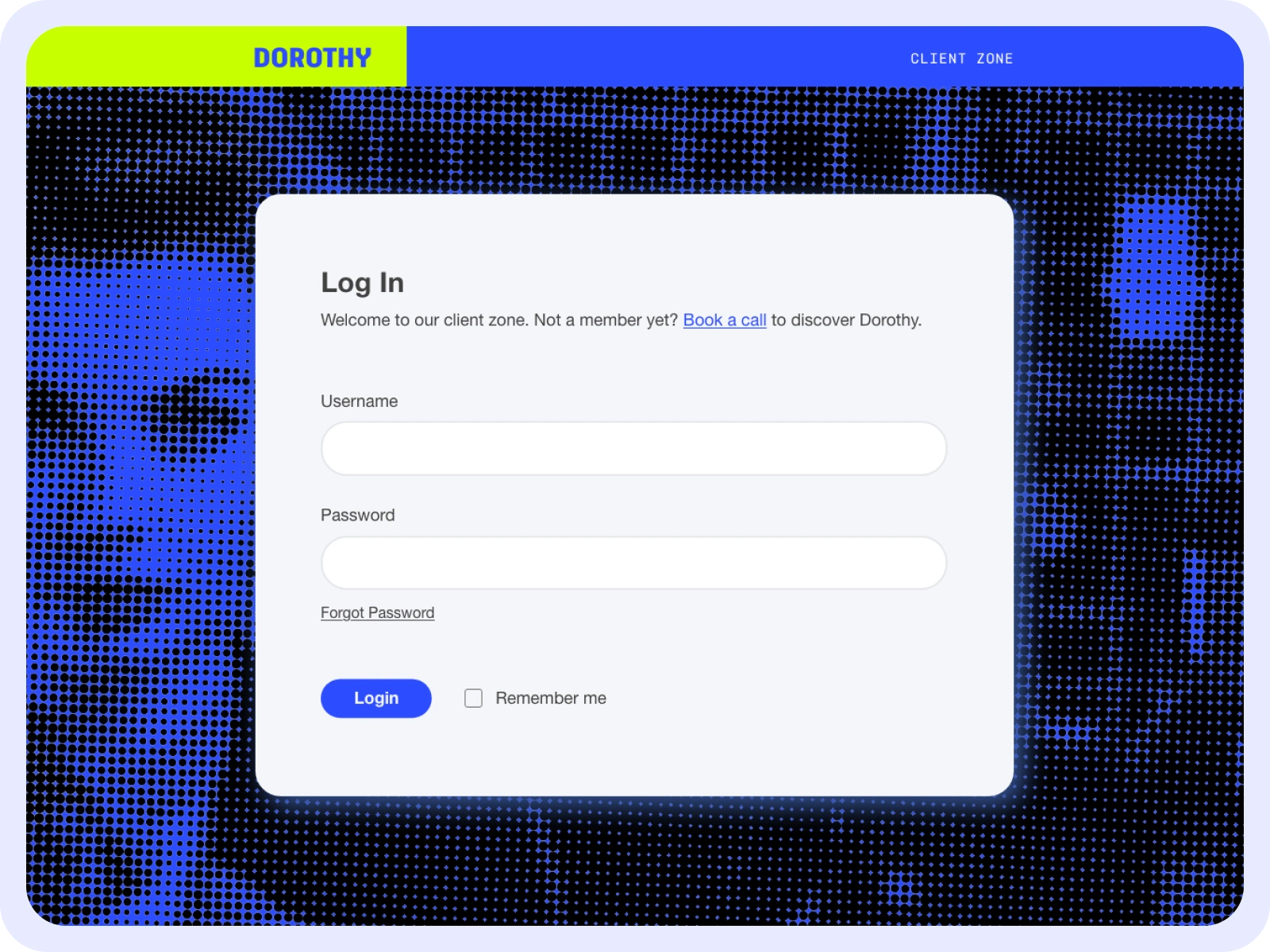
THE DOROTHY CLIENT ZONE
Designing the systems that make a 48-hour creative promise real.
The Promise & The Business Need
Dorothy is a subscription-based design service built inside Houdini—one of LATAM’s most awarded independent creative agencies.
Its value proposition is simple but demanding:
unlimited design, delivered within 48 hours, powered by a hybrid model of human creativity and AI-assisted operations.
Behind that promise sits a real operational challenge:
to deliver consistently at this speed, the internal workflow and the client-facing experience must reduce every friction that slows design production.
This is where the Client Zone comes in.
The Challenge
To make the 48-hour turnaround viable at scale, we needed to fix the three friction points that slow down any creative workflow:
Briefing — clients struggle to articulate requests clearly.
Prioritisation — design requests constantly move; teams need visibility and control.
Progress tracking — clients want clarity without meetings or back-and-forth.
Our approach began with an insight grounded in 20+ years of managing creative workflows at Houdini:
Speed in creative operations doesn’t come from working faster—it comes from removing friction.
So the Client Zone was structured around three pillars that unlock speed:
Clarity at the source → Smart Briefing
Control over priorities → Dynamic Queue Management
Transparency without effort → Real-time Request Visibility
These pillars shaped the two core flows of the platform.
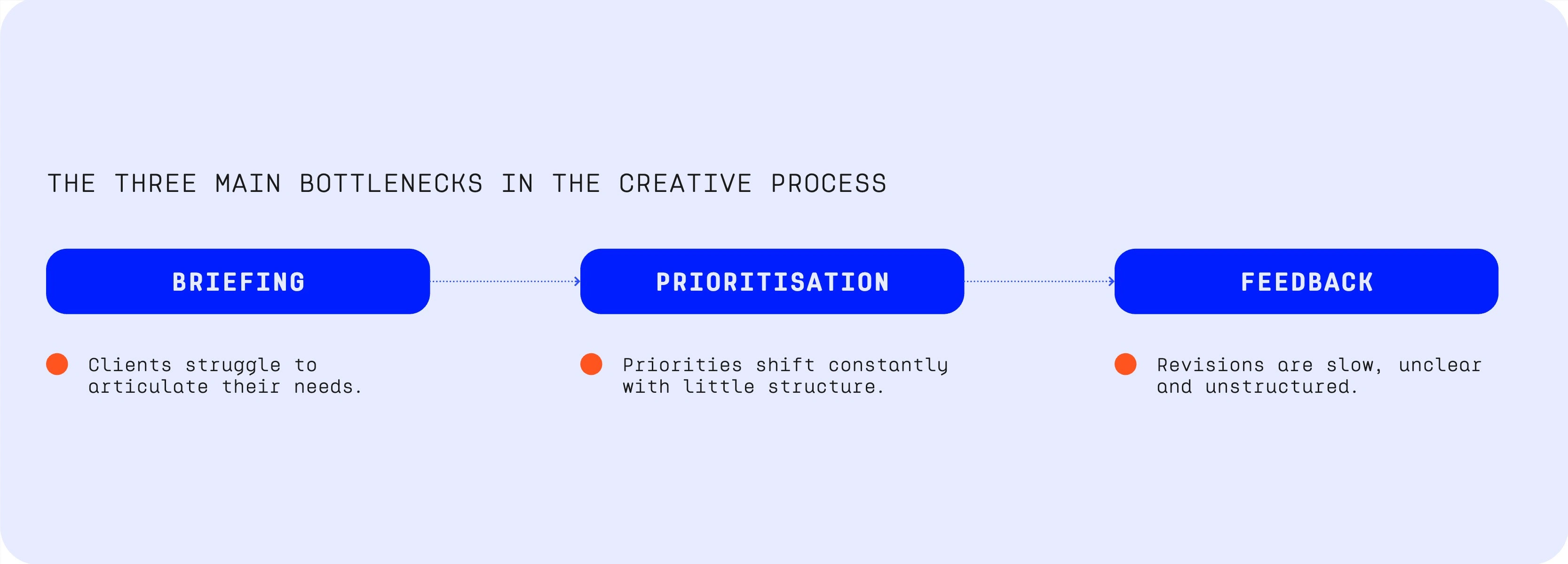
The three main bottlenecks we identified in the operational creative process
FLOW 1 - Smart Brief Generator
A guided, AI-supported system that transforms vague ideas into actionable creative briefs—fast.
Why It Matters
Most delays happen at the beginning: unclear briefs, missing info, misunderstood objectives.
To eliminate this bottleneck, we designed a 3-step guided brief generator that supports the client while also improving the inputs for the design team.
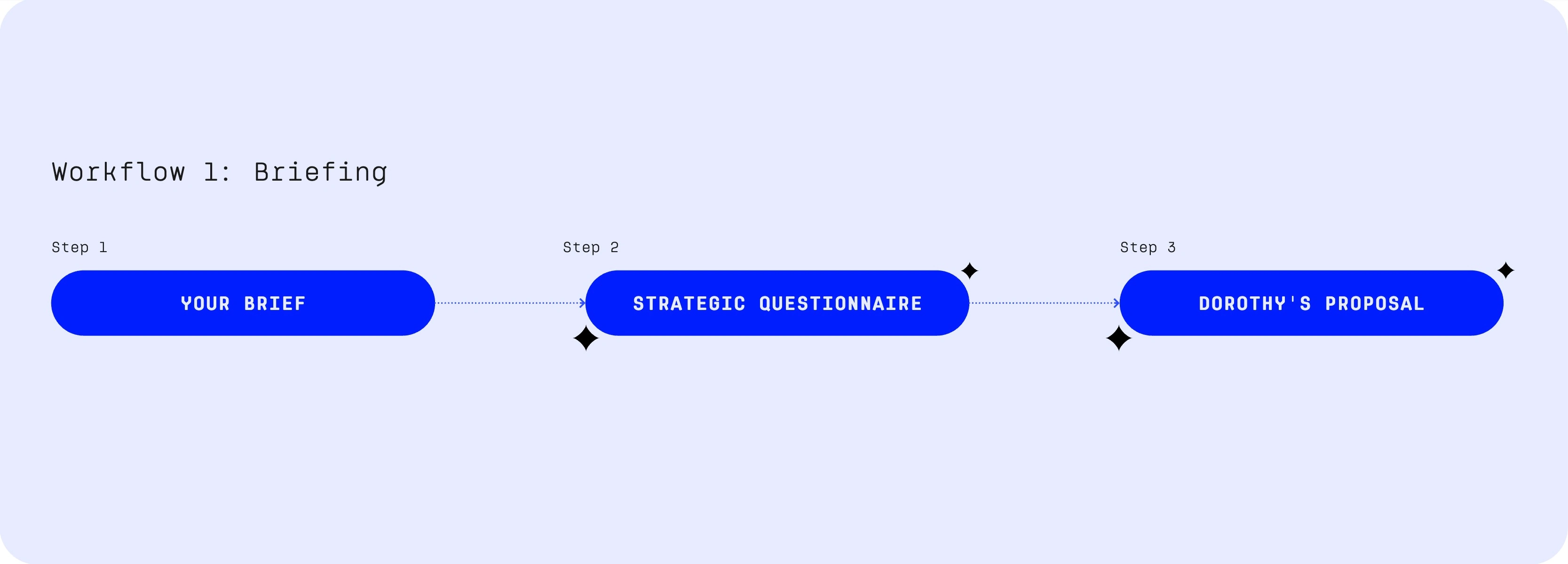
Three-steps process to make a design request
Flow 1 > Step 1 — Capture Intent
A simple way for clients to express what they believe they need.
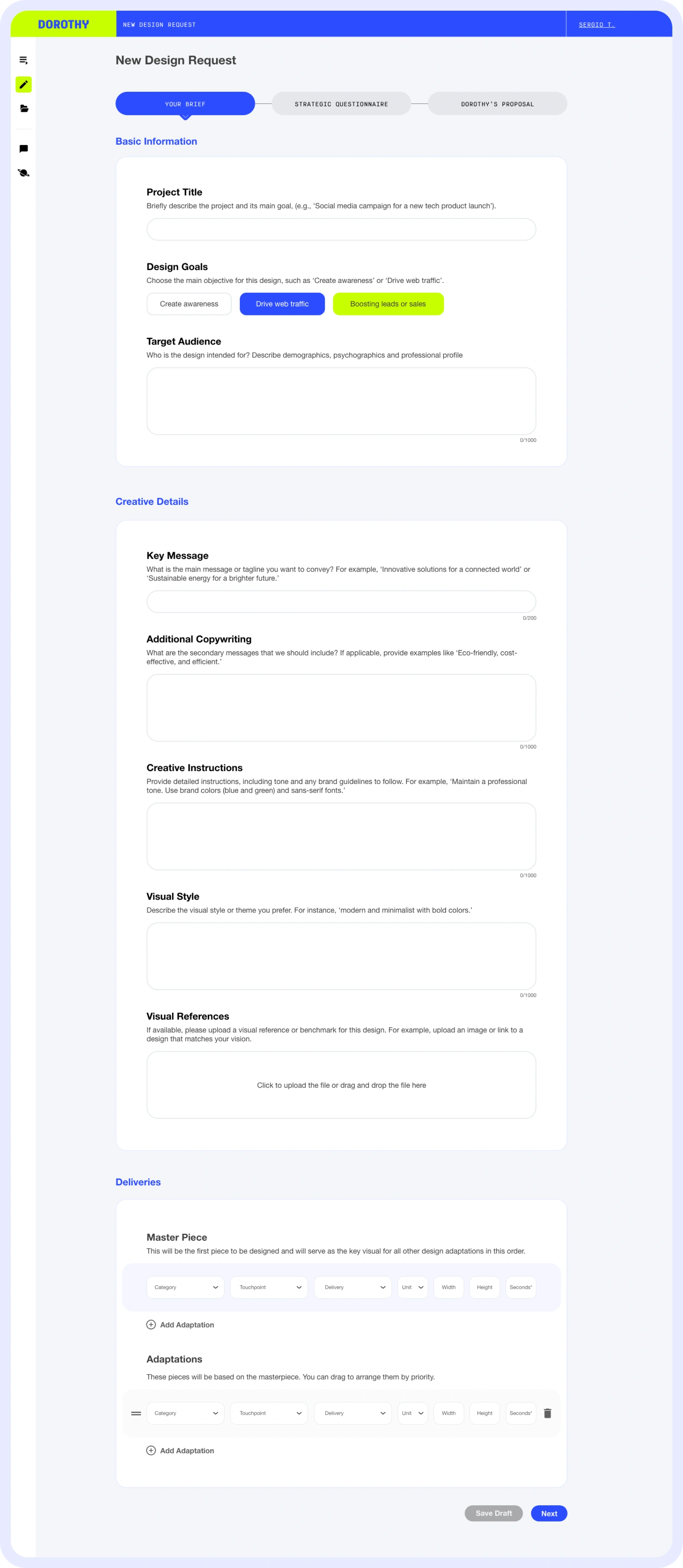
A guided system that transforms rough ideas into clear, production-ready briefs.
Flow 1 > Step 2 — AI Strategic Questions
Using OpenAI, the system generates personalised clarifying questions based on the request’s nature—brand, motion, web, etc.
This helps the client refine intent while surfacing strategic considerations they wouldn’t think of alone.
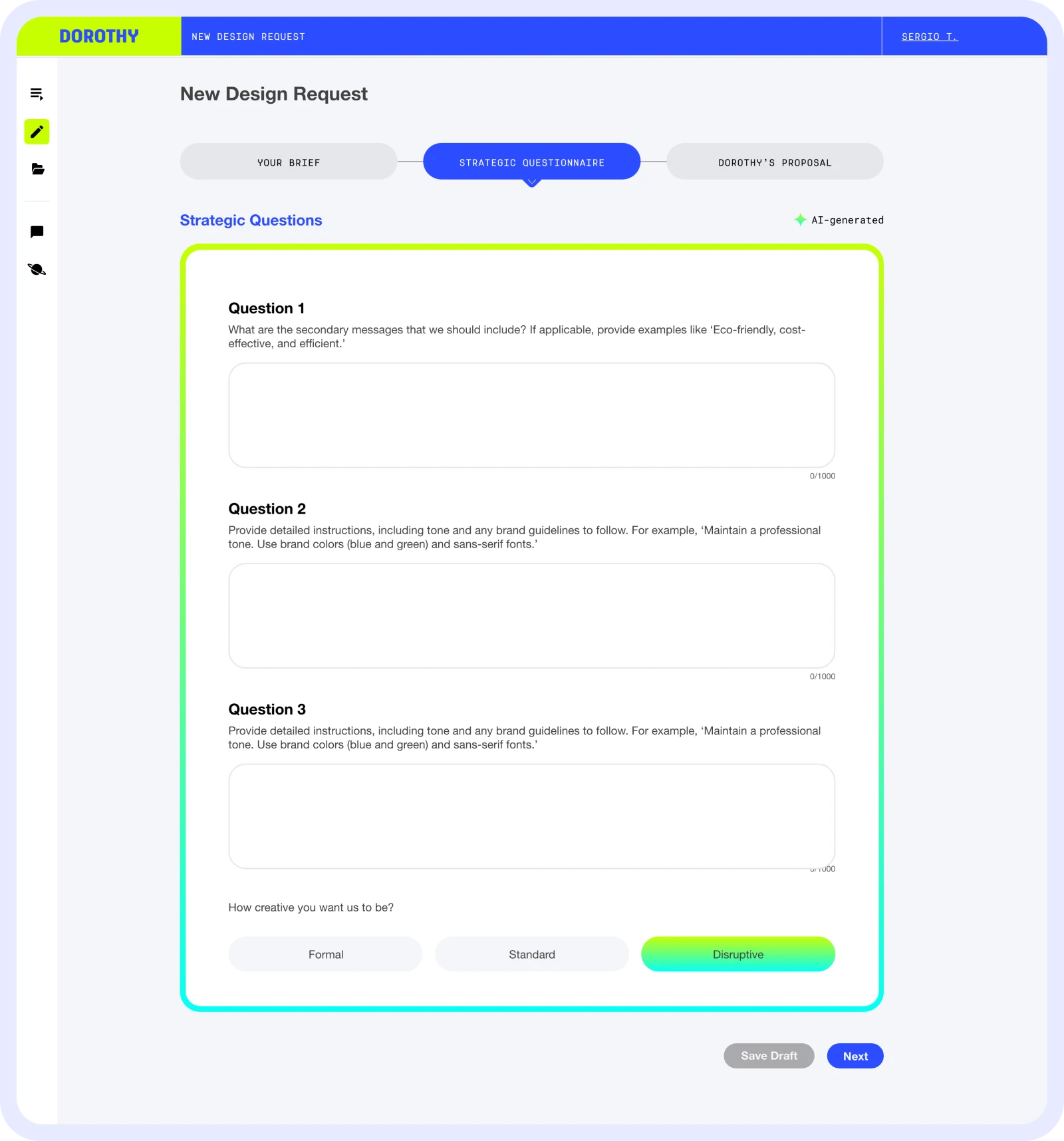
AI-generated questions eliminate misunderstandings before they slow down production.
Flow 1 > Step 3 — Two Optimised Briefs
The system delivers two contrasting brief interpretations to accelerate decision-making.
Clients can choose the direction that fits better—dramatically reducing alignment cycles.
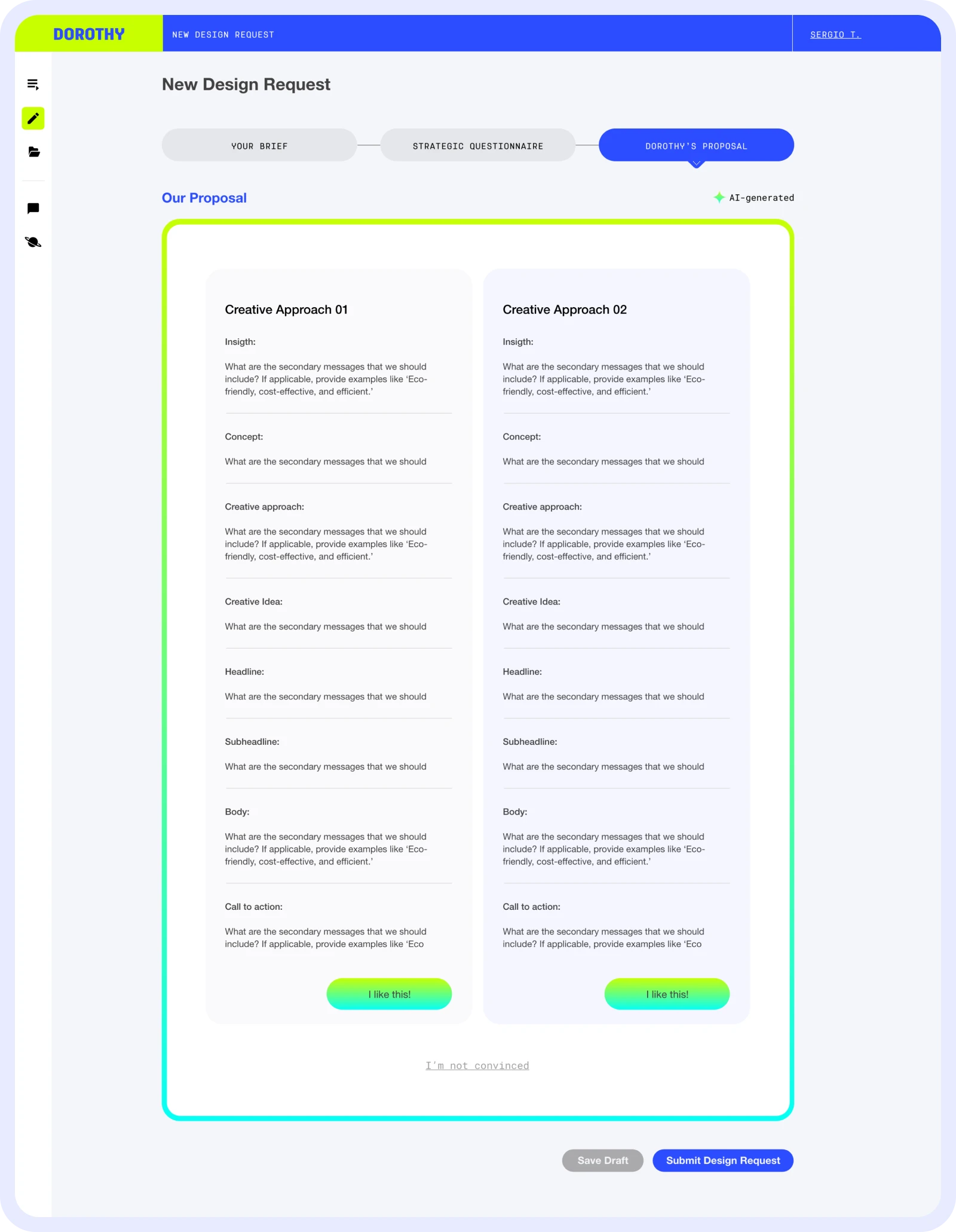
Two strategic directions help clients lock decisions quickly—reducing cycles from days to minutes.
FLOW 2 — Request Queue & Prioritisation
Visibility and control, without friction.
Full visibility and control over active work—without Slack messages, emails or extra meetings.
Why It Matters
Startups and agencies change priorities constantly.
But priority changes often create delays, confusion, or misalignment.
The Client Zone solves this with a real-time request queue, synced directly with our internal Monday environment.
Key UX Elements
1. A clear pipeline:
Pending → In Progress → Delivered
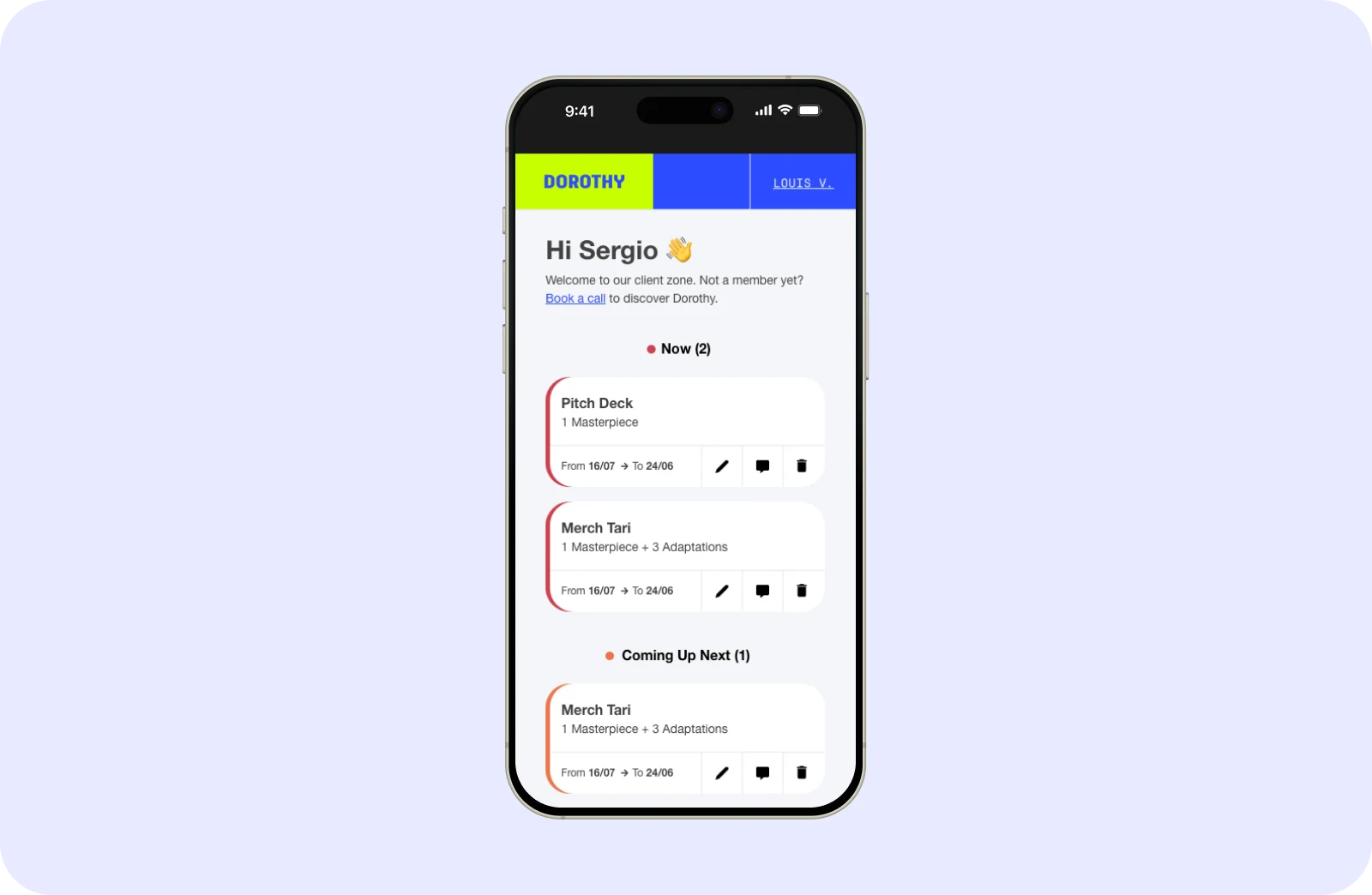
Drag-and-drop priorities keep the 48-hour promise aligned with real business needs.
2. Drag-and-drop prioritisation:
Clients reorder their queue as priorities shift.
No bottlenecks. No miscommunication.
3. Real-time syncing with Monday
Every change automatically updates internal boards, ensuring the creative team always works on the right thing.
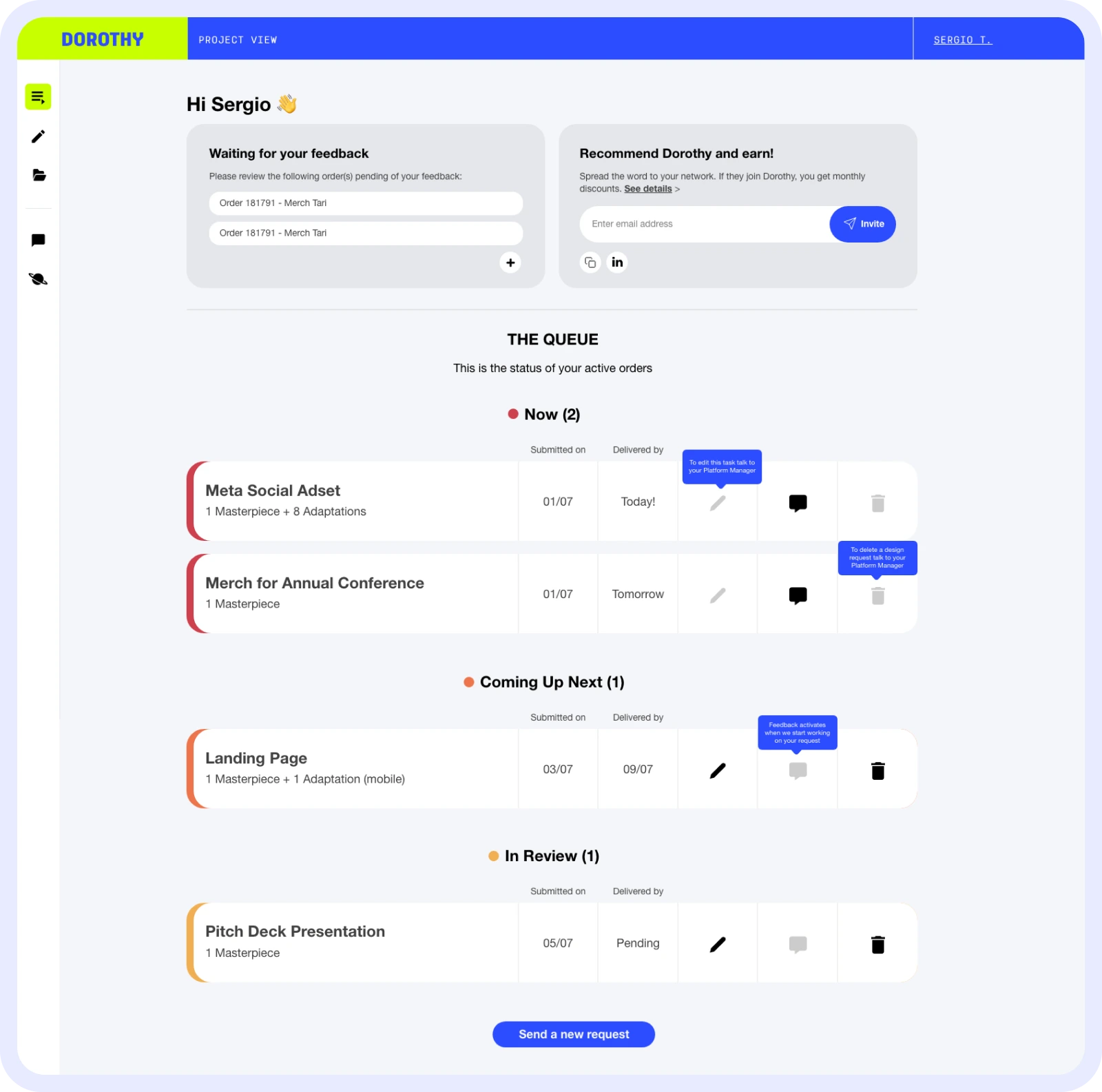
A single source of truth: real-time visibility across every active request.
Integrations That Make it Work
To maintain both speed and scalability, the Client Zone integrates seamlessly with Dorothy’s internal workflow:
OpenAI — powers clarifying questions and dual brief interpretations.
Monday — manages internal production, synced with the client queue.
Zapier — automates board creation, notifications, and organisational structures behind the scenes.
This creates an invisible operational engine that supports the UX without overwhelming the user.
Results
The Client Zone became a core enabler of Dorothy’s service promise:
40–60% reduction in back-and-forth during briefing
Fewer alignment cycles, thanks to dual brief directions
Real-time prioritisation, reducing operational delays
Significant reduction in touchpoints, enabling consistent 48-hour delivery
This creates an invisible operational engine that supports the UX without overwhelming the user.
What This Case Demonstrates
This project demonstrates my ability to:
Translate a value proposition into an operational product
Build flows that reduce friction in creative work
Use AI strategically (not decoratively) to improve inputs
Design UX structures that support both speed and quality
Integrate product, service design, and brand logic in one experience
Like this project
Posted Nov 16, 2025
Designed an end-to-end Client Zone that removes creative bottlenecks and powers Dorothy’s 48-hour design delivery model.
Likes
0
Views
16
Clients
Dorothy