ugly(ui)club

Olha Ratinova

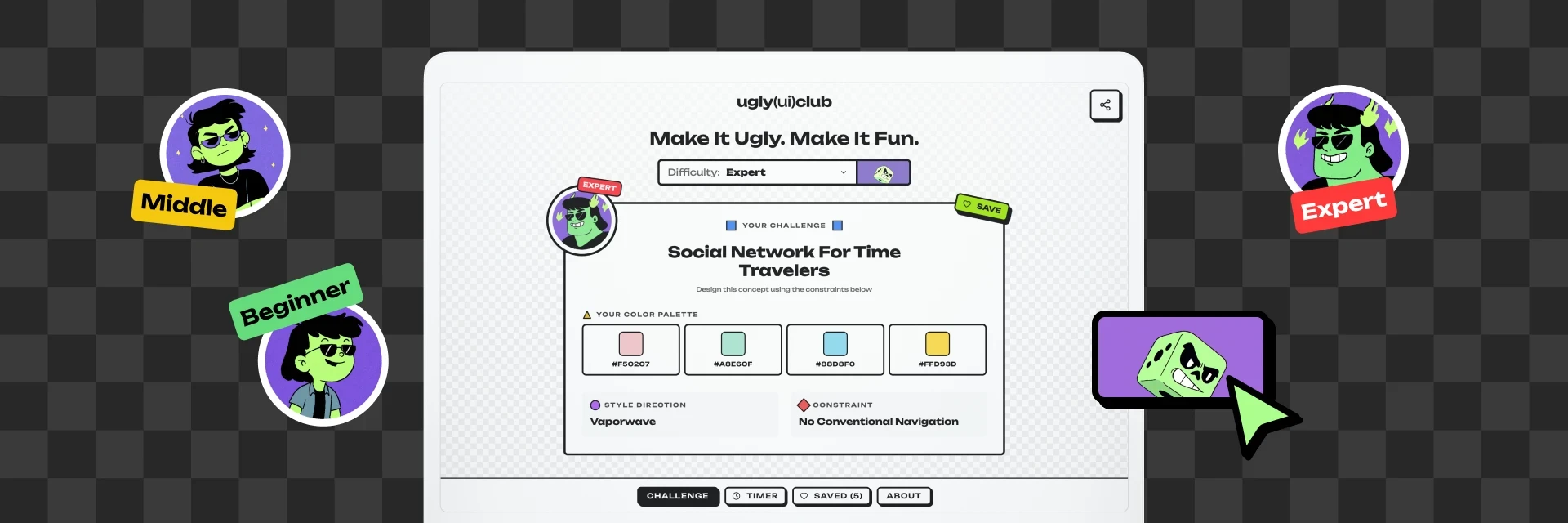
ugly(ui)club is a design challenge generator created in Figma Make.
The idea was simple:
👉 generate unexpected design constraints and turn them into playful creative exercises.
The project was built entirely in Figma Make — from concept to working prototype — without manually crafting traditional UI layouts beforehand.
Concept
The mechanic is intentionally minimal:
Roll the dice
Get a random design challenge
Start a timer
Design under constraints
The goal is exploration, experimentation, and speed.
✦ ugly(ui)club embraces imperfection as a creative catalyst.
Challenge Flow
Process
The project started with:
(1) clear idea
(0) manually prepared frames
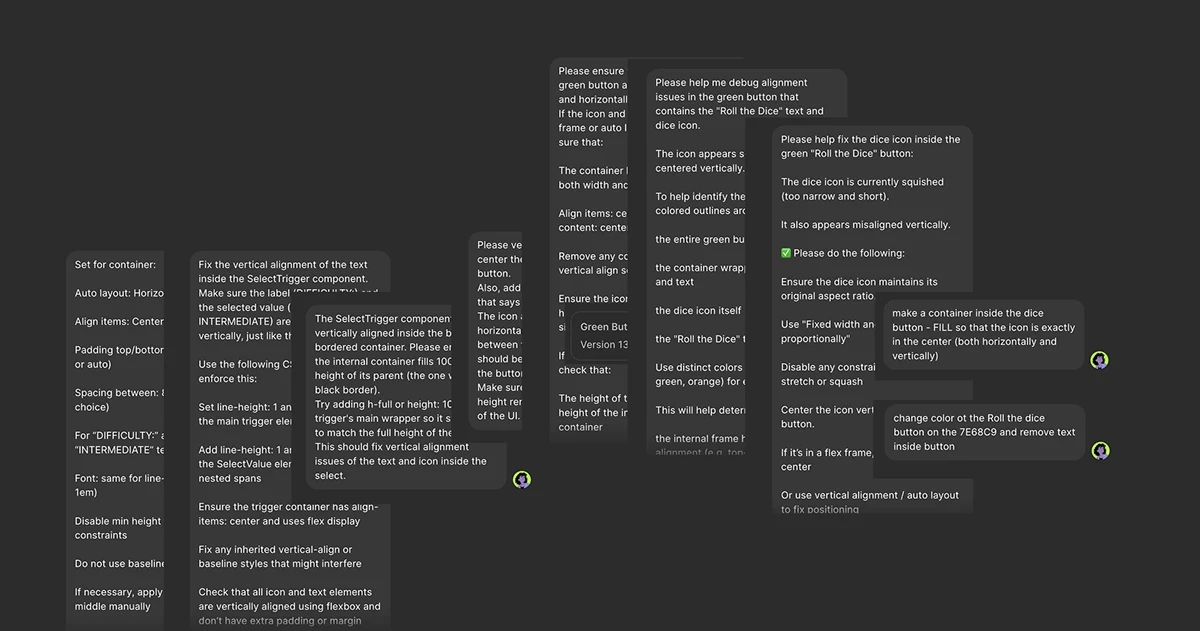
333+ prompts to shape the outcome
Instead of designing every screen traditionally, I iterated through structured prompts inside Figma Make, refining the output until the system behaved exactly as intended.
This approach became an experiment in:
Prompt precision
Iterative control
Human + AI collaboration
Designing through direction rather than drawing
Design Thinking
Although playful on the surface, the project explores a serious question:
🧐 How much control does a designer retain when working with AI-powered tools?
ugly(ui)club became a sandbox for testing:
Constraint-based creativity
Fast idea validation
Interaction simplicity
Minimal friction UX
About Page
Technology
Built entirely in Figma Make. 🤓
No external builders. No coded backend.
📍 Just structured prompts, iteration, and refinement.
Mobile Screens — Challenge Flow, Timer, Saved Challenges
Interactive Timer
The timer is not just a utility feature — it acts as a behavioral trigger within the experience.
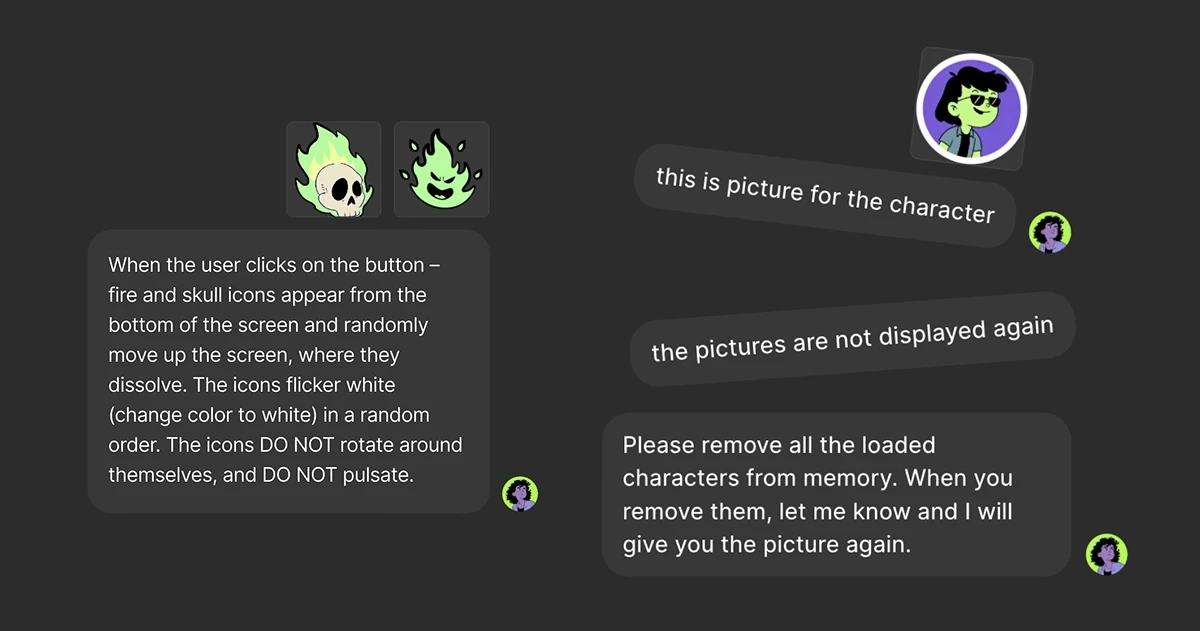
Once activated, animated “tick–tock” flame icons appear across the interface and persist throughout all pages until the timer is stopped.
This creates:
A sense of urgency without aggressive UI patterns
A playful psychological reminder of time passing
A continuous visual rhythm reinforcing the challenge format
A subtle layer of gamification across the entire experience
The timer transforms the interface from a static tool into an active design session environment.
✦ Instead of isolating time tracking in one corner of the screen, it becomes part of the narrative flow.
Copy System
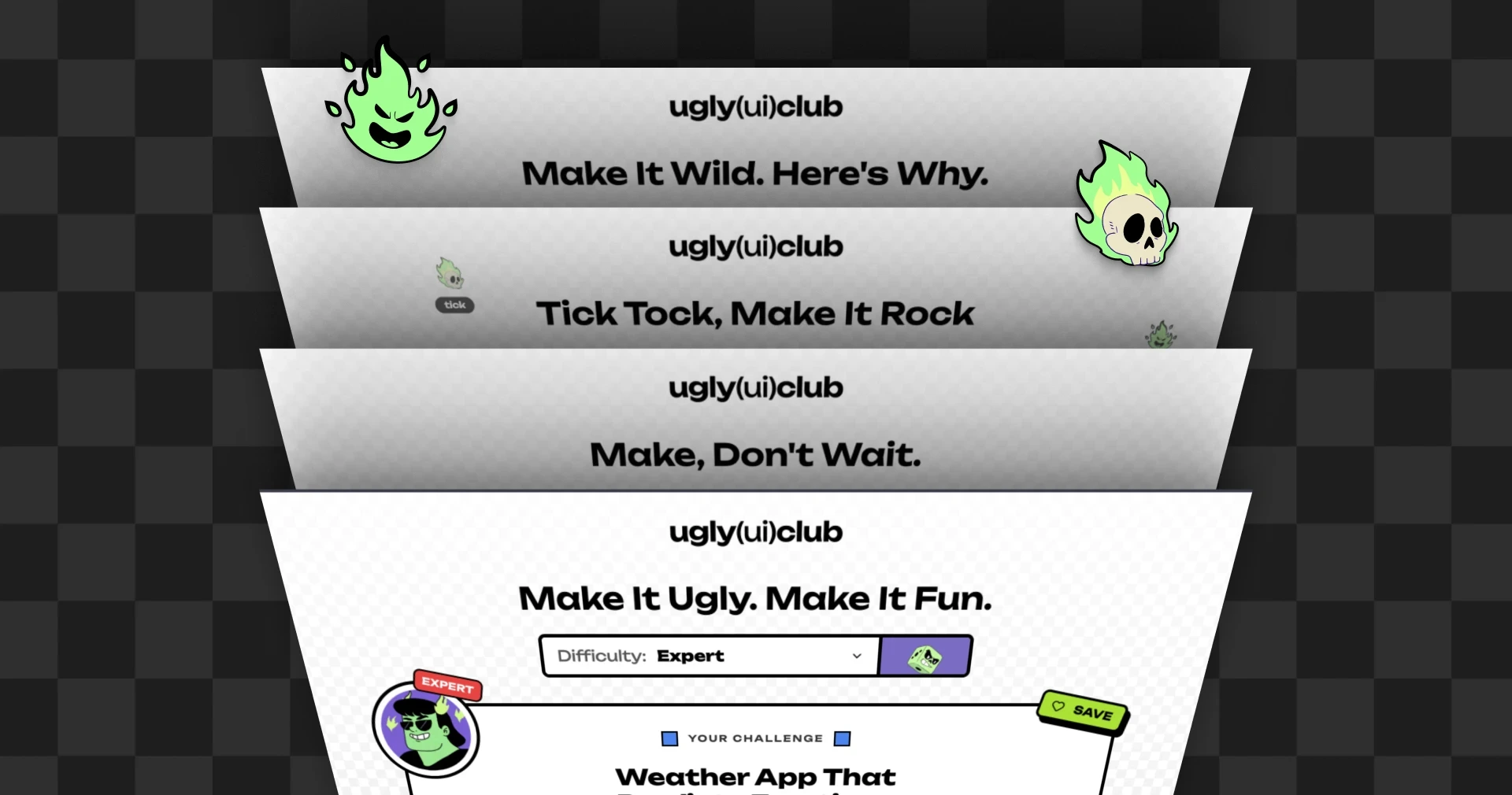
All page headlines include variations of “Make” — intentionally echoing Figma Make as both tool and medium.
✦ The interface becomes self-referential: a project about making, built with Make, encouraging users to make.
This subtle repetition strengthens narrative cohesion without distracting from functionality.
Outcome
ugly(ui)club demonstrates:
Experimental thinking
Rapid prototyping with AI tools
Ability to shape output through prompt engineering
Playful yet structured product thinking
It’s both a creative playground and a study of emerging design workflows.
Like this project
Posted Feb 24, 2026
ugly(ui)club is an interactive challenge generator for designers built entirely in Figma Make.
Likes
0
Views
0