
Context: Online games and gaming services, almost ten years of experiments. A/B tests are the best way to know what a change did, but in a real company they break.
What we found:
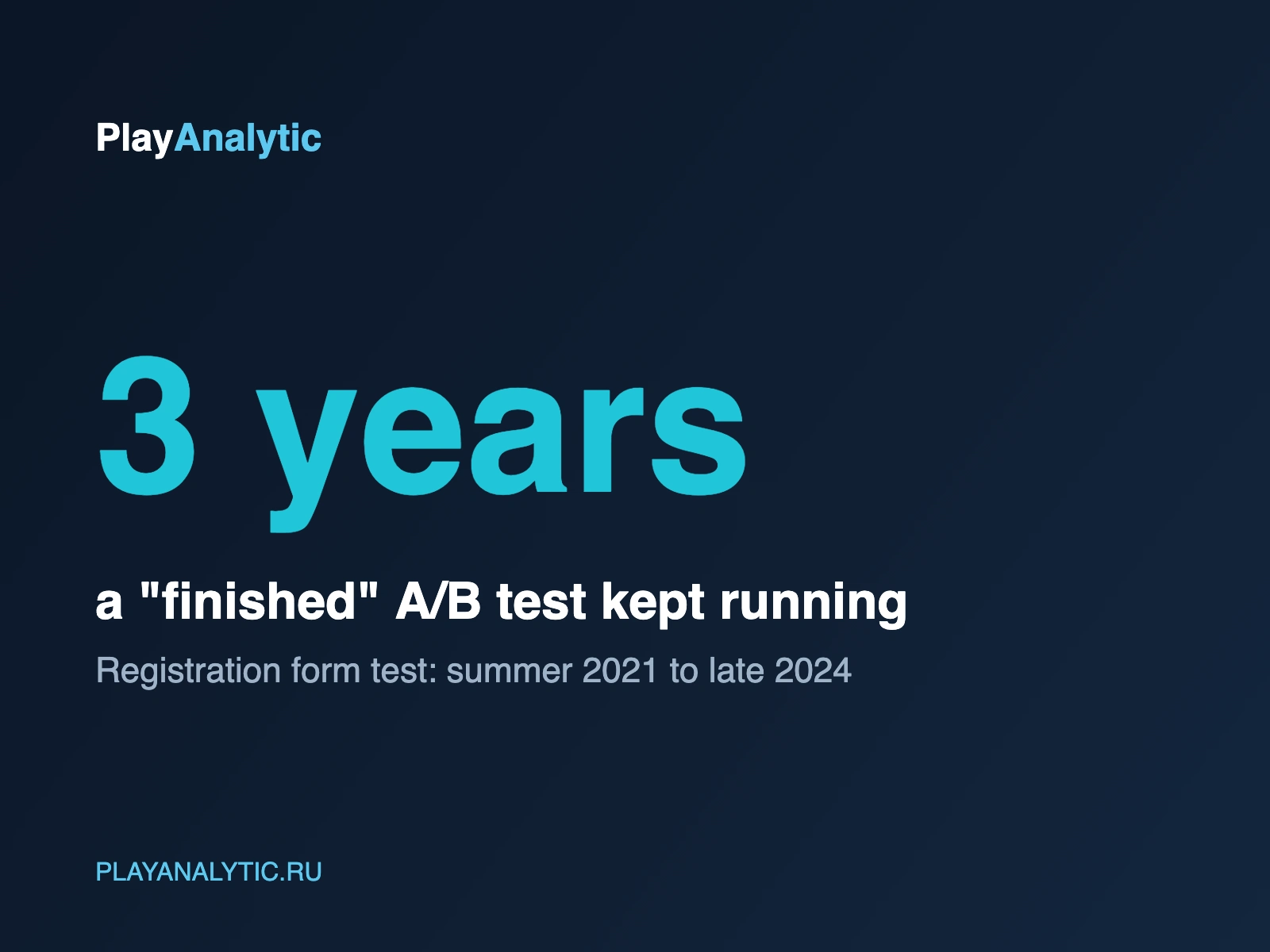
A registration form test launched in summer 2021 was still running in late 2024: the task to switch it off sat in the dev queue for three years. Result: statistically different, practically the same.
Cross-promo banners had no effect on retention, yet users who clicked looked much better, because they were more active before the test started.
A "retention" email at level 55 made players churn more often.
A booster test broke technically: buying a 1-day item gave a 7-day one, and vice versa.
Eight rules we apply: every test has an owner, an end date and a stop rule; duration is calculated before launch; groups are compared as randomized; 50/50 split unless there's a reason; check how much revenue top payers bring in each group; run a technical dry run; no overlaps with promos or other tests; record null results like successes.
Takeaway: A broken test is worse than no test: it gives a confident wrong answer.
0 likes · 0 views · Nov 14, 2026
Nine A/B tests from almost ten years in online games: how they break, and the eight rules that keep experiments trustworthy.