
Context: Online games, 2016–2022. Promotions were judged by units and buyers: sold more, so it worked.
What we found:
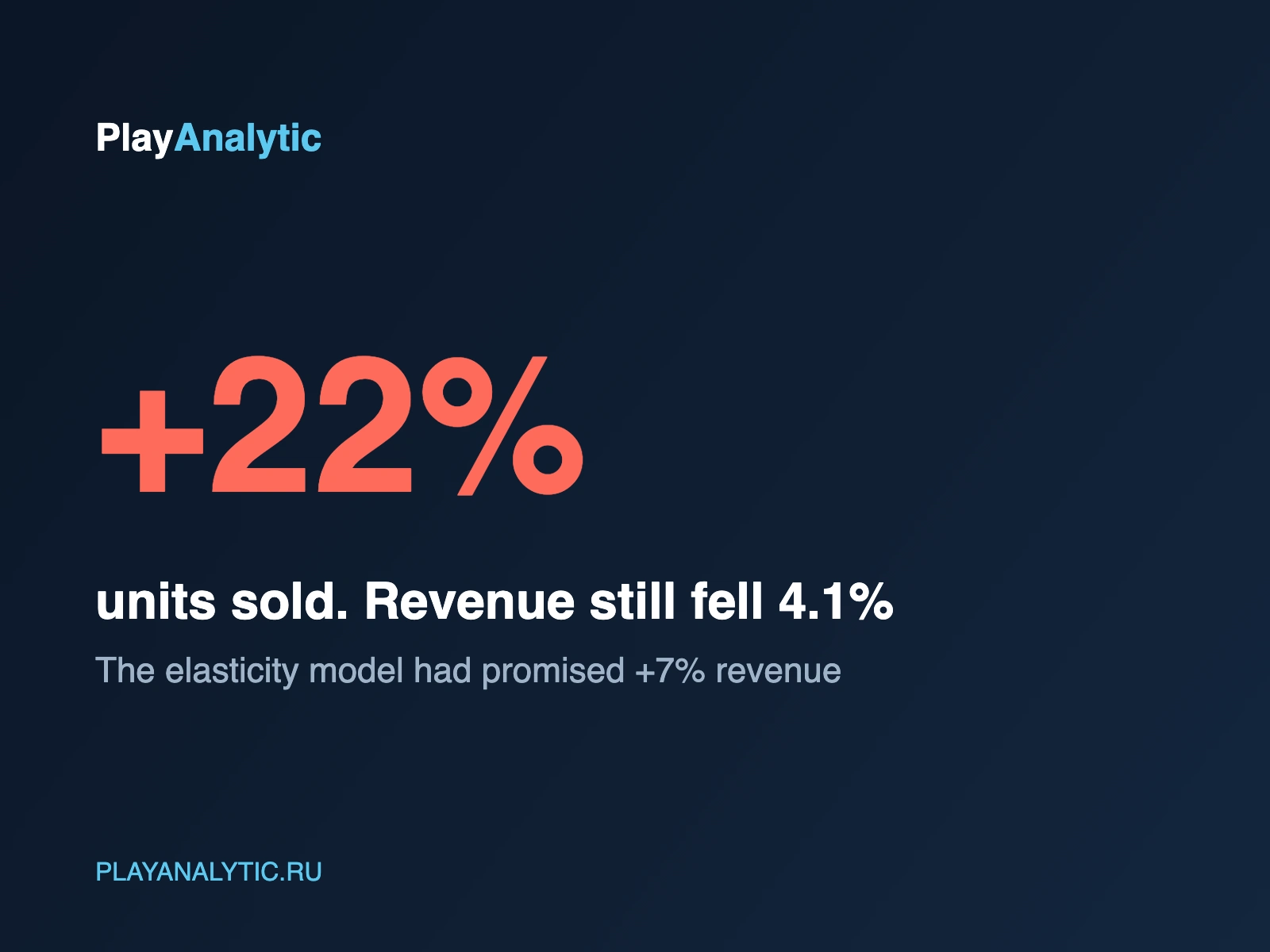
A price elasticity model promised +7% revenue from a 12.5% price cut. In reality units sold rose 22.3% and buyers 28.3%, but revenue on these items fell 4.1%.
A "buy one, get one" offer ran three times in six months; players learned to wait, and within a year spending was back to the pre-promo level.
A currency sale had a "hangover": losses in the following days ate about half of the extra profit.
A top-up bonus motivated players who already pay but added no new payers.
After Black Friday, consumables sold 30% less, and weak offers right after the sale deepened the dip.
Six rules we now apply: count money, not units; look at the window after the promo; split the effect by segment; check spending over a year, not a week; treat an elasticity model as a hypothesis; with no control group, use an honest baseline.
Takeaway: Every promo is worth checking a month later, not on launch day.
0 likes · 0 views · Nov 14, 2026
A 12.5% price cut sold 22% more units, yet revenue fell 4.1%. Six rules we use to judge promotions in money, not units.