Designing BillFlow for Streamlined Freelance Invoicing

Simira Ahmed


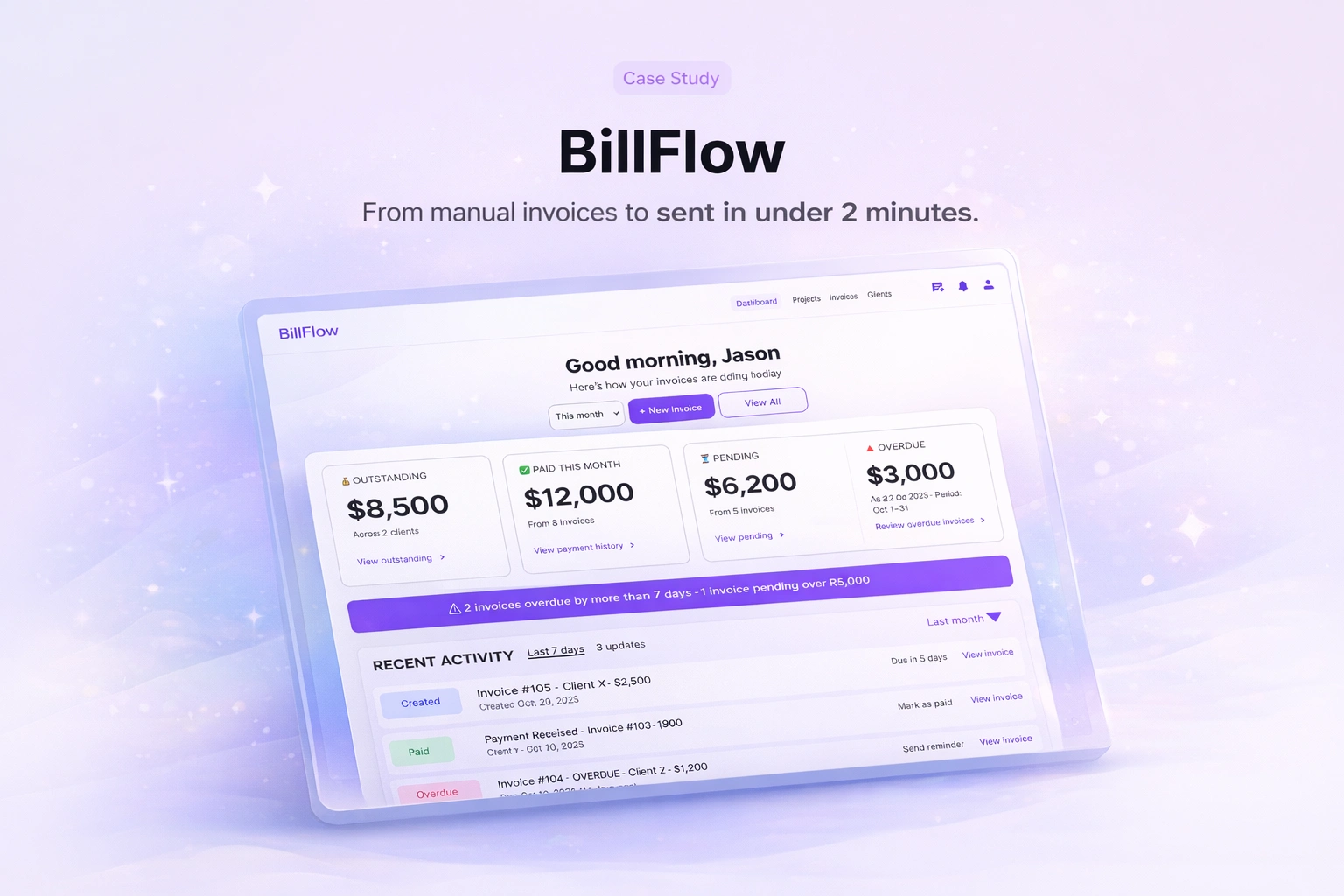

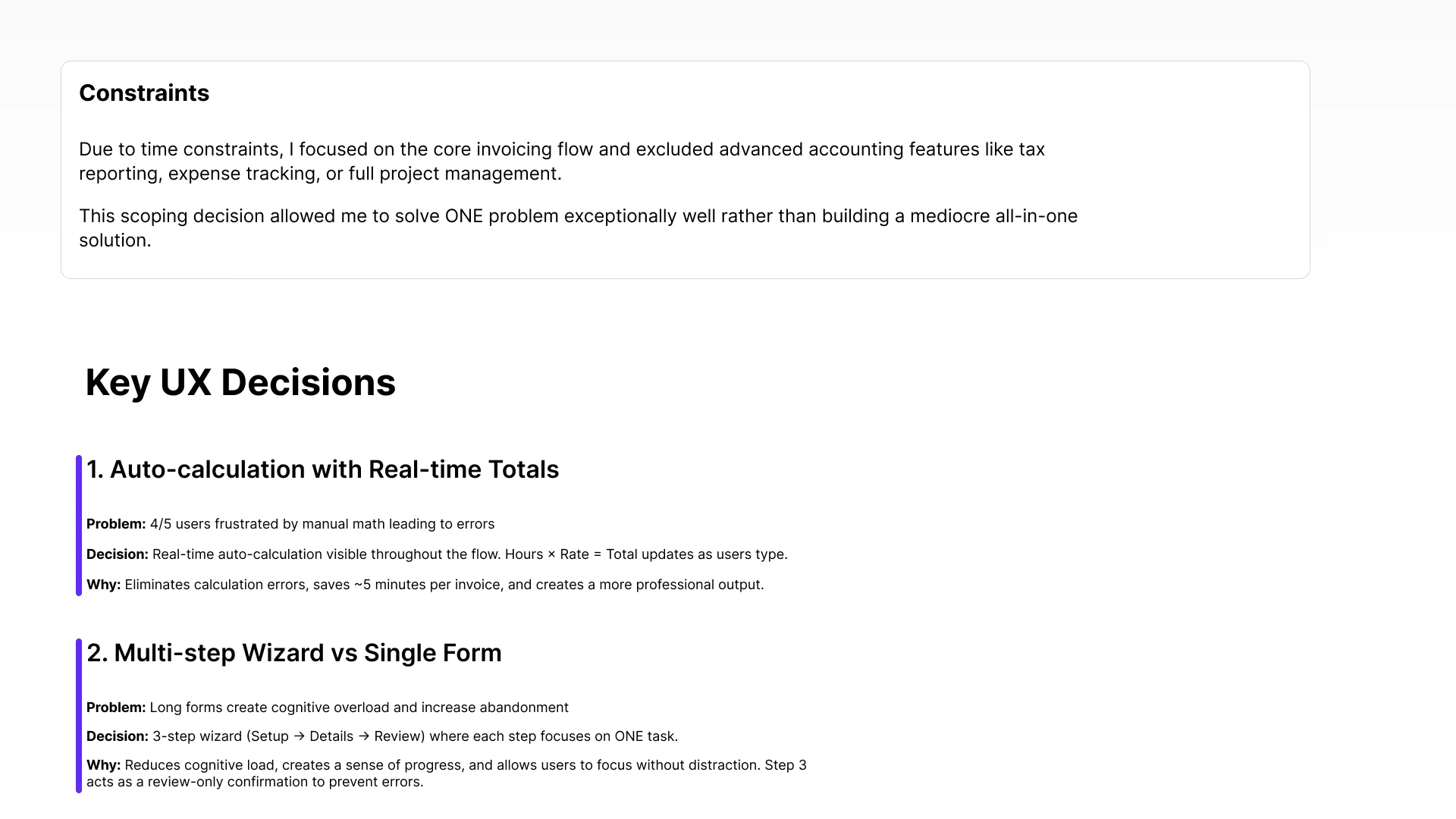
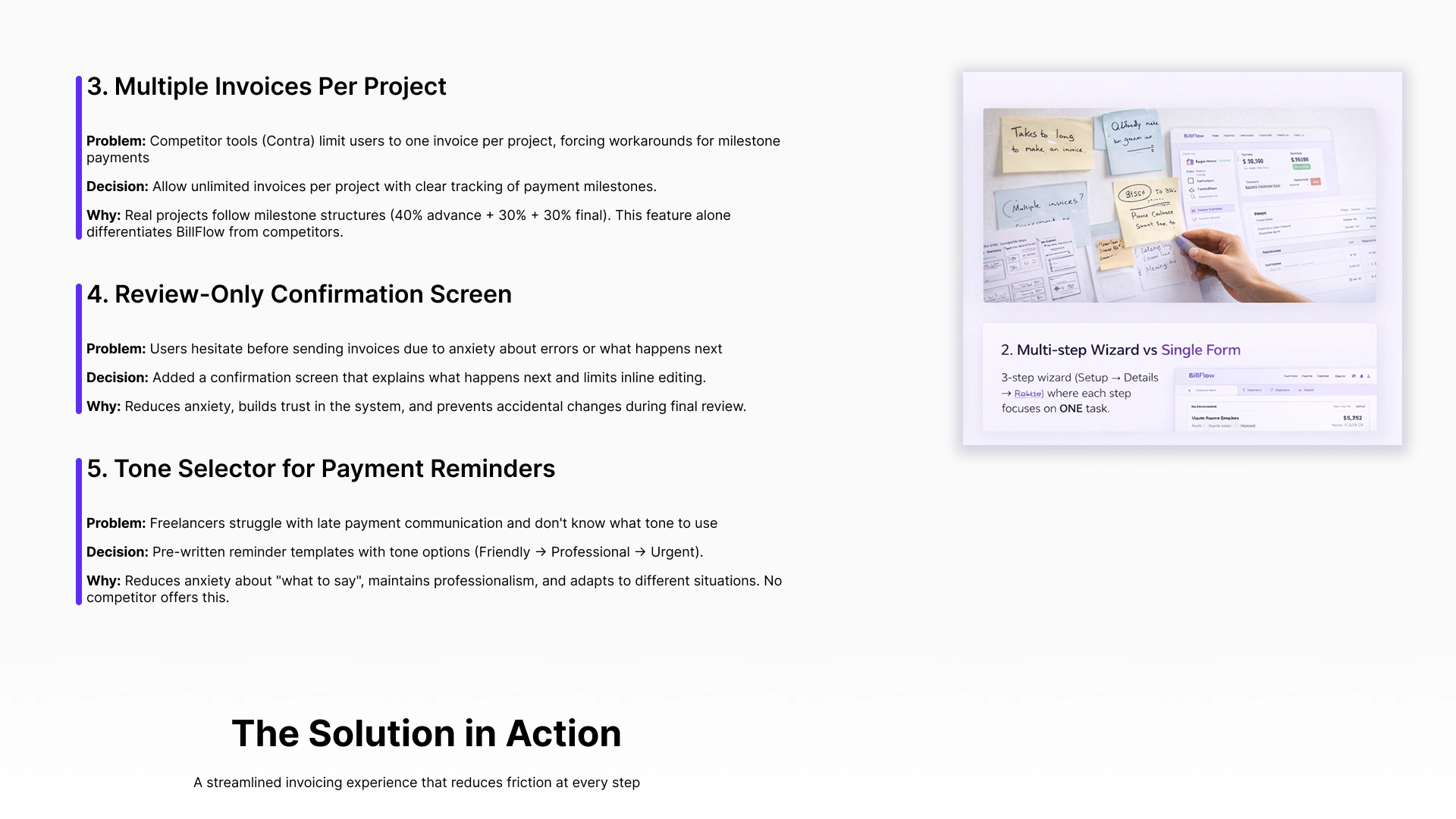
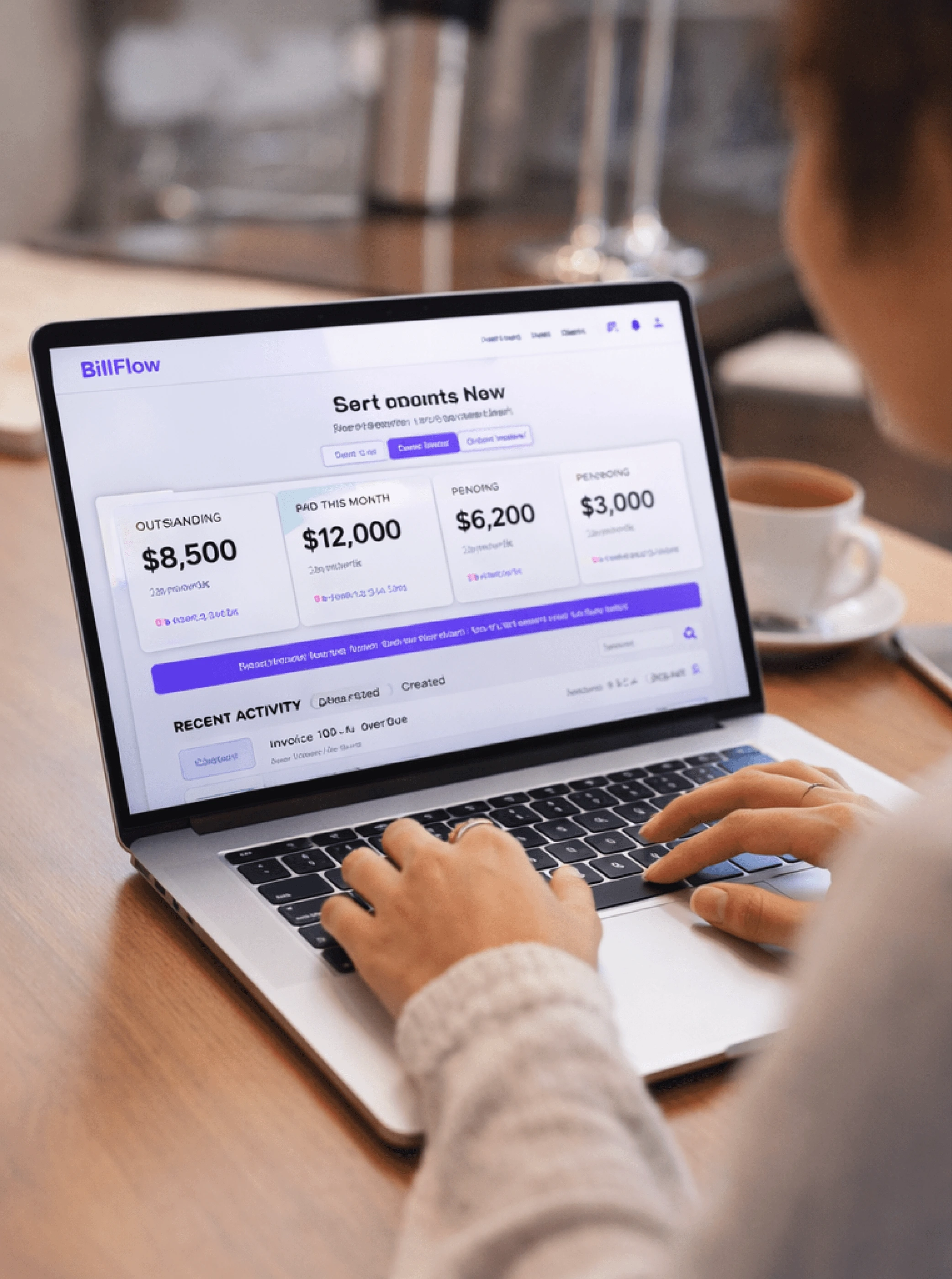
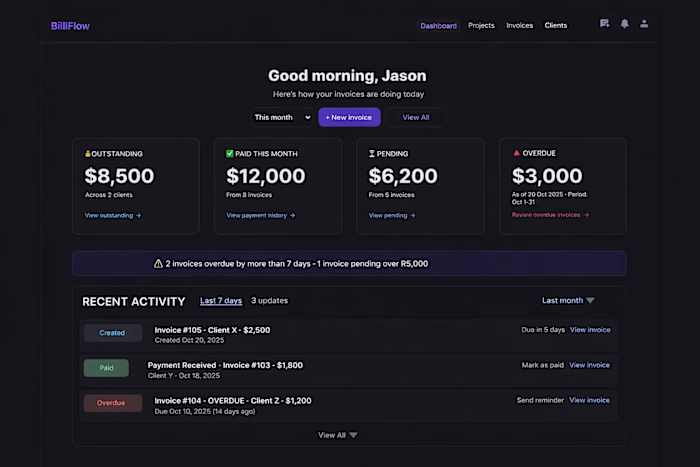
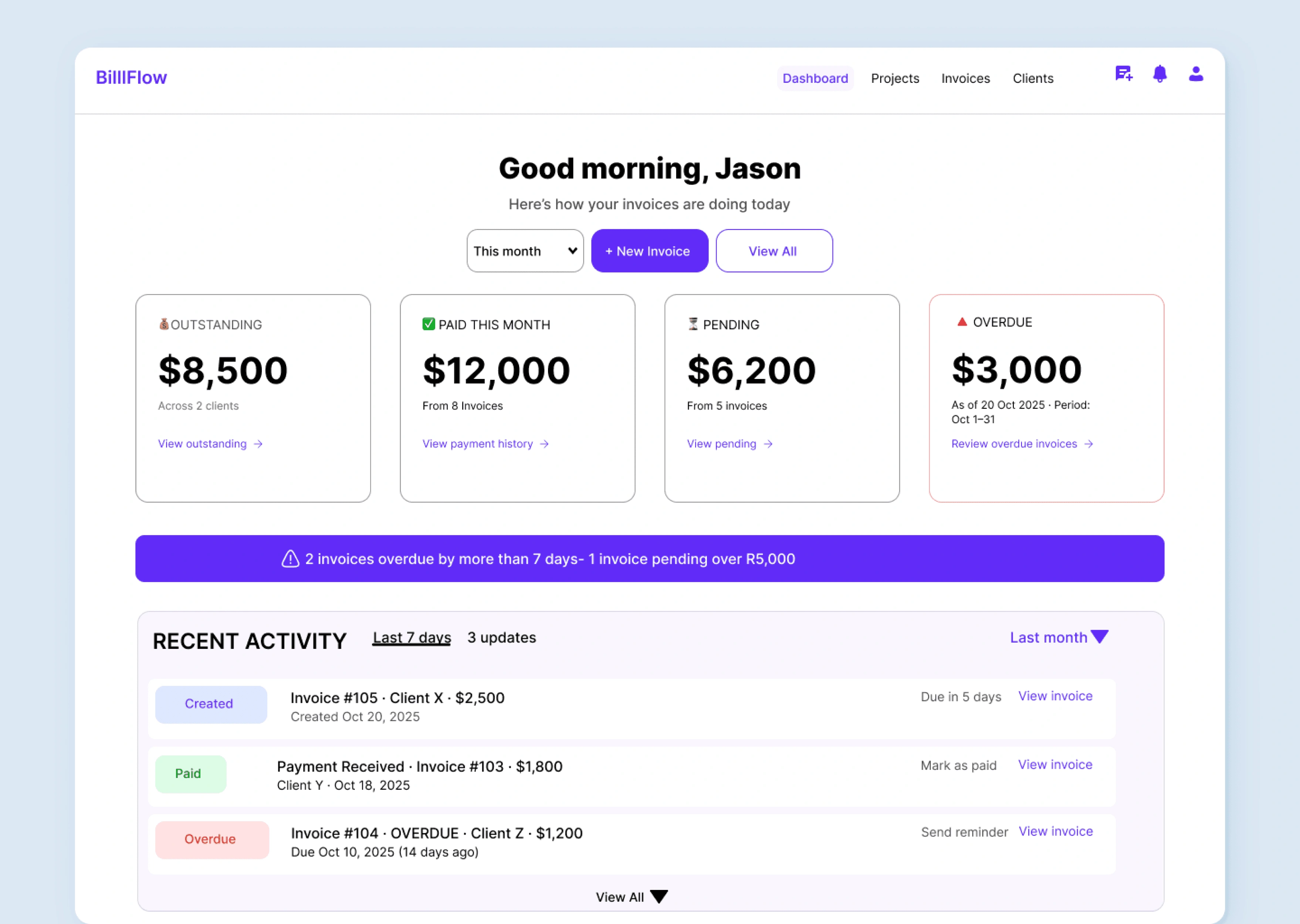
#### At-a-glance payment visibility
### Users understand invoice status in 3 seconds. Key metrics are prioritized with color-coded cards, and overdue invoices are visually stronger to drive immediate action.
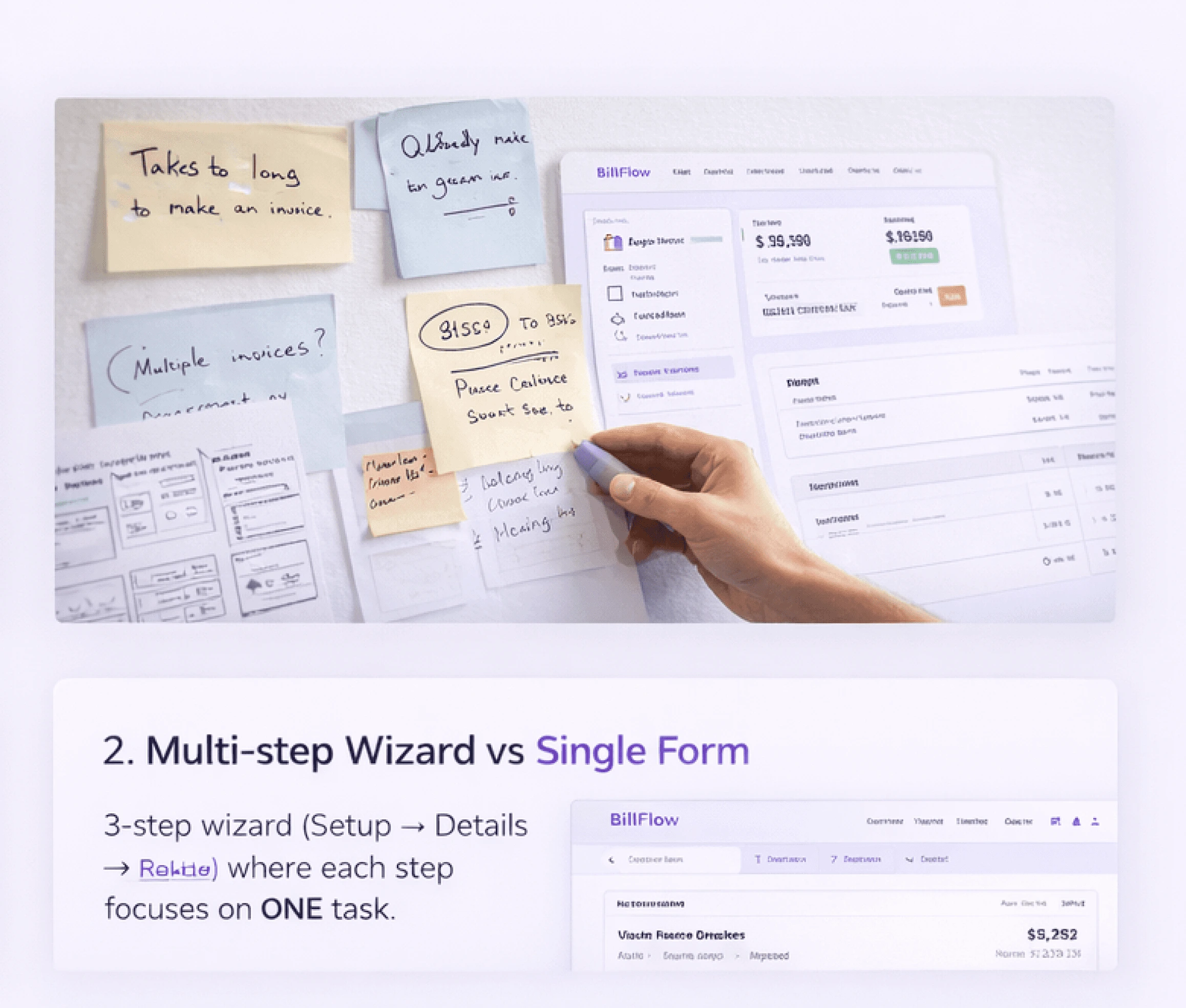
Support both quick one-off invoices and milestone-based projects. Smart defaults reduce effort for repeat clients, while the stepped approach prevents cognitive overload.
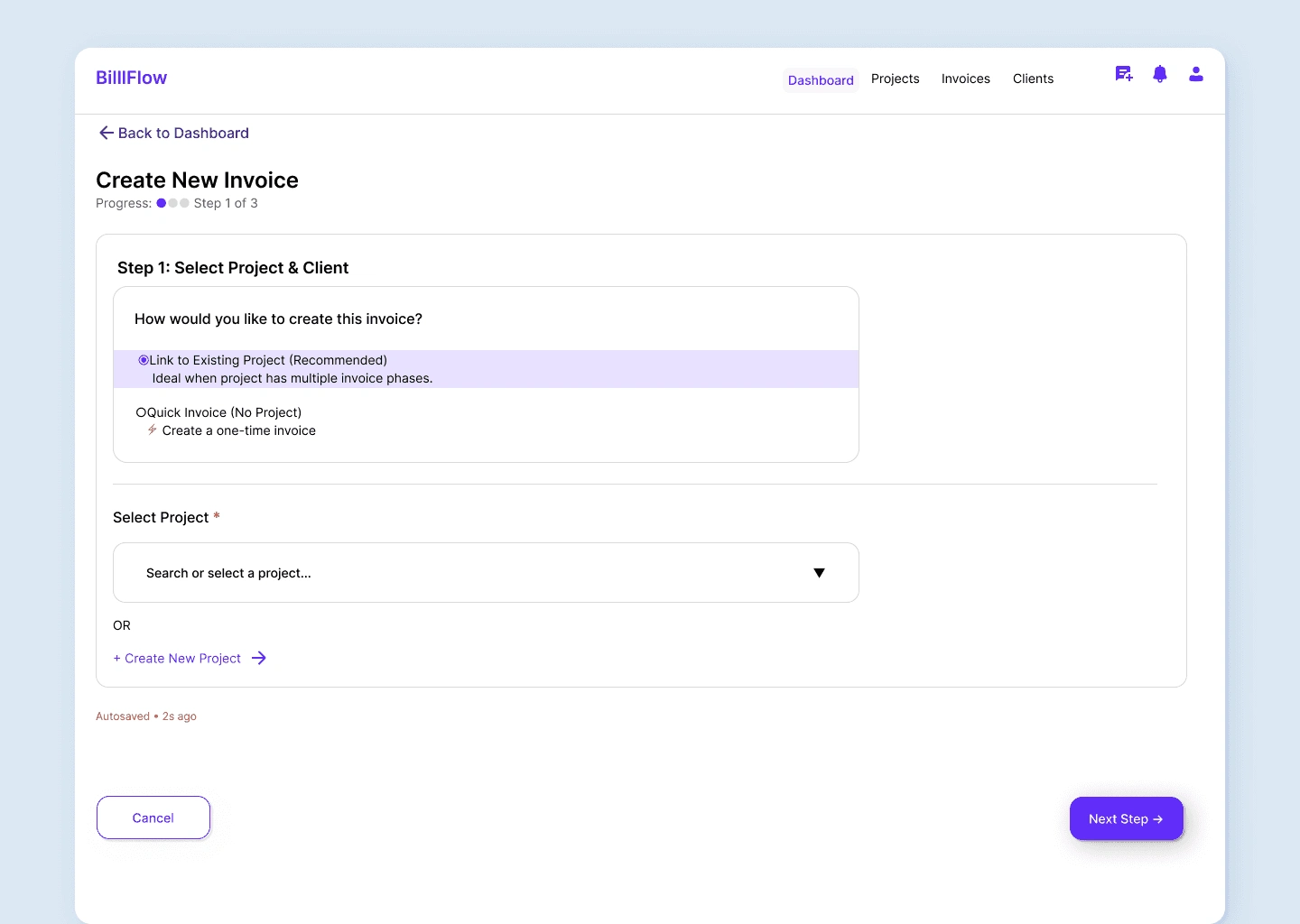
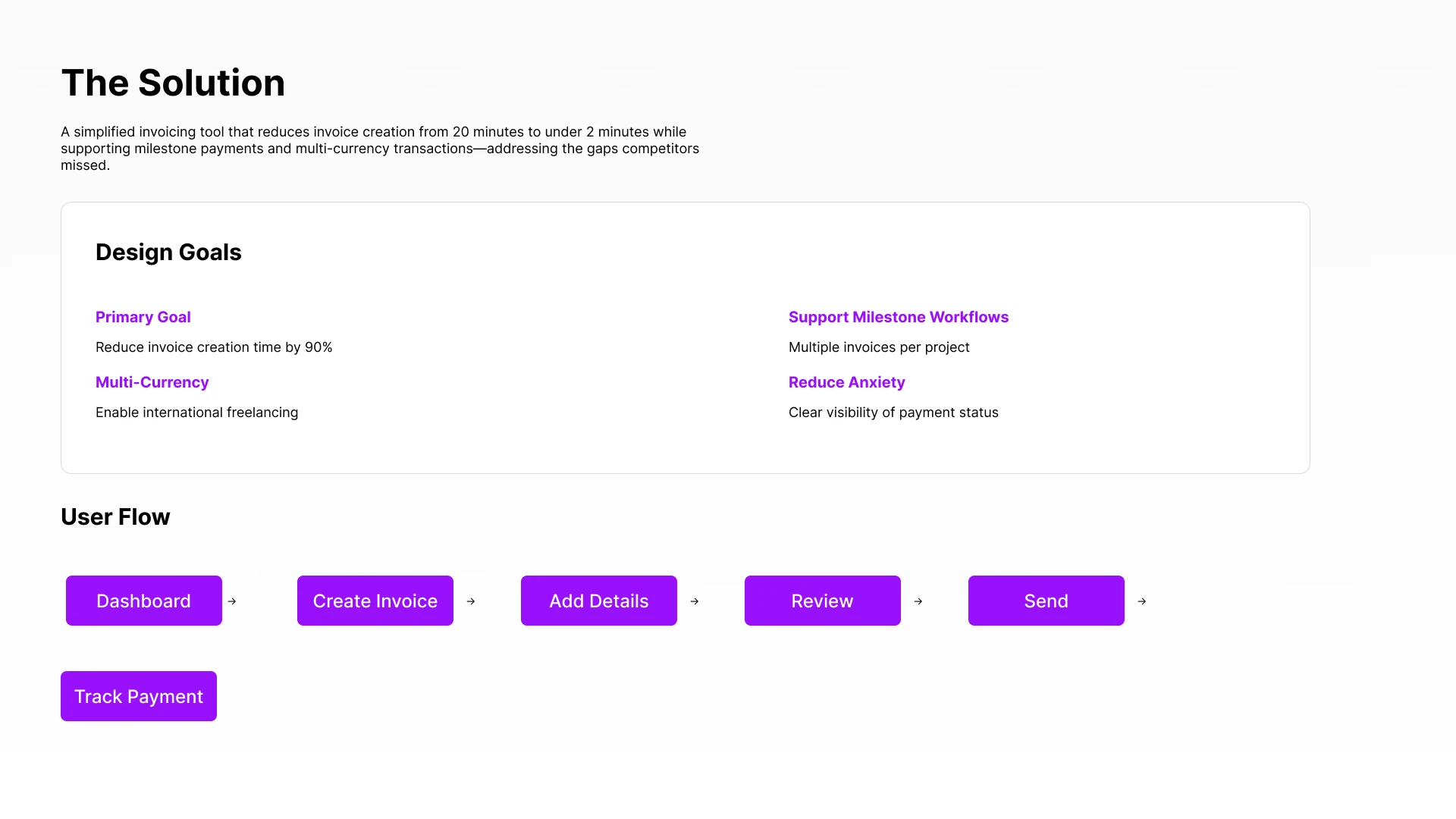
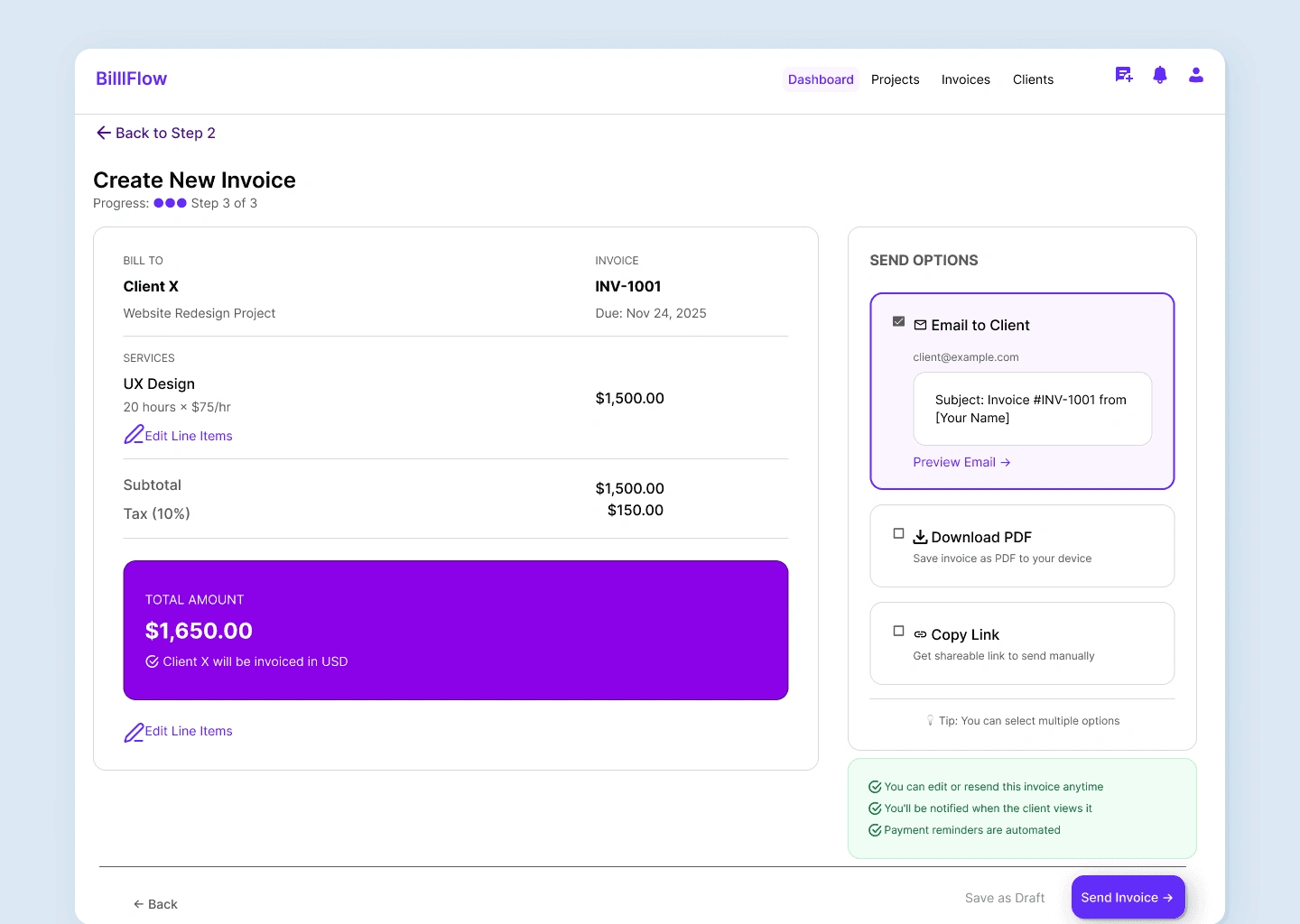
Why 3 steps instead of a single form? Breaking the flow into focused stages reduces decision fatigue and creates a sense of progress—critical for users who "hate admin work."
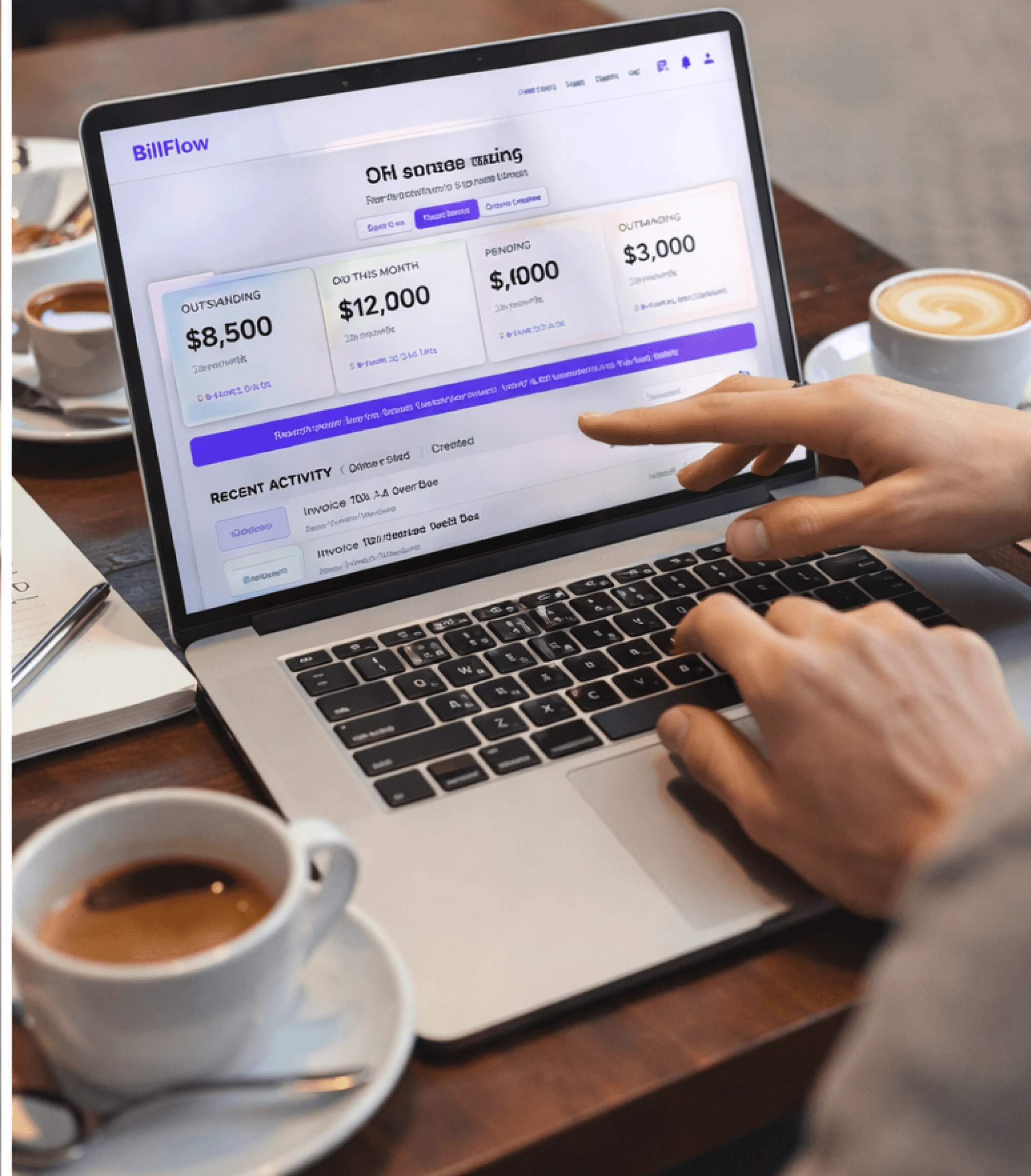
Real-time calculation eliminates errors
Line items calculate totals automatically as you type—no more manual math or spreadsheet errors. The running total stays visible, building confidence at every step.
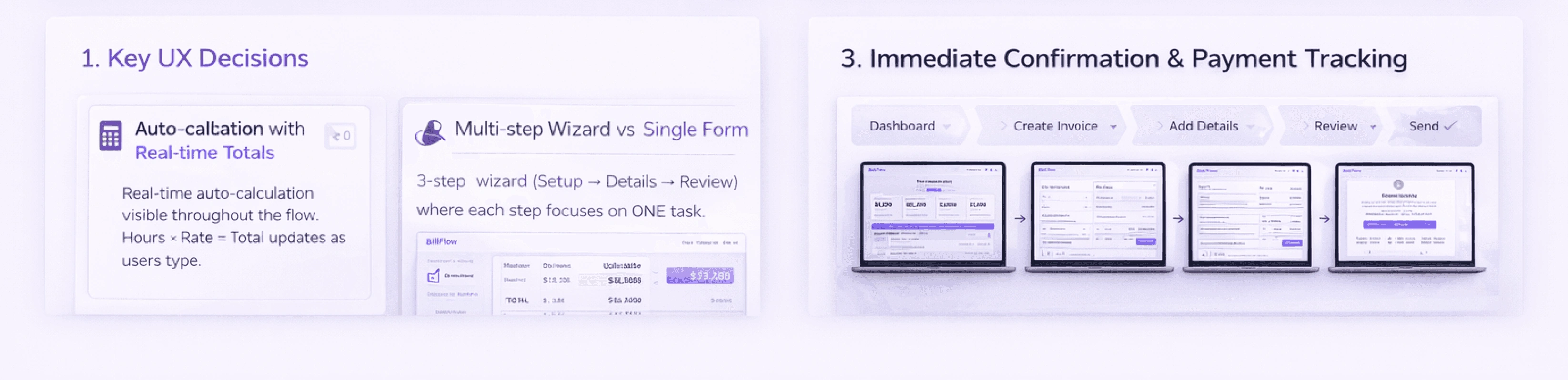
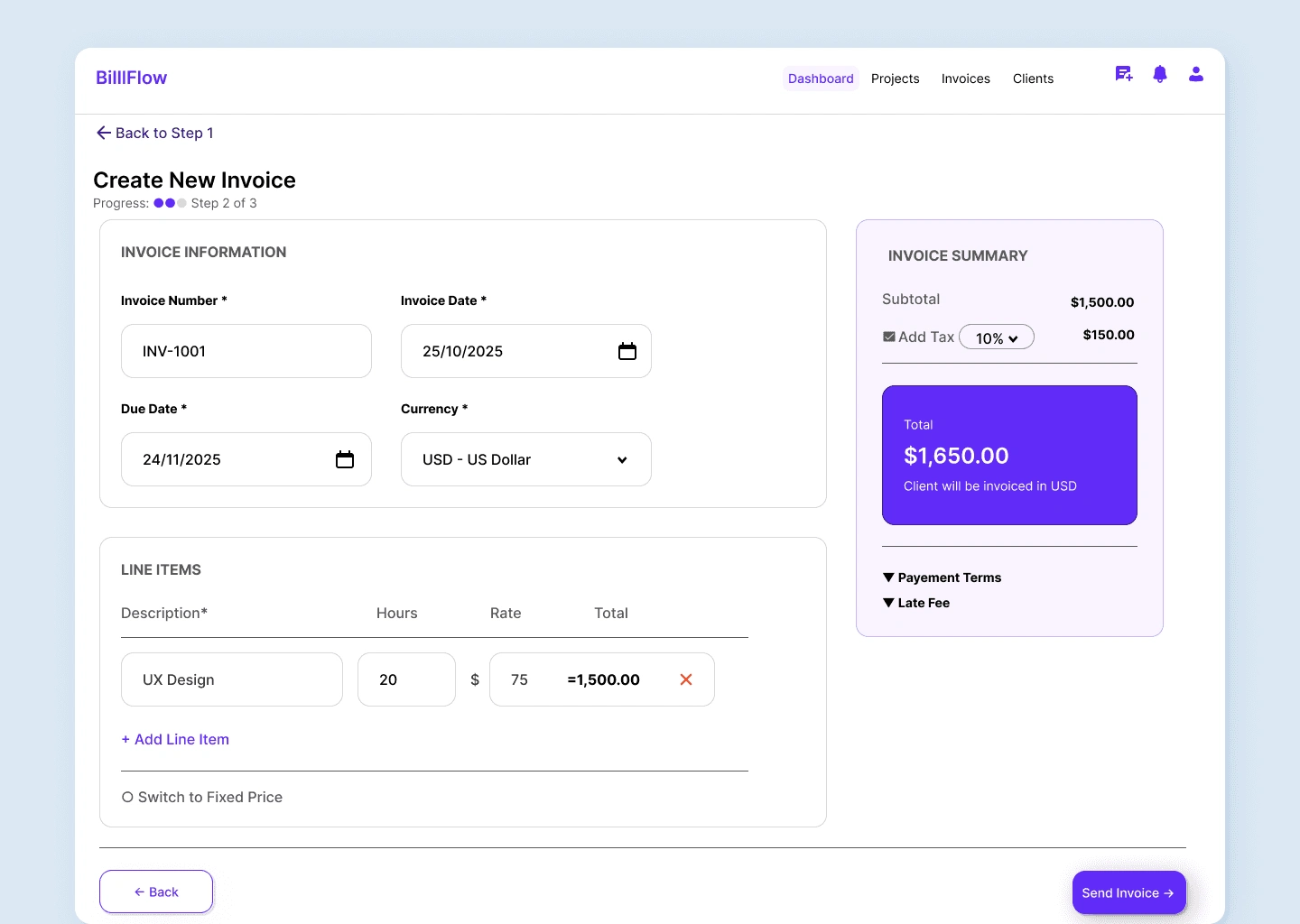
Auto-calculation
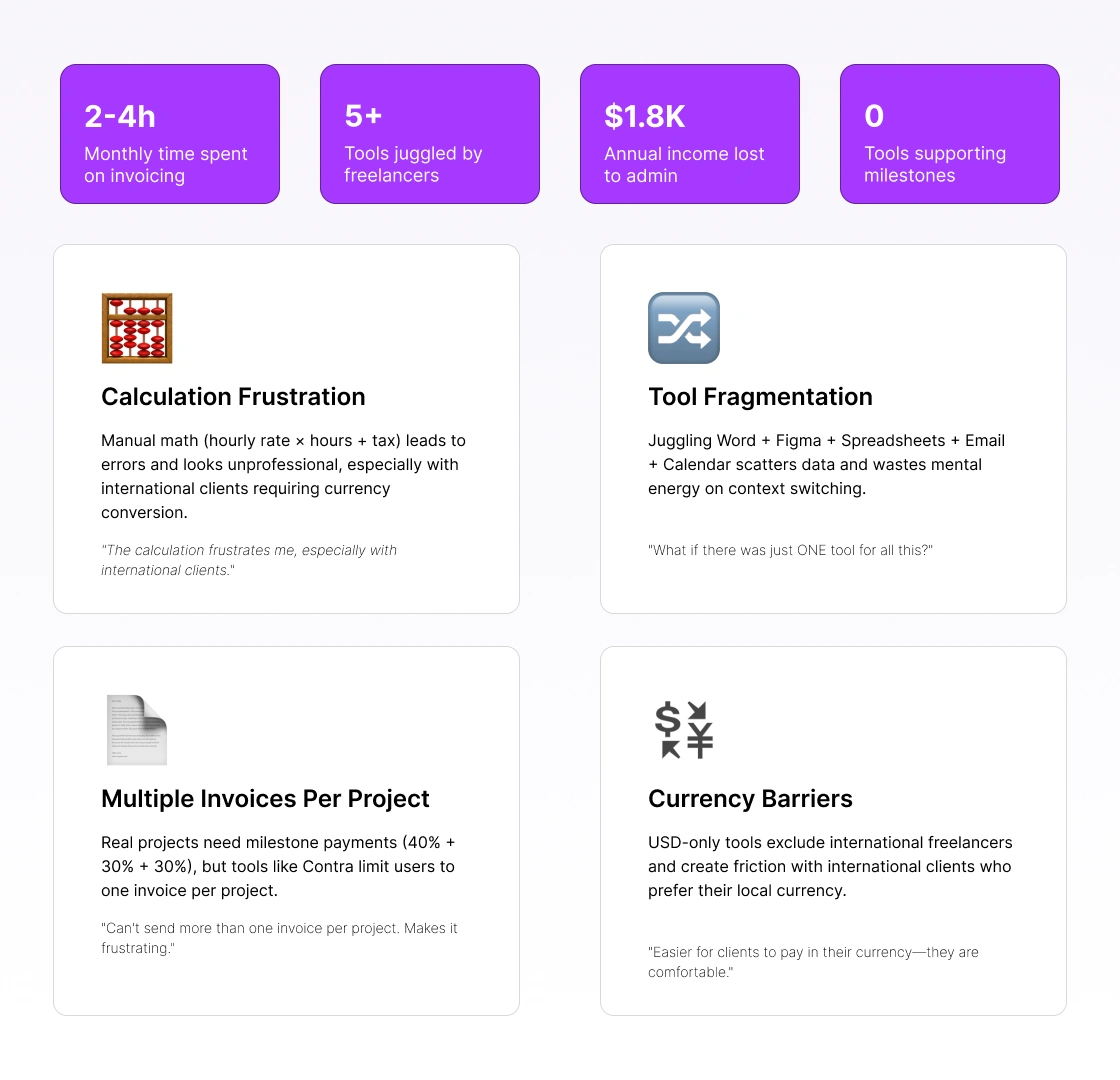
Hours × Rate updates instantly, eliminating the #1 pain=-point from research
Final confirmation screen prevents accidental changes and clearly shows what the client will receive. Multiple send options provide flexibility while maintaining control.
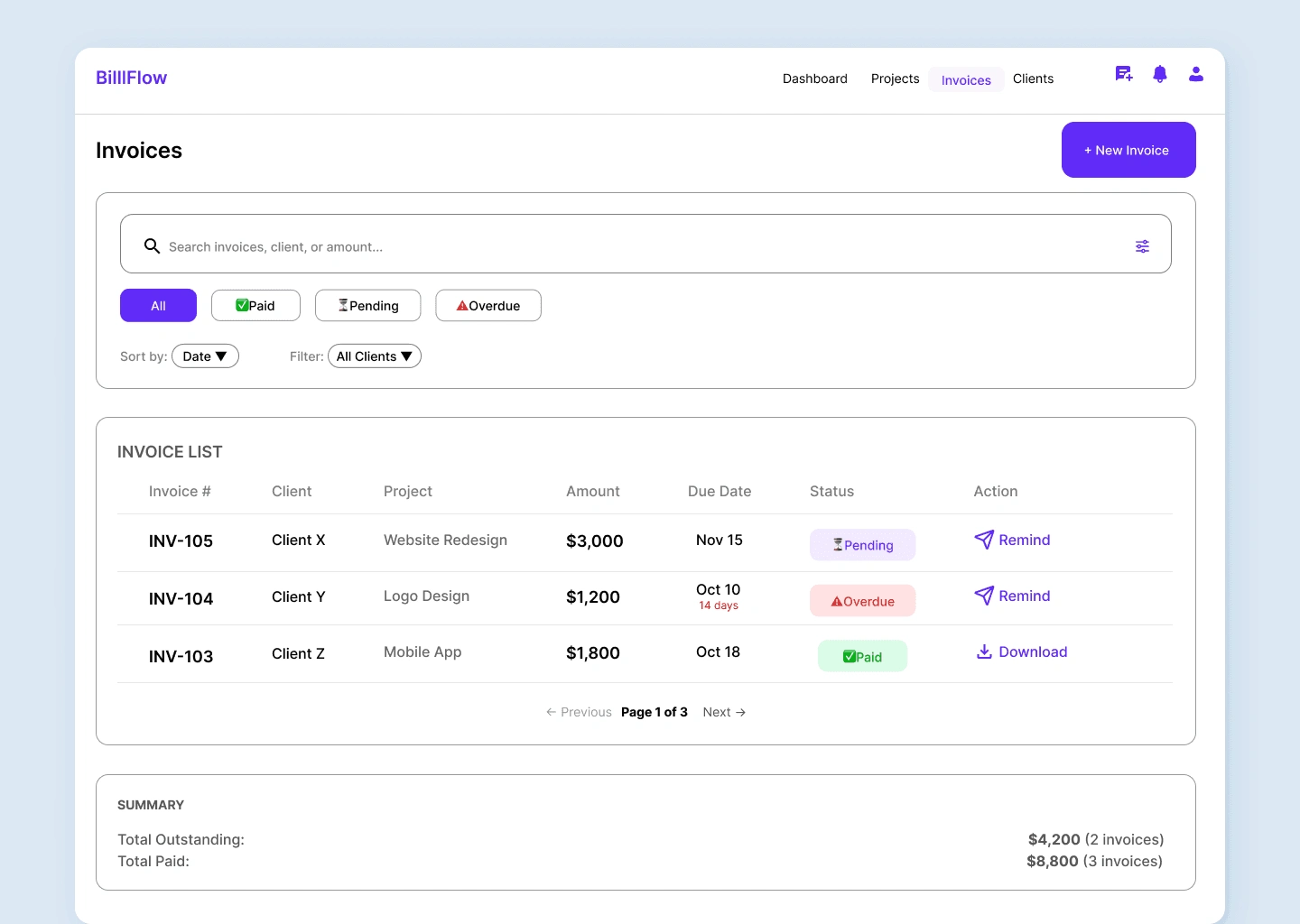
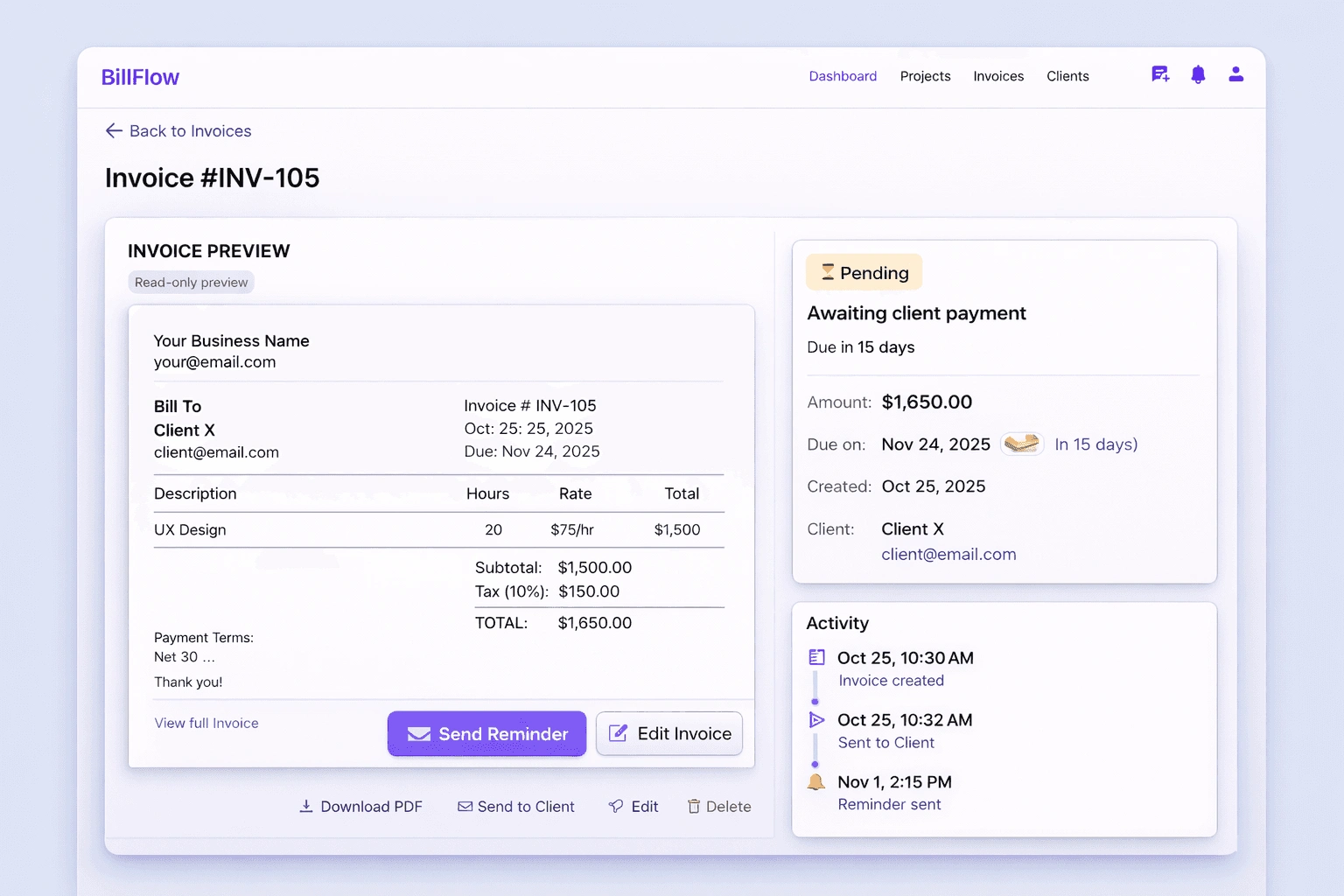
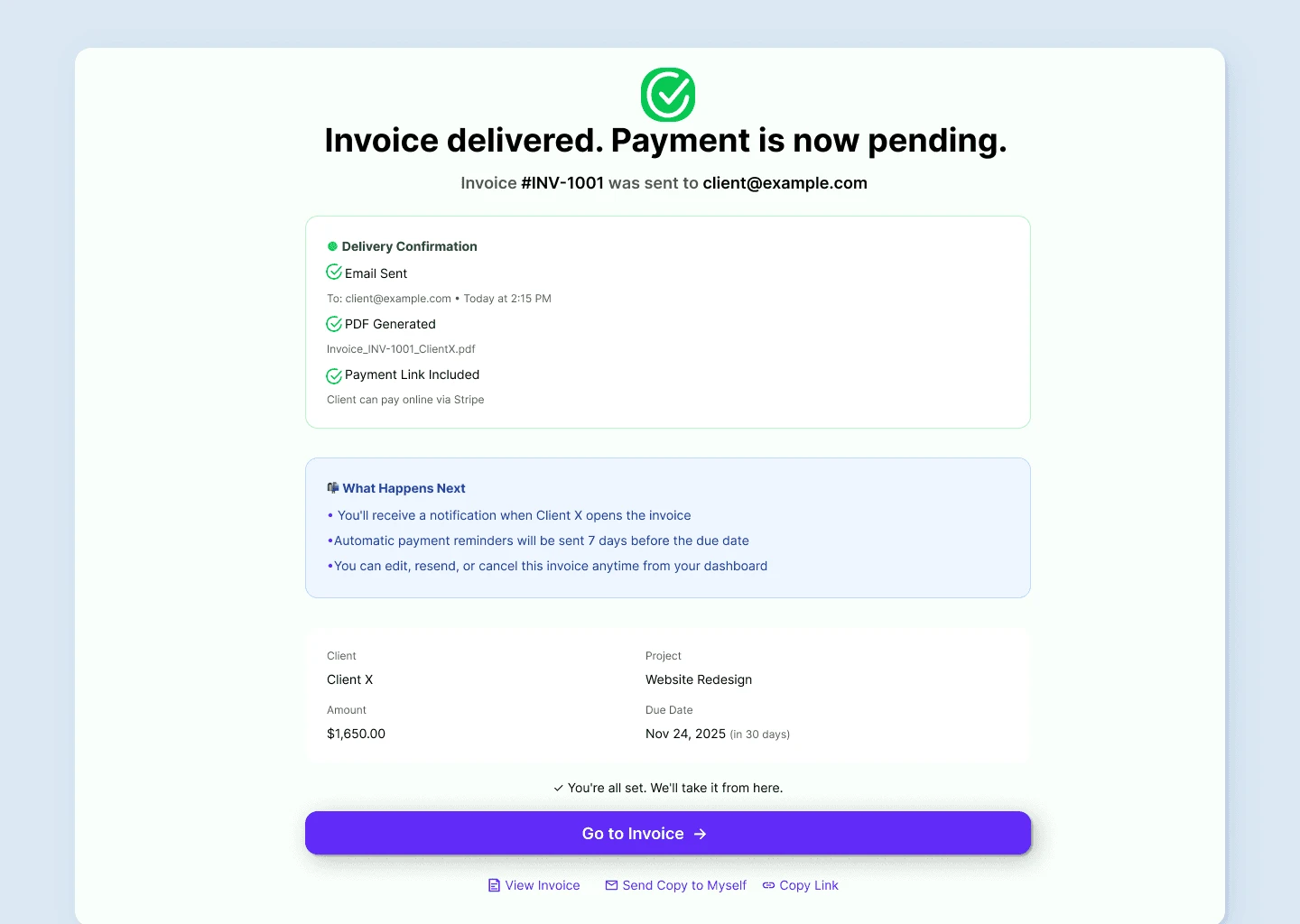
Junior designers often forget success states. This screen prevents user confusion and builds trust that the system worked correctly—essential for "anxious" admin tasks.
The Killer Feature
BillFlow supports unlimited invoices per project—solving the #1 pain point from
research that no competitor addresses.
• Invoice #1: Research Phase (40% — $4,000) • Paid
• Invoice #2: Wireframes (30% — $3,000) • Pending
• Invoice #3: Final Design (30% — $3,000) • Draft
Impact & Outcomes
Quantifying the value of ruthless simplicity
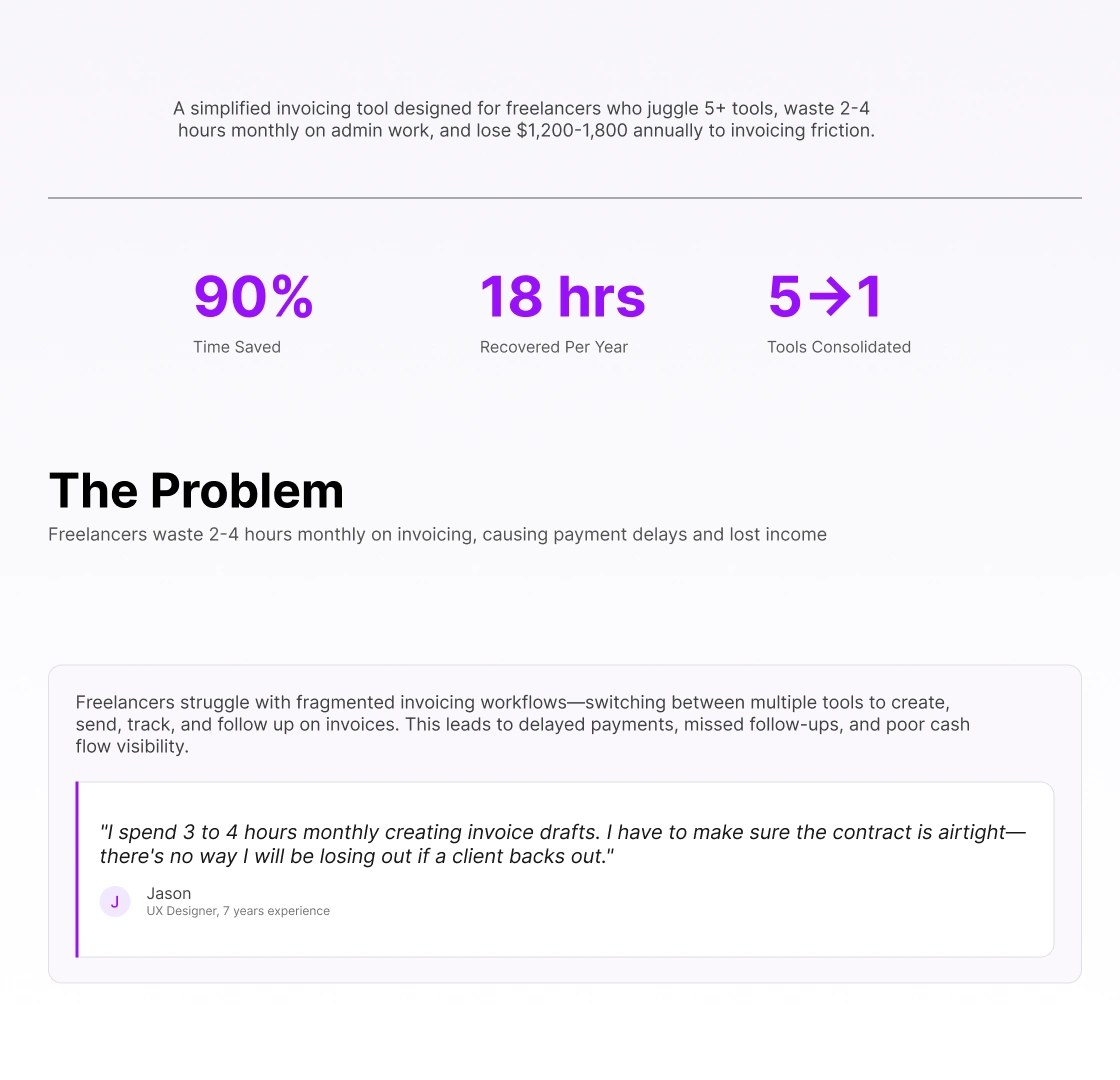
BillFlow is designed to reduce invoice creation time by 90% and
recover hundreds of hours annually for freelancers—while addressing
critical gaps competitors missed.
Reflection & Next Steps
What I learned and where this goes next
• User research uncovered a critical gap(multi-invoice per project) that competitors completely missed
• Focusing on ONE problem (invoicing) instead of trying to build full accounting software allowed for deeper solution
• Jason's detailed interview provided a gold mine of insights that shaped unique features (tone selector, currency needs, pricing model)
• Systematic approach to design decisions kept the project focused and prevented feature creep
→ What I'd Do Differently
• Conduct 10-15 interviews instead of 5 to validate pricing model assumptions and uncover more edge cases
• Test prototypes with users mid-design to catch usability issues earlier instead of waiting until final designs
• Create design system components first, then screens—would have saved significant iteration time and ensured consistency
• Design more empty states and error handling upfront rather than adding them late in the process
Roadmap to Launch
• Test reminder timing and confirmation copy effectiveness
• Build clickable prototype for developer handoff
• Contract templates for legal protection (addresses research pain point)
• Recurring invoices for monthly retainers
• Client portal for transparent payment view
• Analytics dashboard for income tracking and patterns
• Team collaboration features for small agencies
• API integrations (QuickBooks, Stripe, PayPal)
• Time tracking integration with auto-invoice generation
BillFlow transforms freelancer invoicing from a 20-minute burden into a 2-minute streamlined process.
Like this project
Posted Jan 26, 2026
Designed BillFlow to streamline freelance invoicing, reducing time by 90%.