Built with Framer
Framer Developer for Royal Woodwork's Artisan Website

Oluwatosin TheWebFramer

From Beautiful to Useful: Turning a Framer Template into a Conversion-Ready Artisan Website
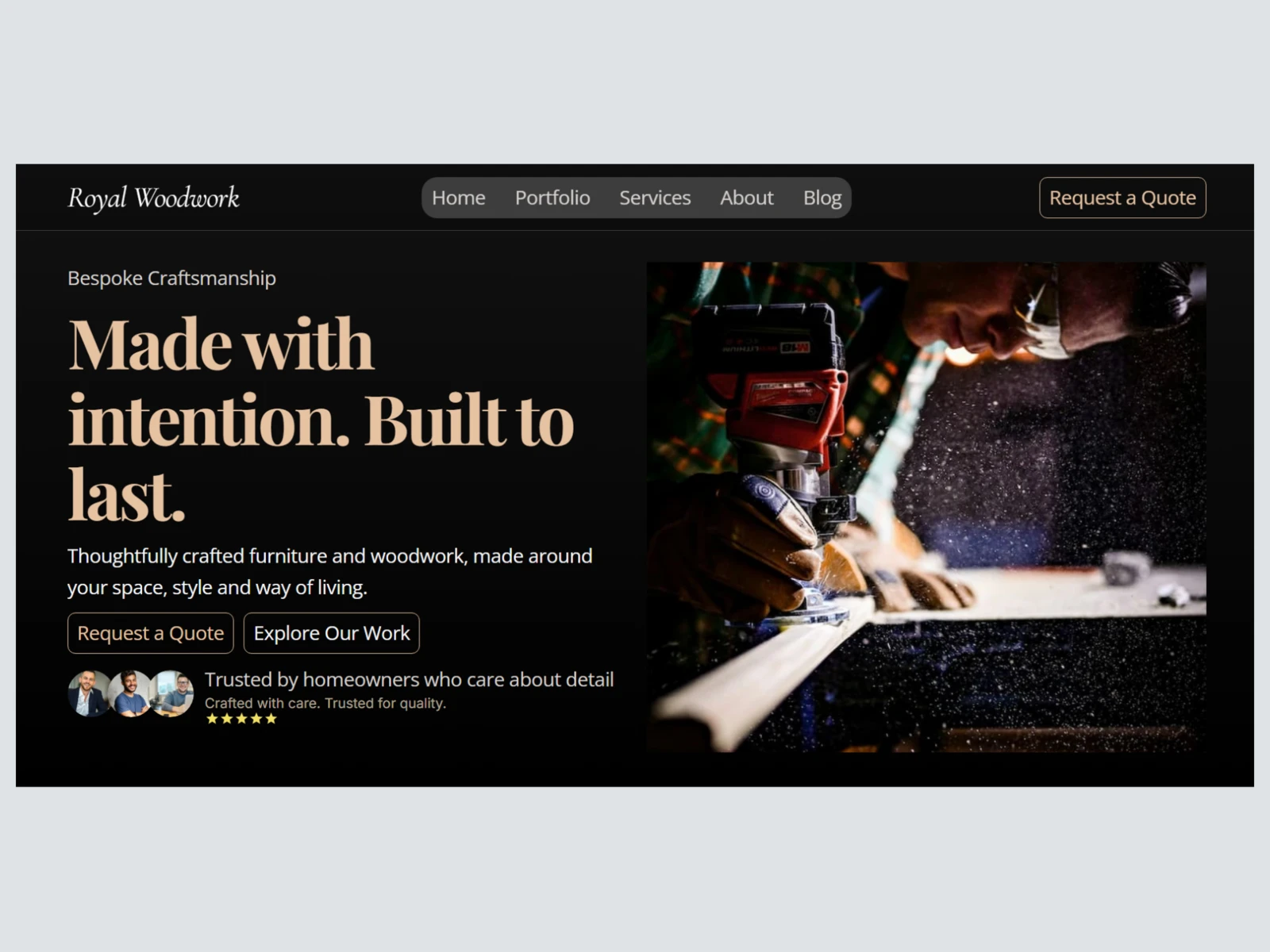
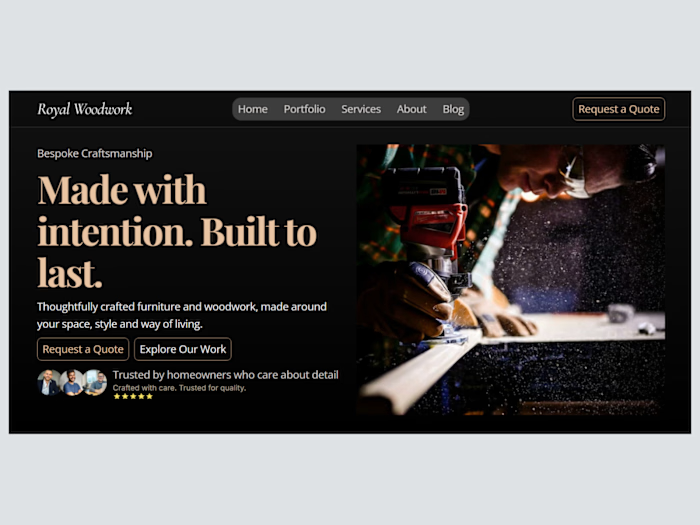
Royal Woodwork HomePage
Royal Woodwork Framer Website & CMS Case Study
Role: Web Designer / Framer Developer
Platform: Framer
Focus: UX, CMS Architecture, Content Strategy, Conversion, Responsive Design
Industry: Craftsmanship / Custom Woodwork / Artisan Businesses
A beautiful website isn't enough.
A premium artisan website has one job beyond looking good:
Make the quality of the work impossible to miss and make it easy for the right client to take the next step.
That was the challenge behind Royal Woodwork.
What started as a visually polished carpentry website became a deeper exercise in information architecture, CMS design, content strategy and conversion thinking.
The final goal wasn't simply to create a convincing website for a fictional woodworking company.
It was to build a complete digital system for an artisan business, one that could showcase exceptional work, explain the process, establish trust, generate enquiries and remain flexible enough to be adapted to other creative trades.
The Challenge
The original direction had the visual foundation of a premium artisan brand, but visual quality alone wasn't enough.
The website needed to answer a series of questions quickly:
What does this business make?
Is the quality of the work worth my attention?
What services can I hire them for?
How does the process work?
Can they handle my specific project?
Why should I trust them?
What happens if I want to start a project?
There was also a second challenge.
Although Royal Woodwork uses carpentry as its showcase, the underlying template needed to work for a much broader category of businesses:
furniture makers
sculptors
ceramicists
metalworkers
leather artisans
studios
independent craftspeople
other creative service businesses
The solution couldn't be a generic website that happened to contain woodwork.
It needed to be a specific, believable carpentry brand built on a flexible system.
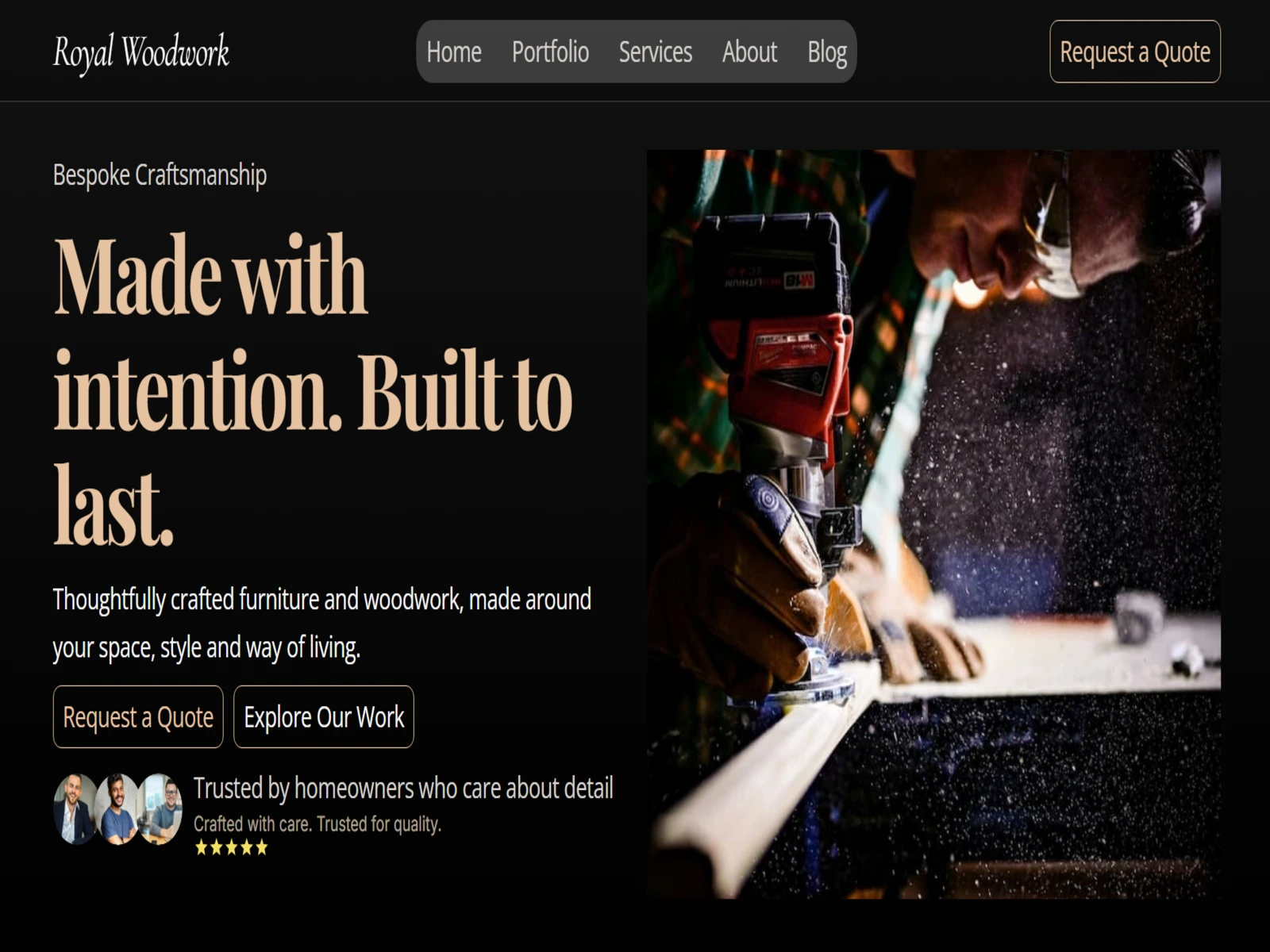
Royal Woodwork Homepage
The Objective
The project had five clear objectives.
01 — Make the work the hero
The portfolio needed to become one of the strongest conversion assets on the site.
Instead of asking visitors to read their way into understanding the business, the site should let the quality of the work establish credibility immediately.
02 — Turn the CMS into a real content system
The CMS shouldn't simply store titles and images.
It needed to support:
projects
services
testimonials
company stories
categories
blog content
SEO information
enquiry information
without becoming difficult for a future template buyer to manage.
03 — Make projects feel like case studies
A project shouldn't end at:
image + title.
The project pages needed to communicate the thinking, craftsmanship and decisions behind the work.
That makes the portfolio more persuasive and gives the artisan an opportunity to demonstrate expertise.
04 — Build a clearer path to enquiry
The journey needed to become:
Discover → Explore → Understand → Trust → Enquire
rather than simply:
Browse → Contact
05 — Build for adaptation
The carpentry content should feel authentic.
The architecture should remain flexible.
That distinction became one of the most important decisions in the project.
The Strategic Shift
The biggest change wasn't visual.
It was deciding what the website was actually supposed to do.
Instead of treating each section as an isolated design component, I started treating the website as a client journey.
The new hierarchy became:
Hero
Introduce the positioning and immediately offer a path into the work.
↓
Featured Work
Show the quality.
↓
Services
Explain what can be commissioned.
↓
Brand / Craftsmanship
Explain why the work is different.
↓
Process
Remove uncertainty around working together.
↓
Testimonials
Add social proof.
↓
FAQ
Remove remaining objections.
↓
Enquiry
Give the visitor a clear next step.
This created a much more intentional relationship between sections.
Every section now has a job.
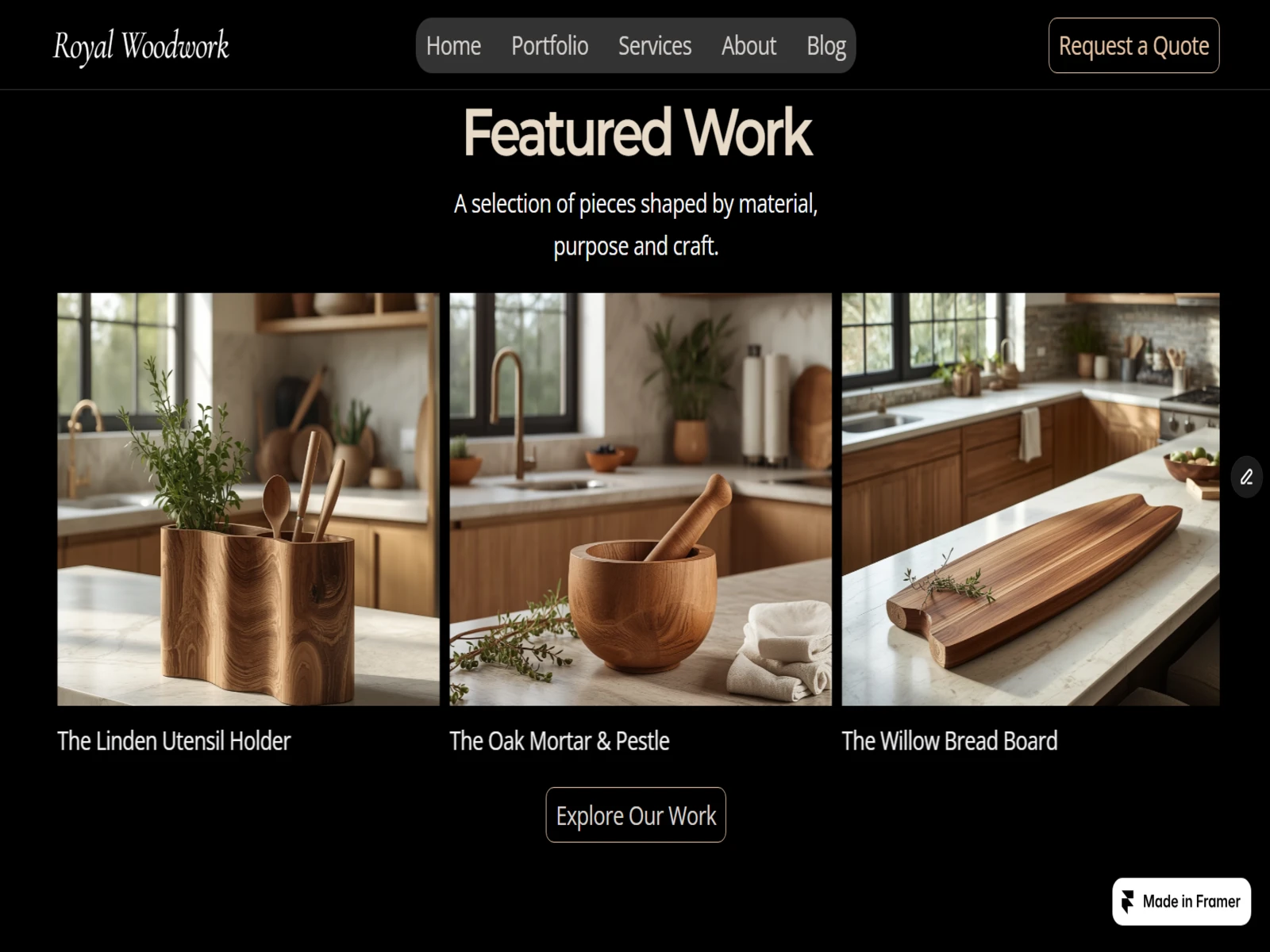
Royal Woodwork Featured Works Section
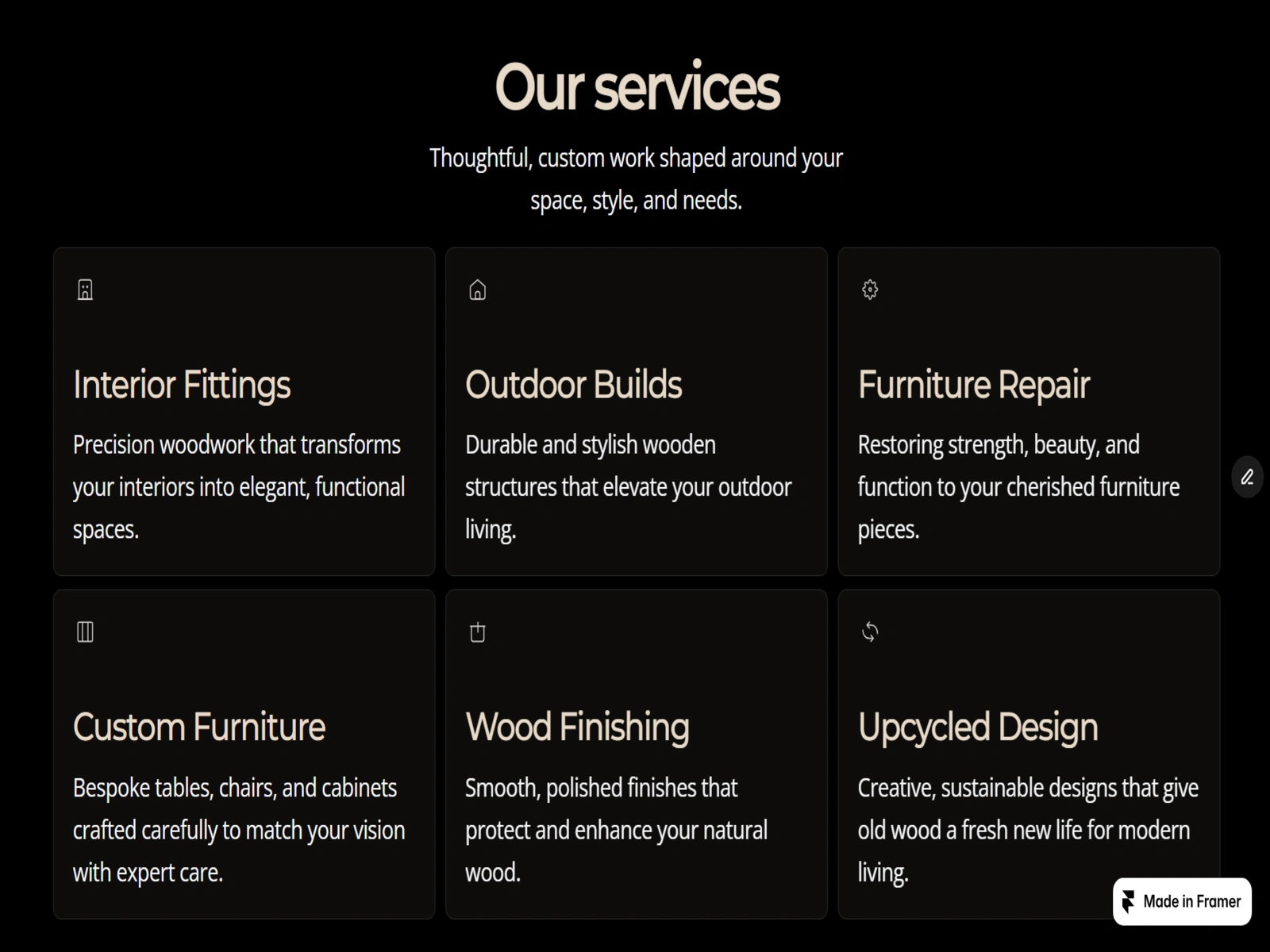
Royal Woodwork Our Service Section
01 — Making the Portfolio More Than a Gallery
One of the most important decisions was to make the portfolio central to the experience.
For an artisan business, the work is often the strongest proof available.
So instead of treating projects as decorative cards, the CMS was structured to support richer project presentations.
Project information was expanded around things such as:
design philosophy
craftsmanship
primary and secondary materials
finish
color palette
dimensions
estimated build time
suitable spaces
features
care instructions
construction style
wood grain
The goal wasn't to expose every piece of information at once.
The goal was to give the project page enough substance to tell a story.
A visitor can see:
What was made
→ Why it was designed that way
→ How it was made
→ What it was made from
→ What makes it distinctive
That transforms the portfolio from a gallery into a sales and credibility tool.
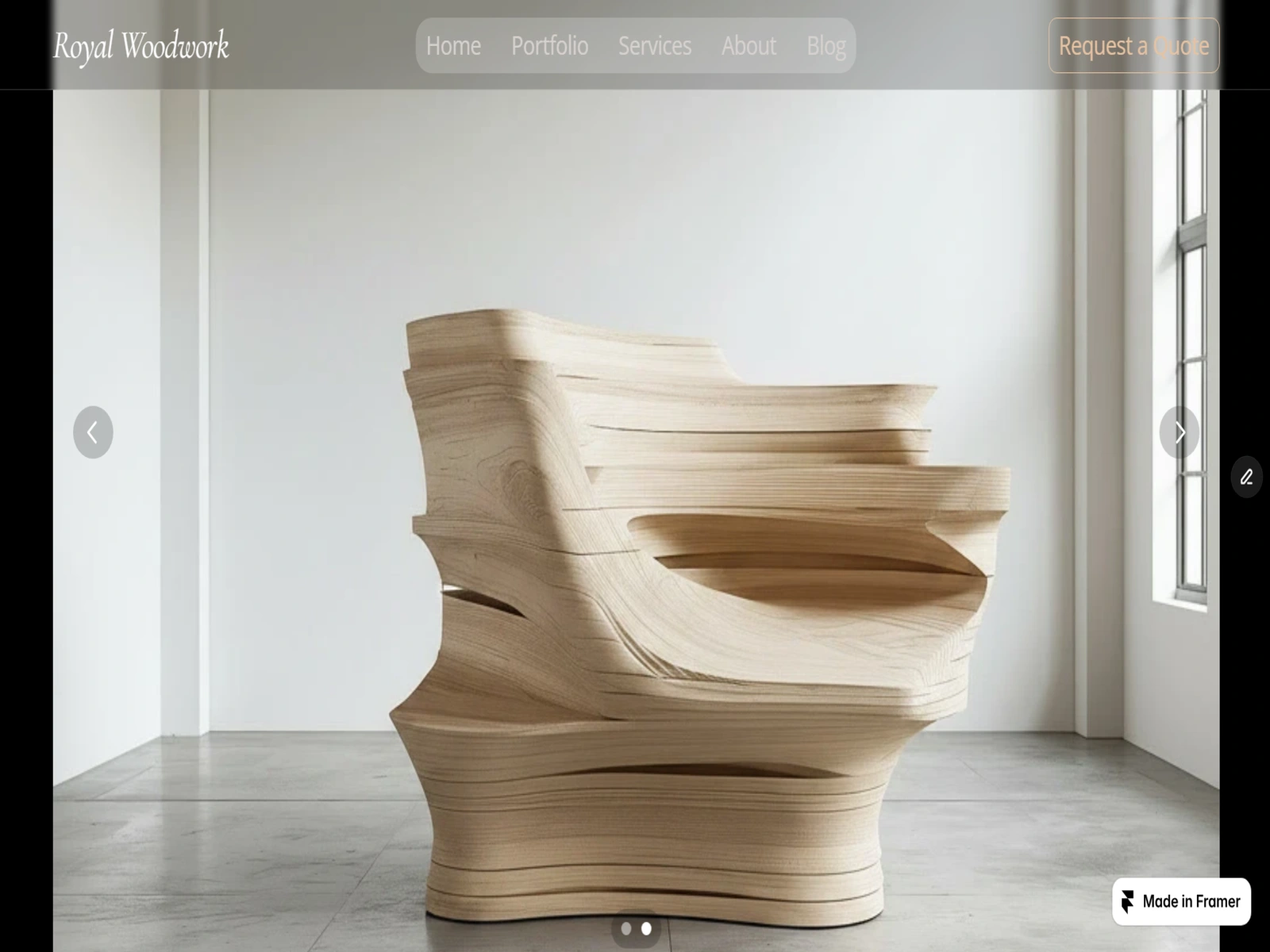
Royal Woodwork Sand Dunes Project Image
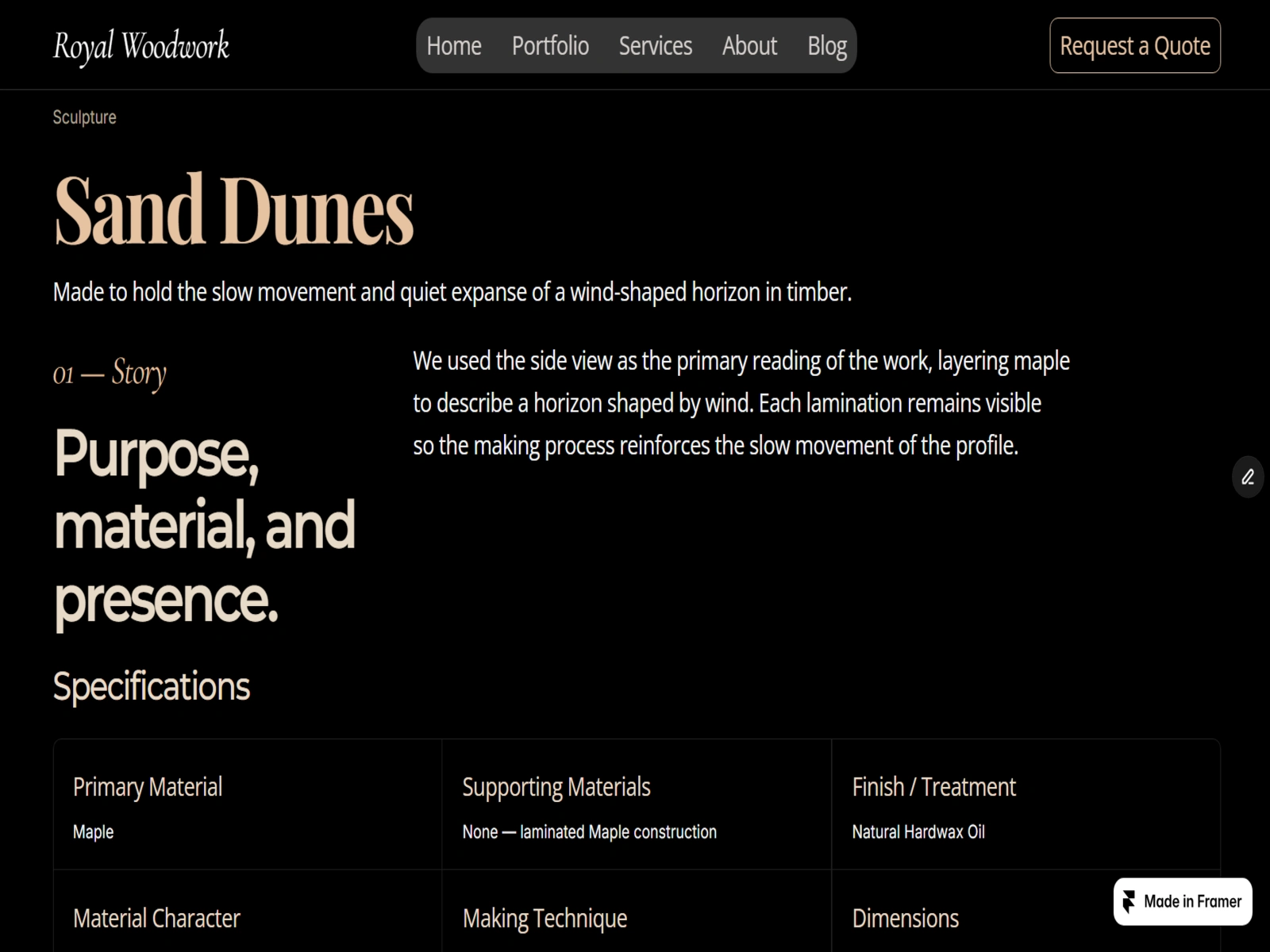
Royal Woodwork Sand Dunes Project Information
02 — Designing a CMS That Doesn't Fight the Designer
A common CMS mistake is assuming that more fields automatically mean a better system.
They don't.
More fields can quickly become information overload.
So the CMS was repeatedly simplified.
Fields were renamed based on what a template buyer would understand without needing documentation.
For example, vague labels were replaced with clearer language such as:
Review Text → Testimonial
Name → Client Name
Review App → Review Source
Round Image → Client Image
The same principle was applied to FAQs, contact forms and other collections.
The objective was simple:
A person opening the CMS should understand what each field is for in one glance.
That makes the template easier to use, easier to customize and less intimidating.
03 — Company Pages Without CMS Bloat
The site contains six deeper brand pages:
Our Story
Our Craft
Design Philosophy
Workshop
Materials & Finishes
Awards & Recognition
Rather than creating a separate CMS structure for every page, they share one Company Pages collection.
The structure stays simple:
Page Title
Hero Introduction
Hero Image
Page Content
Supporting Image
The important part is that the content itself changes according to the purpose of the page.
The Workshop page talks about the working environment.
The Materials & Finishes page explains material selection and finishing.
The Design Philosophy page explains the thinking behind the work.
The Awards & Recognition page communicates credibility.
The architecture stays consistent.
The storytelling changes.
That's a much more scalable approach.
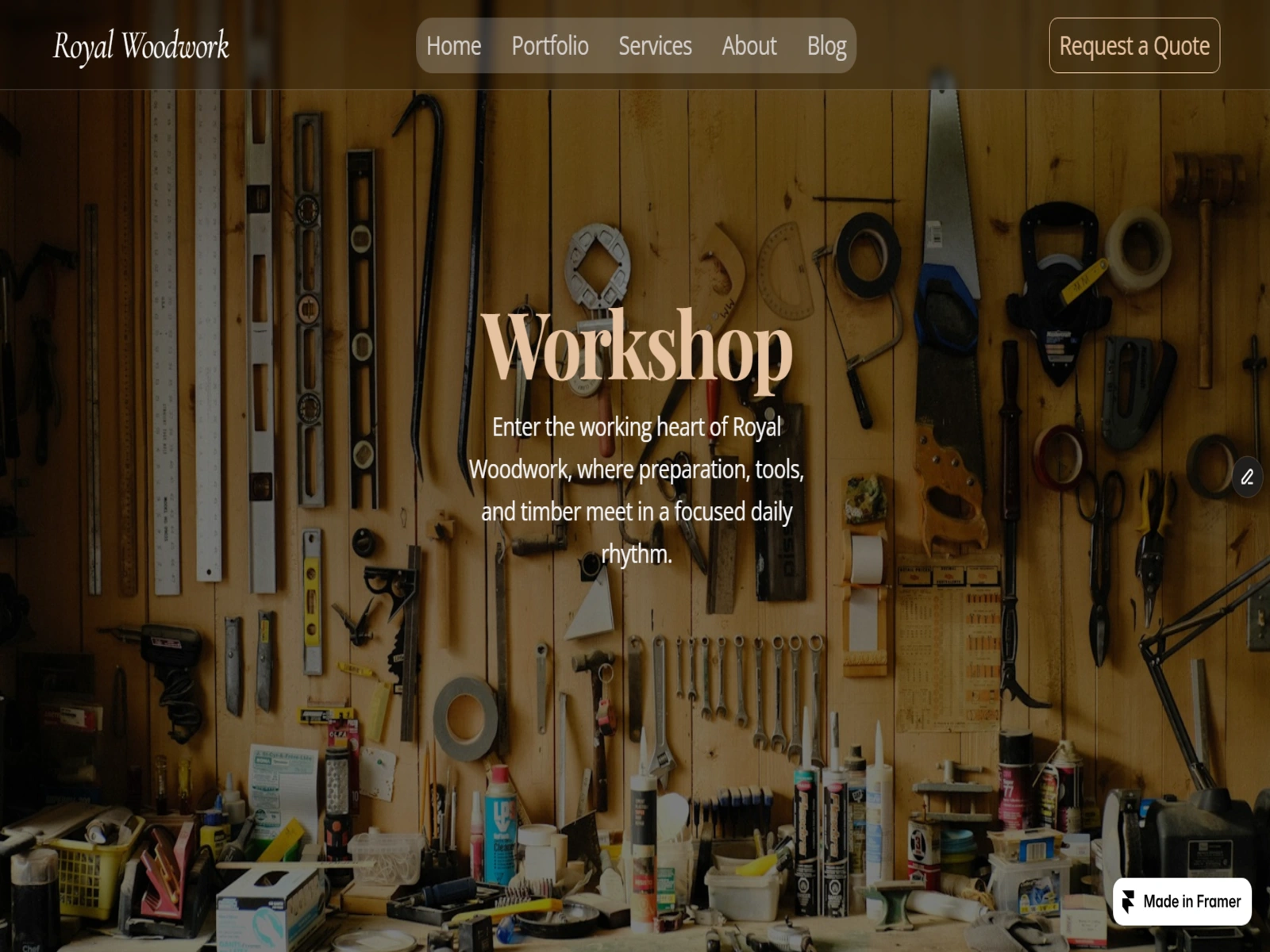
Royal Woodwork Workshop Page Hero
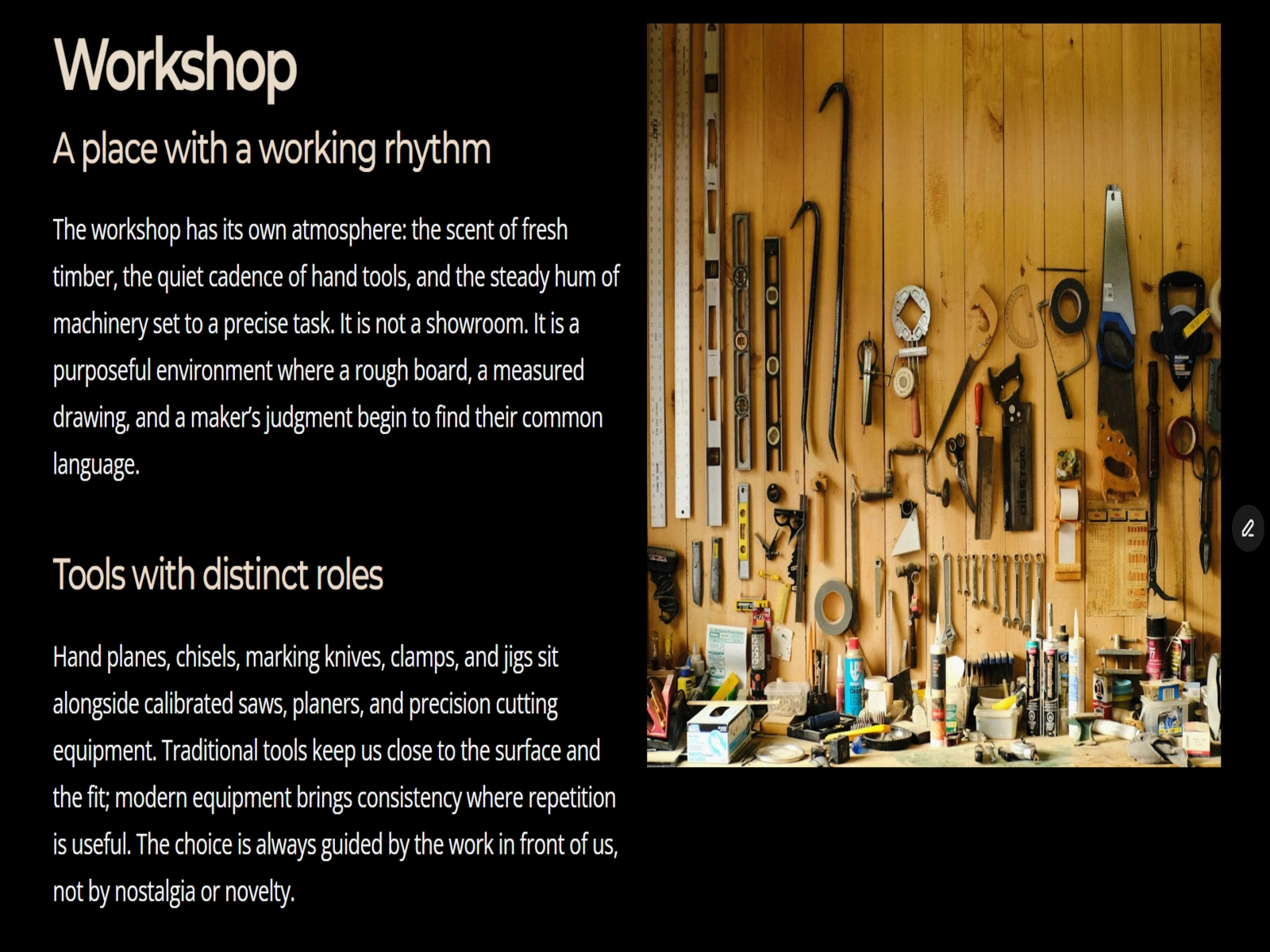
Royal Woodwork Workshop Page Information
04 — Turning the Process Into a Confidence Builder
Custom work has an inherent problem:
Clients don't always know what happens after they make contact.
The process section was therefore designed to reduce that uncertainty.
The project journey is communicated through six stages:
01 — First Conversation
Understand the project, requirements and intended use.
02 — Scope & Direction
Establish the appropriate direction and estimate.
03 — Material Choices
Confirm materials, finishes and relevant choices.
04 — Making & Updates
Craft the piece while keeping the client informed.
05 — Delivery or Installation
Prepare the finished work for its final destination.
06 — Care & Follow Up
Provide guidance for maintaining the finished piece.
The section isn't trying to overwhelm the visitor with operational detail.
It's doing something more valuable:
making the process feel understandable.
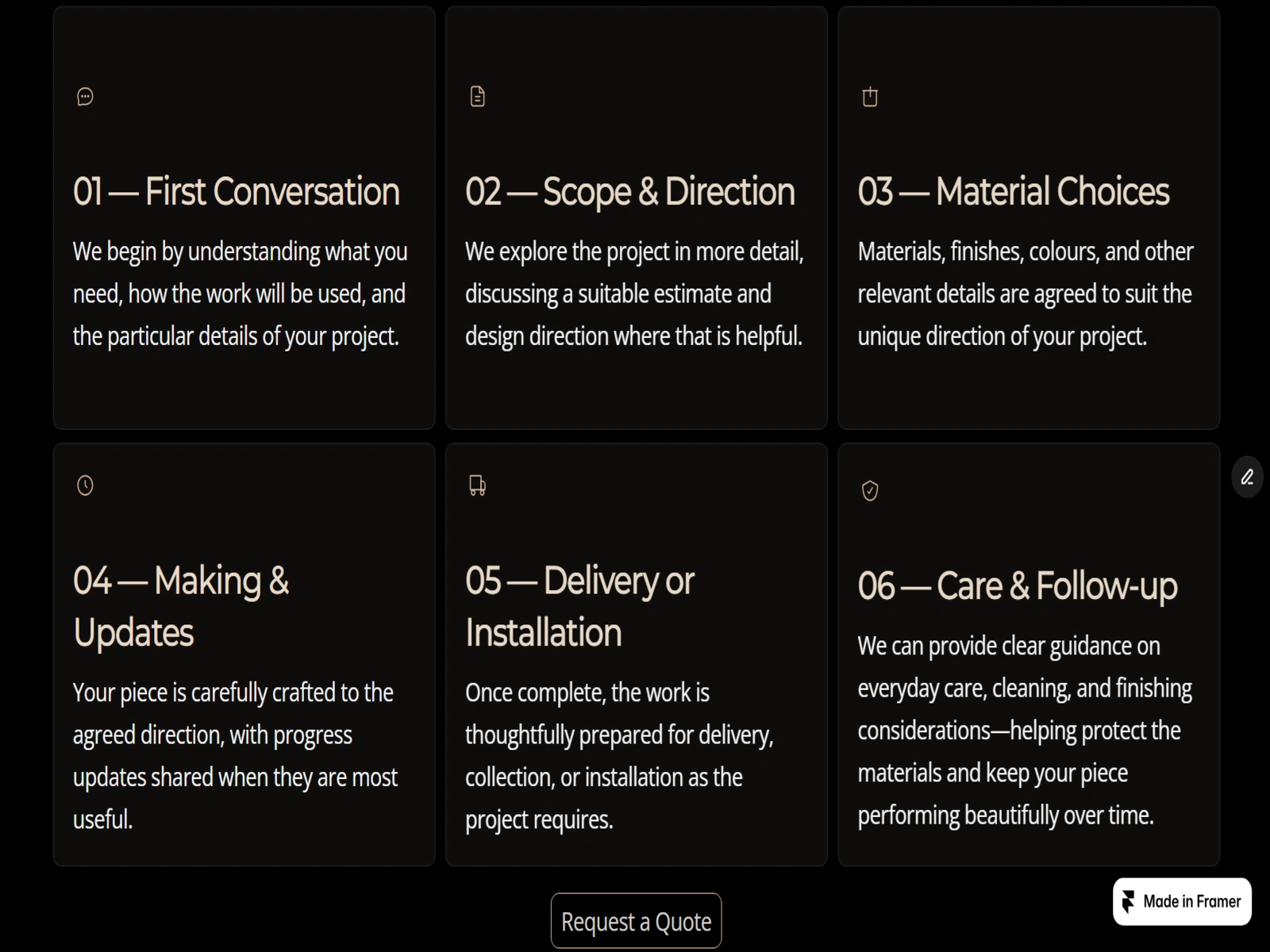
Royal Woodwork 6 Step Process
05 — Removing Friction From the Enquiry
The contact form was treated as part of the conversion experience rather than an afterthought.
Instead of asking only for:
Name + Email + Message
the form captures the information that actually helps an artisan understand a potential project:
Name
Email Address
Phone Number
Service
Project Description
Project Location
Approximate Budget
Desired Timeline
Preferred Contact Method
Importantly, several of these remain optional.
That creates a balance:
Enough information to qualify an enquiry.
Without:
Making the first interaction feel like an application form.
The result is a more useful starting point for a custom project.
06 — Making the Content Feel Specific Without Making the System Rigid
This was one of the most important principles of the entire project.
Royal Woodwork is intentionally written as a carpentry business.
The services talk about furniture, wood finishing, restoration and interior fittings.
The projects showcase woodwork.
The company pages talk about the workshop and materials.
That's deliberate.
A template shouldn't feel generic just because it is reusable.
Instead, the content demonstrates one strong use case, while the CMS architecture allows the buyer to replace that content with their own business.
The same architecture can support:
A furniture studio
or
A sculptor
or
A ceramicist
or
A metal artisan
without requiring the template to be redesigned from scratch.
07 — Building Trust Without Fake Authority
Another important part of the refinement was separating credible positioning from fabricated-looking credentials.
A template can demonstrate how a business communicates trust without pretending that the fictional business has:
thousands of verified reviews
decades of history
certifications
awards it never received
real-world credentials that can't be verified
Instead, credibility comes from the combination of:
Quality of work
Clear process
Specific expertise
Client testimonials
Detailed project information
Professional enquiry experience
This is much more useful to a future template buyer because they can replace the sample content with their own genuine proof.
08 — Small Details That Make the System Feel Professional
The project also involved a large number of seemingly small decisions:
clearer CMS field names
concise FAQ answers
better contact-field labels
consistent CTA language
page-specific Company Page content
clearer testimonial metadata
more intentional project information
responsive behavior checks
SEO considerations
image accessibility
mobile navigation
portfolio filtering and CMS relationships
None of these decisions alone transforms a website.
Together, they change how the website feels to use and manage.
The Result
The purpose of the project was never simply to create another beautiful Framer template.
The purpose was to create an artisan website system where:
The work attracts attention.
The content builds understanding.
The process reduces uncertainty.
The proof builds trust.
The enquiry system creates a clear next step.
And the CMS makes the entire system manageable.
The result is a premium carpentry showcase that is also structurally prepared for a much wider class of artisan businesses.
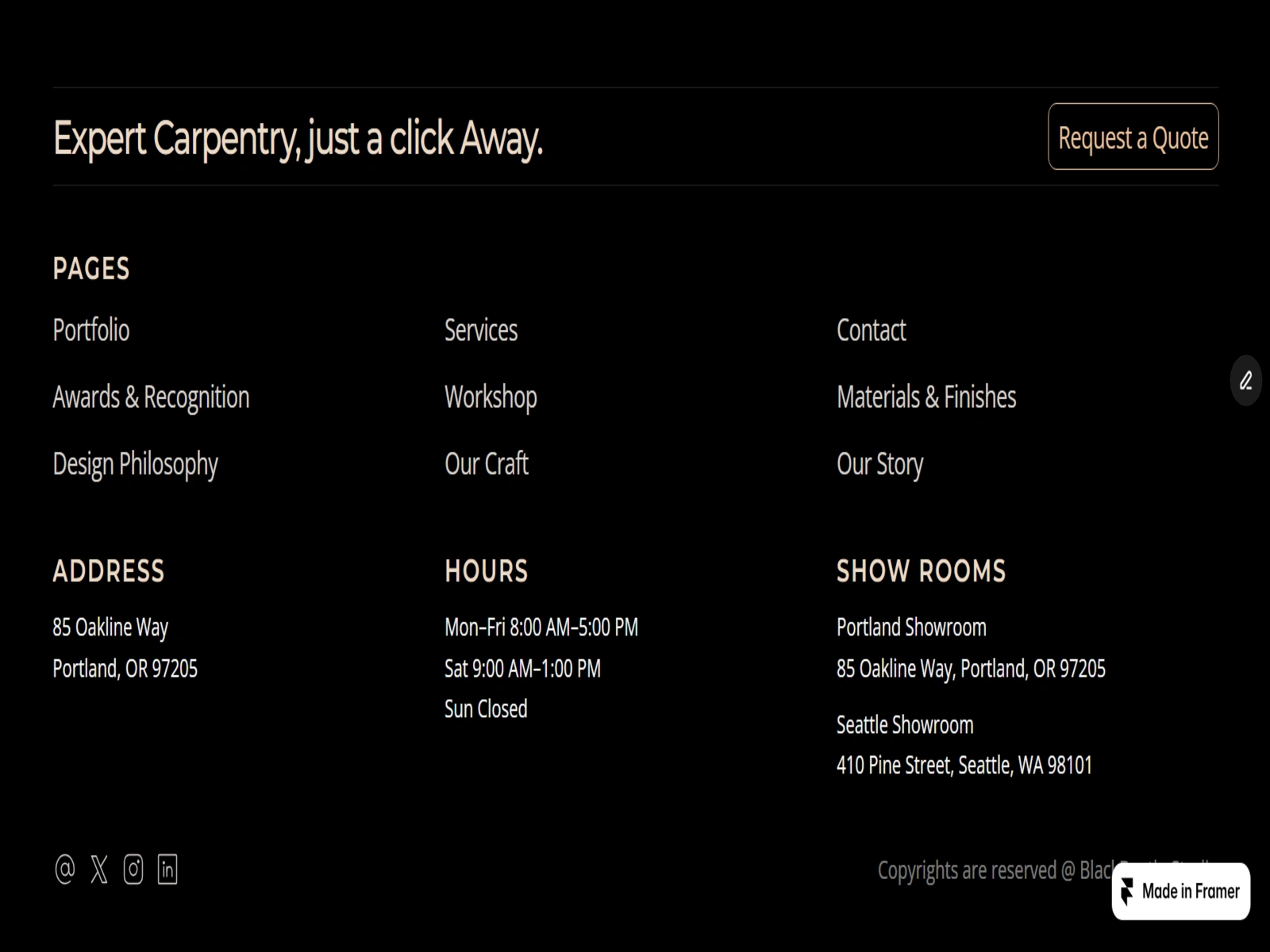
Royal Woodwork Footer
What I Was Really Designing
The visible result is a woodworking website.
But the actual design problem was bigger.
I was designing a system that helps a craft business answer the questions a potential client is already asking:
Can you make what I need?
Do you understand the quality I'm looking for?
Can I trust you with the project?
What will working with you be like?
How do I get started?
That is what turned Royal Woodwork from a collection of polished pages into a more complete client acquisition experience.
Purpose Achieved
The project achieved its core purpose by bringing together three things that are often treated separately:
Brand
A distinctive, premium carpentry identity.
Experience
A clear journey from first impression to enquiry.
System
A flexible CMS architecture that allows the website to evolve without rebuilding its foundation.
The result isn't simply a site that looks like a premium artisan business.
It is a system designed to behave like one.
The Bigger Lesson
The strongest artisan websites don't sell craftsmanship by saying:
“We make high-quality things.”
They demonstrate it.
Through the work.
Through the details.
Through the process.
Through the information they choose to reveal.
And through how confidently they guide someone from:
“I like this.”
to:
“I want to work with them.”
That's the experience I wanted Royal Woodwork to create.
View the live site:
Get Royal Woodwork on the Framer Marketplace: https://www.framer.com/community/marketplace/templates/royal-woodwork/
Like this project
Posted Aug 12, 2026
Developed a conversion-focused artisan website using Framer for Royal Woodwork, adaptable for varied craft businesses.
Likes
0
Views
9