Social Laboratory on Shareability: Enhancing Local Collaboration

Alejandro Arce


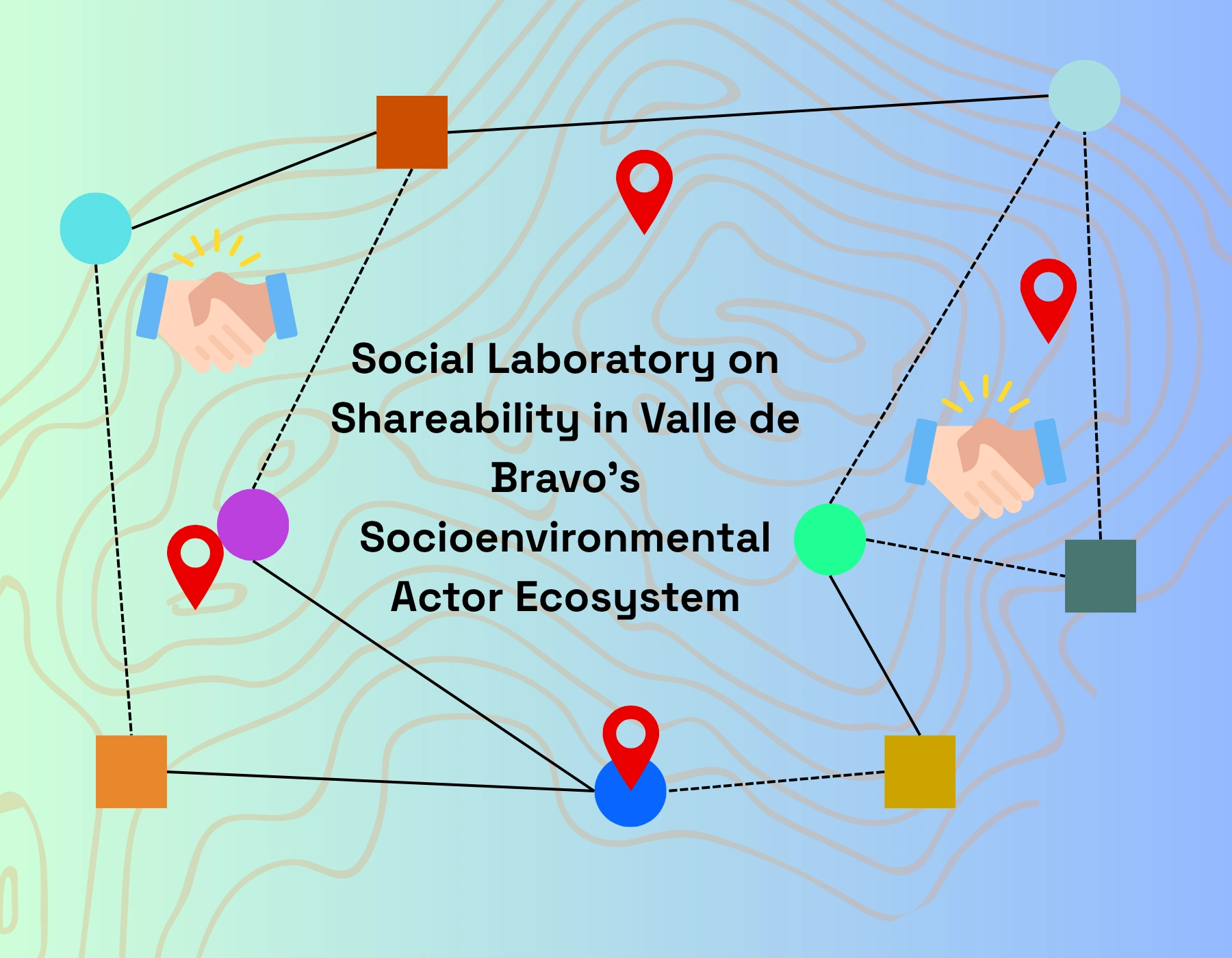
Social Laboratory on Shareability
Building a collaboration-driven ecosystem among local socio-environmental organizations in Valle de Bravo, México.
Diagrams used in this case study are re-made given that the actual documents can't be shared without the current project owner's permission.
Overview
The Social Laboratory on Shareability is a collaborative initiative designed to strengthen cooperation among local socio-environmental organizations in Valle de Bravo. The project aimed to map relationships, identify collective challenges, and create mechanisms for knowledge and resource exchange. Through a systems-thinking approach, the Lab facilitated different processes where the organizations could experiment with ways of enhancing their own individual efforts and impacts on a macro scale, both in environmental regeneration for the water basin, as well as social cohesion for local communities they work with.
Context & Challenge
Valle de Bravo, with its pristine yet humanized forest ecosystems and vibrant water basin, is home to a plethora of NGOs and grassroots initiatives dedicated to conservation, social cohesion, regeneration and sustainability. However, despite shared goals, many operated in isolation which means duplicated efforts, competing for funding, and lacking spaces for coordination. The challenge was designing a collaborative system that builds trust, reveals interdependencies, and enables organizations in sharing resources and strategies effectively.
Objectives
Map and visualize the local socio-ecosystem, including NGOs, government agencies, private actors, and ecological services dependencies.
Identify leverage points for collaboration and joint action.
Facilitate co-creation processes that build trust and collective capacity.
Design a replicable framework for ongoing coordination and communication.
My Role
As Project Coordinator, Lead Facilitator and Analyst:
Designed and conducted stakeholder mapping processes that resulted in a participatory systems map
Organized and facilitated multi-stakeholder workshops combining dialogue, mapping, and scenario exploration
Designed the data gathering tools, databases and analysis framework that resulted in the guiding information to choose which collaborations to focus on
Coordinated communications, documentation, and strategic reflection sessions among the inner team, the host organization, as well as the rest of the participants.
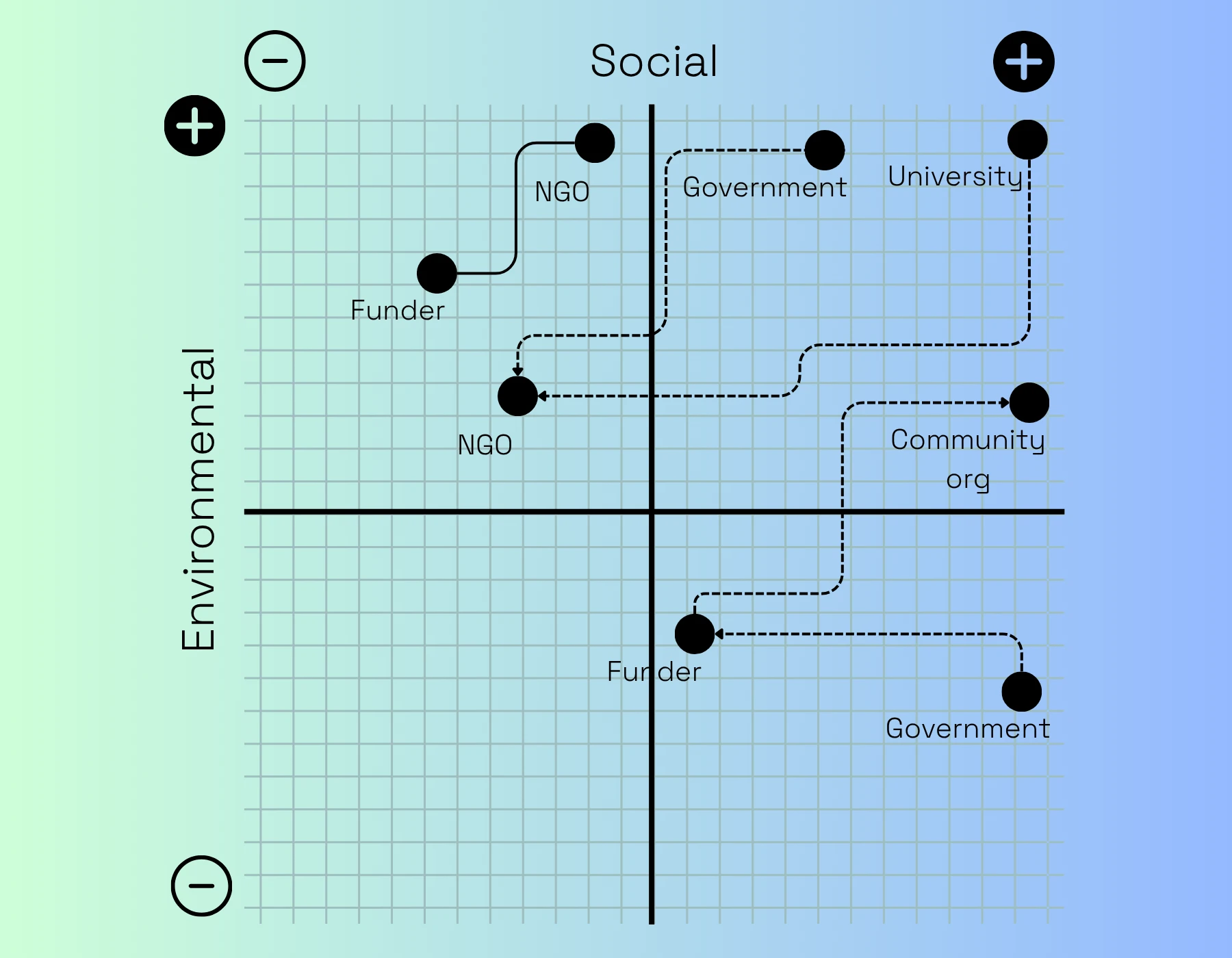
Example of a stakeholder analysis matrix used for this project
Approach & Methodology
The Lab followed a systems and design-thinking process, structured in phases:
Phases:
Discovery: Understanding the ecosystem
Key activities: Stakeholder mapping, interviews, and systems analysis
Co-Creation: Building a shared understanding
Key activities: Facilitated workshops, shared value identification, analysis of potential
Design: Developing collaboration prototypes
Key activities: Analyzing dependencies, designing specific collaboration frameworks, overseeing the implementing teams
Reflection: Capturing learning
Key activities: Collective synthesis of results and lessons learned, recommendations for the future of the program, documentation and shareability for next iteration's teams
Key Deliverables
Stakeholder ecosystem map visualizing actors and relationships
Workshop facilitation plan for participatory co-creation sessions
Collective action framework outlining shared priorities and coordination mechanisms
Process documentation report summarizing learnings, challenges, and next steps
Results & Impact
Strengthened trust and collaboration among 10 local NGOs, 2 government agencies, 5 different local actors, and 3 other types of organizations (20 actors in total)
Revealed hidden connections and shared challenges that informed future joint actions
Established a foundation for a regional coordination platform, including a communication channel for ongoing collaboration
Contributed to a culture of openness and shared purpose within Valle de Bravo's socio-environmental network
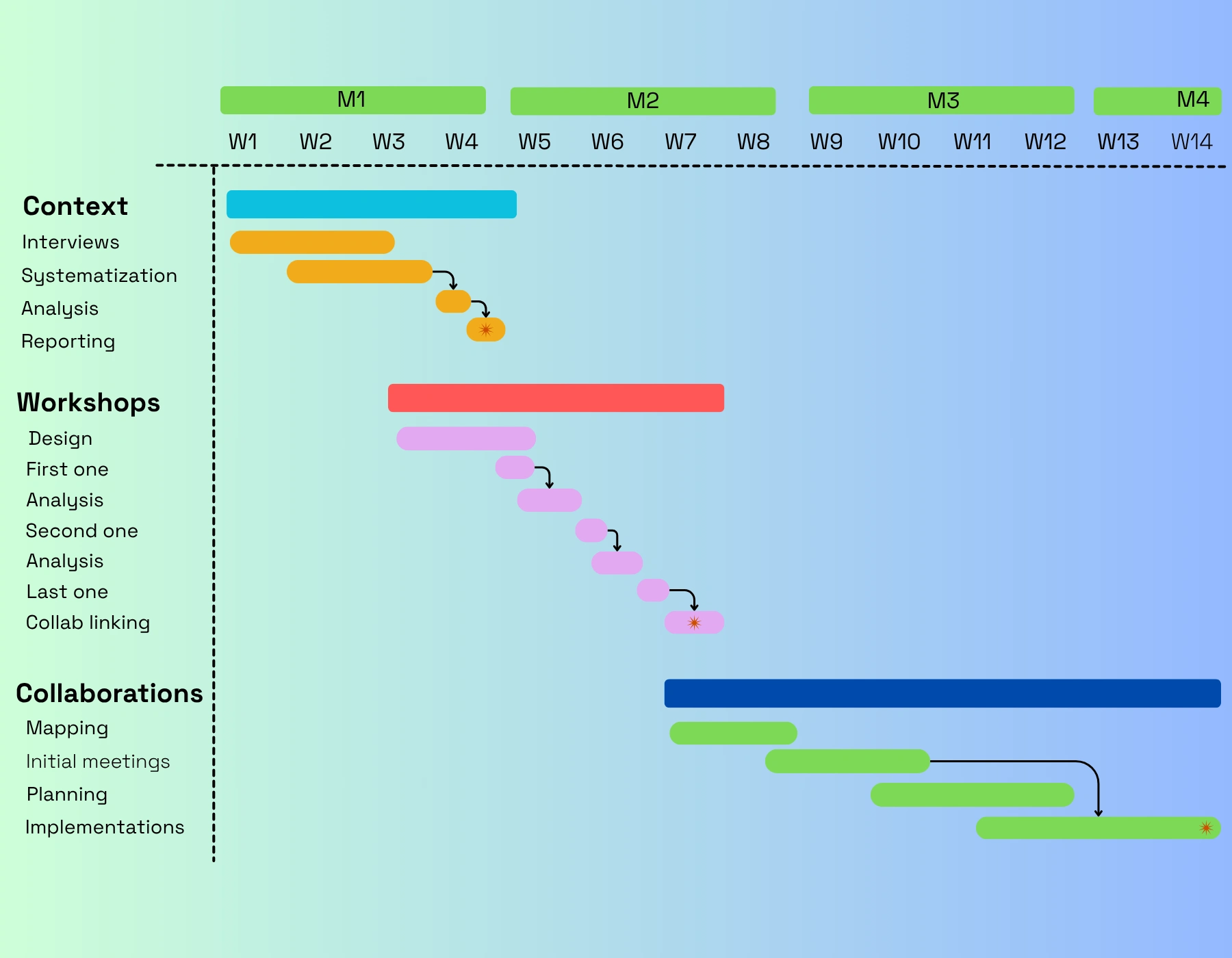
Example of the gantt chart / timetable created for the management of the project
Skills Demonstrated
Project management and multi-stakeholder coordination
Systems mapping and participatory facilitation
Strategic design and collaborative process planning
Qualitative data synthesis and communication design
Documentation and reflective learning
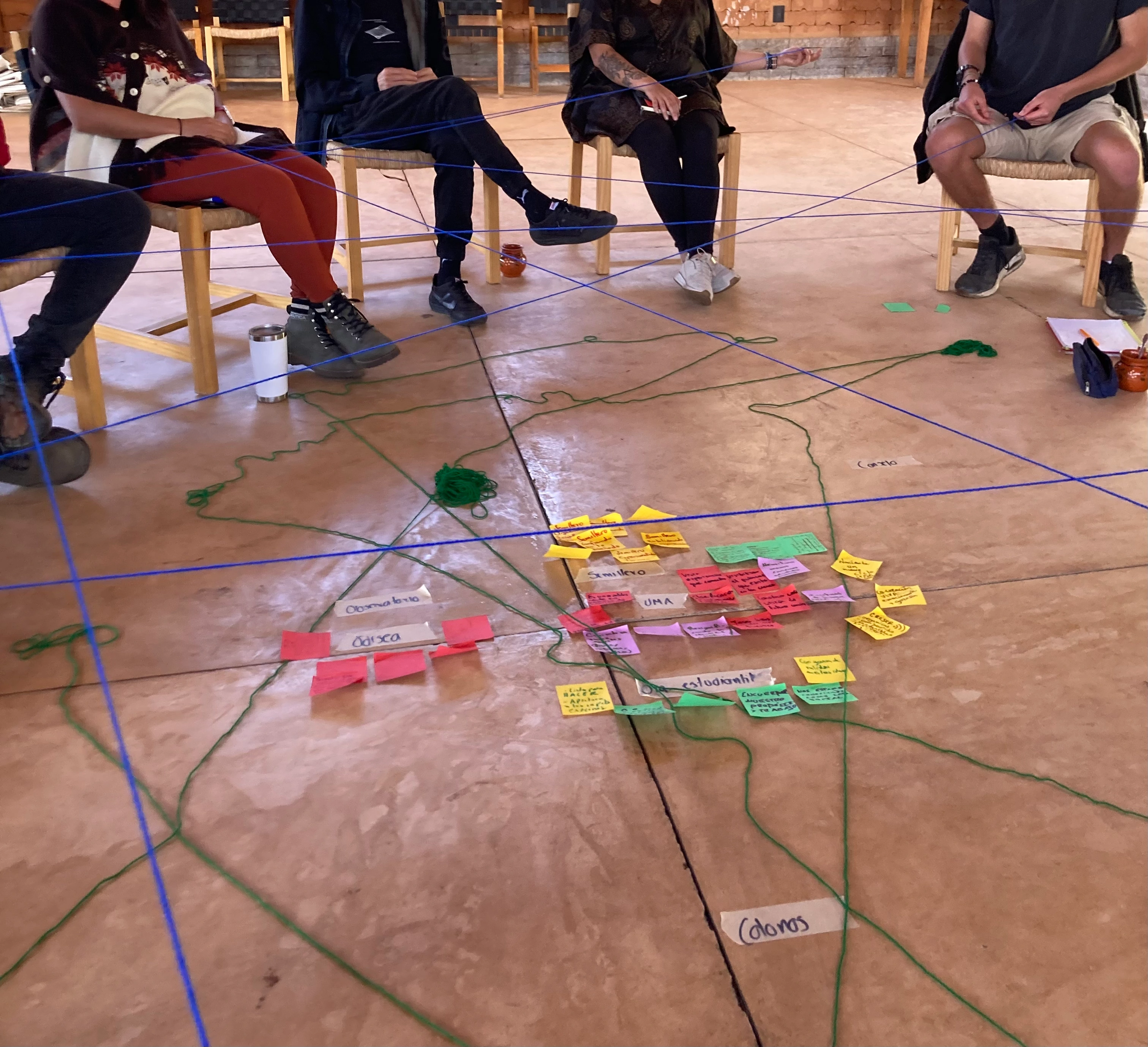
Photo of the closing session with the organization heads
Key insight
Collaboration is not just an outcome, it is an infrastructure built with participation and continuity, it must be intentionally designed, facilitated, and maintained. The Social Lab demonstrated that, by visualizing systems and fostering dialogue spaces, local organizations can move from competition toward collective regeneration.
Like this project
Posted Nov 12, 2025
Coordinated a collaborative initiative to enhance cooperation among socio-environmental organizations in Valle de Bravo.
Likes
0
Views
3
Timeline
Aug 15, 2022 - Jun 1, 2023