Interactive Study Design Pilot for Anatomy & Physiology

Caycee Creamer

Case Study: Interactive Study Design in Introductory Anatomy & Physiology I (Pilot)
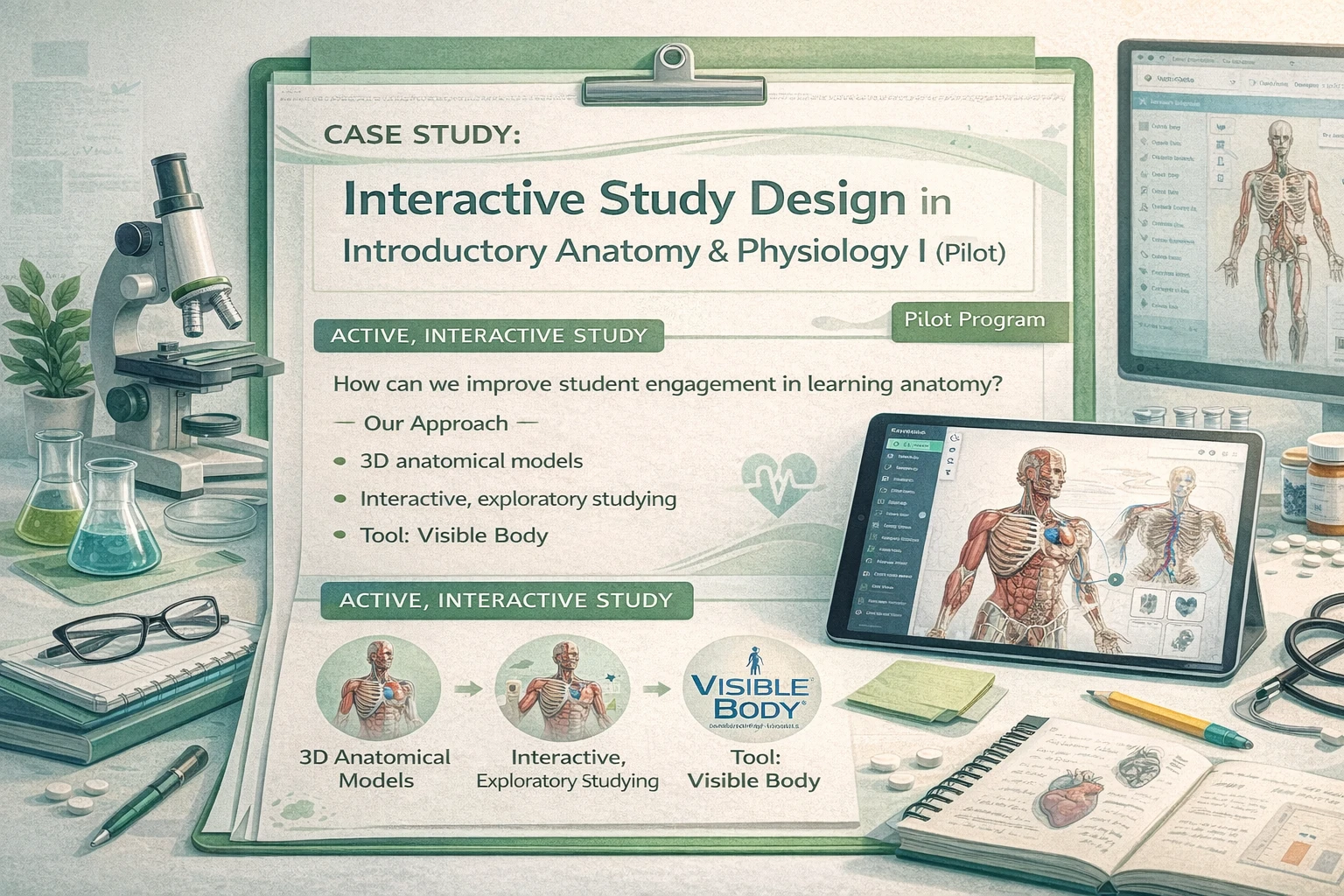
This upcoming semester, I’m leading a pilot in an introductory Anatomy & Physiology I course focused on interactive studying rather than passive review. A&P is a course where students often struggle not because of effort, but because traditional study methods don’t match the spatial and conceptual nature of the material. The goal of this pilot is to help students move beyond memorization and engage more directly with anatomical structures and physiological processes. The course design integrates Visible Body as a core study tool rather than an optional supplement. Students interact with 3D anatomical models, manipulate structures, explore relationships between systems, and visually connect form and function. These activities are intentionally aligned with lecture topics, labs, and assessments so students encounter the same concepts in multiple formats. The focus is on active engagement. Instead of asking students to reread notes or memorize diagrams, the course encourages exploration, visualization, and repeated interaction with content. This approach is designed to support visual and kinesthetic learners while reinforcing understanding for students who benefit from multiple modes of learning. This pilot is still in progress, but it reflects a shift toward more student-centered, interactive study design in foundational science courses. The long-term goal is to evaluate how structured use of interactive tools impacts student confidence, engagement, and conceptual understanding in A&P.
Tools (to be) Used: Visible Body, LMS course organization, instructional alignment between lecture, lab, and assessment
Like this project
Posted Dec 20, 2025
Leading a pilot course redesign to integrate interactive studying for Anatomy & Physiology.
Likes
0
Views
0