BoREAL - VR Prototype

Christian Toro


Overview
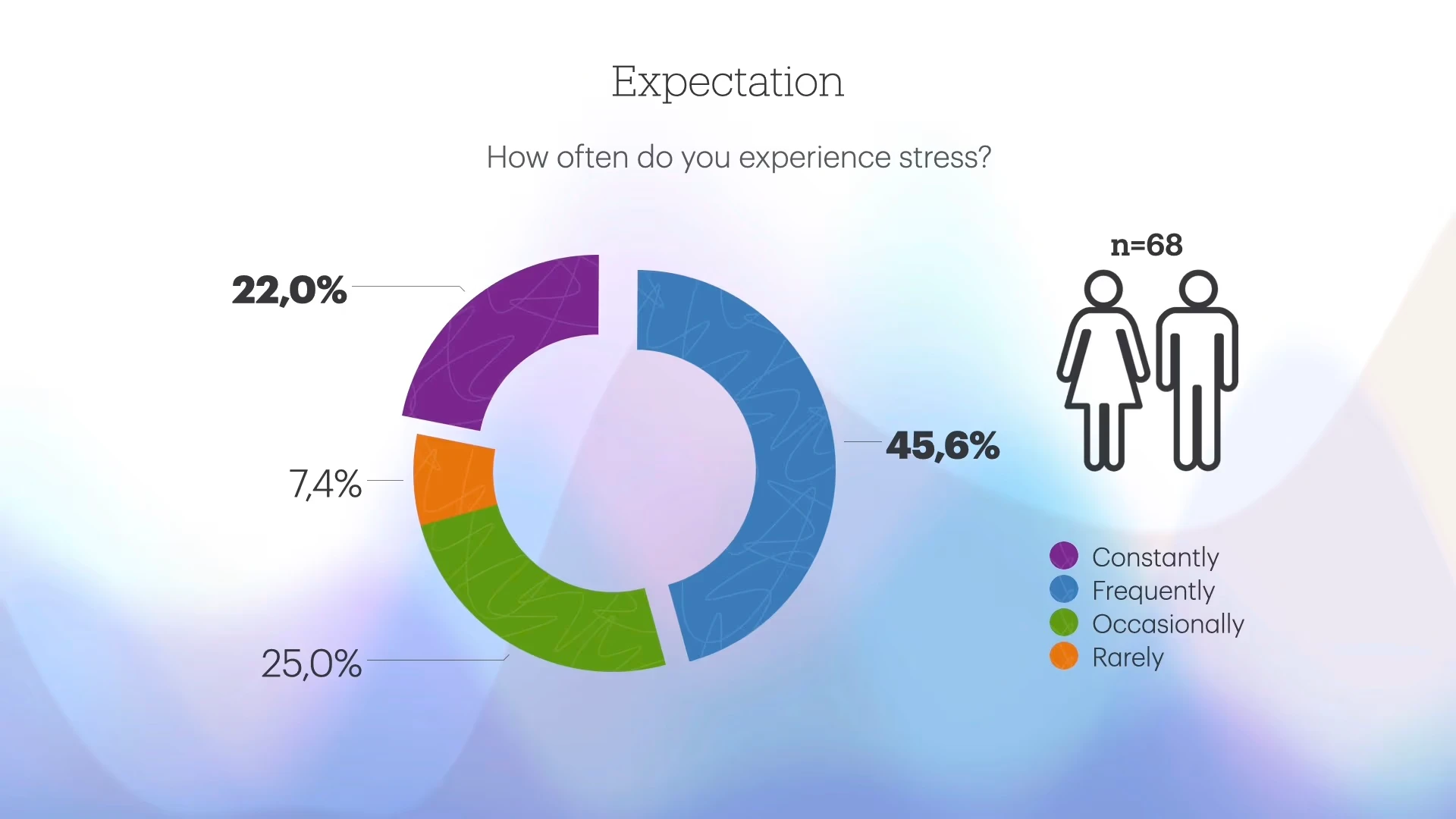
Urban workers and students experience chronic stress with limited access to restorative natural environments. 68% of surveyed individuals experience stress frequently or constantly, yet current digital wellness solutions rely on passive consumption or over-gamification, failing to provide meaningful stress relief (Ryan & Deci, 2000).
The Challenge
Create an accessible, scientifically validated immersive experience that delivers the stress-reduction benefits of nature exposure without geographical or time constraints.
Concept & User Experience
Research Foundation
Applied Kaplan's Attention Restoration Theory through Human-Centered Design methodology, integrating four restoration elements: Being Away, Soft Fascination, Extent, and Compatibility.
HCI Approach
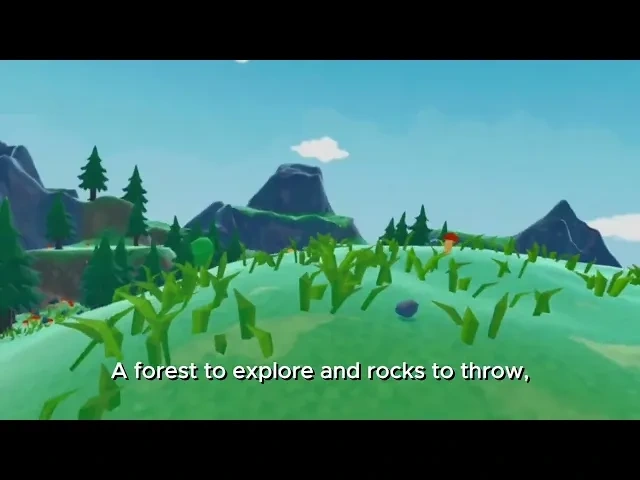
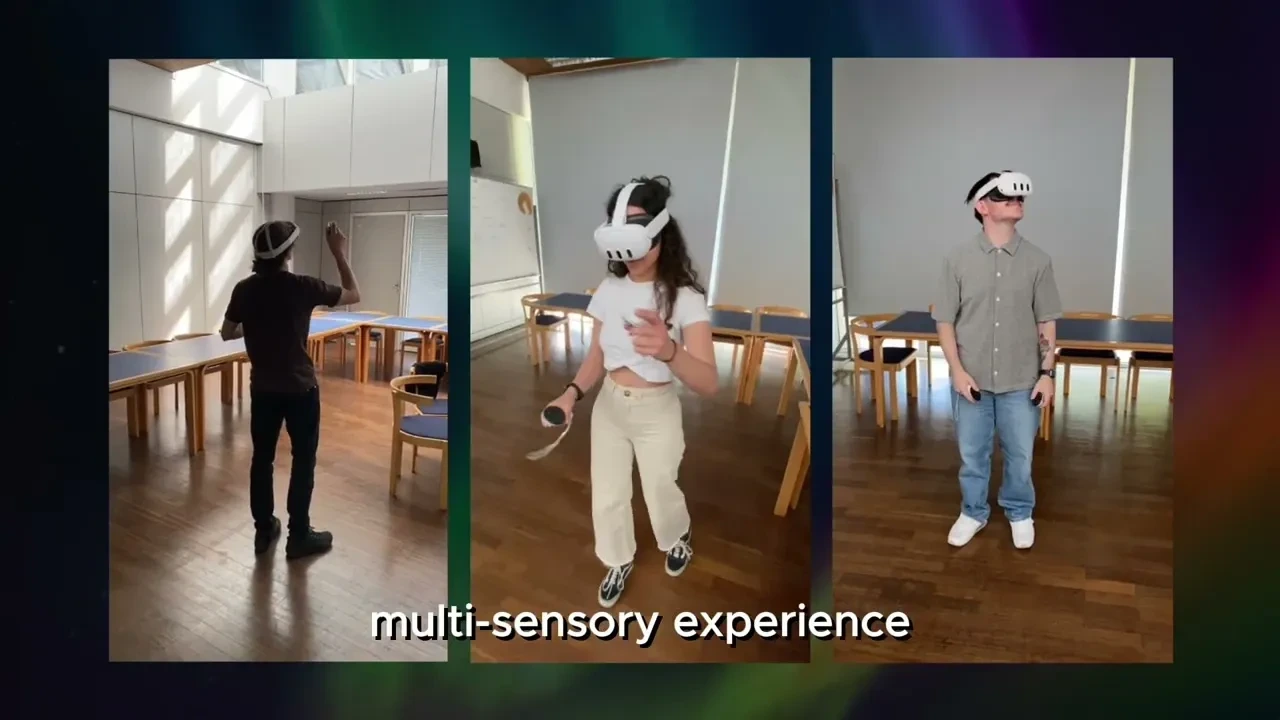
Designed gaze-based interactions and environmental responsiveness to maximize user agency while minimizing cognitive load. Implemented binaural audio and spatial design principles to create multisensory restoration.
Iterative Process
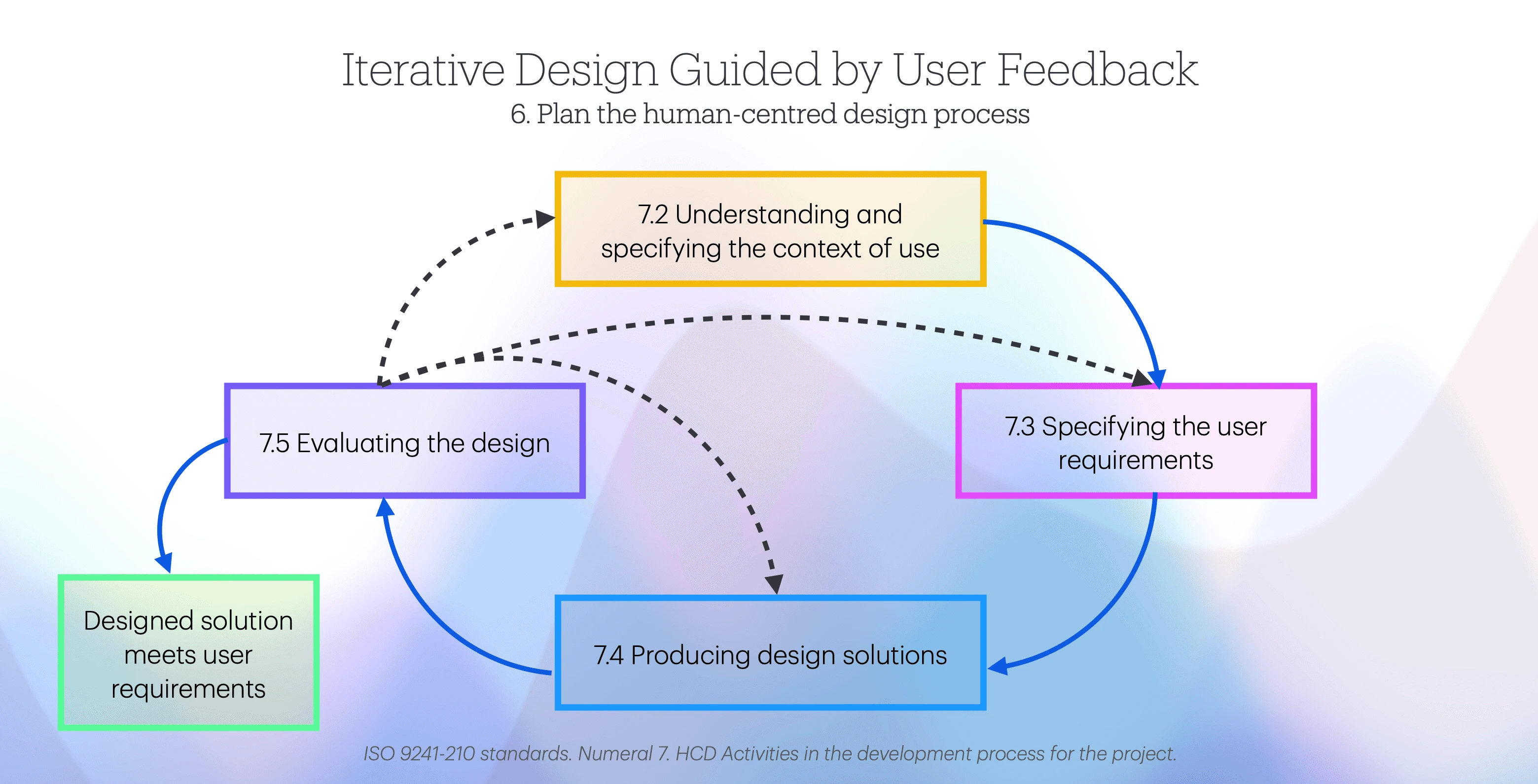
Following ISO 9241-210 Human-Centered Design standards through multiple prototyping cycles, user feedback integration, and continuous refinement of interaction mechanics.
Evaluation Protocol
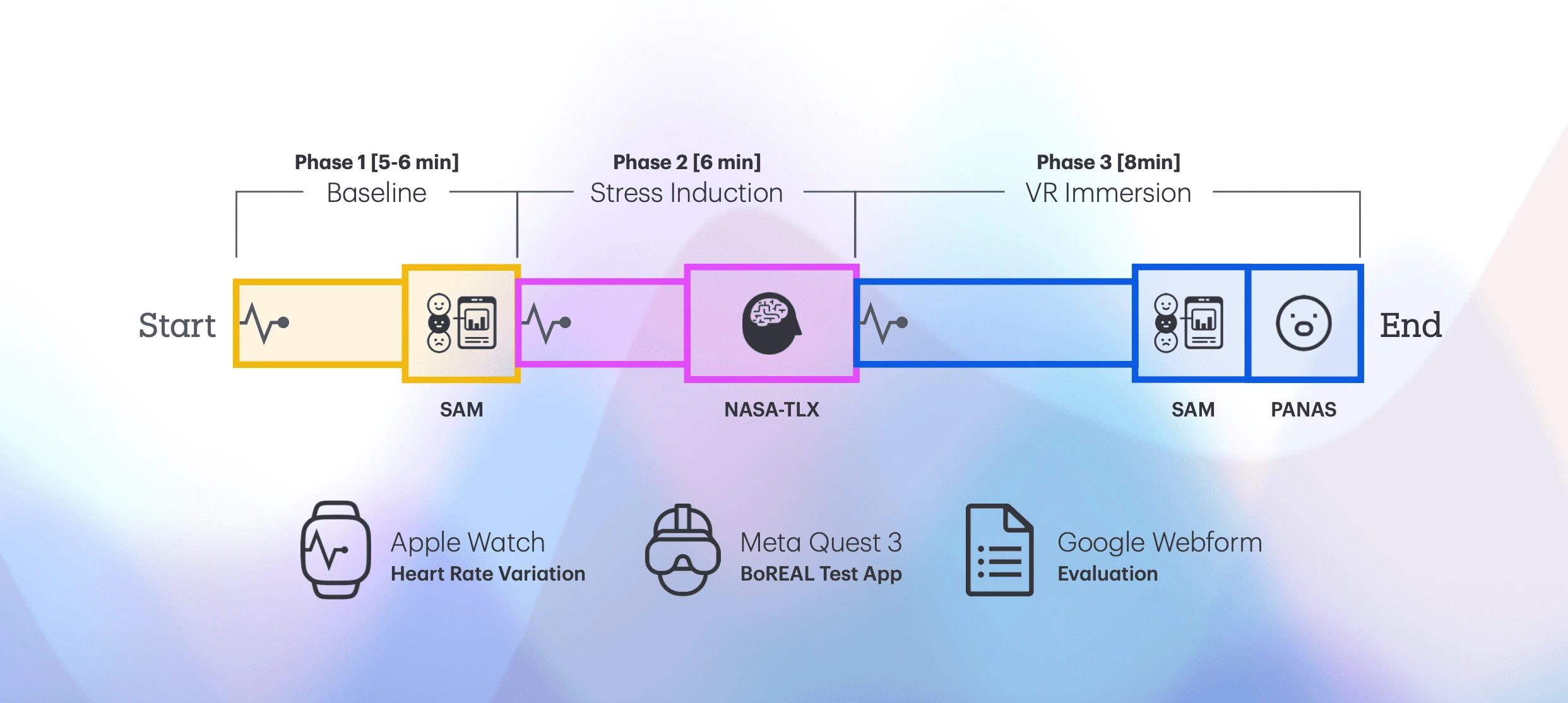
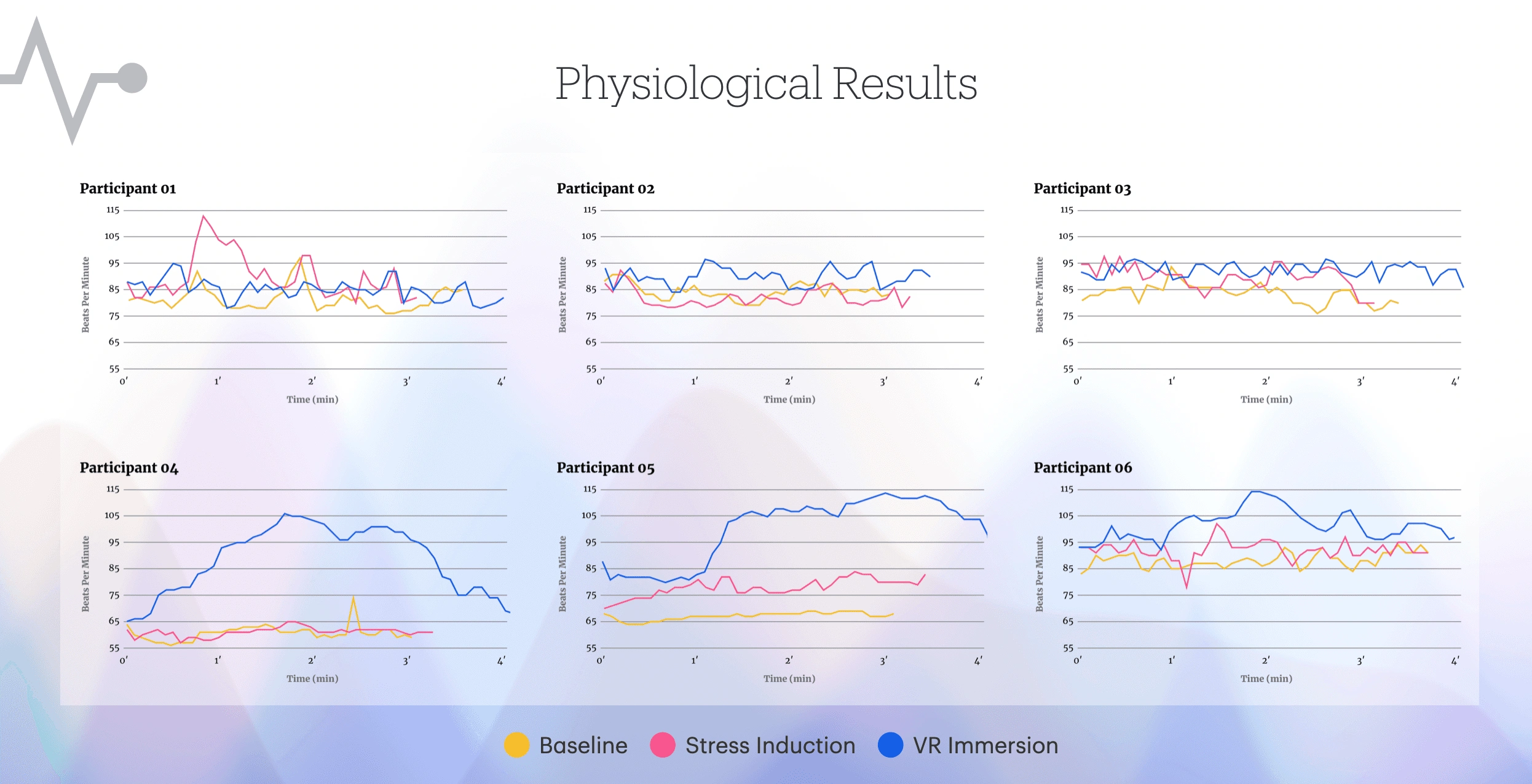
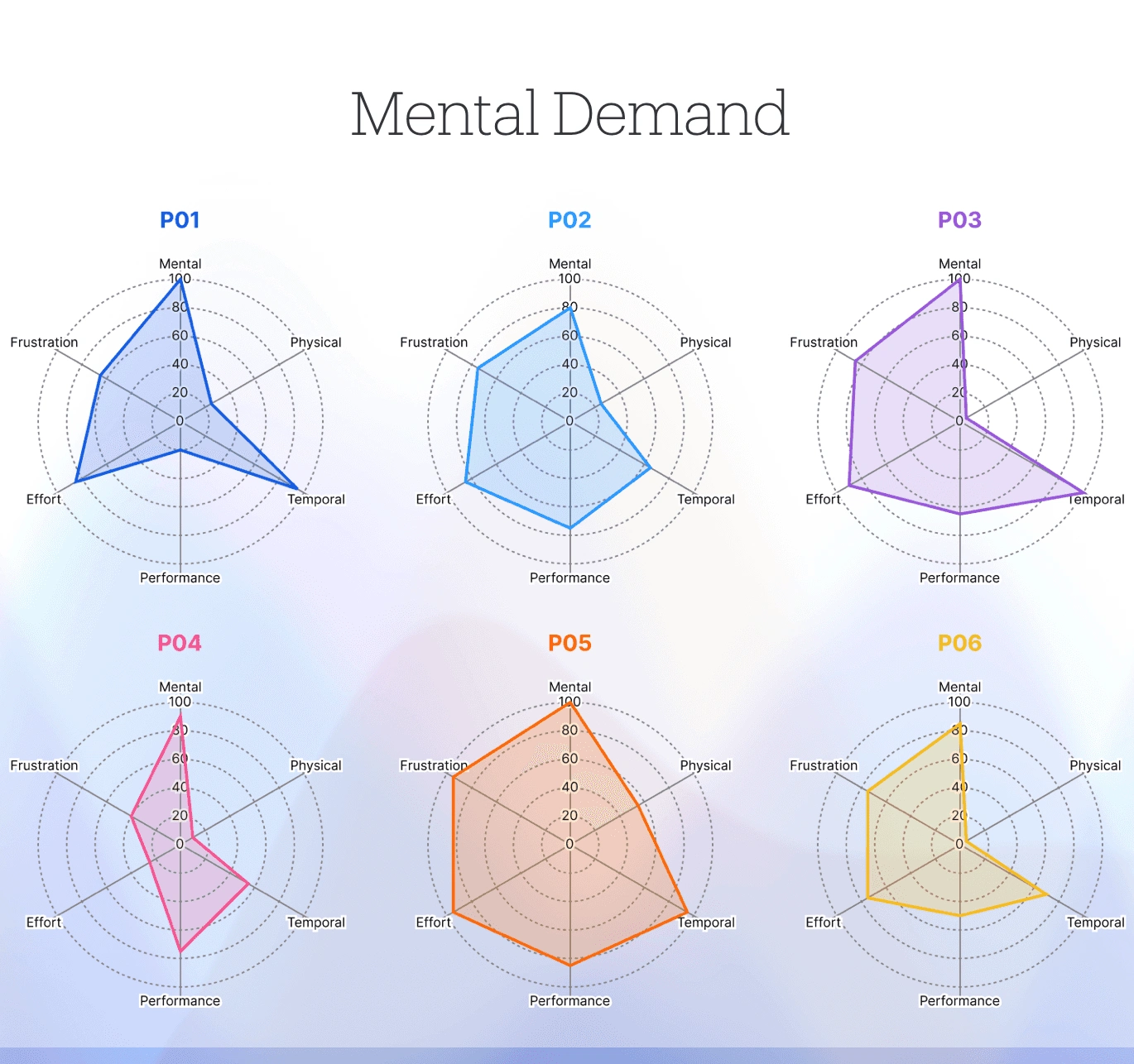
3-phase testing approach using physiological monitoring, psychological assessments (SAM, PANAS-X, NASA-TLX), and qualitative feedback with 6 participants aged 24-71.
Results
Scientific Validation
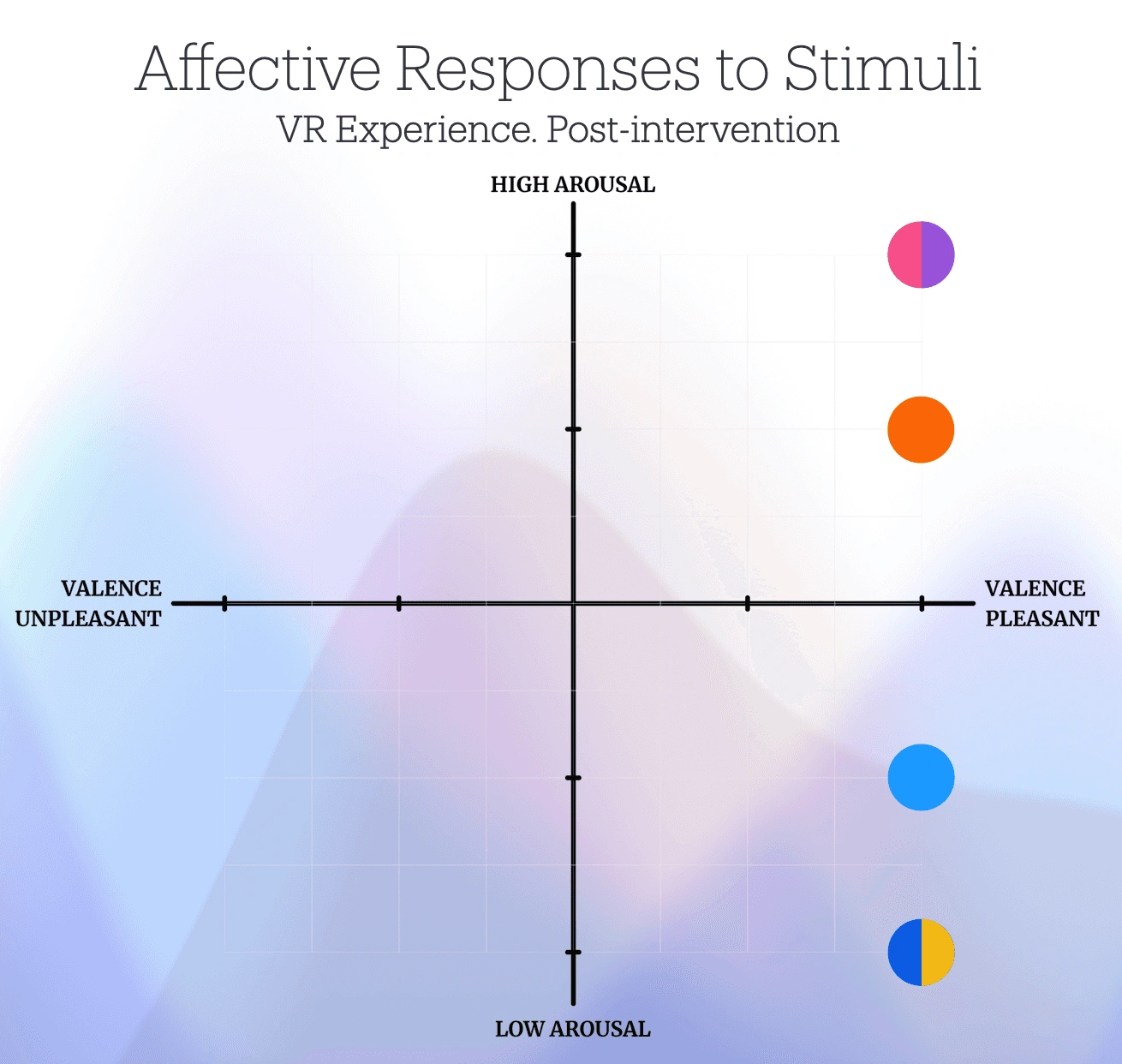
56% improvement in emotional valence (3.2 → 5.0/5)
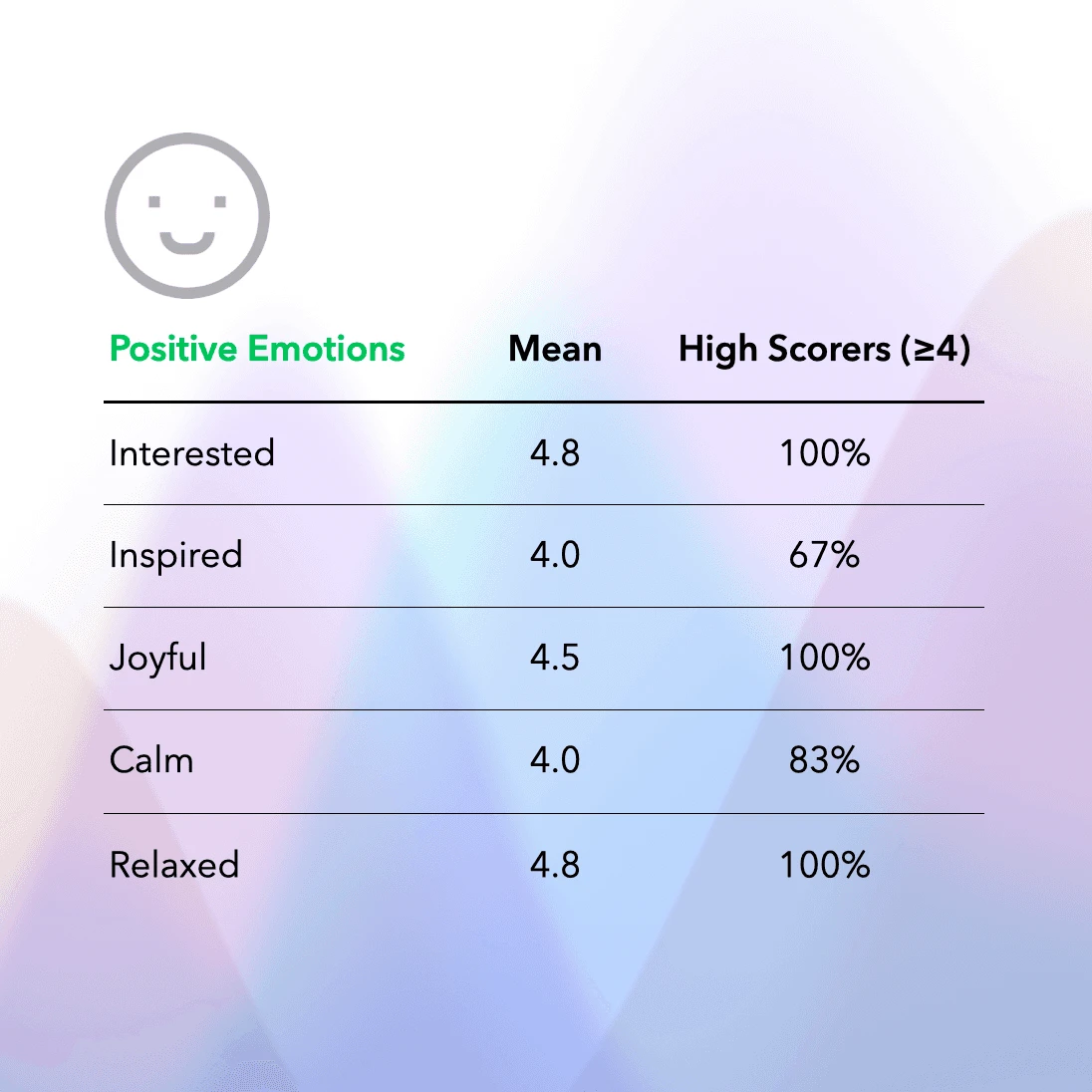
100% positive emotional outcomes across all participants
0% motion sickness reported across age groups 24-71
89% would recommend the experience to others
Emotional Outcomes
Calm: 4.8/5 average (100% scored ≥4)
Relaxed: 4.8/5 average (100% scored ≥4)
Interested: 4.8/5 average (100% scored ≥4)
Negative emotions: Minimal (1.0-1.5/5 range)
Key Findings
Virtual nature environments can effectively restore attention and well-being
User agency through environmental interaction increases therapeutic effectiveness
Fantasy elements enhance rather than diminish restorative experience
Cross-generational appeal demonstrates broad applicability
Academic Impact
Established empirically validated framework for therapeutic VR design, with methodology documented for replication and scaling in educational and workplace wellness programs
Key Learnings
Empowered Users: Allowing simple interactive choices (e.g., bubble-popping) increases both engagement and effectiveness of digital experiences.
Multi-sensory Coherence: Integrating visuals, sound, and interaction in a balanced way yields measurable restorative effects.
Data-Informed Iteration: Actively combining usability research with physiological and self-report data ensures continual experience improvement and validates design decisions.
Like this project
Posted Aug 26, 2025
Created a VR experience for stress reduction using nature exposure principles.
Likes
0
Views
42
Timeline
Jan 15, 2025 - Jul 14, 2025