
Role: Web Designer and Web Developer · Timeline: 1 week · Tools: Figma, Framer · Live: https://dev.cxtstudios.com/tundeonakoya/ · Studio: CXT Studios, which I co-founded
Overview
Tunde Onakoya is a Nigerian chess champion, a Guinness World Record holder and the founder of Chess in Slums Africa. I designed and built him a personal website that does one job: it lets you move through his story instead of reading it in a list.
It is one long page. A branded loader opens it. His face fills the first screen. A journey of ten chapters runs from Ikorodu to the work that continues today. After that come the children, the record, a collection of chess boards, and the stages he has spoken on. I designed every screen in Figma, then built it in Framer.
Why I built this
People think they follow Tunde because he is a chess player. That is not why.
Tunde is a storyteller. Chess is the tool. What he stands for is hope, and he gives it to the people who have none, the average Nigerian. He knew how to tell his story, and that is how he built the following he has.
So I did not want a page that listed his achievements. I wanted a site that told that story with him, from a humble beginning all the way to a Guinness World Record.
The challenge
A personal site for someone with this much to say can easily become a biography page: a photo, a paragraph and a list of awards. That would have buried the thing people actually connect with.
Two things had to hold at once: Hope had to come first. The record, the talks and the boards are all true and impressive. But they only land if a visitor has first met the man and understood why he does it.
The story had to move, without getting in the way. Motion could carry the journey, but each effect needed a reason. Nothing could slow the page down or hide the photographs.
Process: from Figma to Framer
I started in Figma. I designed each section on desktop, then on mobile, with the colours, type and components set up once and reused. Next to every frame I wrote a short note on how it should move, with timings and easing. That meant the motion was planned before any of it was built.
Then I built the whole page in Framer, section by section. Each section is its own code component, so the scroll-driven parts behave exactly as designed. I tested it on desktop and on a phone, checking every animation and comparing the page against the Figma frames until the layout and the length of the page matched.

The solution
A hero that starts with his face. I picked this portrait for the emotion. He looks so approachable. I wanted everybody to see Tunde's face first, because he has changed so many lives. His name comes up like a signature, so you know exactly who you are looking at. The loader before it is orange, his accent colour, with just the monogram, so the first thing you see is calm.
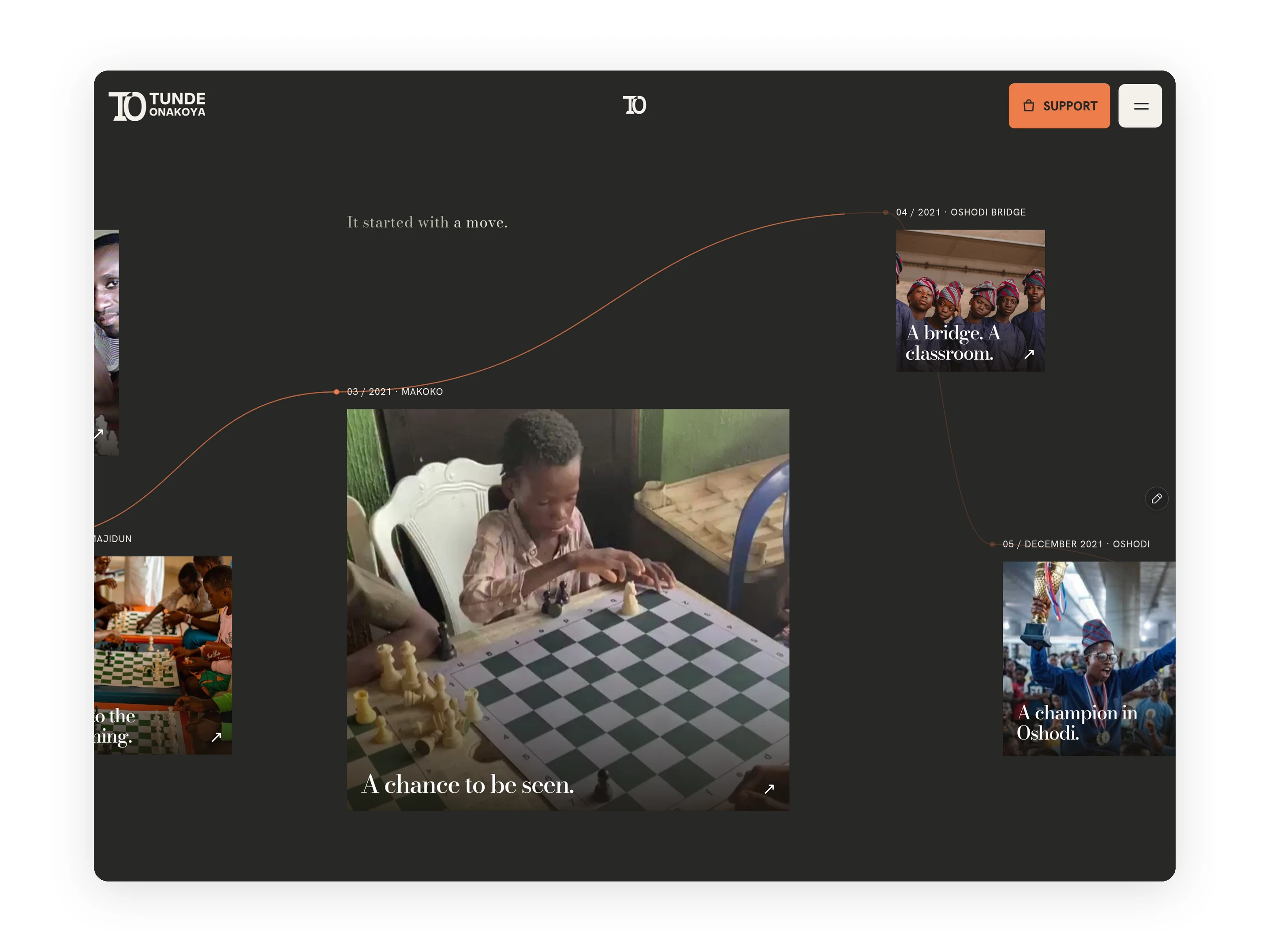
A journey you scroll sideways. Ten chapters run from "The beginning · Ikorodu" to "2026 · The work continues". The page pins in place and your scroll moves you along a path while a thin thread draws itself between the chapters. His story is meant to inspire anyone, so the road from humble beginnings to a world record had to be something you travel, not skim.
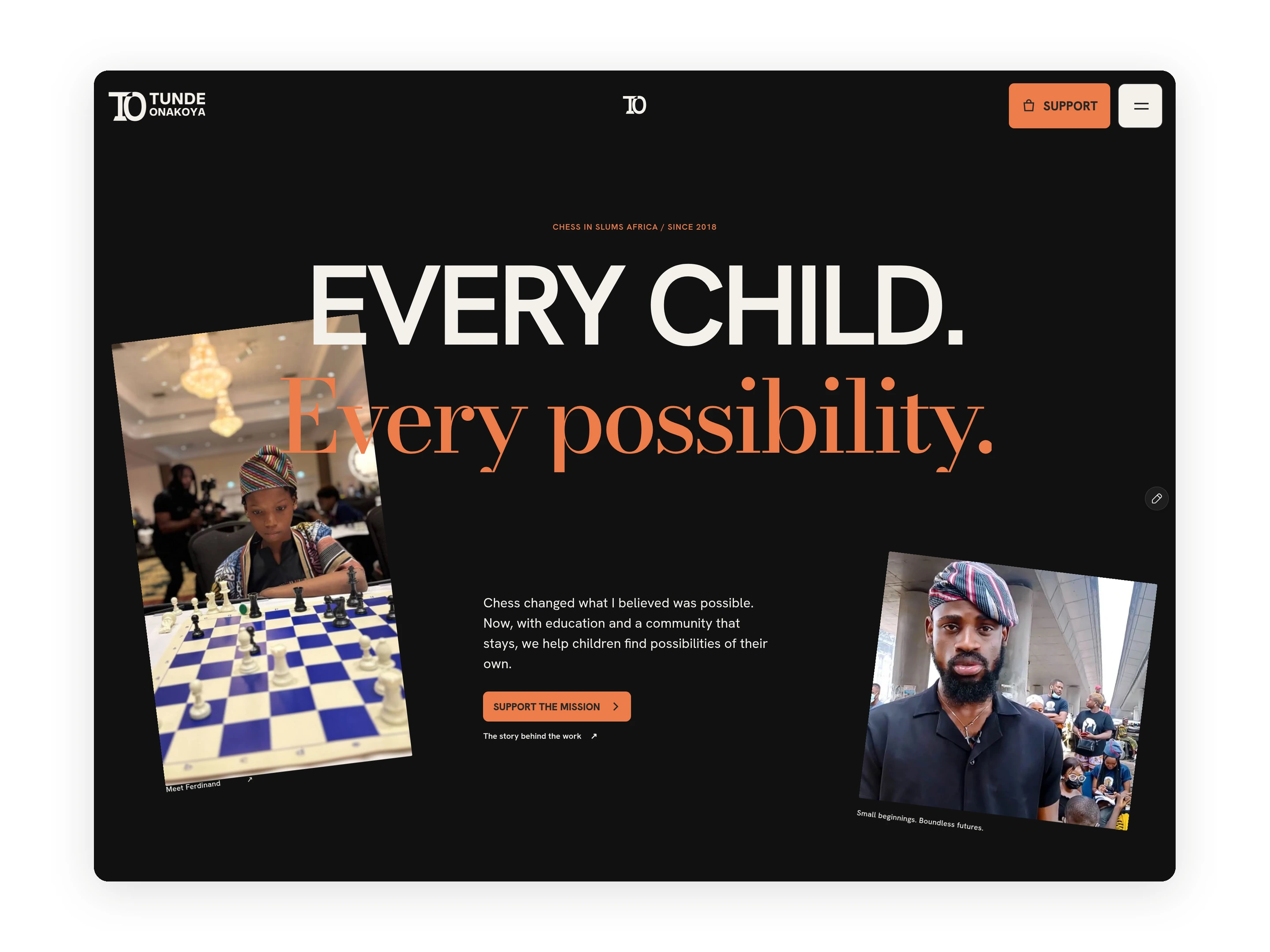
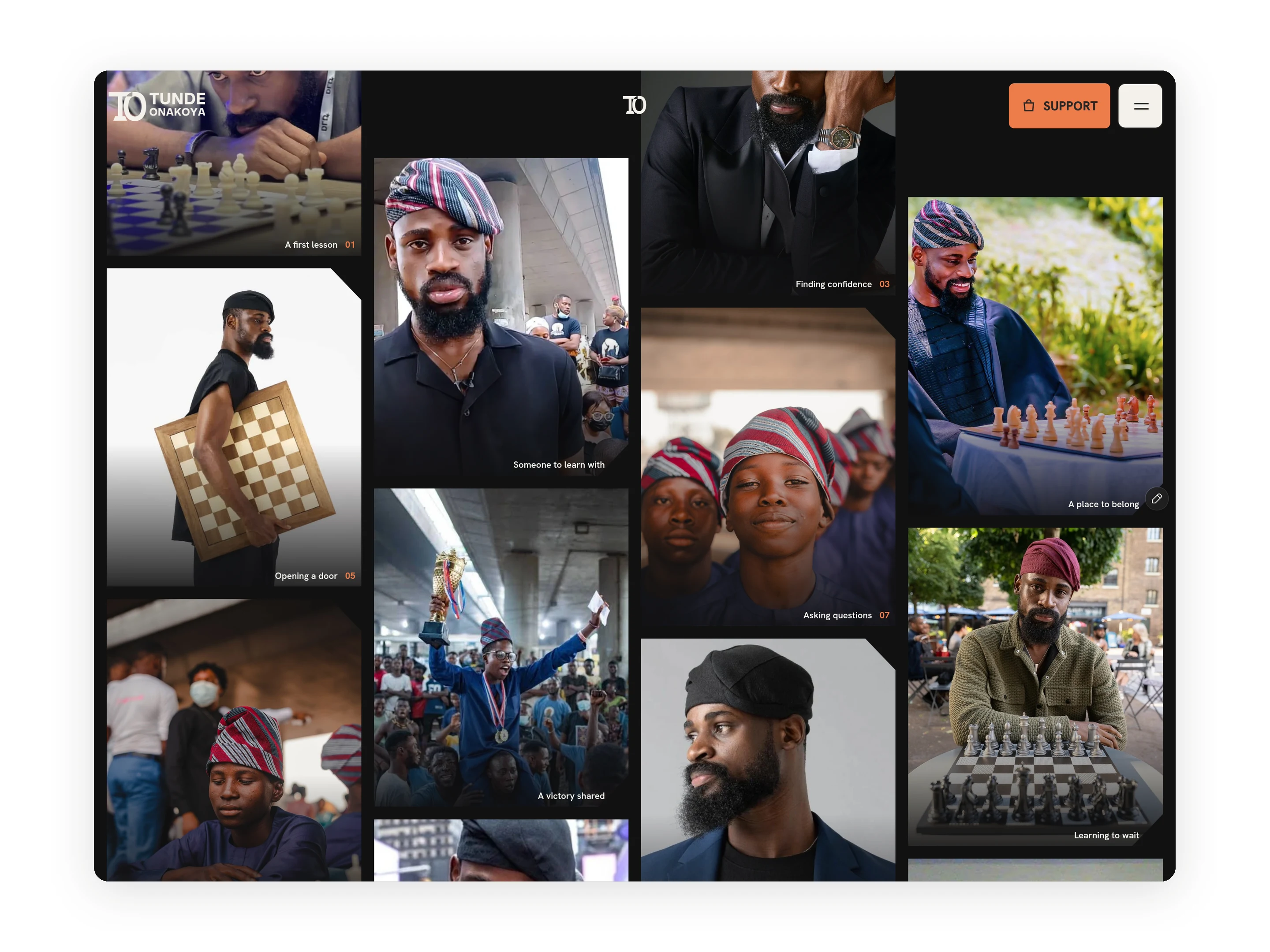
The children, and the moments. Every child deserves a story, and his started under a bridge. I gave the mission its own dark, full-screen moment, "Every child. Every possibility.", followed by a grid of sixteen moments. He has a lot of photographs. I love the emotion, the clothes and the small captures, and I wanted people to sit inside his everyday life, the struggles and the hope.
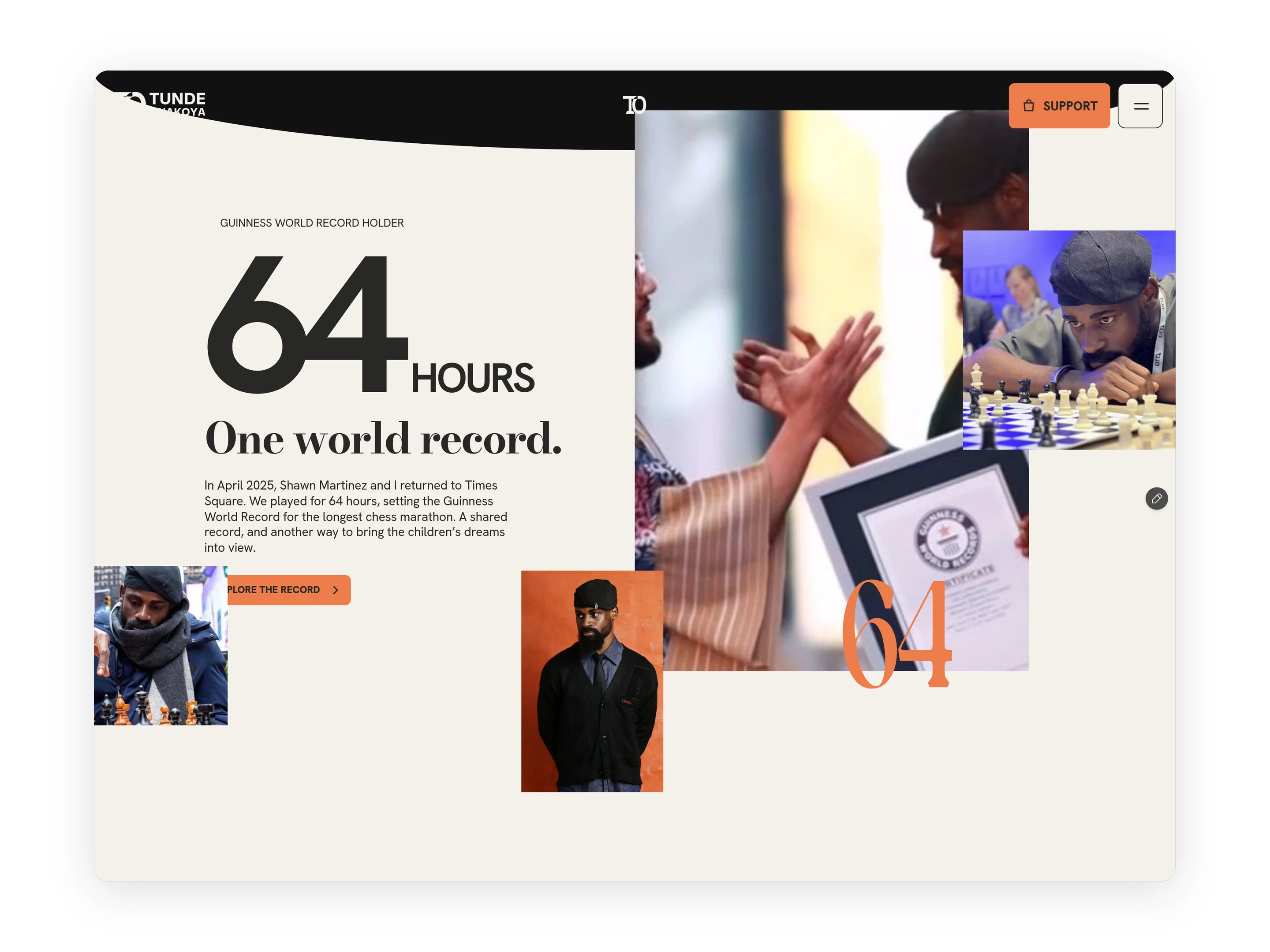
The record, in proportion. "64 Hours. One world record." is set large with the Times Square photographs. A boy from Ikorodu gave everyone from Ikorodu a reason to be a world champion, so the record sits in the story, not on a trophy shelf.
A menu that opens like a reveal. The full-screen menu wipes down in his orange, with the links rising in one after another beside the same portrait and the line "Great things. Small places."
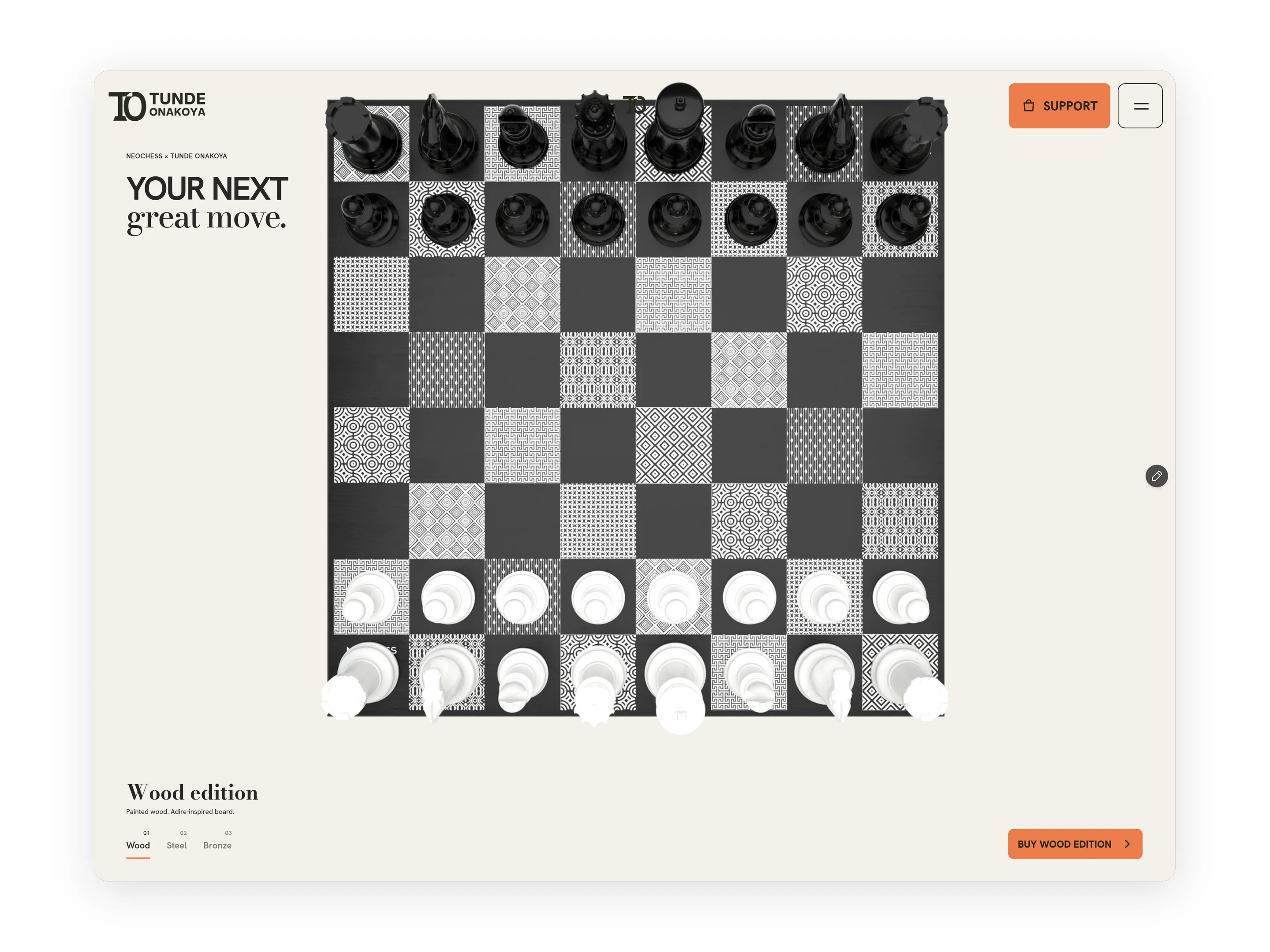
Pieces you can switch between. The Neochess × Tunde Onakoya boards come in Wood, Steel and Bronze. Switching between them reveals each board in place, so the pieces seem to transform as you choose, and each edition links out to buy.
Smooth scrolling throughout. The whole page eases as you scroll, and on a phone it uses the phone's own scrolling, so it stays light.
Outcome
Tunde has seen the site and likes it.
You can explore it here: https://dev.cxtstudios.com/tundeonakoya/
What I'd highlight
Tunde already knew how to tell his story. The site just had to tell it with him.
That is why the page is something you move through instead of something you scan. Once his face, the journey and the children are doing the work, the record, the boards and the invitations to speak or to support have somewhere to sit. They never have to introduce him from scratch.
1 like · 0 views · Nov 11, 2026
Designed in Figma and built in Framer: a personal website that walks visitors from Ikorodu to a Guinness World Record and the children Tunde teaches.


