What if furniture became sacred

Ihor Terzi

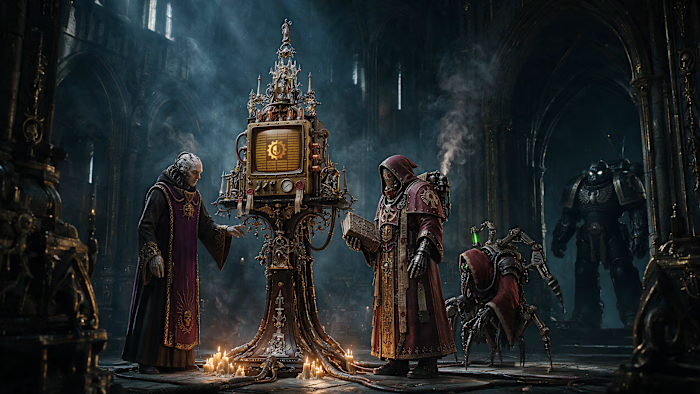
What if furniture became sacred architecture?
I reimagined an early 19th-century coin cabinet from The Metropolitan Museum of Art as a monumental sacred object at the heart of an ancient city.
Created to store coins and medals, the cabinet was inspired by Ancient Egyptian architecture, with its upper section referencing an Egyptian pylon and its decoration incorporating Egyptian motifs.
But when I looked at it, I saw something else. The cabinet's structure, which tapered toward the top, brought to mind a monument—even a pyramid.
The drawers began to look like monumental steps and the door turned into a massive wall. Instead of recreating a specific historical civilization, I imagined an ancient world that could have grown around this architecture. The cabinet itself became a mysterious object of worship — an ancient monument.
I preserved the recognizable architecture and decorative language of the original while changing its scale, function, and world.
Original artwork: Coin Cabinet, The Metropolitan Museum of Art.
Original artwork: [The Met link] https://www.metmuseum.org/art/collection/search/195473
Link to the canvas: https://app.flora.ai/join-project/078b7d07-3311-4991-8cb2-ee815af97c4c
Like this project
Posted Sep 8, 2026
What if furniture became sacred architecture? I reimagined an early 19th-century coin cabinet from The Metropolitan Museum of Art as a monumental sacred obje...
Likes
0
Views
1