Quantura: Building an Inspectable Forecasting Platform

Tamzid Ullah


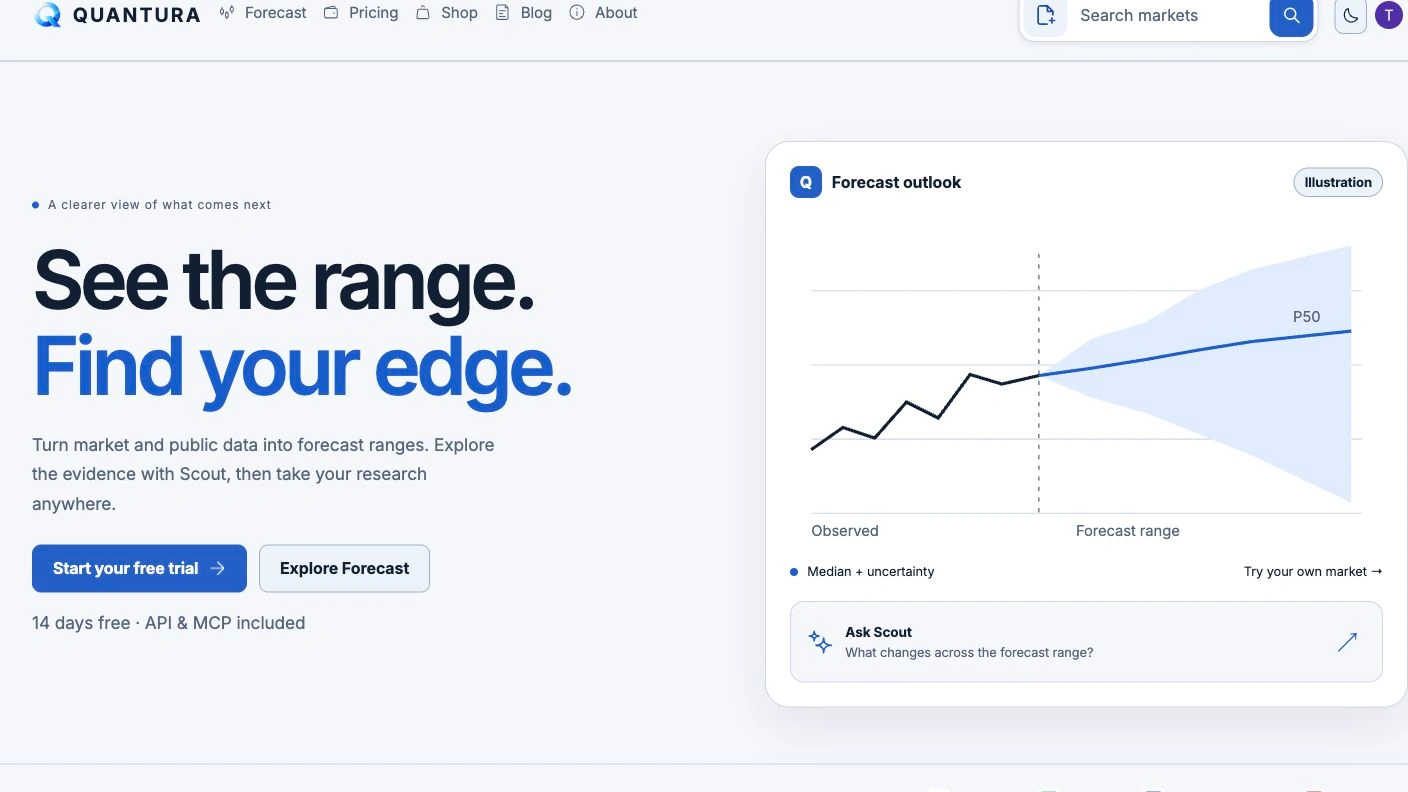
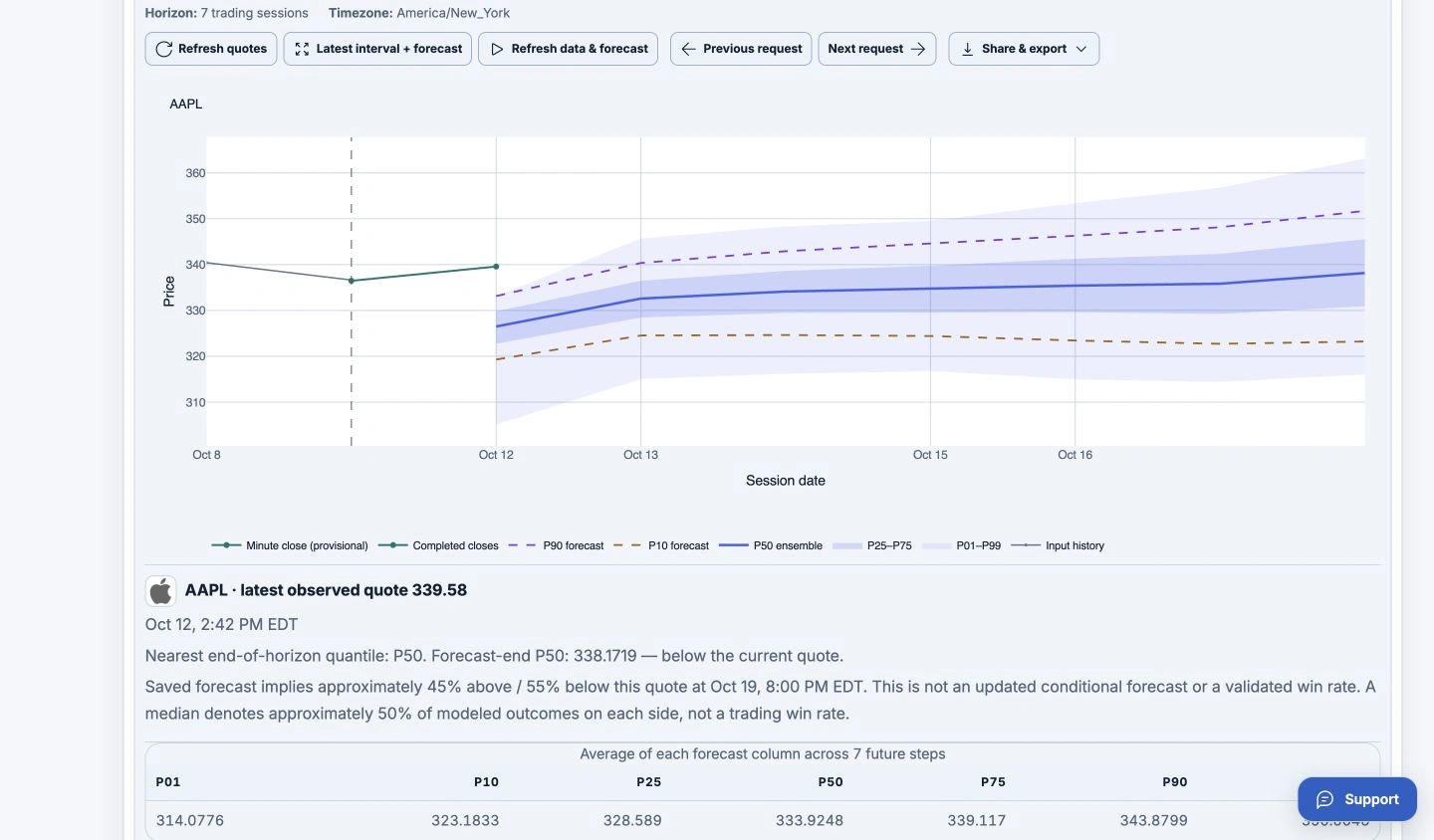
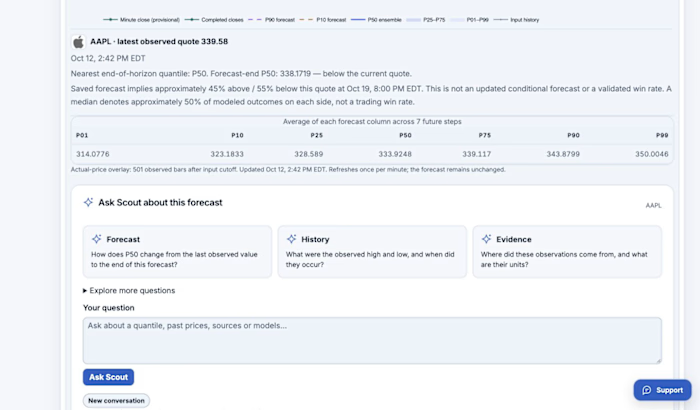
Published AAPL forecast: seven trading sessions with reported model participation and quantile ranges.
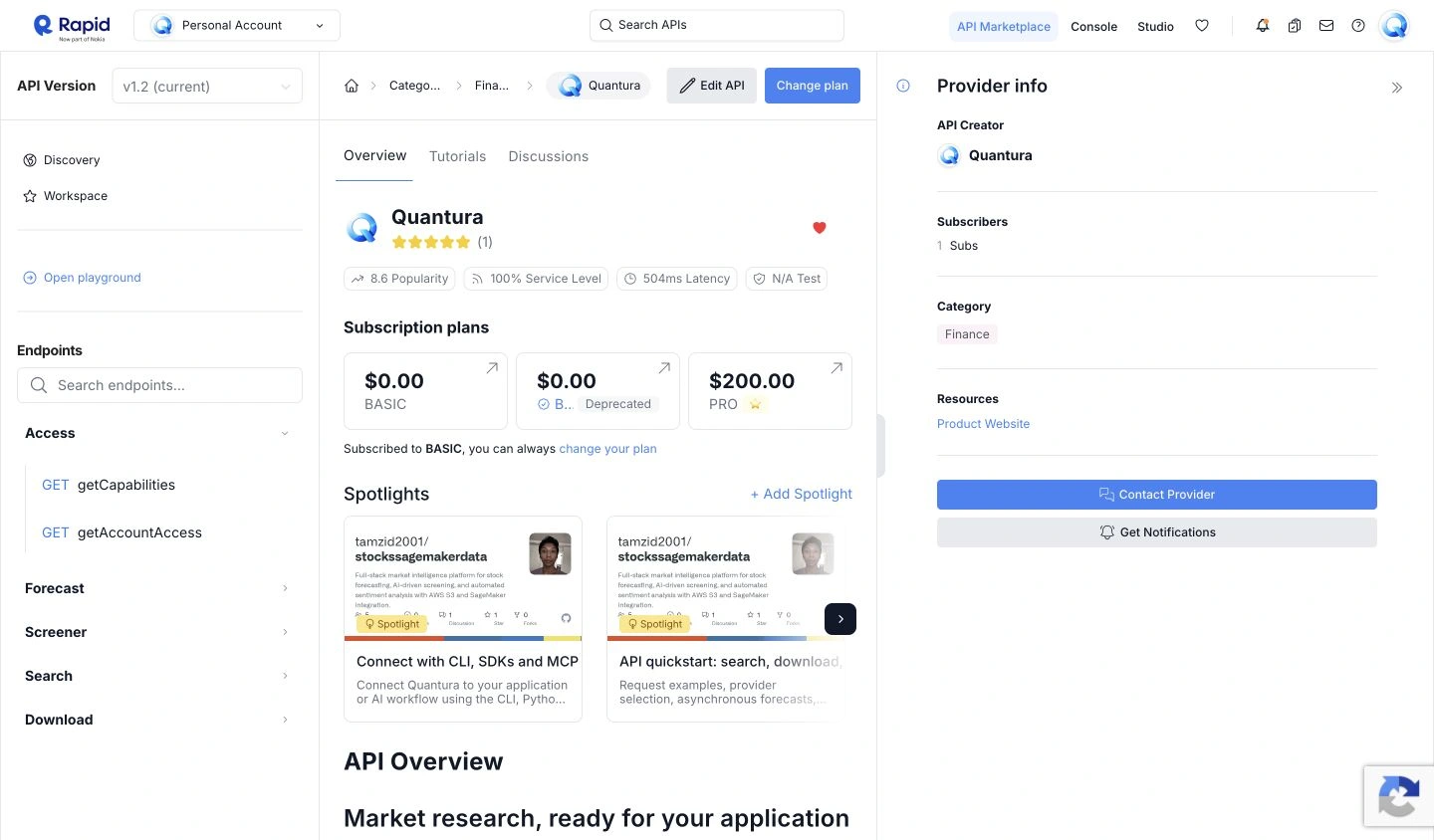
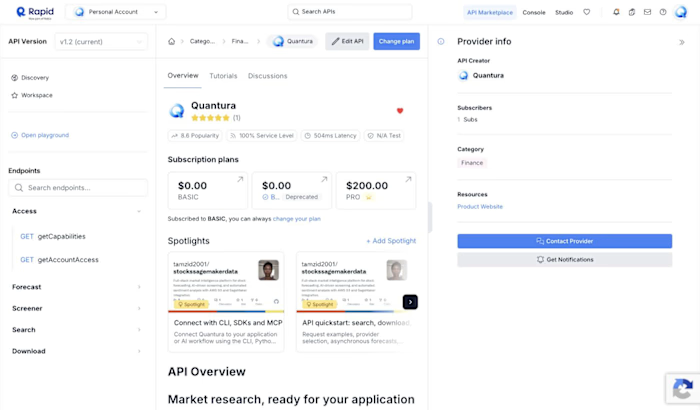
The public Quantura API listing, organized around a shared discovery, history and forecasting workflow.
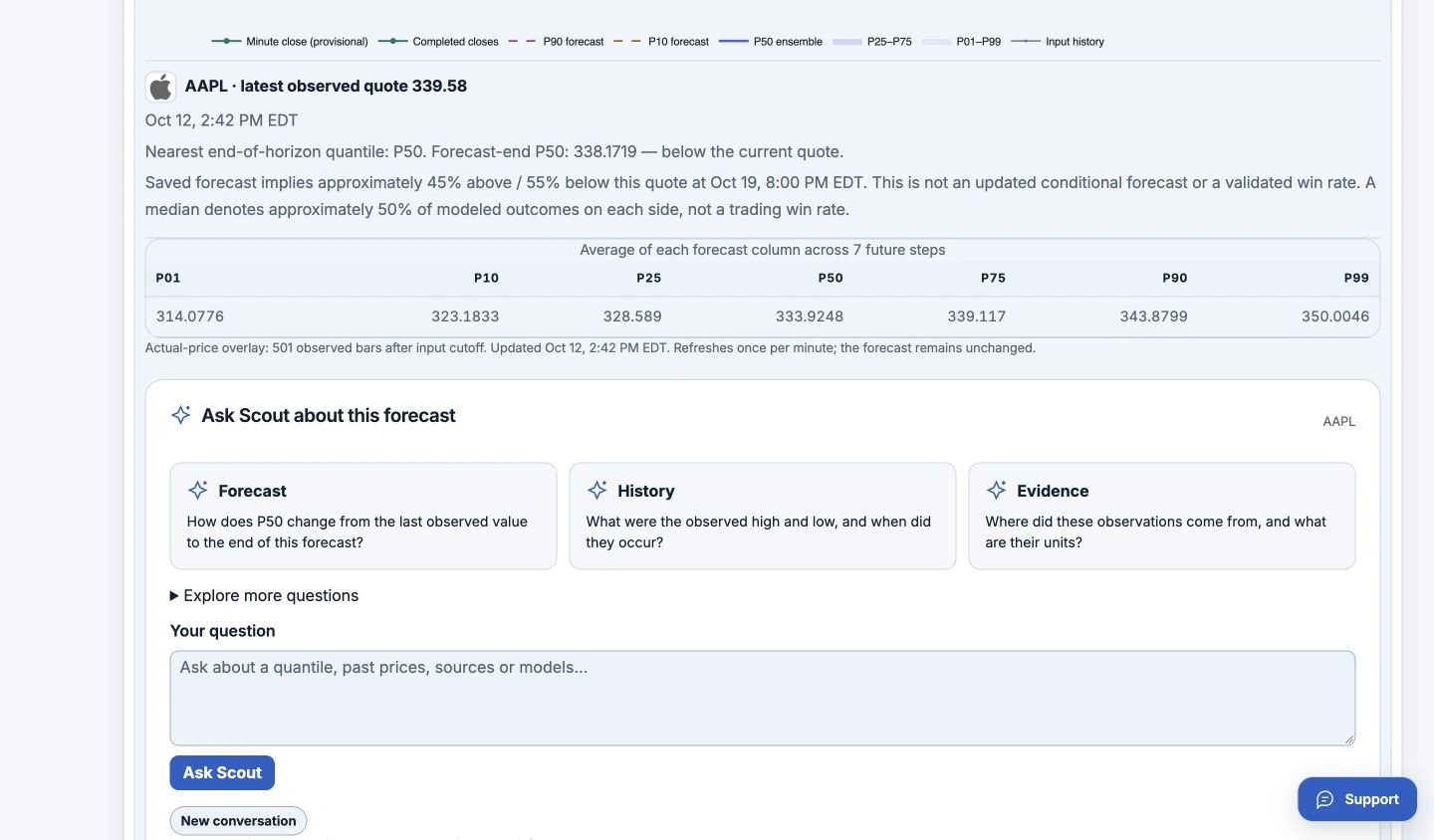
Scout organizes contextual research questions into Forecast, History and Evidence.
From fragmented data to inspectable forecasts
Quantura is my own forecasting and research product. I built it to help users move from a market or public time series to an observed history, a probabilistic forecast and an explanation they can revisit. This case study documents my work as its founder and builder.
The challenge
Market and economic providers expose different identifiers, frequencies, calendars and timestamp conventions. A chart can look convincing while hiding gaps, model exclusions or an incompatible data source. Users also need a consistent way to inspect uncertainty and ask what a forecast means.
My role
I led the product direction and implemented provider integrations, forecasting workflows, the research interface, authenticated API access, SDK/CLI examples and documentation. My work connects Python research and model execution with a TypeScript backend and JavaScript web interface.
What I built
One data workflow. Search, Download and Forecast share structured sources. Integrations include Alpaca, Dukascopy, Gemini, Treasury Fiscal Data, World Bank Data360 and BigQuery public datasets. The workflow preserves timestamps and units, exposes provider limitations and avoids inventing missing observations.
Inspectable model ensembles. Forecasts report requested models, actual participation, input cutoff and horizon. Quantile ranges communicate uncertainty; supported models contribute to each requested quantile according to their capabilities. The displayed AAPL example has a seven-session horizon and reports Prophet, Toto, Granite, Chronos and TimesFM participation.
Scout research. Contextual question cards organize Forecast, History and Evidence. Users can ask about median changes, observed highs and lows, sources and units. Chart annotations, notes, named CSV previews and saved conversations help them revisit their work.
Developer access. The REST API, Python/TypeScript SDKs, CLI and OAuth MCP connection expose the same research workflow. Asynchronous jobs, saved identifiers, idempotency keys and JSON/CSV exports make it practical to integrate into other applications.
Engineering decisions
I made source identity and history controls explicit, retained original forecasts alongside later price overlays, and used chronological evaluation with matching prediction and outcome timestamps. Authentication and account permissions are checked at the API. Scheduling and retries preserve job identity across interrupted requests.
The result
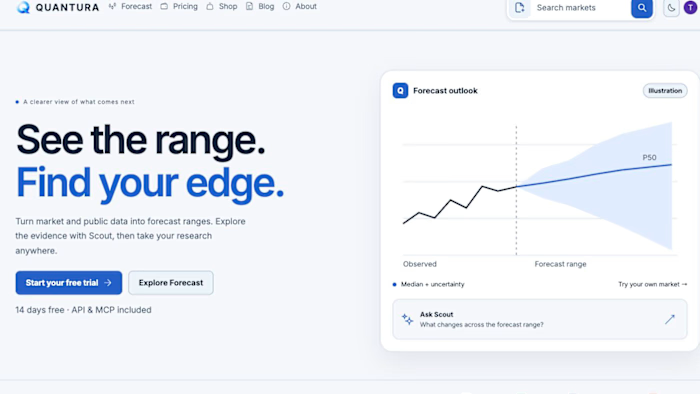
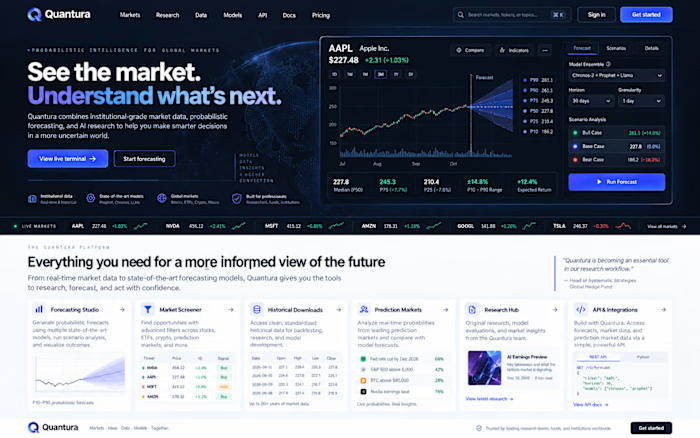
Quantura is live with data discovery, historical downloads, published stock forecasts, interactive charts and contextual Scout research. The screenshots show the working homepage, an actual published forecast, the API listing and Scout interface. Developer examples and reusable workflow resources are available alongside the product.
Each implementation records provider availability, model licensing and genuine historical coverage. These boundaries help users understand what the system produced and what the available evidence supports.
Reusable resources and next steps
I packaged the implementation approach into three downloadable resources: a Forecasting Workflow Blueprint, a Quantura API & MCP Starter Kit, and a Forecast Evaluation & Quantile Audit Kit. Custom client work can begin with a scoped pilot: data audit, scheduled pipeline, chronological validation and handoff.
Like this project
Posted Oct 12, 2026
Unified market and economic data, model ensembles, Scout research, and OAuth API/MCP access in a live forecasting product.
Likes
1
Views
0