
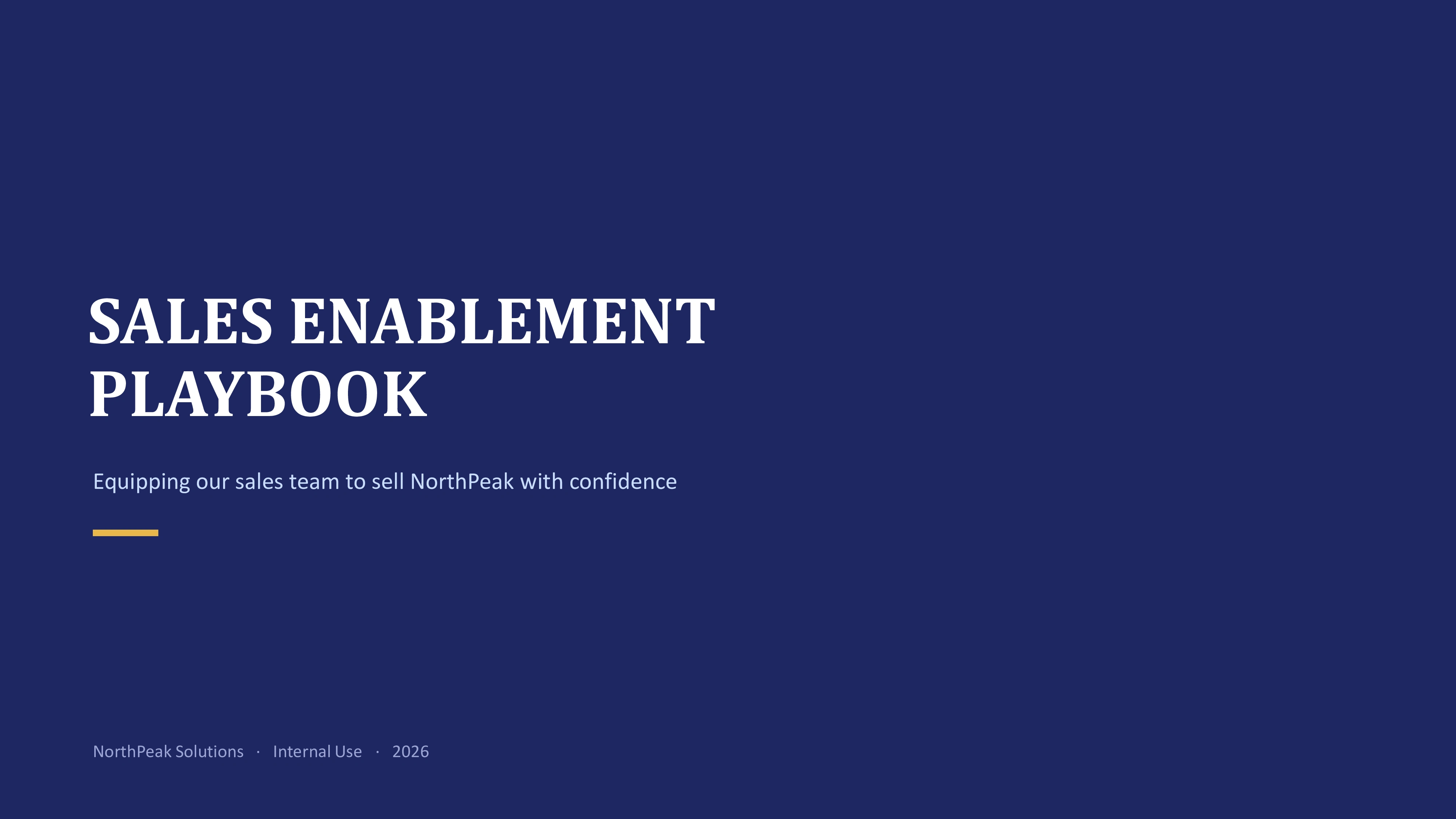
Sales Enablement Playbook — Concept Project
A 10-slide Sales Enablement Playbook designed as an internal-facing deck to equip a sales team with the messaging, positioning, and objection-handling tools they need to sell effectively. This is a training/reference deck aimed at the sales team itself, not a buyer-facing pitch deck.
Note: This is a concept/spec project built around a fictional B2B SaaS company (NorthPeak Solutions, a retail inventory management platform) to demonstrate the format and design approach. The structure can be easily adapted for a real client by swapping in their product, market data, and competitors.
The Goal
Give a sales team one consolidated resource covering: what the company sells, who to sell to, why they win against competitors, how to move a deal through the pipeline, and how to handle common objections. The aim is for reps to spend less time hunting for information and more time selling consistently on-message.
Process & Approach
Started from a standard sales-enablement structure: overview, market, ICP, differentiators, product, competition, process, objections, and resources
Chose a "Midnight Executive" navy/gold palette to feel authoritative and premium rather than generic corporate blue
Varied the layout on every slide (stat cards, native bar chart, icon-numbered grids, comparison table, process-flow arrows, objection rows) so it doesn't read as repetitive bullet slides
Kept data visualizations native and editable (real PowerPoint chart, not an image) so it's easy for a client to update numbers later
The Slides
Slide 1
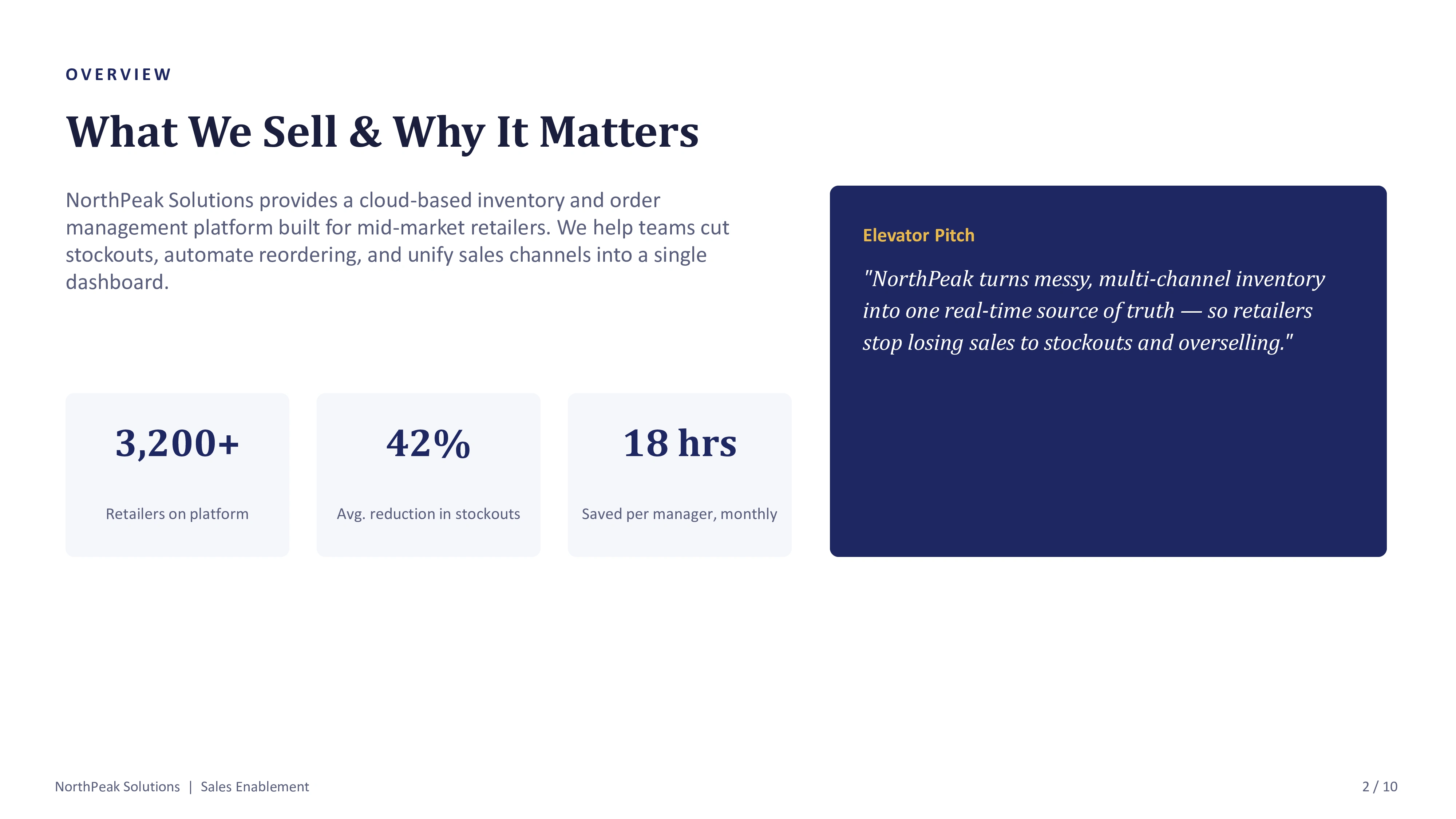
Slide 2
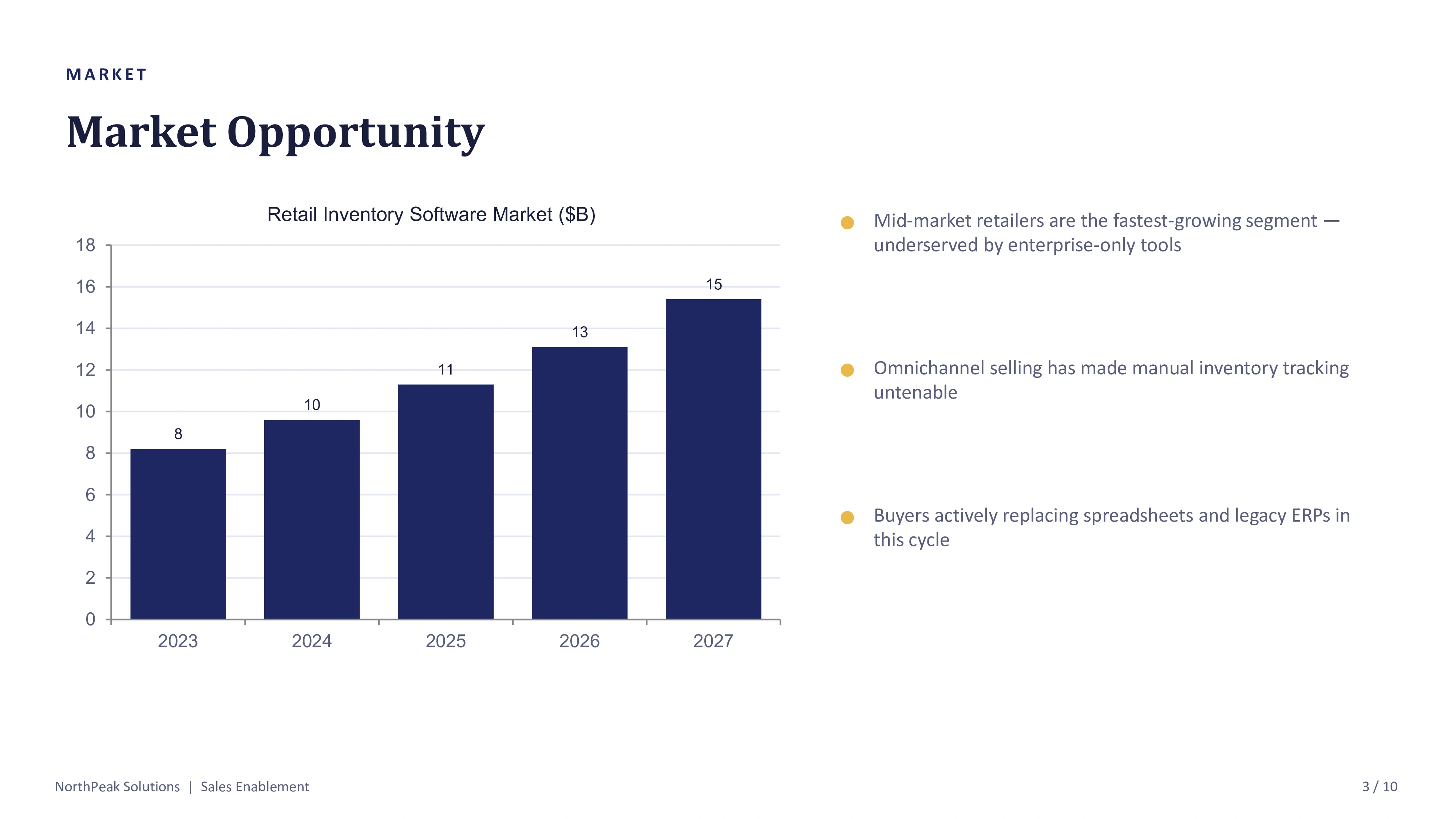
Slide 3
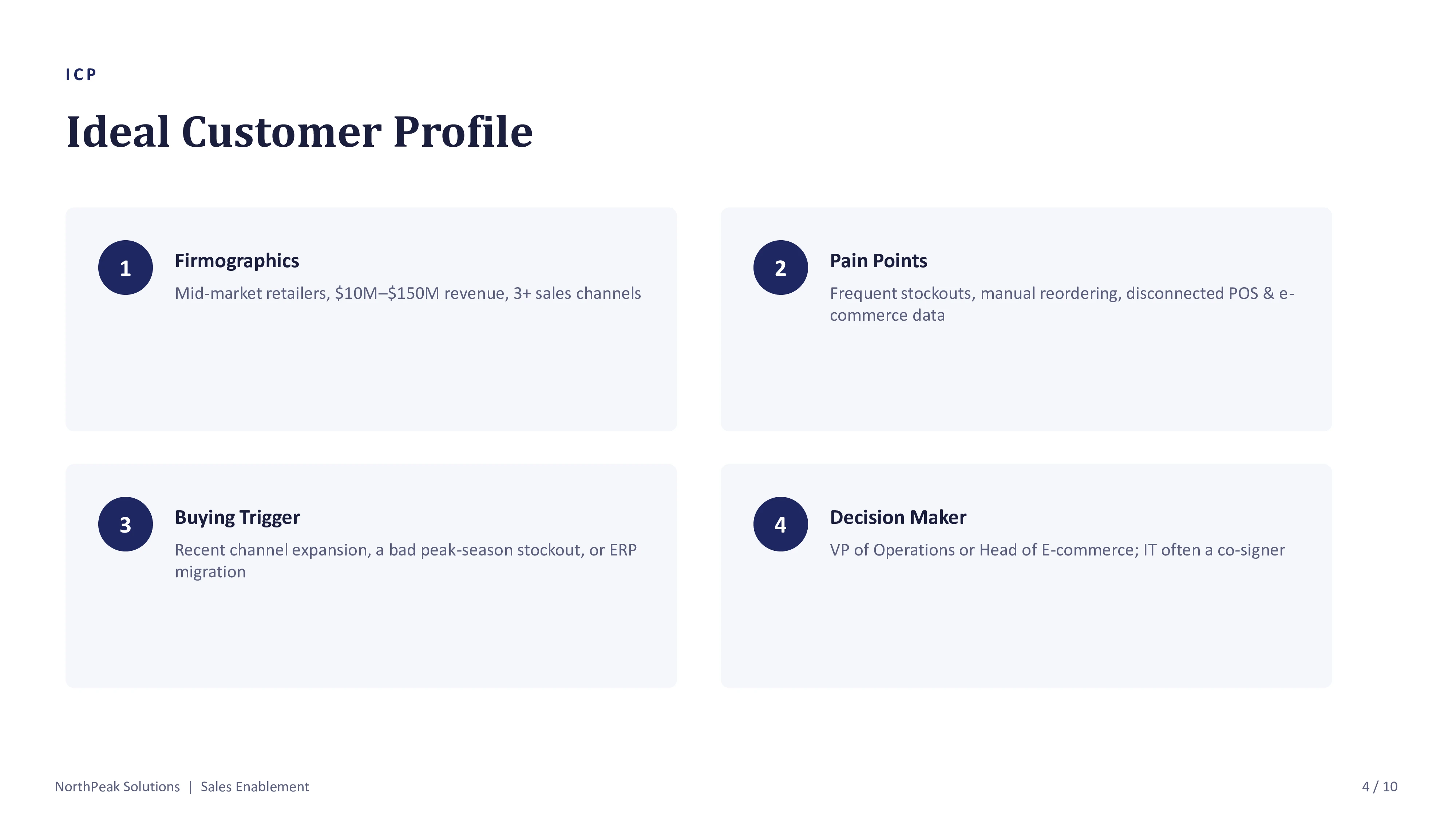
Slide 4
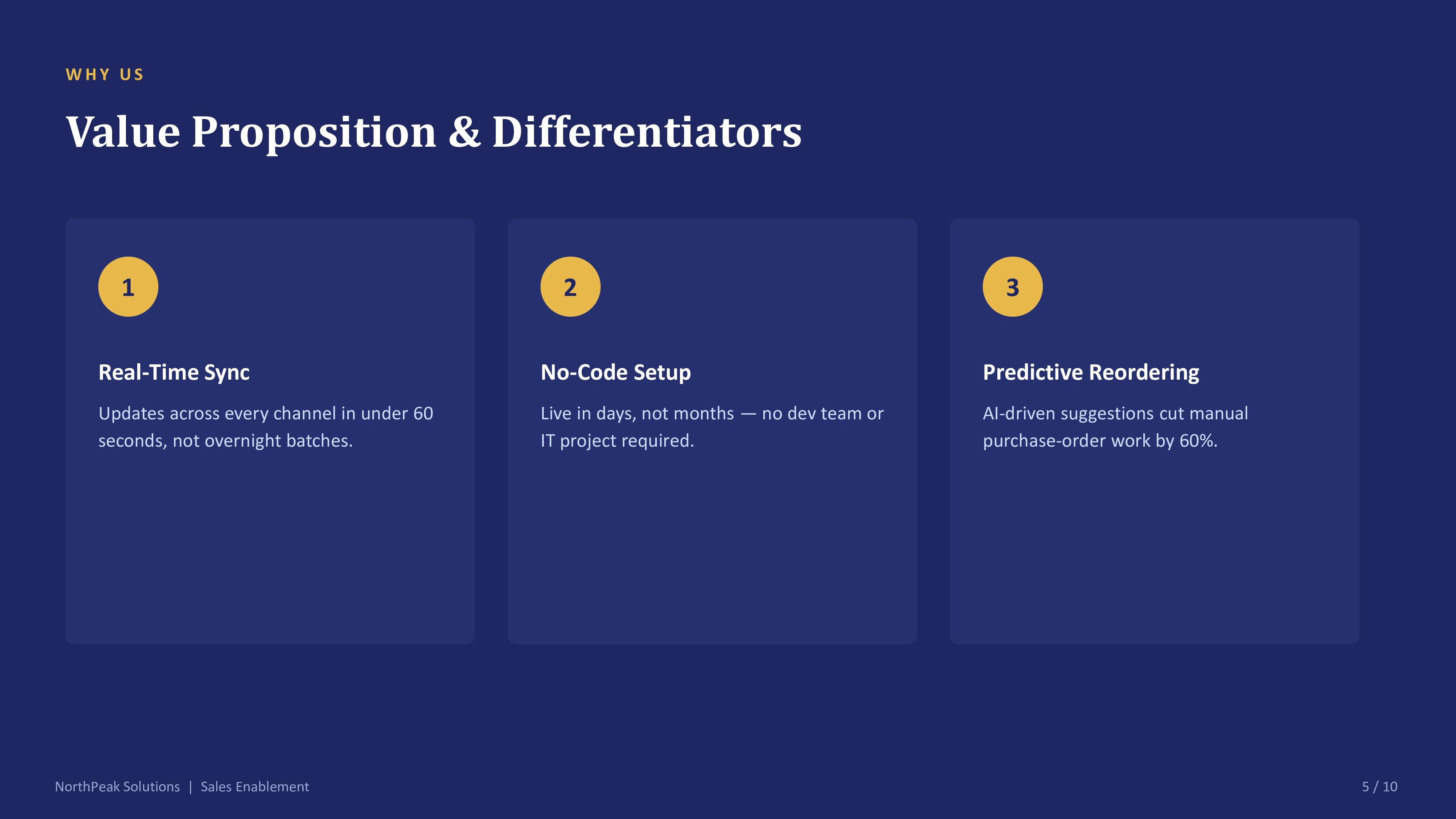
Slide 5
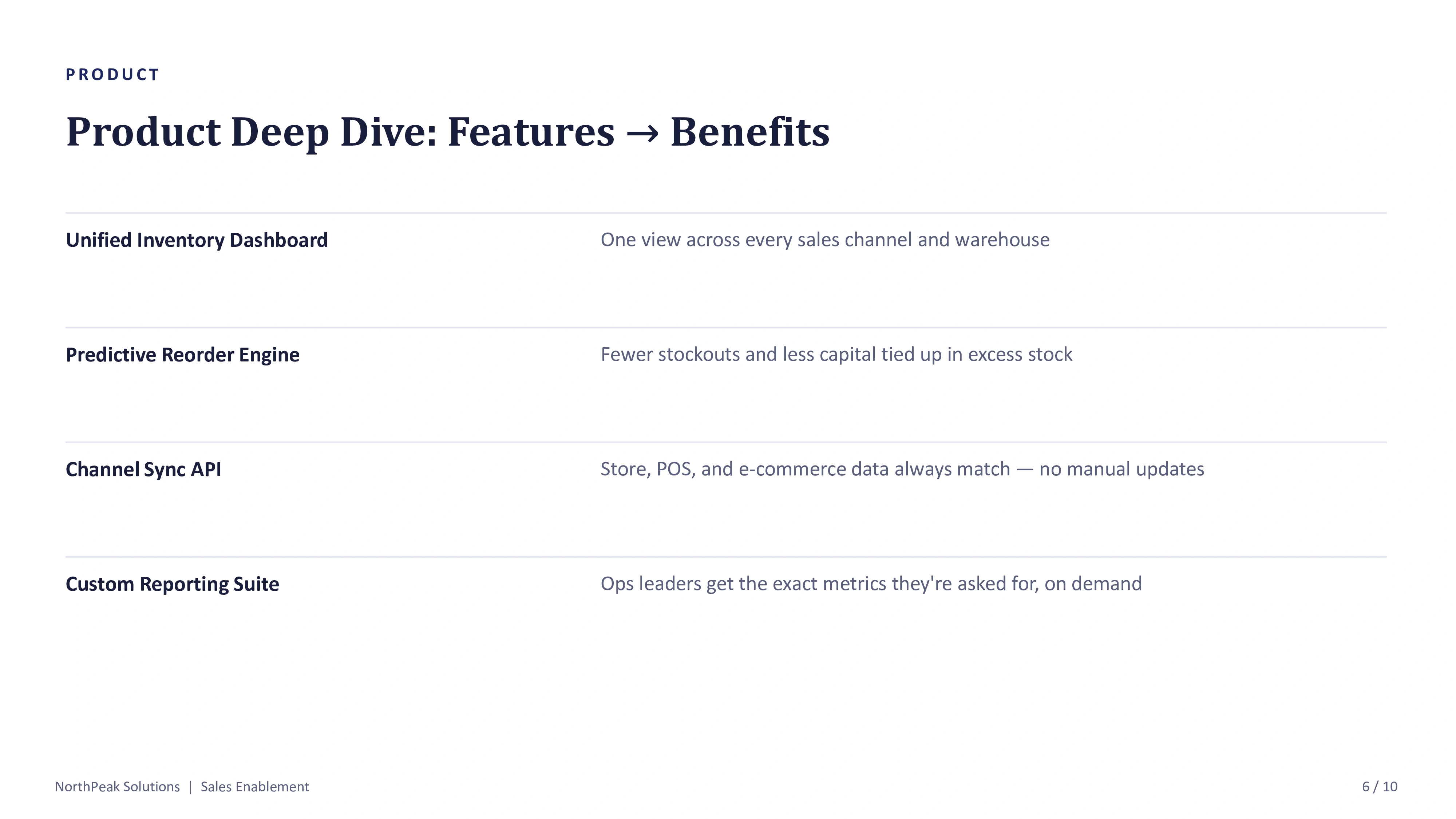
Slide 6
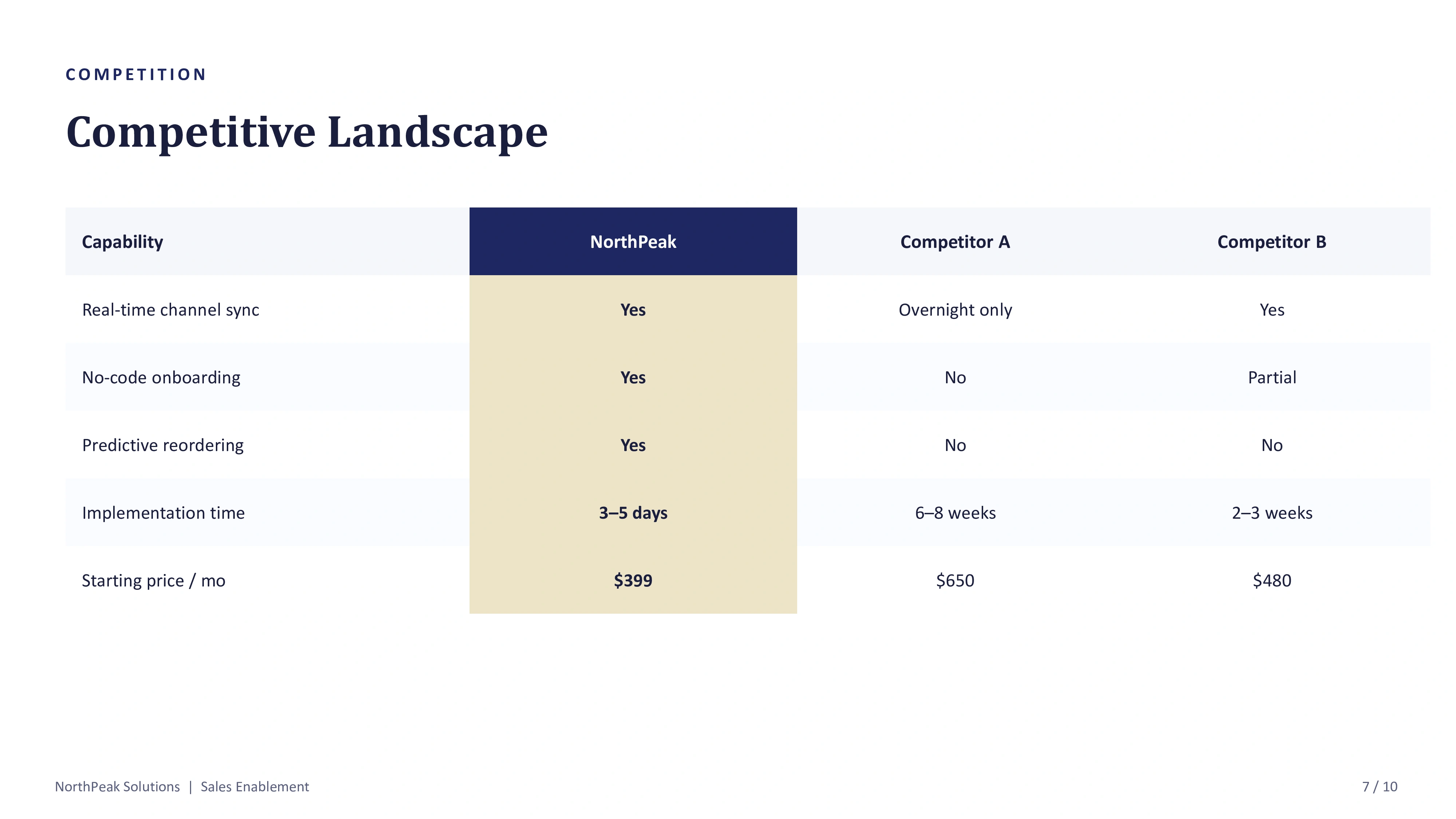
Slide 7
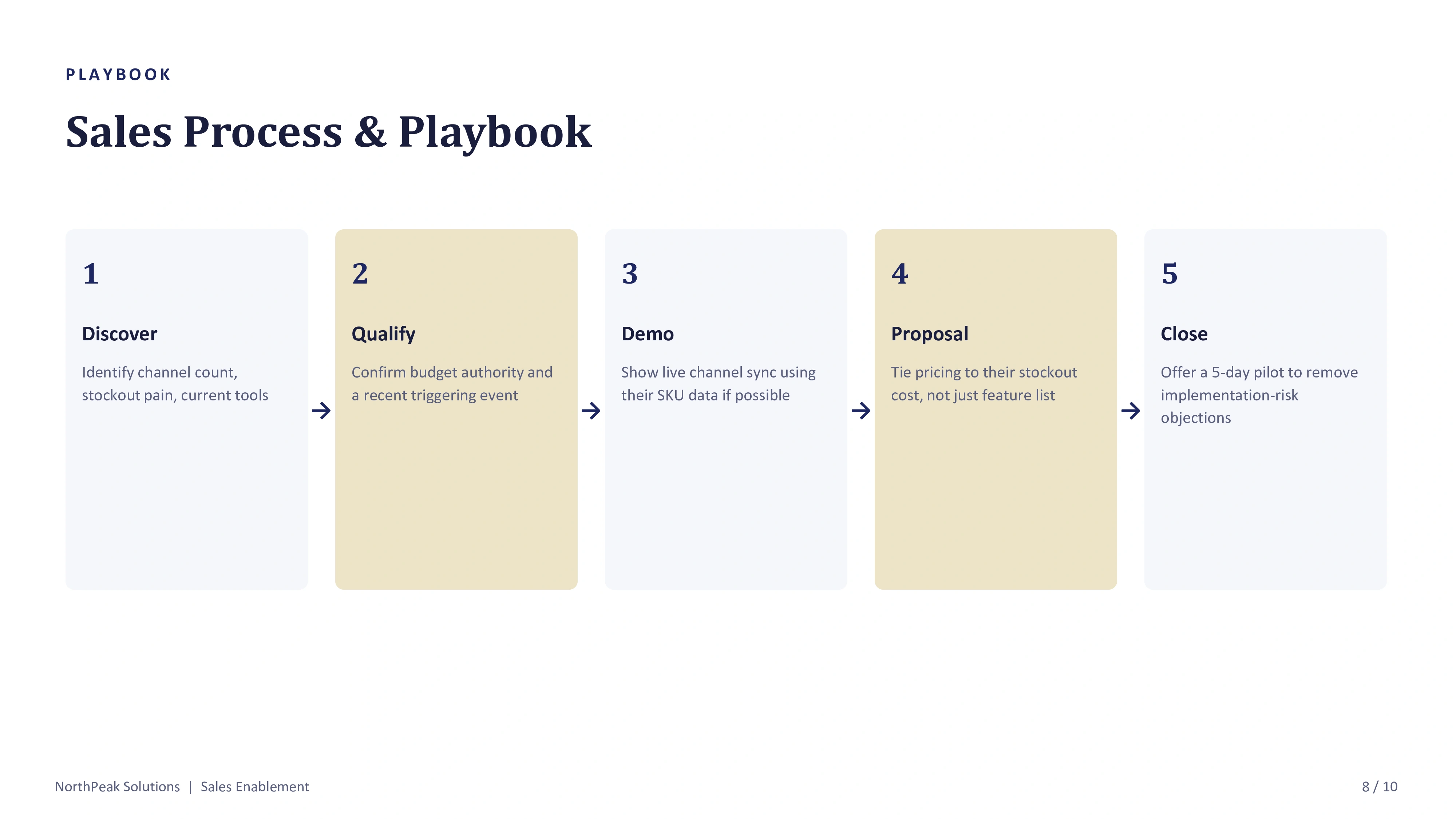
Slide 8
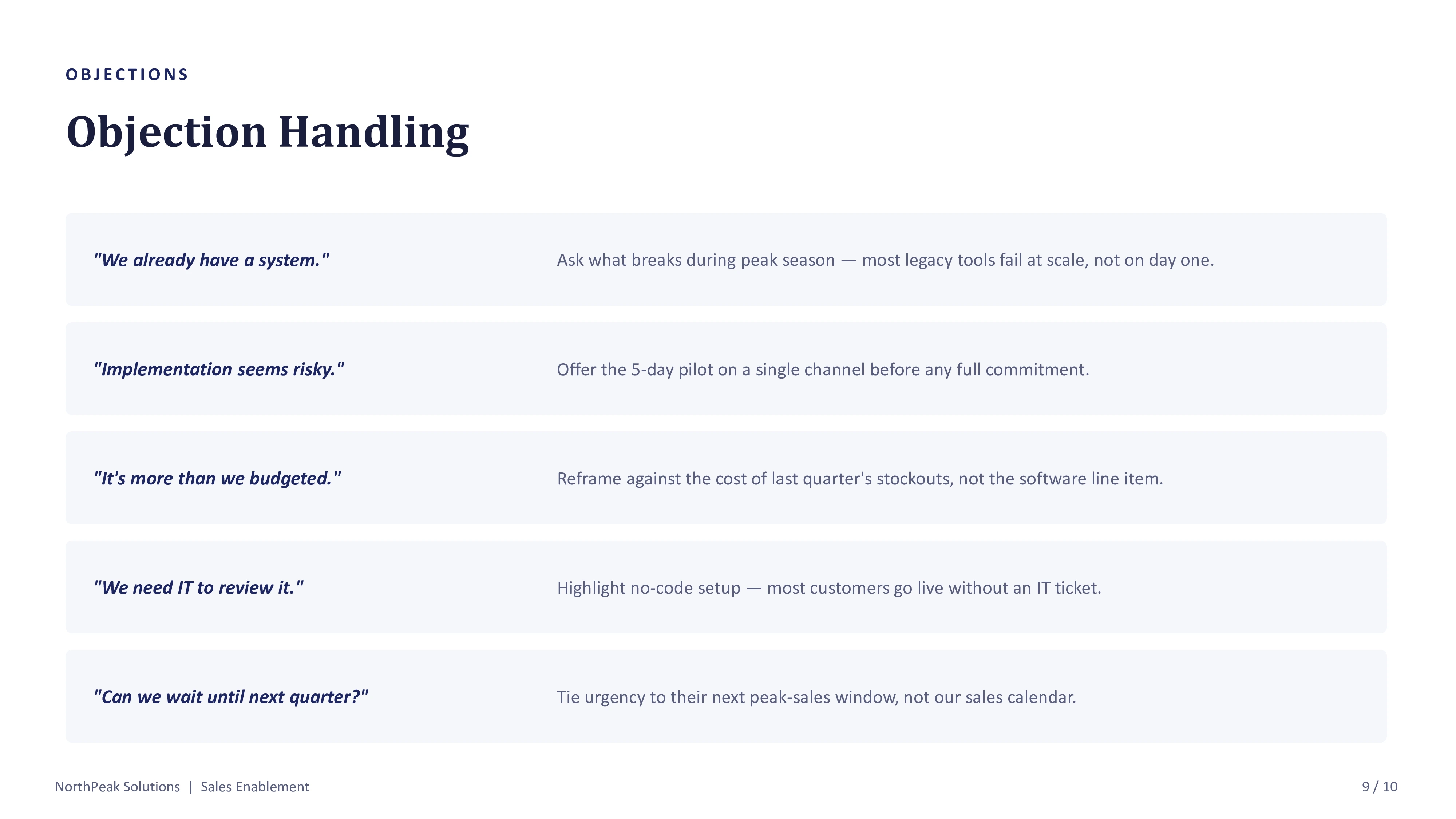
Slide 9
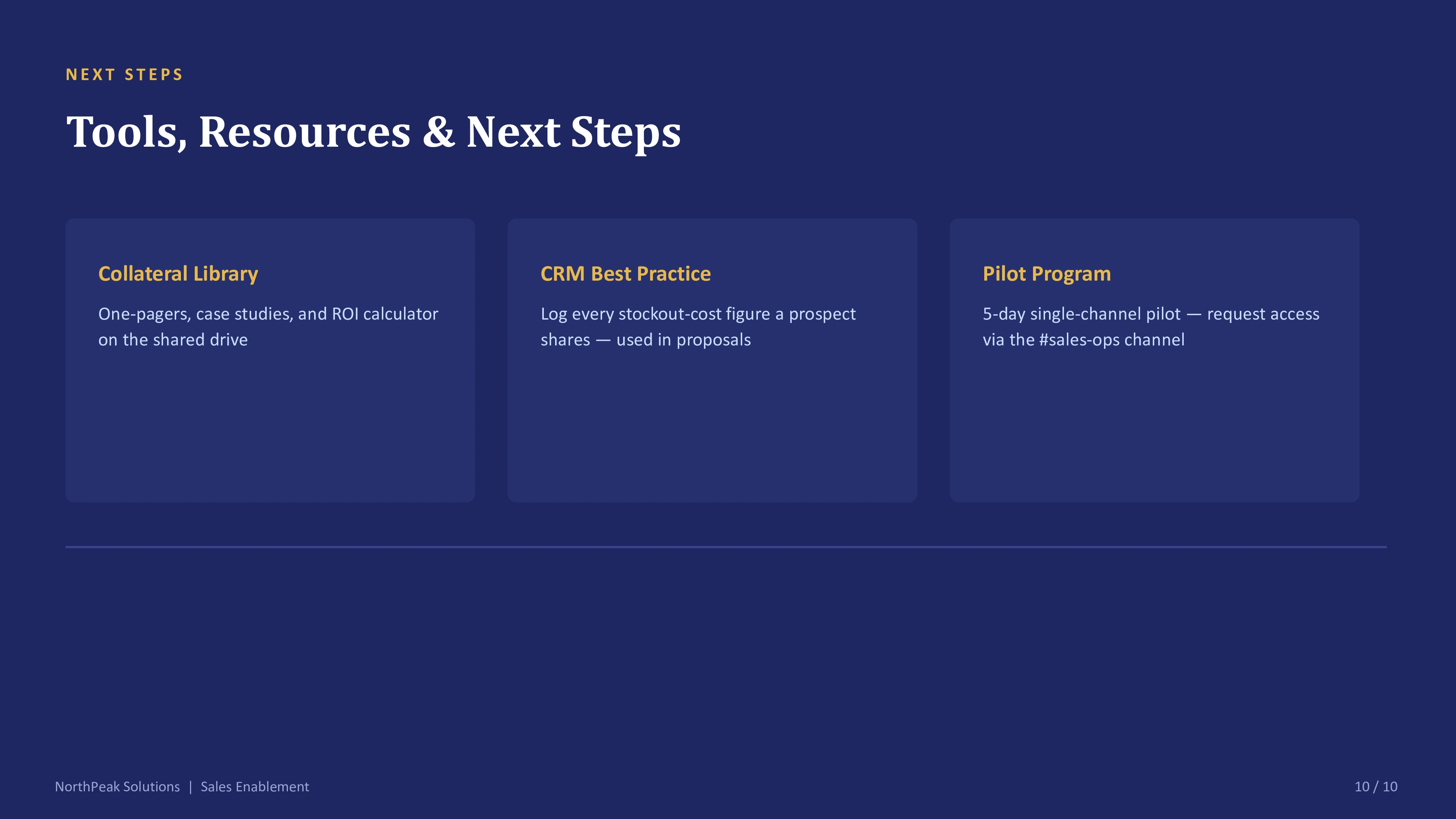
Slide 10
Outcome
This concept piece showcases range in sales/business deck design: data visualization, tables, process diagrams, and varied layouts across a cohesive visual system. The structure and design are ready to be adapted for a real client with actual metrics and results.
2 likes · 19 views · Jul 19, 2026
A 10-slide sales enablement deck designed to equip B2B SaaS sales teams with structured messaging, competitive positioning, and objection-handling frameworks. Built for internal use, with a focus on clarity and fast adoption across distributed teams.


