Own the Podium — Role-Based Funding Platform

Zahid Hussain


Overview
Own the Podium runs the entire sports-funding process for Canada's national sport organizations — and more than 300 people depend on it to do their part without ever stepping outside their authority. I designed and built it end to end: the web applications, the back-end services, and the role-based permission engine that governs every action across the funding lifecycle.
Demo: a walkthrough of the Own the Podium platform — the portal, the funding workspace, and moving a budget request through the lifecycle.
The problem
Allocating national sport funding is a multi-stage, high-stakes process. Applications are submitted, reviewed, revised, approved, and finally allocated — each stage touched by different people with different authority. Run over spreadsheets and email, accountability gets murky: who can see what, who can approve what, and at which stage. A single permissions mistake can undermine the integrity of the entire allocation.
The approach: permissions as the foundation
The core of the system is a granular, role-based access engine. Instead of a simple admin-versus-user split, I modeled roles that control not just what a user can see but which actions they can take at each stage of the funding lifecycle. The platform defines internal roles — Administrator, Vice President (Sport), HPA User, Database Administrator, and a simple User — alongside external roles with edit or minimal permissions, and lets each role be activated per application (Funding and Performance). This let the organization mirror its real governance, with reviewers, approvers, and administrators each operating strictly within their mandate.
Demo: role-based access in action — the same screens change by role, so each user only sees and touches the stages and actions their mandate allows.
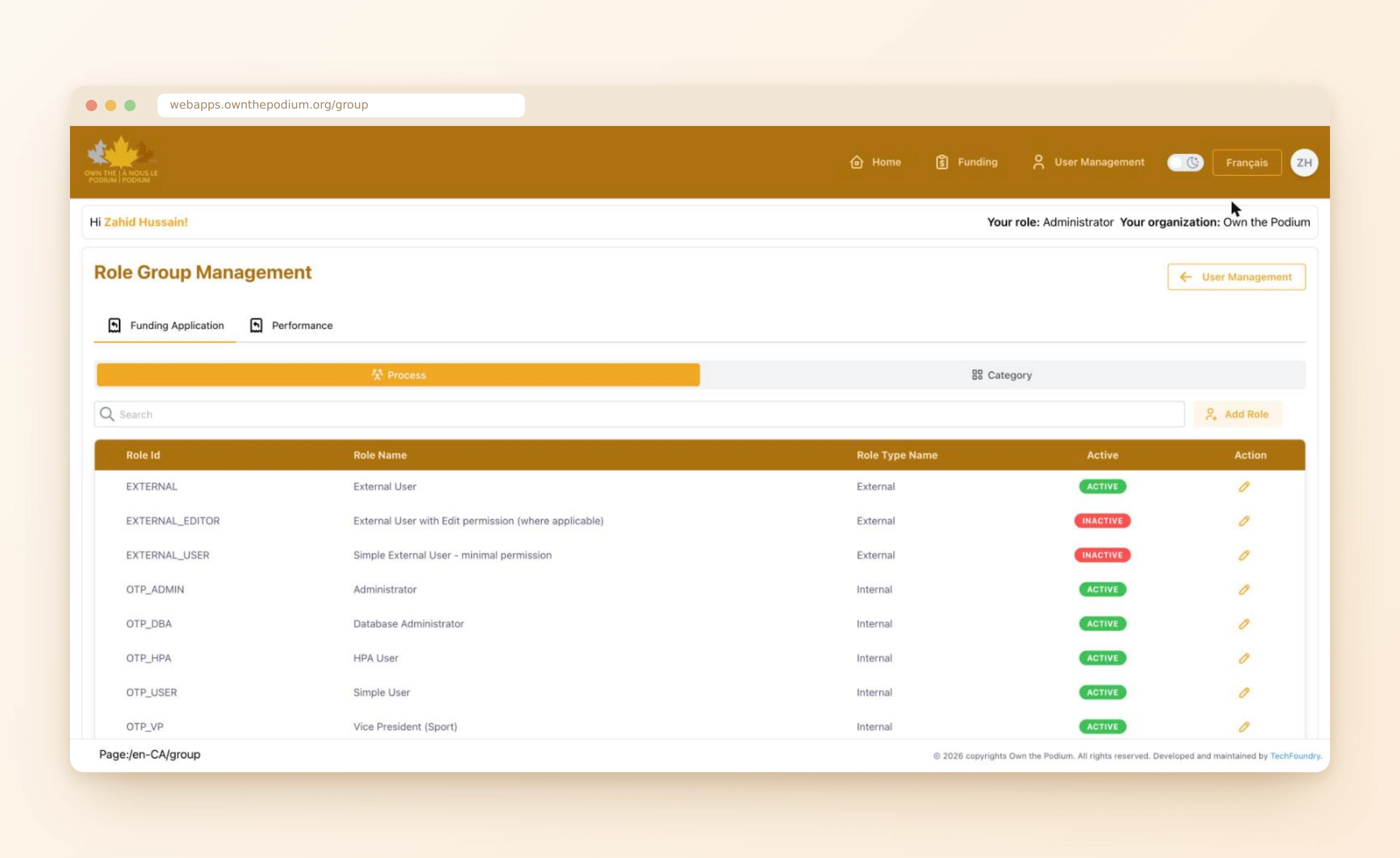
Role Group Management: internal roles (Administrator, VP, HPA, DBA) and external roles, each toggled active or inactive per application.
What I built
Funding module — submit budget requests, then track, revise, approve, and allocate funds across every stage of the process. User management — create users, assign them to organizations and sports, and control both their access and their per-action permissions. Role Group Management — define roles and toggle them active or inactive per application, with a clear separation of internal and external role types.
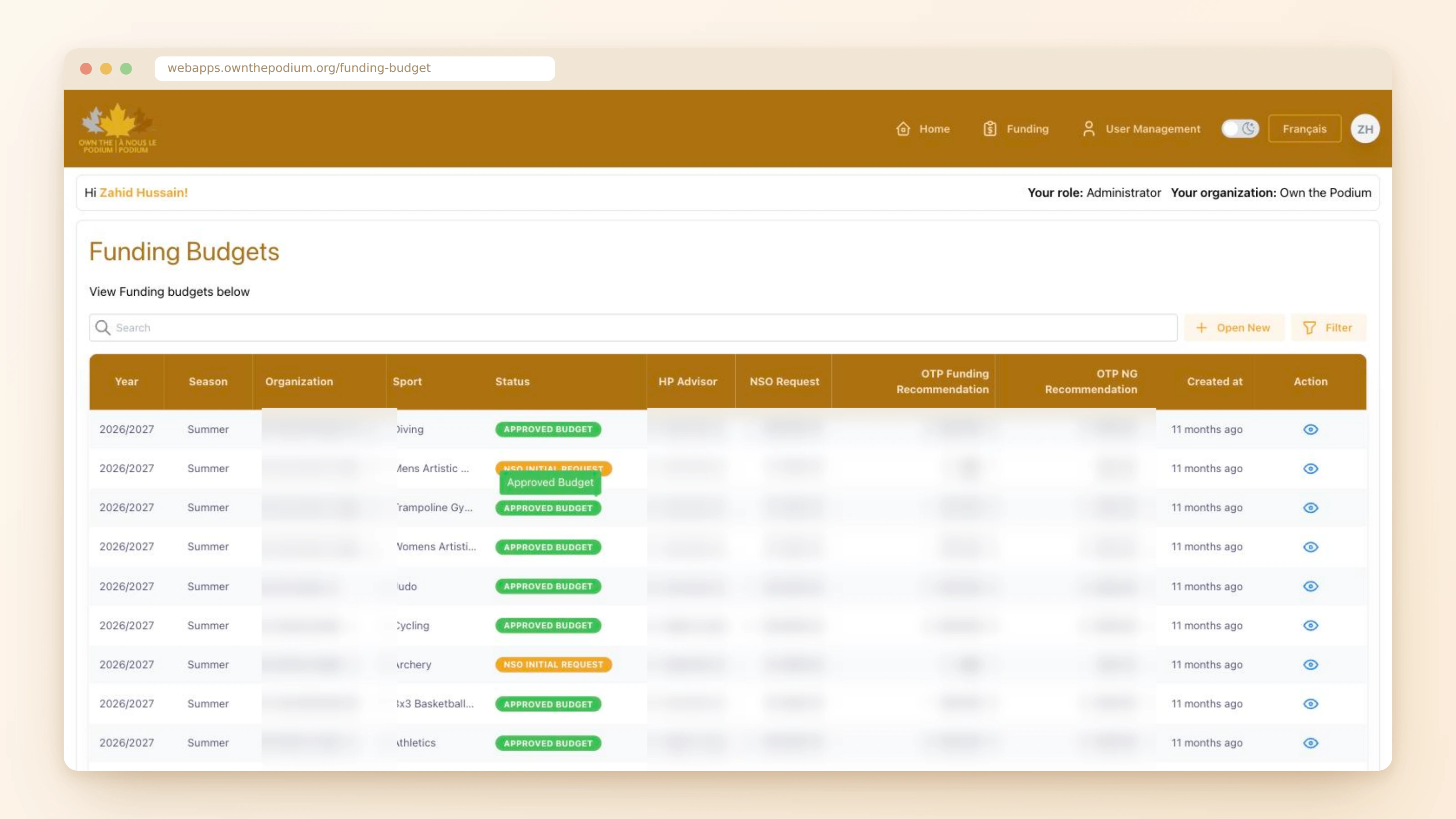
The Funding module: every NSO budget request tracked through review, revision, approval, and allocation. Organization names, advisors, and amounts are blurred here to protect client confidentiality.
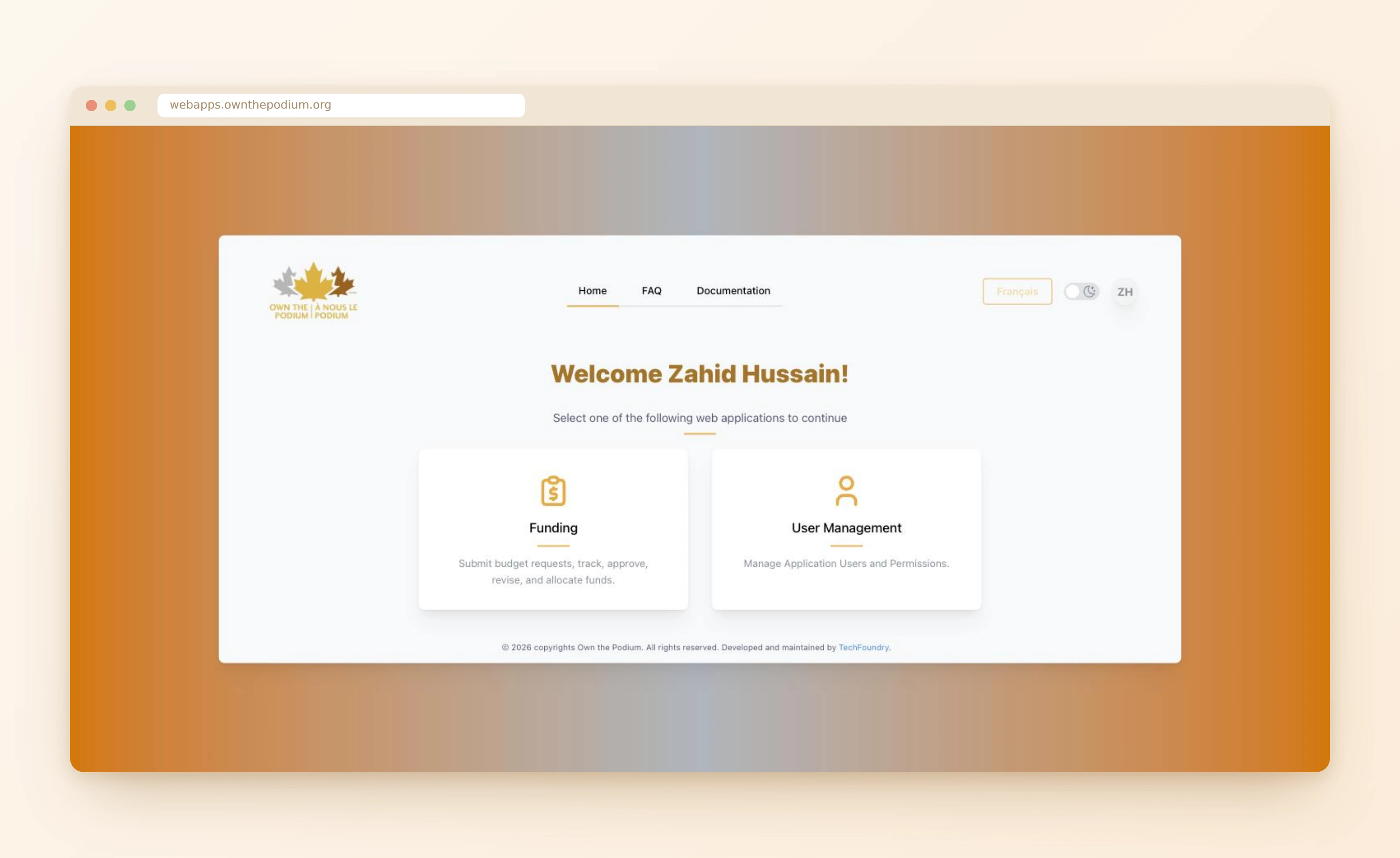
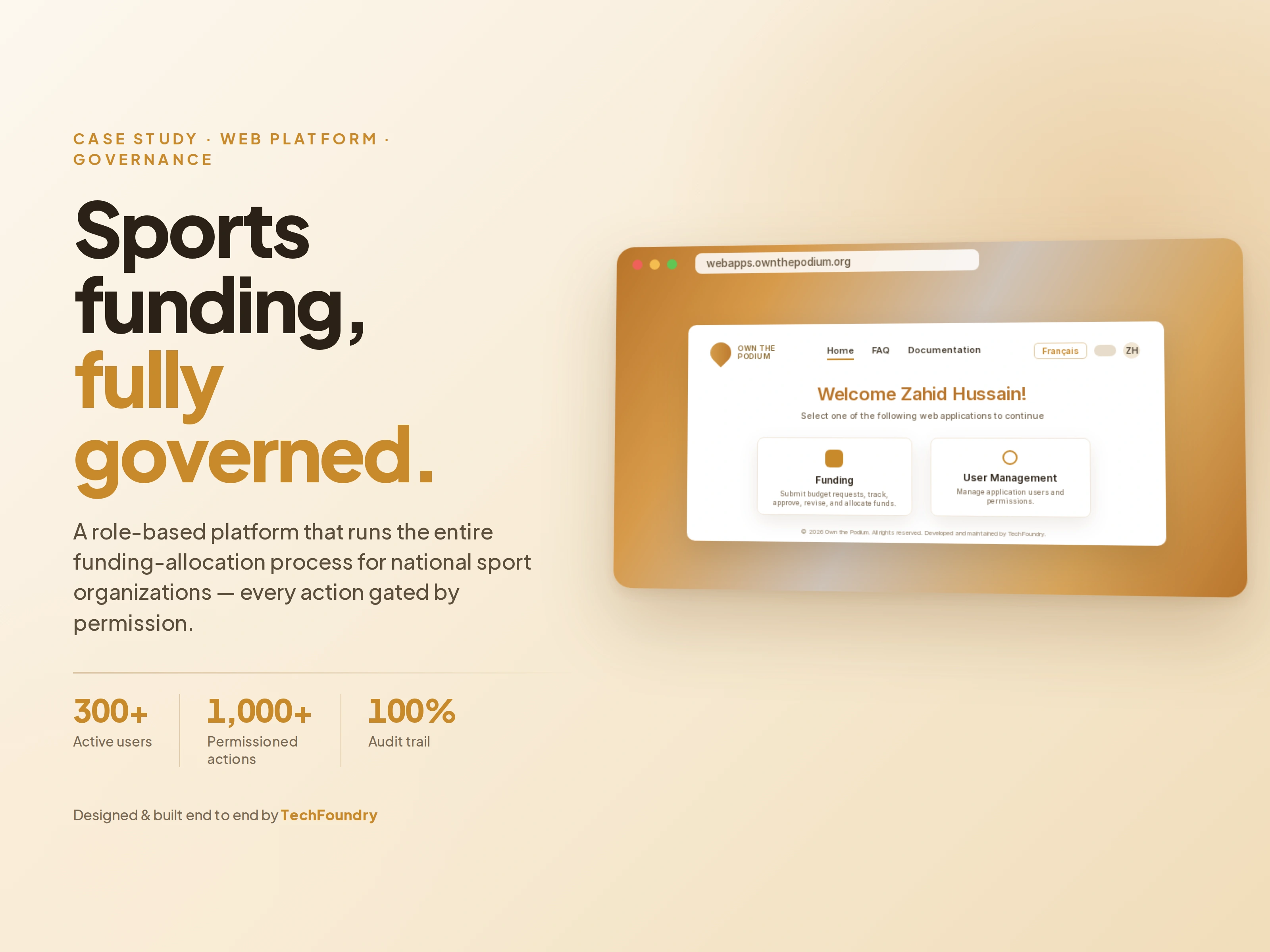
The entry point: two governed workspaces — Funding for budget requests and allocations, User Management for access and permissions.
Results
300+ people now work in one governed system instead of scattered spreadsheets and email threads. Every one of 1,000+ distinct actions is gated by a specific permission, so no one can review, approve, edit, or allocate outside their mandate. And because each step is attributable, the organization has a clear, auditable record of who did what and at which stage — turning an error-prone manual process into stage-aware governance it can stand behind.
Note: the figures above are illustrative and have been changed to protect the confidentiality of the client's data.
Tech
The suite is built on a micro-frontend architecture — independently owned, independently deployable front ends composed into one seamless experience — so the development lifecycle scales cleanly as the platform grows and new modules ship without stepping on each other. Next.js / React front ends, Node.js back-end services, and a custom role-based access-control layer at the core.
Like this project
Posted Aug 12, 2026
Production platform running the full sports-funding lifecycle for national sports organisations — 300+ users, 1,000+ permissioned actions, stage-aware RBAC.
Likes
2
Views
24
Clients
Own the Podium