Development of Gripco LIMS Platform

Saadaan Hassan


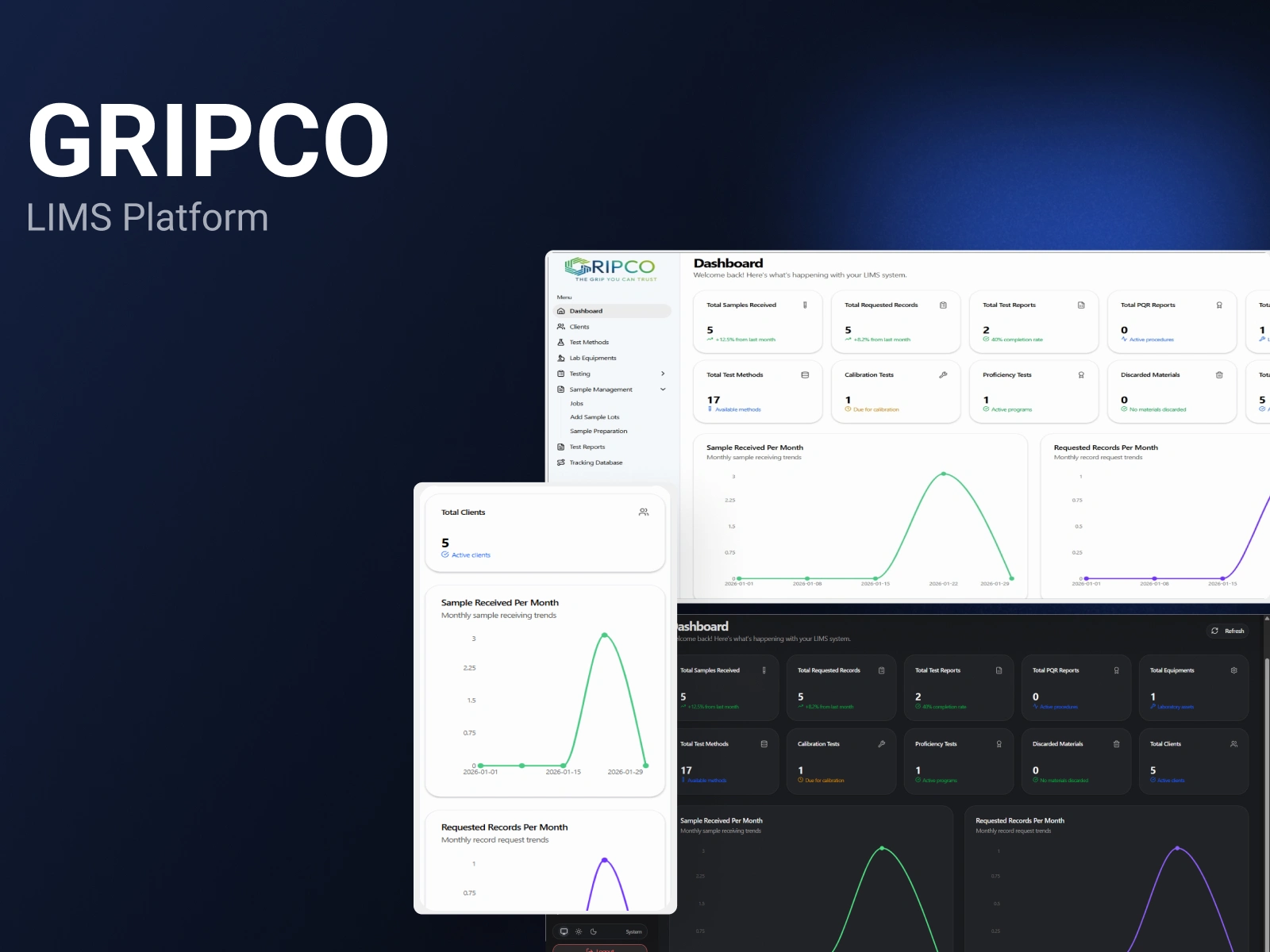
Gripco is a Laboratory Information Management System (LIMS) designed to digitize laboratory workflows including sample tracking, test lifecycle management, reporting, and administrative control. The platform centralizes operational data, reduces manual errors, and provides real-time visibility into laboratory performance through a scalable web-based architecture.
Gripco was developed to modernize laboratory operations by replacing fragmented, paper-based, and spreadsheet-driven workflows with a centralized digital system.
The objective was to build a secure, scalable, and modular LIMS platform capable of managing:
Sample lifecycle tracking
Test assignments and result management
Role-based access control
Administrative dashboards
Operational reporting
The system was engineered to support real-world laboratory environments requiring traceability, auditability, and operational efficiency.
The Problem
Laboratories commonly face:
Manual sample logging errors
Lack of real-time status visibility
Fragmented record keeping
Delayed reporting
Limited audit trails
Poor coordination between lab staff and administrators
Existing workflows relied heavily on spreadsheets and manual processes, increasing turnaround time and risk of data inconsistencies.
The Solution
Gripco provides a centralized LIMS platform with:
End-to-end sample lifecycle tracking
Role-based dashboards for lab technicians and administrators
Digital test result recording and validation
Secure access control mechanisms
Reporting and analytics for operational oversight
The platform ensures traceability from sample intake to result finalization.
System Architecture
1. Application Layer
Modular web-based interface
Role-based user experience
Dynamic dashboards for technicians and admins
2. Backend Layer
RESTful API architecture
Secure authentication & authorization
Business logic for:
Sample status transitions
Test assignment workflows
Result verification pipelines
3. Data Layer
Structured relational database
Normalized schema for:
Users
Samples
Tests
Reports
Audit logs
4. Security & Compliance
Role-Based Access Control (RBAC)
Data validation safeguards
Audit trail support
Secure login and session handling
Sample Management
Unique sample ID generation
Intake logging
Status tracking (Received → In Progress → Completed → Reported)
Test Management
Test assignment to technicians
Status monitoring
Result input and verification
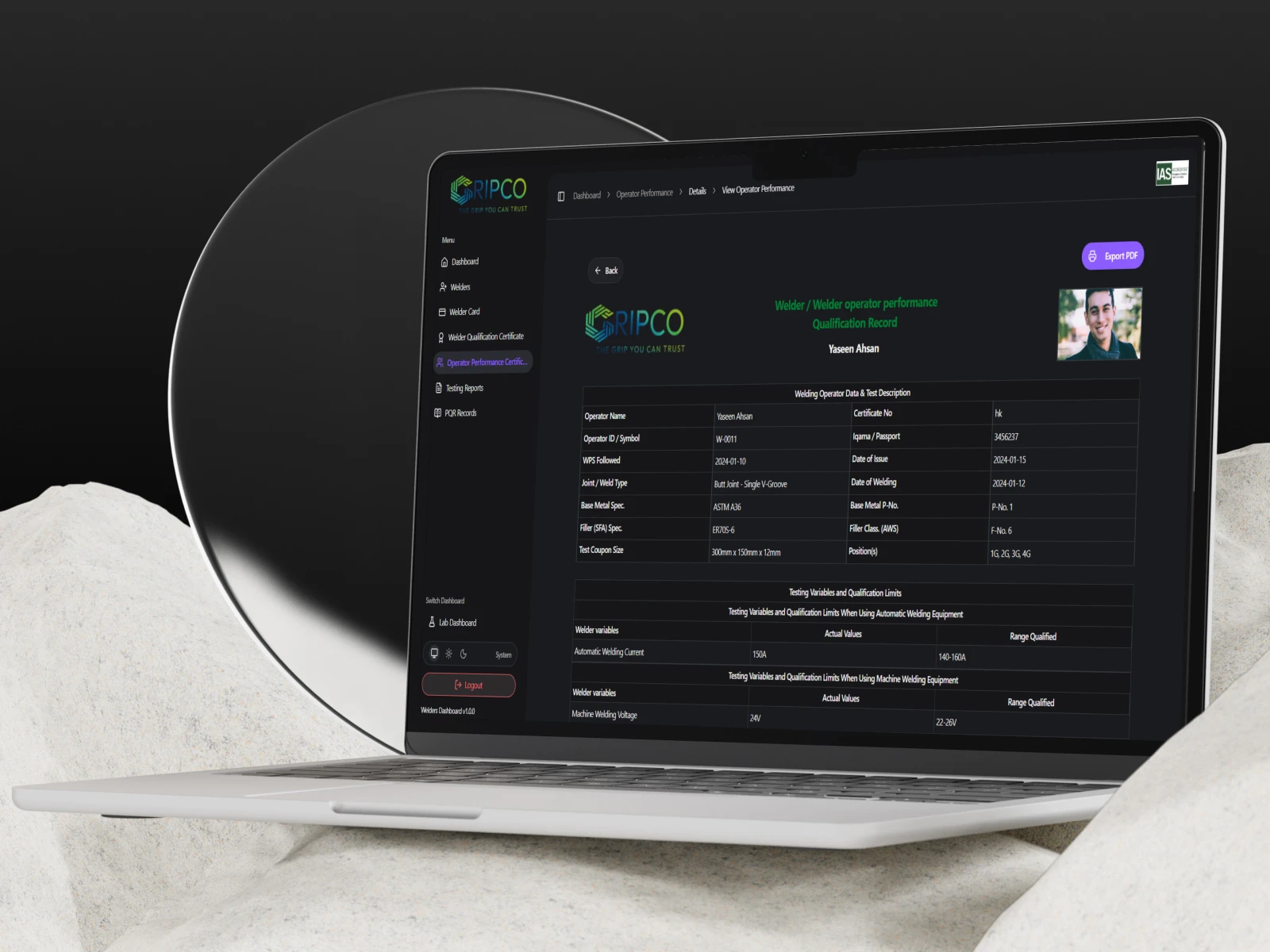
Digital result reports
Export capabilities
Historical record retrieval
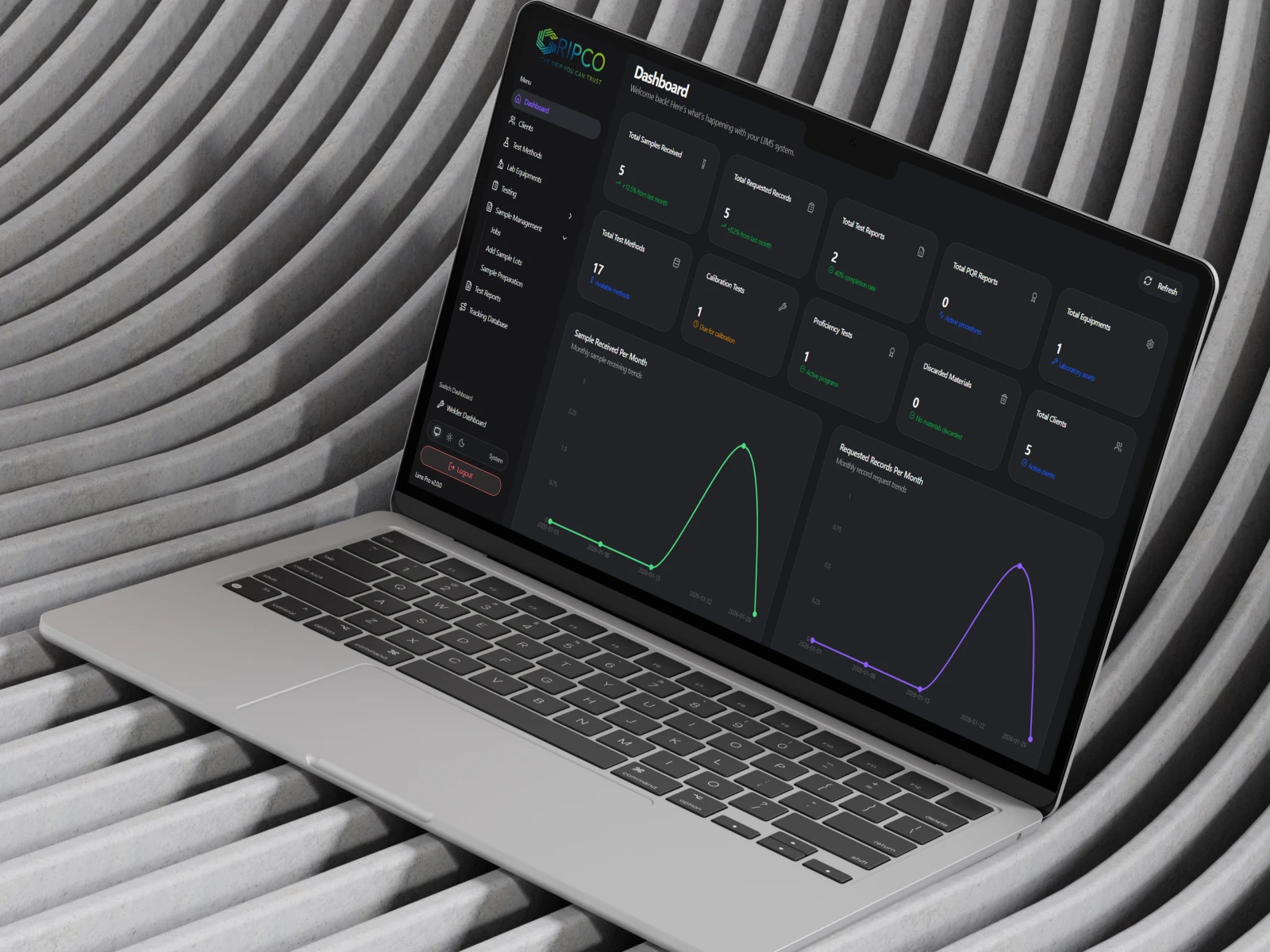
Administrative Dashboard
User management
Workflow monitoring
Performance visibility
Engineering Decisions
Modular Backend Design
Allows scaling new laboratory modules without restructuring core logic.
Normalized Database Schema
Prevents redundancy and ensures data consistency.
Essential for laboratory data sensitivity and operational security.
Scalability Strategy
Multi-lab deployment capability
Extensible test catalog architecture
Reporting layer designed for analytics expansion
API-first structure for future integrations
Outcome
Gripco transformed manual laboratory workflows into a structured digital system, improving operational visibility, reducing errors, and enabling better turnaround management.
The system architecture supports long-term scalability and enterprise-grade deployment.
Like this project
Posted Jun 10, 2026
Gripco digitized lab workflows, enhancing performance and reducing manual errors with a scalable system.