Venelx — CI/CD for React Native & Expo

Senthil Kumar


What Venelx is
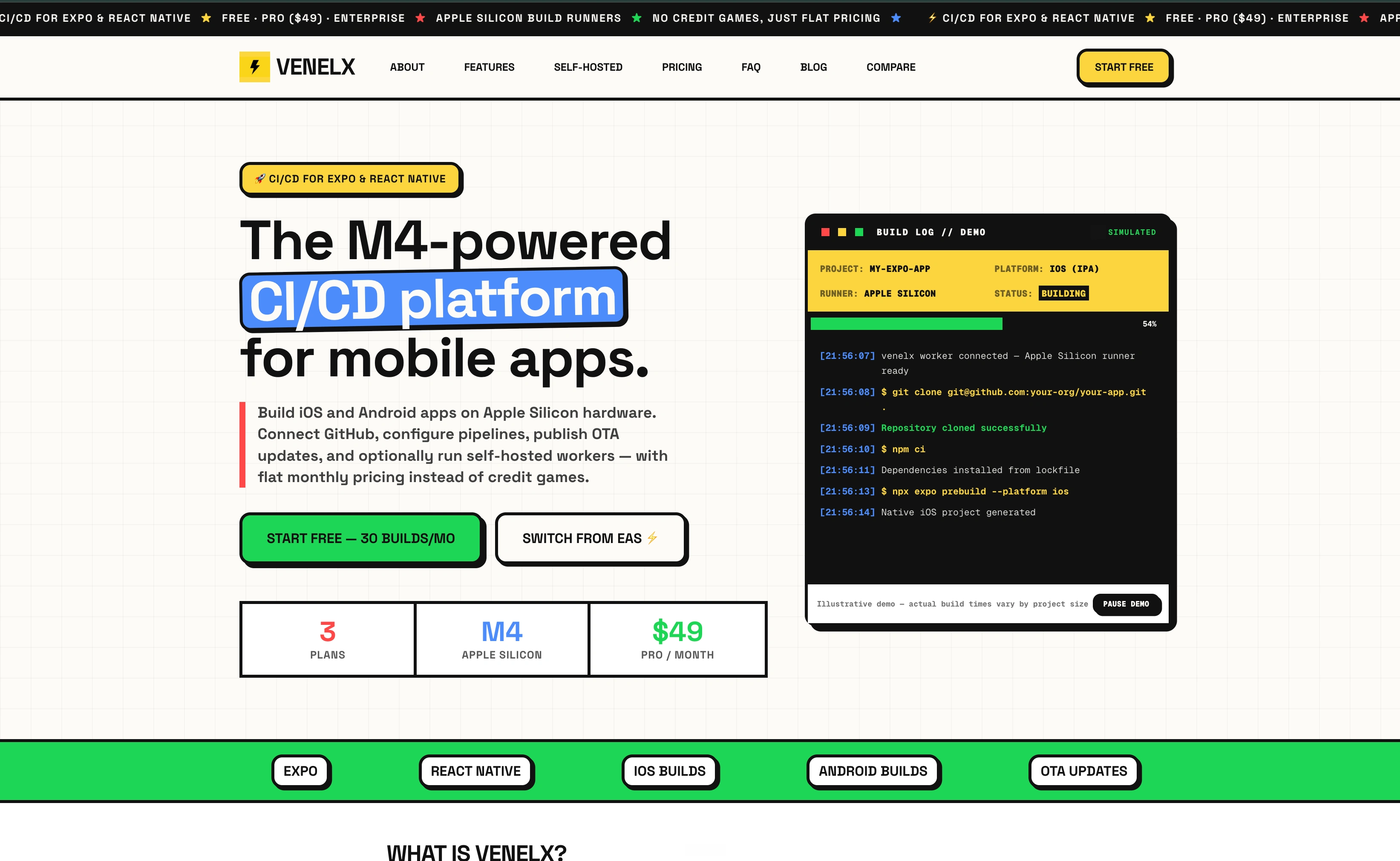
Venelx is a CI/CD platform for Expo and React Native apps. Teams connect a GitHub repository, configure iOS and Android pipelines in the dashboard, and get signed builds, OTA updates and store-ready artifacts from Apple Silicon (M4) build runners, with flat monthly pricing instead of per-build credits. Live at https://venelx.com
The problem
Hosted mobile CI charges per build minute or per credit, queues get long right when a release is due, and running your own Mac build machines is a maintenance job nobody wants. Small teams shipping weekly were spending more time waiting on builds than writing features.
What I built
Next.js dashboard: projects, pipelines, live-streamed build logs, OTA update channels and team access
Node.js backend and job scheduler that queues builds and hands them to Apple Silicon workers, with GitHub integration for triggers and status back on the repo
Worker agent: clones the repo, restores caches, runs Expo prebuild and the native iOS and Android builds, signs the output and uploads the artifacts
Self-hosted worker mode, so a team can run builds on its own Macs while keeping the same dashboard, plus Docker-based deployment of the whole platform
Results
Build-and-release cycles up to 10x faster than the hosted CI the first teams came from
Flat pricing: a free tier with 30 builds a month, Pro at $49 a month, and an Enterprise plan, with no per-build credits
Designed, built, deployed and operated end to end by me, from the dashboard UI to the build workers
Stack
Next.js, Node.js, TypeScript, Docker, GitHub API, Expo and React Native tooling, Apple Silicon build runners. Try it at https://venelx.com or compare it with EAS at https://venelx.com/compare
Like this project
Posted Oct 10, 2026
A CI/CD platform I built for Expo & React Native mobile builds — up to 10× faster build-and-release pipelines, with a backend + worker architecture.
Likes
0
Views
0