
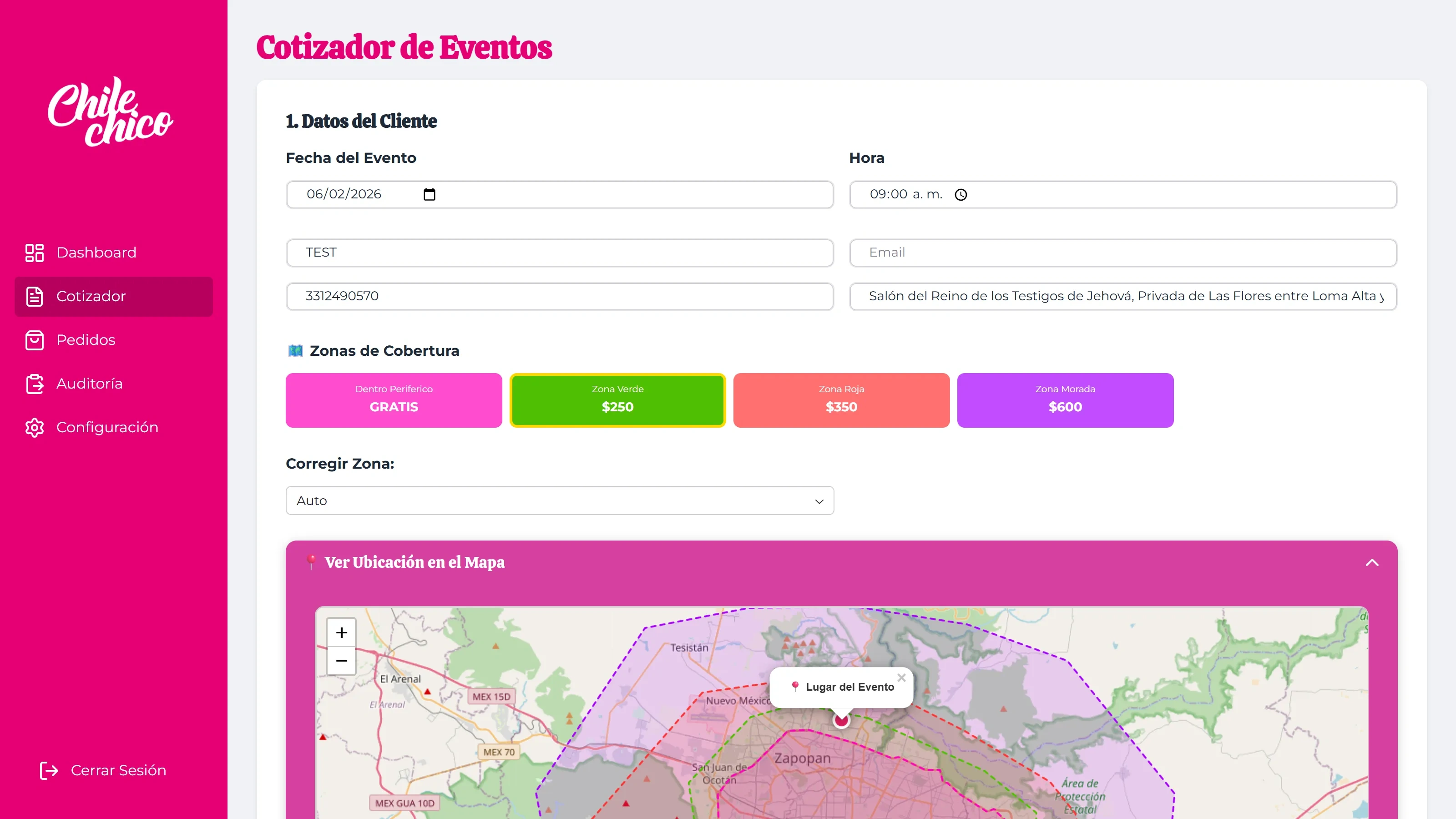
Receipt System
2026
Enterprise logistics & order workflow engine for a regional food events company — automating delivery polygons, dynamic pricing, and real-time customer notifications.
🚀 Case Study: Enterprise Logistics & Order Workflow Engine
Role: Lead Product Engineer (Architecture & UI)
Tech Stack: Python, FastAPI, React/UI, PostgreSQL (Supabase), Google Cloud Platform (Cloud Run), Docker, Asyncio.
🛑 The Problem
The client’s regional operations were bottlenecked by a manual, disjointed system. Processing logistics, calculating complex delivery polygons, applying dynamic pricing tiers, and notifying customers required multiple human touchpoints. This resulted in high operational latency and an increased margin for critical errors as the business tried to scale.
📐 The Architecture
I approached this challenge with a Design-to-Deployment mindset: mapping out a flawless user experience first, and then engineering a highly fault-tolerant, event-driven backend to support it.
⚙️ Technical Execution & Impact
1. Zero-Friction UI & Frontend
Leveraged my background in design to build an intuitive, reactive interface that abstracts the underlying complexity away from the operators, reducing training time to near zero.
2. Serverless Orchestration (GCP & Python)
Engineered a central
OrderWorkflowManager using Python and FastAPI. The backend is containerized via a multi-stage Dockerfile and deployed on Google Cloud Run, heavily optimized to eliminate cold starts and maintain response times under 200ms.3. Event-Driven & Async Processing
To prevent UI blocking during heavy operations, I implemented advanced
asyncio patterns. While the system computes complex ray-casting for delivery polygons via Google Maps and executes ACID transactions to PostgreSQL, it simultaneously:Generates physical PDF receipts in memory and uploads them to Google Cloud Storage.
Synchronizes deals and customer data with Pipedrive CRM.
Triggers real-time WhatsApp Webhooks via Respond.io.
🏆 Business Results
Delivered a robust system covered by +100 unit tests (pytest + mocking) to guarantee zero downtime in production. The platform entirely digitized the organization’s regional workflow, transforming a slow, error-prone manual process into an automated, real-time logistics engine.
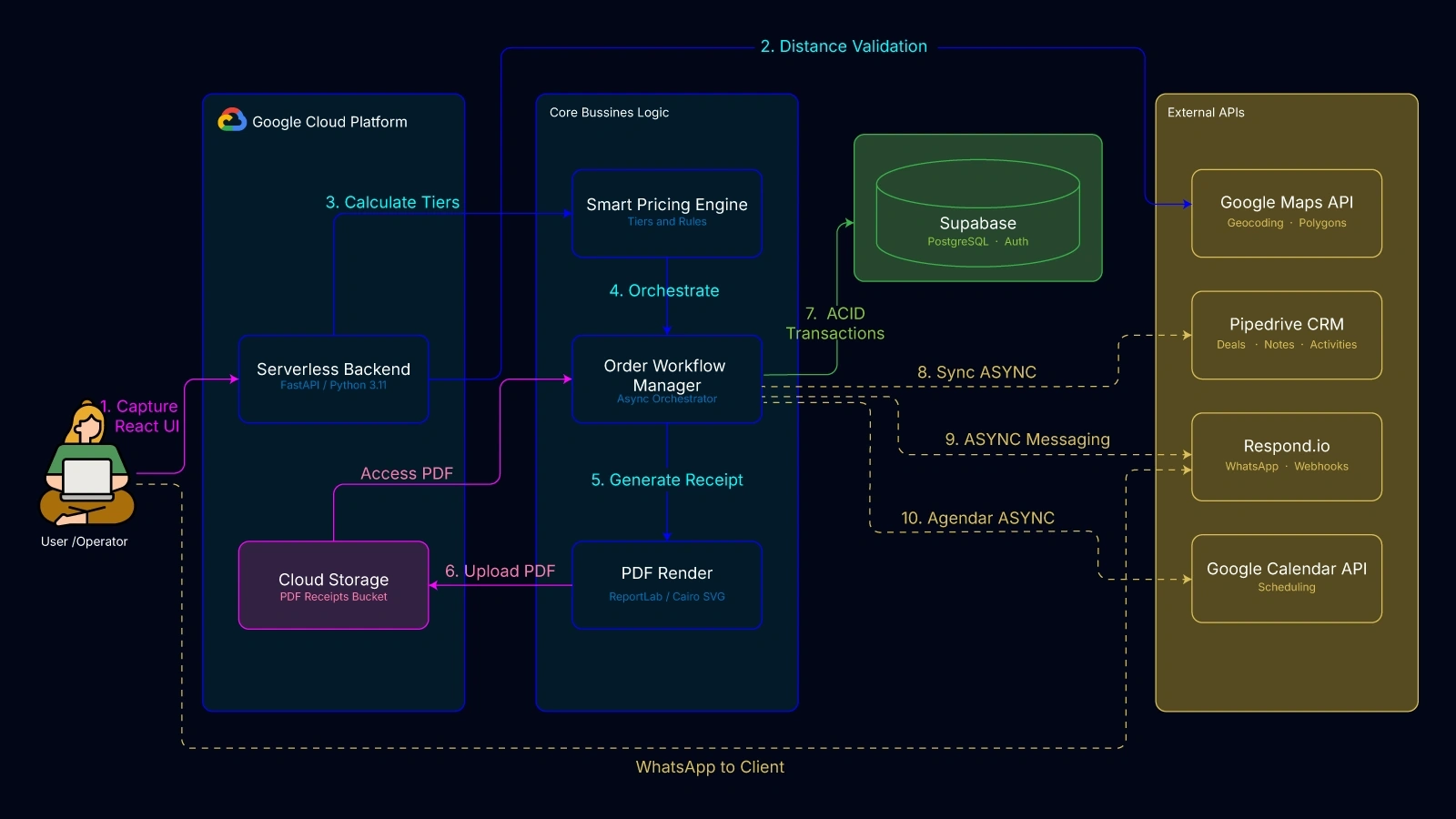
System Architecture Diagram
Tech Stack
Python FastAPI React PostgreSQL (Supabase) Google Cloud Platform Docker Asyncio
0 likes · 9 views · Jun 8, 2026
Enterprise logistics engine automating delivery and notifications for a food events company.


