AI-Enhanced Legal Contract Review System

Jijo Maitra


Contract Review
Orthos.ai — Product Case Study
Role Design Head / Principal Designer
Company Orthos.ai
Domain Legal Technology
Scope End-to-end product design
Every contract was a fresh act of reading from scratch
Before Orthos, a lawyer reviewing a contract had the same set of tools every time: a PDF, a Word document, an email thread, and their own memory. There was no system that knew what the company's policies said, what the counterparty had changed, or where the last conversation left off.
The result was a workflow that demanded maximum cognitive effort for tasks that required minimum judgment. Lawyers were reading line by line, cross-referencing policies manually, and tracking changes across email chains. The actual legal thinking — the reasoning about risk, the judgment calls — was buried under hours of extraction work.
"The problem was not that lawyers were slow. It was that the process asked them to do work that should never have required a lawyer."
The breaking points
01 — Manual document analysis
Analysis took 10-15 hours per contract as lawyers reviewed every clause line by line with no automated support for policy checks or risk flags.
02 — Fragmented collaboration
Redlines moved through email threads and Word files. Multi-party negotiations regularly dragged into 1-2 week cycles with no shared source of truth.
03 — No compliance infrastructure
Contracts were managed in Excel with no renewal notifications, no obligation tracking, and no automated alignment to Indonesian regulations.
The friction was not in the reading. It was in the remembering.
I mapped the end-to-end workflow by shadowing lawyers through live reviews. What I found was that the hard part was never understanding a clause. It was holding everything in working memory at the same time: what this clause says, what company policy requires, what the counterparty changed last round, and what was agreed in the last call.
Every one of those cognitive loads was a place where something got missed or slowed down. The design problem was not how to make lawyers read faster. It was how to externalize those four layers of memory so lawyers could operate at the level they were actually trained for.
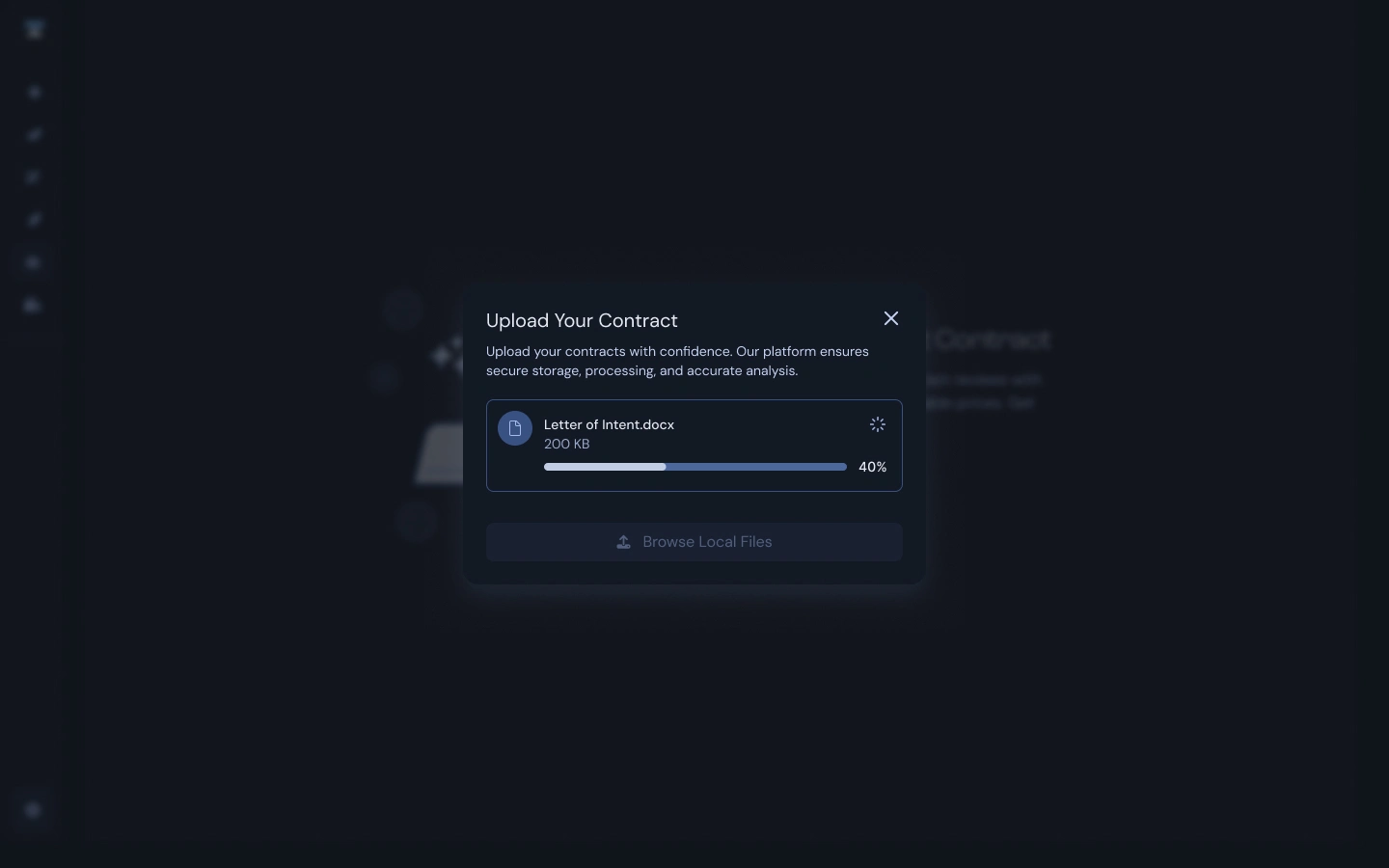
Contract getting uploaded
Three workspaces. One workflow. Nothing lost between steps.
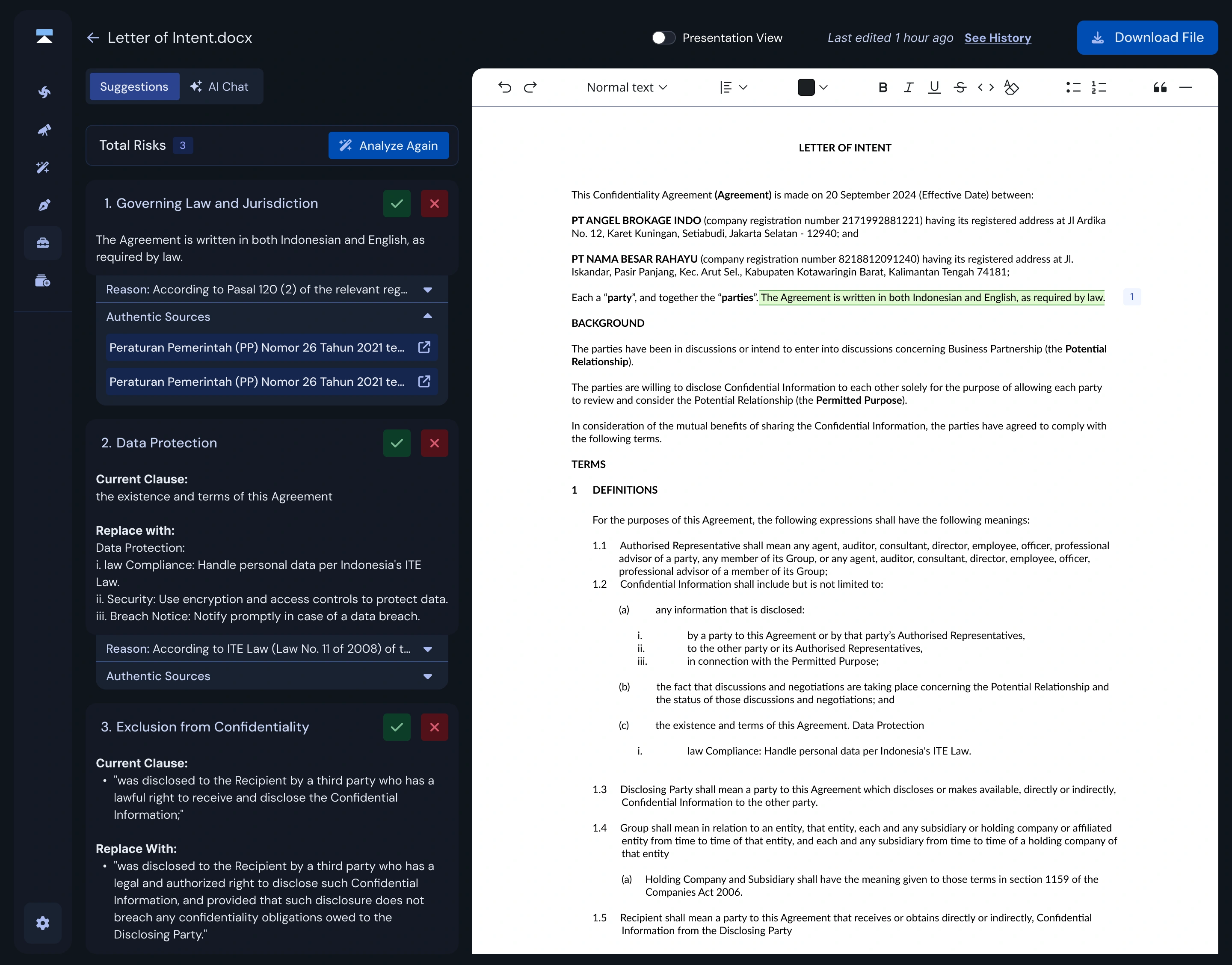
I designed the review environment around three synchronized workspaces that mirror how lawyers actually think during a review. The suggestions panel on the left surfaces risks and flags as structured, actionable items. The document on the right stays live and in sync. The AI chat handles anything that does not fit the structured review pass.
The review engine automatically checks contracts against internal policies and local Indonesian regulations, highlights conflicts, and explains the rationale behind every flag. Lawyers can accept, dismiss, or query any suggestion without leaving the editor. Real-time collaboration, version history, and line-level tracking replaced the email thread entirely.
Contract upload to reviewed output
Add definition and clause editing flow
Design Decisions
Each decision had a reason. None were cosmetic.
Suggestions panel anchored to the document.
The risk list and the live document are always in sync. Clicking a suggestion highlights the exact clause in context. This eliminates the mismatch that happens when findings are delivered in a separate report, which was the most common complaint in discovery.
Rationale surfaced by default.
Every flagged clause shows the reason and cites the specific regulation. This was a deliberate choice against black-box outputs. Lawyers need to defend their decisions. The system has to show its work, not just its conclusions, or it will not be trusted.
Accept and reject at the clause level.
Each suggestion gets one binary action: accept or dismiss. The document only updates on explicit approval. This keeps the lawyer in full control while removing the overhead of manually tracking which redlines have been addressed.
AI chat as a secondary layer.
The AI Chat tab sits alongside Suggestions rather than replacing it. Structured risk flags handle the systematic review pass. Chat handles ad-hoc queries, rephrasing requests, and edge cases. Separating these two modes prevents the interface from collapsing into a generic chatbot.
Authentic sources as trust infrastructure.
Regulatory citations link out to the actual source documents. This was not cosmetic. It gives lawyers the ability to verify the AI's reasoning independently, which is the minimum bar for professional adoption in a compliance context.
Impact
Metric Before After Review time per contract 20-30 minutes 4-6 minutes Deal cycle length 1-2 weeks 3-5 days Multi-party collaboration time Baseline -60% Clause deviation coverage Manual sampling 100% automated AI clause-matching accuracy — 92-95%
The interface is not trying to replace legal reasoning.
It is trying to stop legal reasoning from being wasted on tasks that should never have required it. Policy checking became automated. Clause context became visible inline. Negotiation history became persistent and shared.
What remained for the lawyer was the actual work: judgment on whether to accept, reject, or push back. That is the only part of contract review that requires a lawyer. Everything else was a system problem that had been left unsolved for too long.
Tools
Figma, React, Node.js, PostgreSQL, Gemini API, EditorJS
Few screenshot from the app
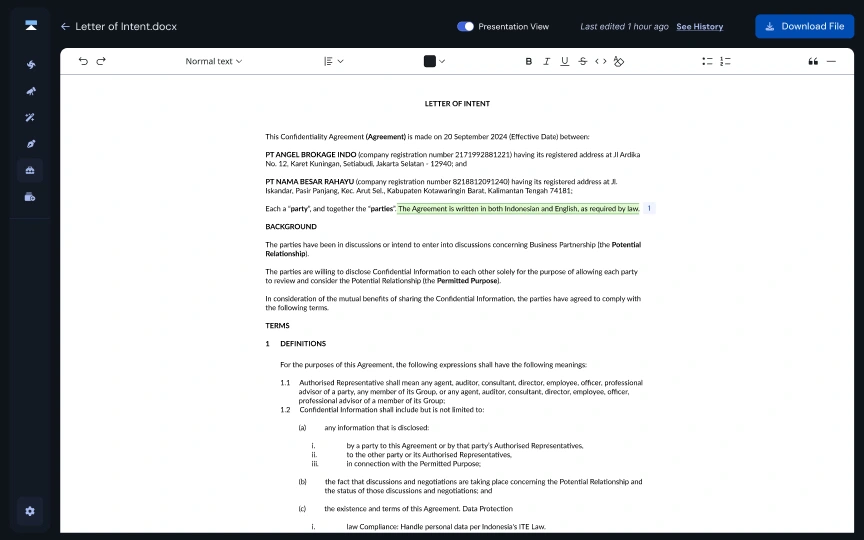
Full page mode
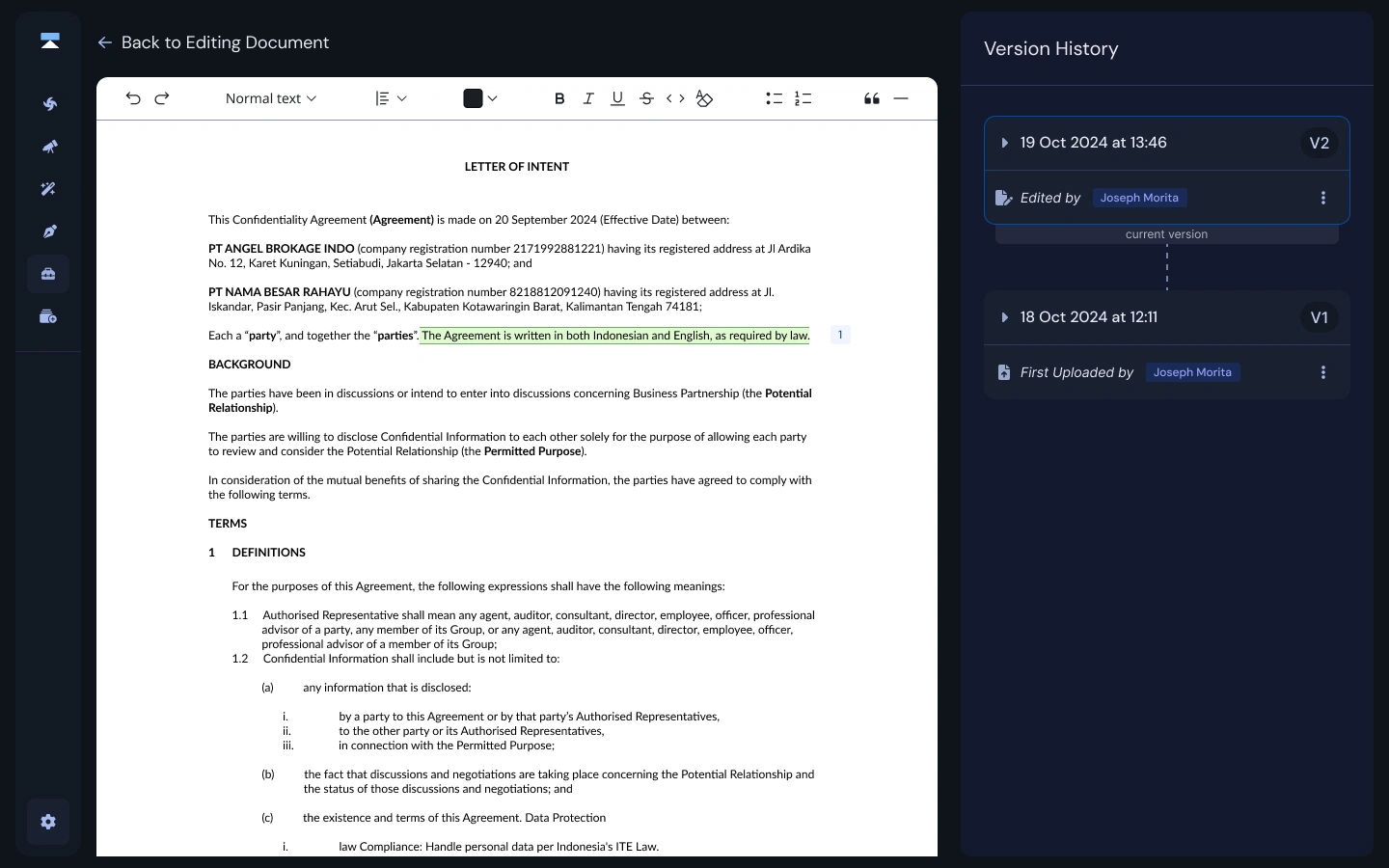
Contract history
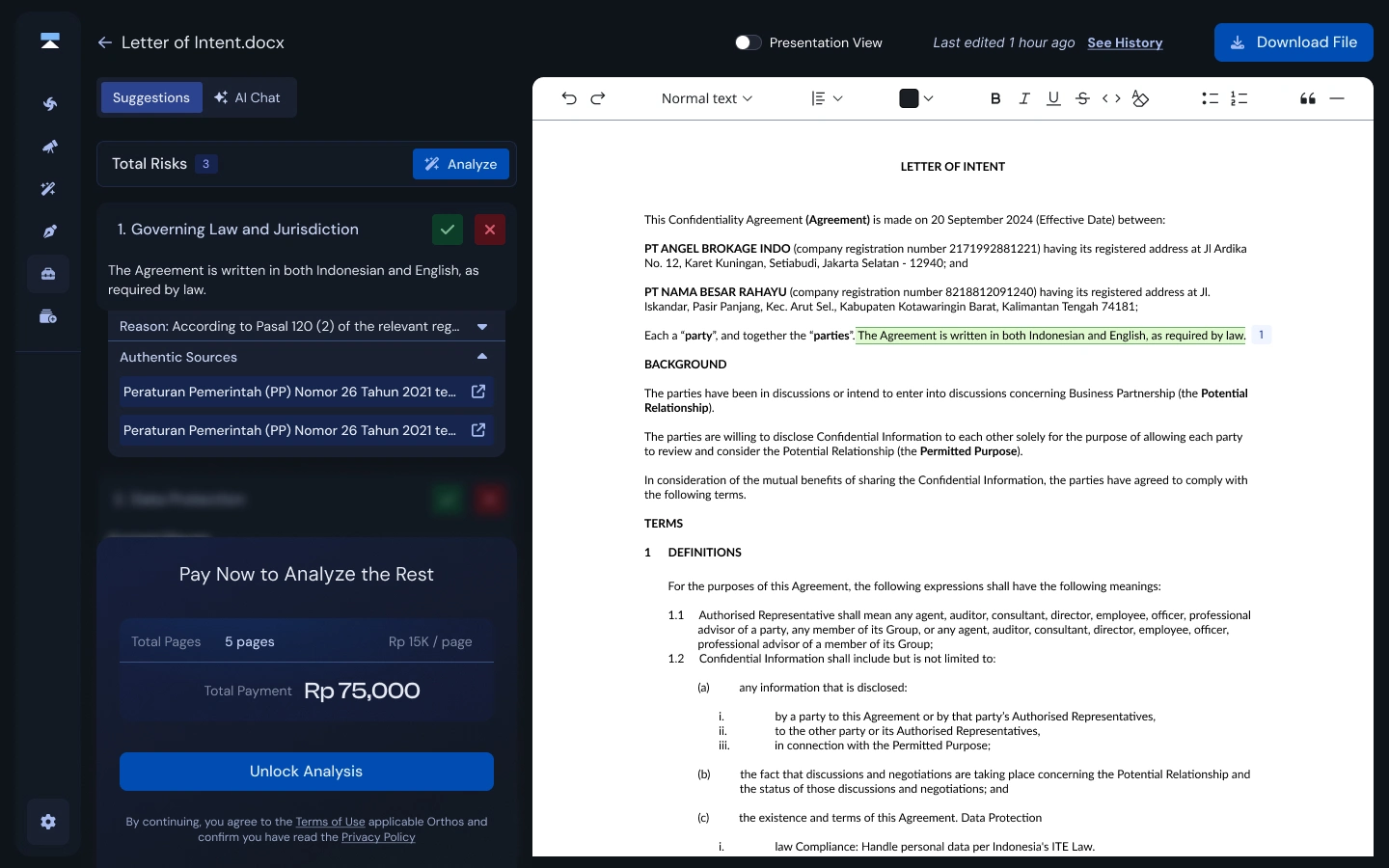
Contract review pricing screen
Like this project
Posted May 22, 2026
Designed an AI-enabled contract review environment for lawyers.