
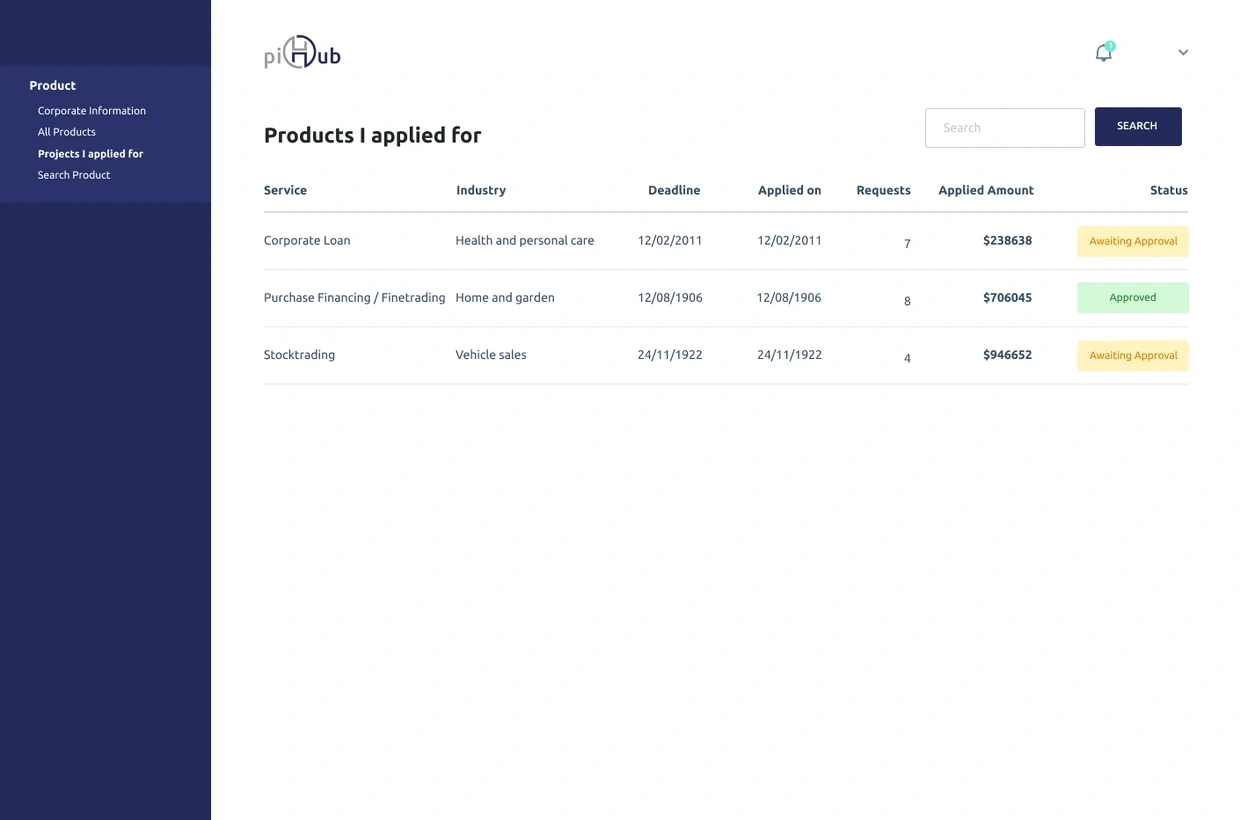
PiHub creditor application list keeps service, industry, dates, amounts and written approval status together. Full original Figma frame; design content is sample data.
The project and my part in it
piHub connects creditors, investors and administrators. Each person sees a different part of the same process: one submits an application, another reviews an offer or request, and an administrator manages access and records.
I worked on forms, information hierarchy and status language across these roles. The central problem was helping someone understand what had happened, what was still needed and who should act next.
What shaped the design
Creditor, investor and administrator roles need different information.
Waiting for another person is a legitimate part of the process.
A review decision needs the relevant request and its supporting detail.
THE DESIGN CHALLENGE
How does a financial workflow remain understandable when the next step belongs to another person?
I followed the application across the roles. The screens need to share a meaning for each status, while giving creditors, investors and administrators different information and actions.
01 / Show what has been submitted
Show what has been submitted
The creditor sequence starts with company information, acknowledges an application and brings submitted work into a list. The acknowledgement says that the application was received; it should not be confused with approval.
In the list, written statuses sit beside the information needed to compare applications. A person can see which requests are waiting and which have moved forward without opening every record.
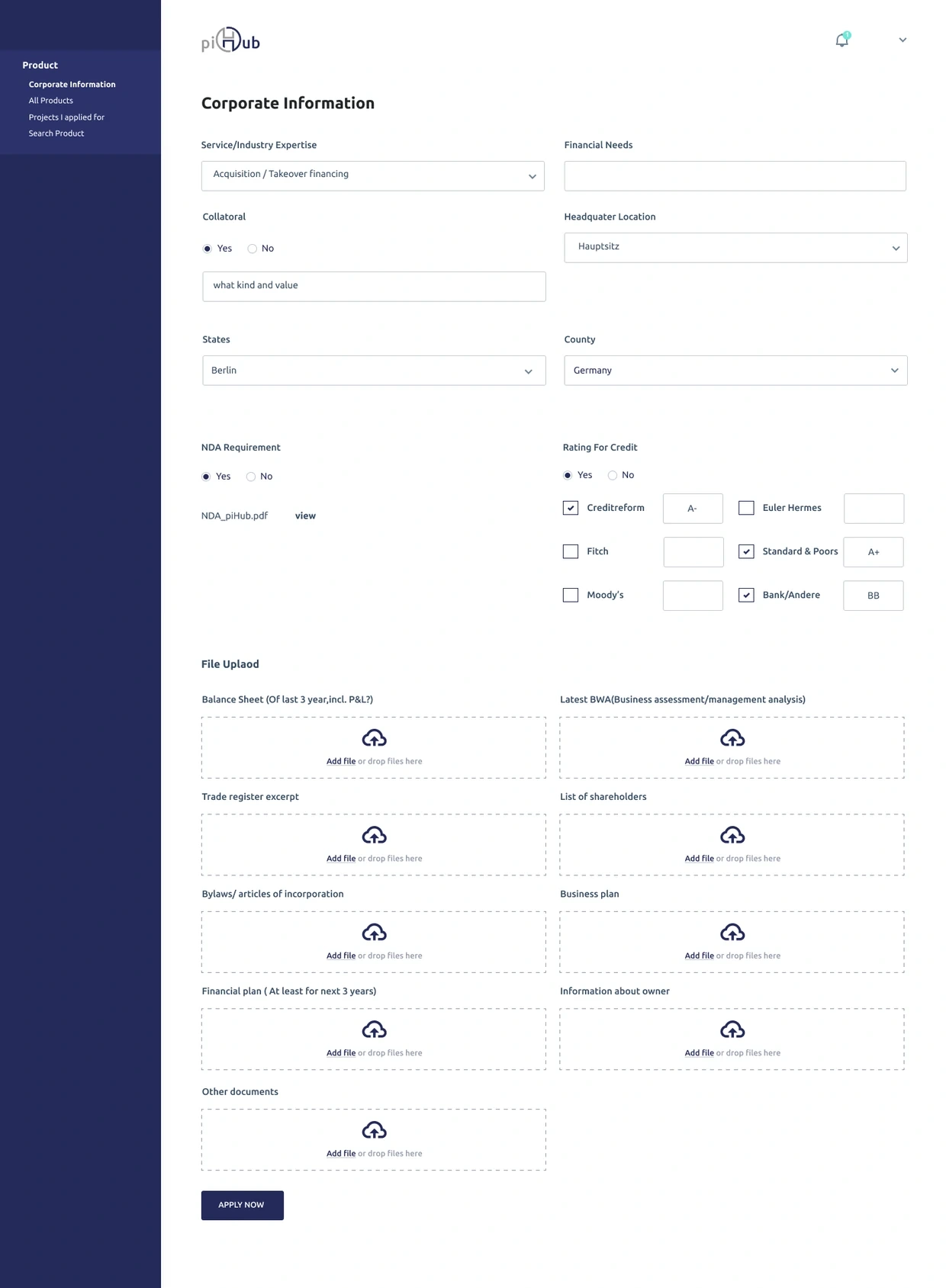
PiHub corporate-information form groups company, contact and business details before an application. Full original Figma frame; design content is sample data.
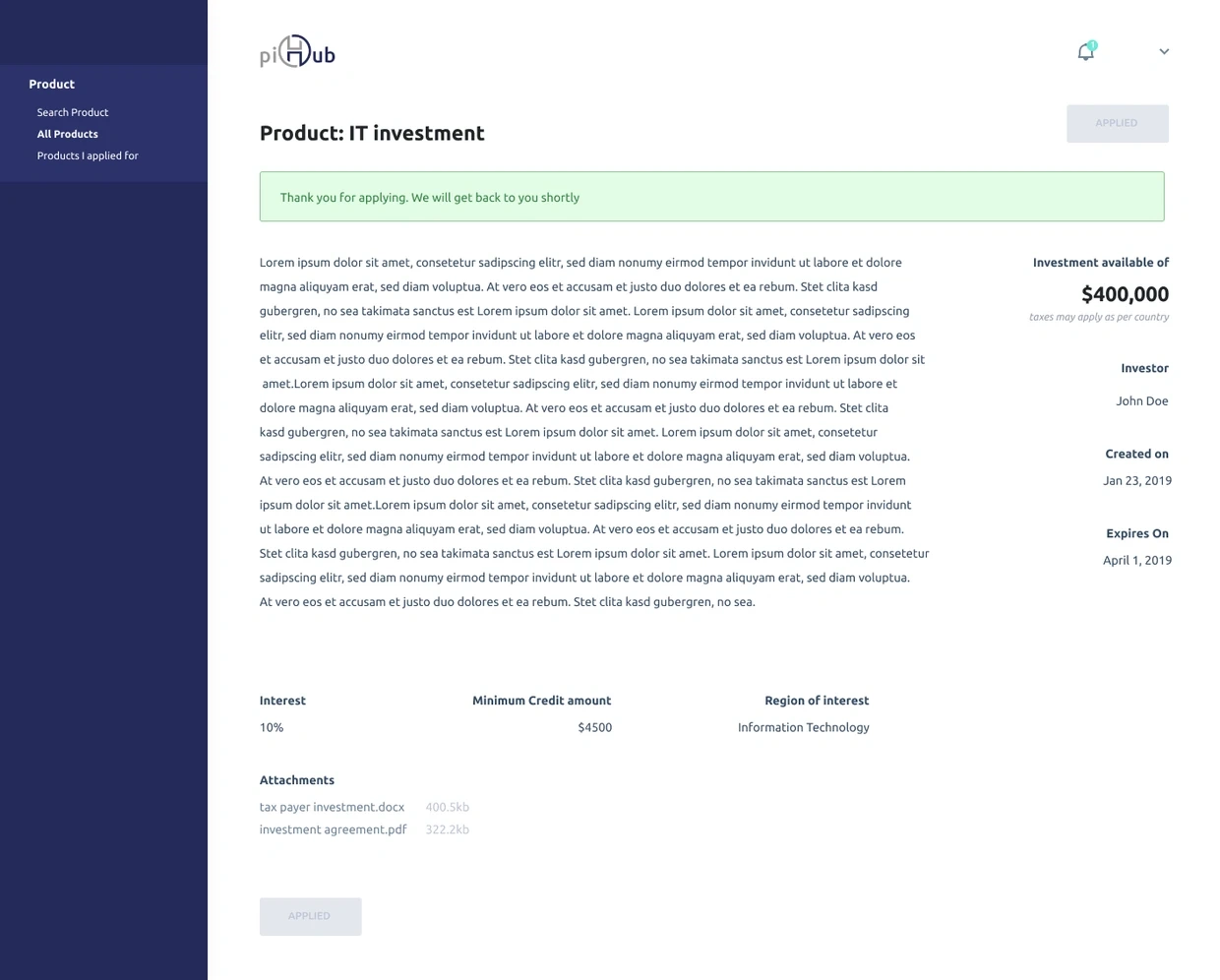
PiHub product-application acknowledgement design with the message “Thank you for applying” and an APPLIED control. Complete original Figma frame with sample content; processing and approval are not verified.
A compact list helps comparison, but a request that needs attention also needs a specific explanation.
02 / Give investors their own view of the work
Give investors their own view of the work
Investors enter the process with different questions. They need to define an offer, review products and inspect incoming credit requests. Their screens therefore give those objects more attention than the creditor profile.
I kept the relationship between the roles in the status language. A label such as Awaiting Approval needs one agreed meaning even when each role sees a different page.
Open image ↗
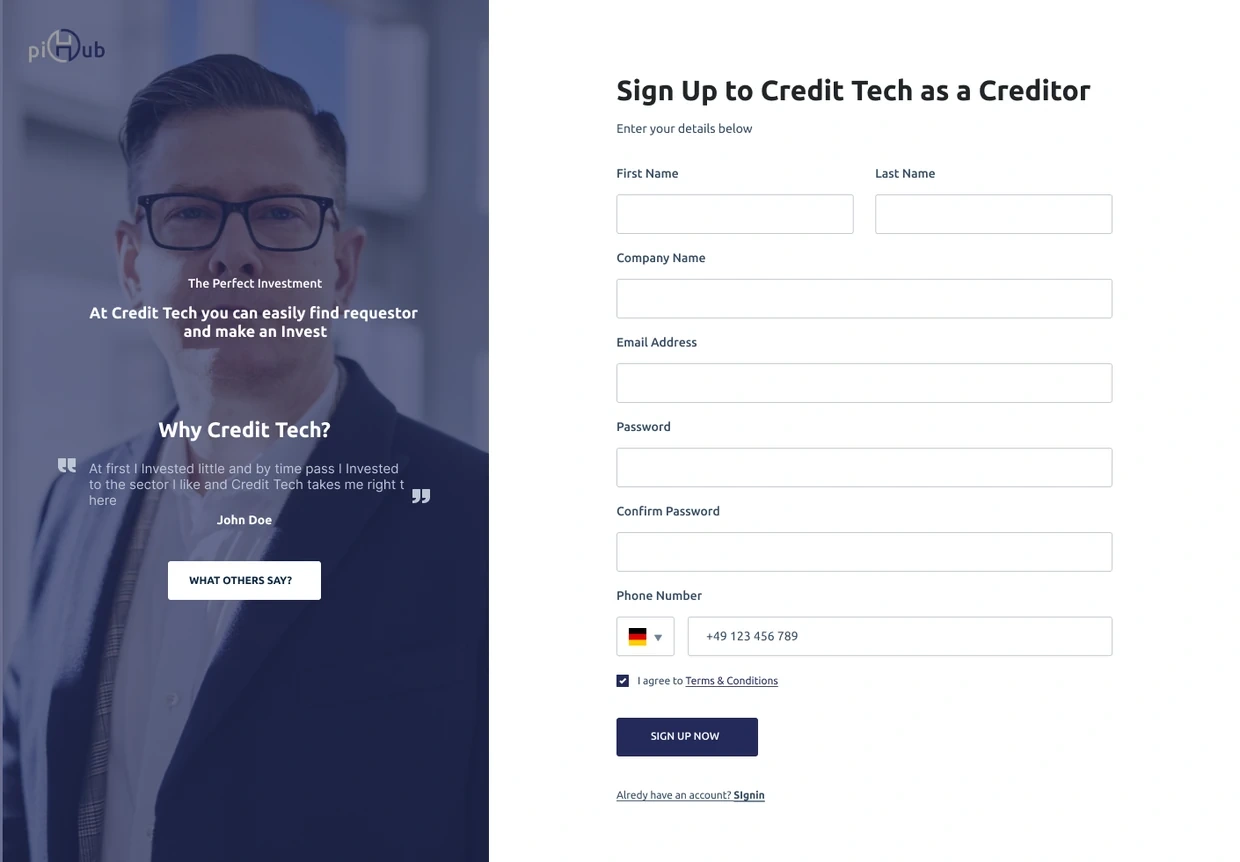
PiHub historical sign-up design places account creation beside the product introduction. Full original Figma frame; design content is sample data.
Open image ↗
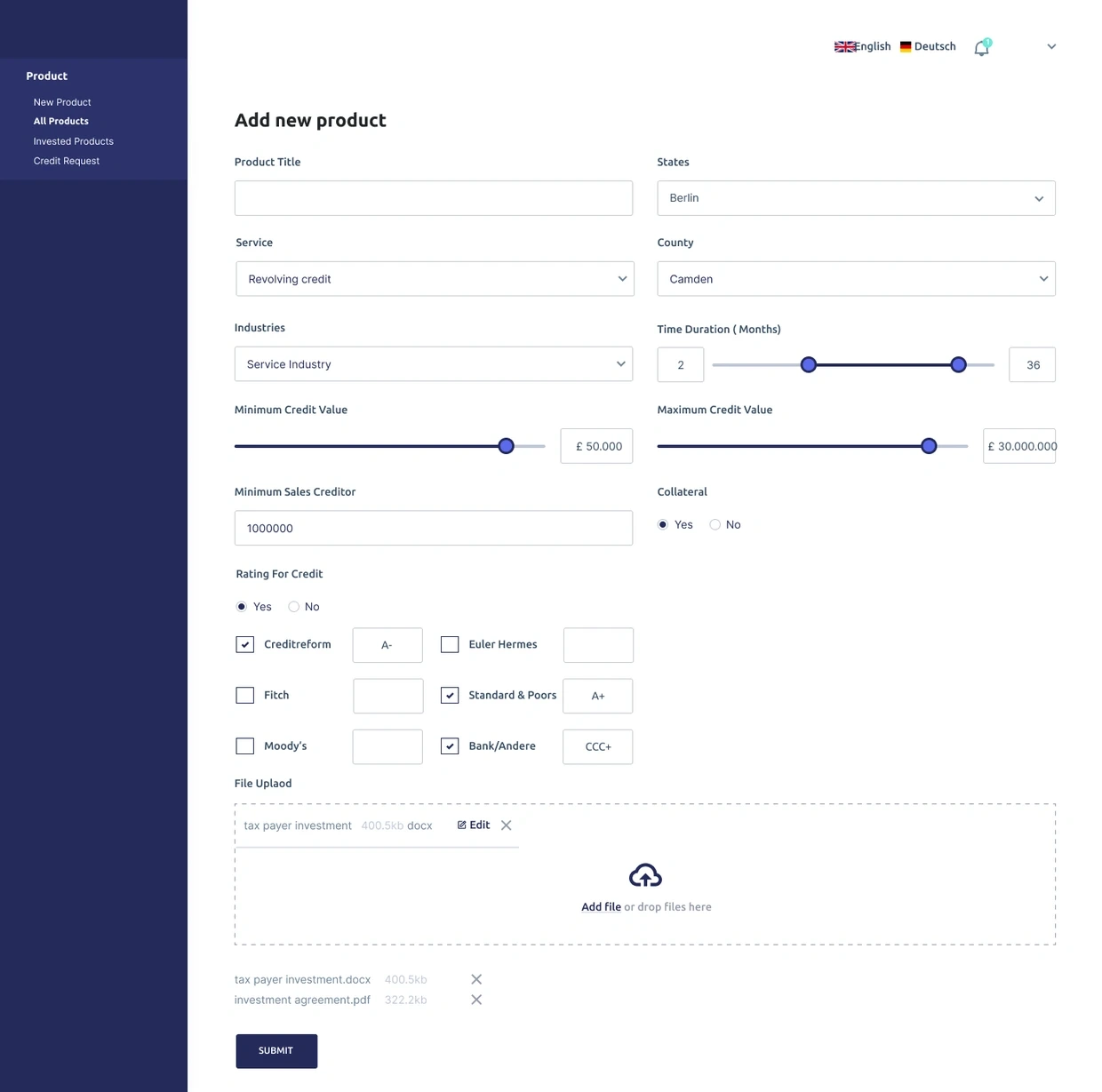
PiHub investor product creation combines credit type, industry, amount range and product description. Full original Figma frame; design content is sample data.
Open image ↗
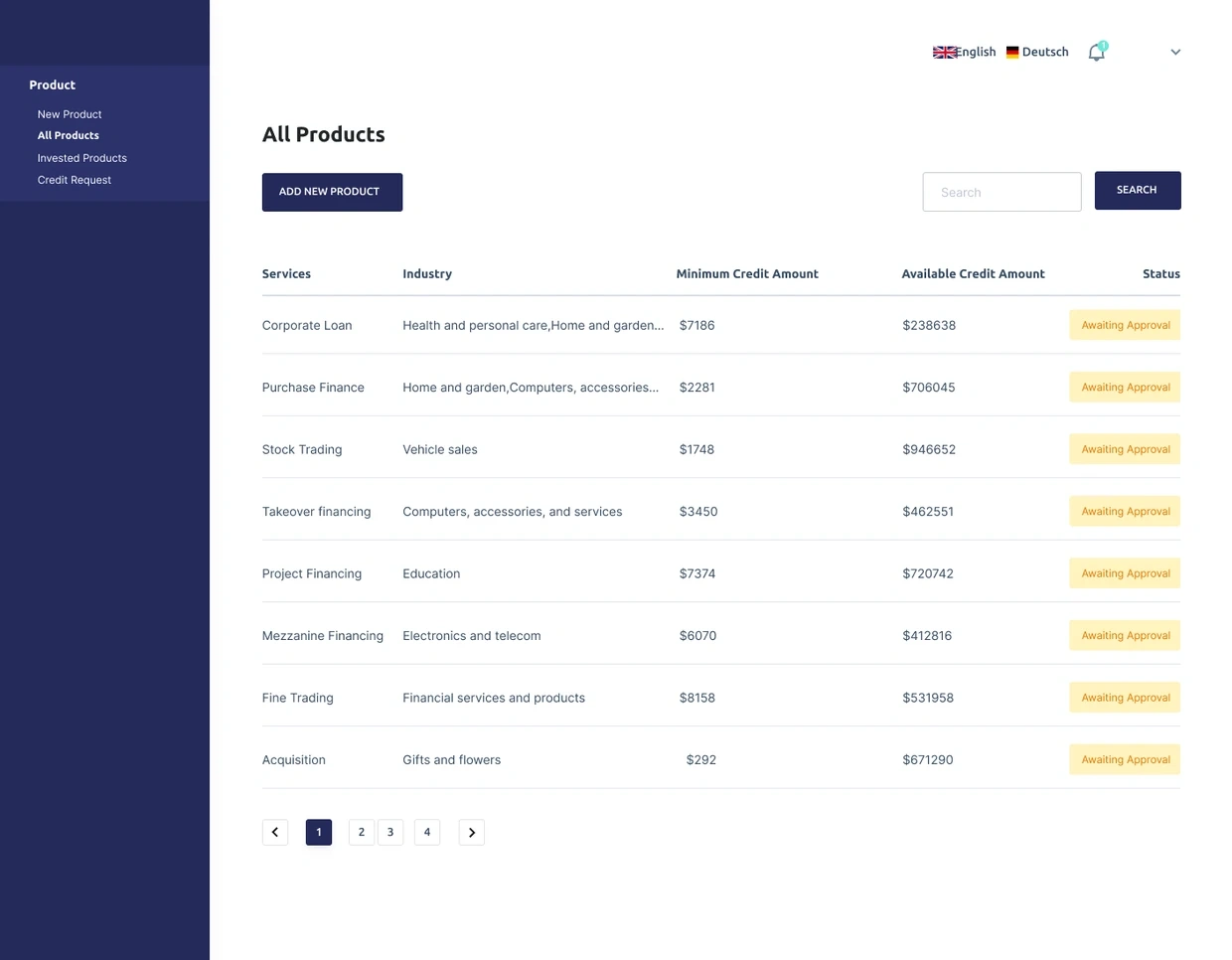
PiHub investor product directory compares services, industries, credit amounts and status. Full original Figma frame; design content is sample data.
Open image ↗
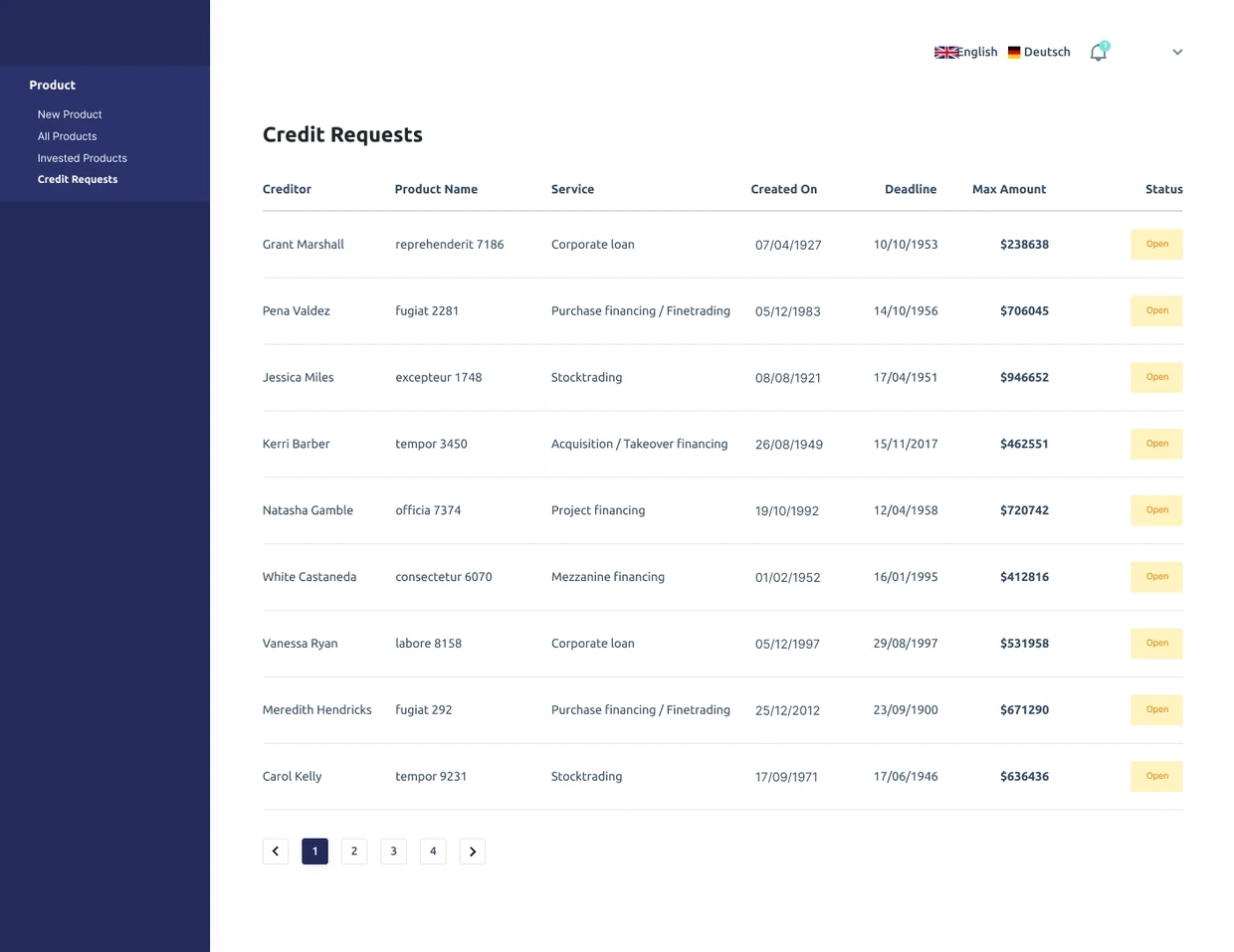
PiHub credit-request list makes incoming requests and their review status inspectable. Full original Figma frame; design content is sample data.
The roles can share components and status names while giving different actions priority.
03 / Put the request beside the review decision
Put the request beside the review decision
The administrator views add the other side of the handoff. A request list leads into company details, and a credit-review page collects the information and attachments needed to consider the request. Approve and Disapprove sit with the record they affect.
Access denial is a separate situation. Its recovery screen gives a way back, while permission checks still belong to the application and server. I would review these boundaries with the team before treating the cross-role flow as complete.
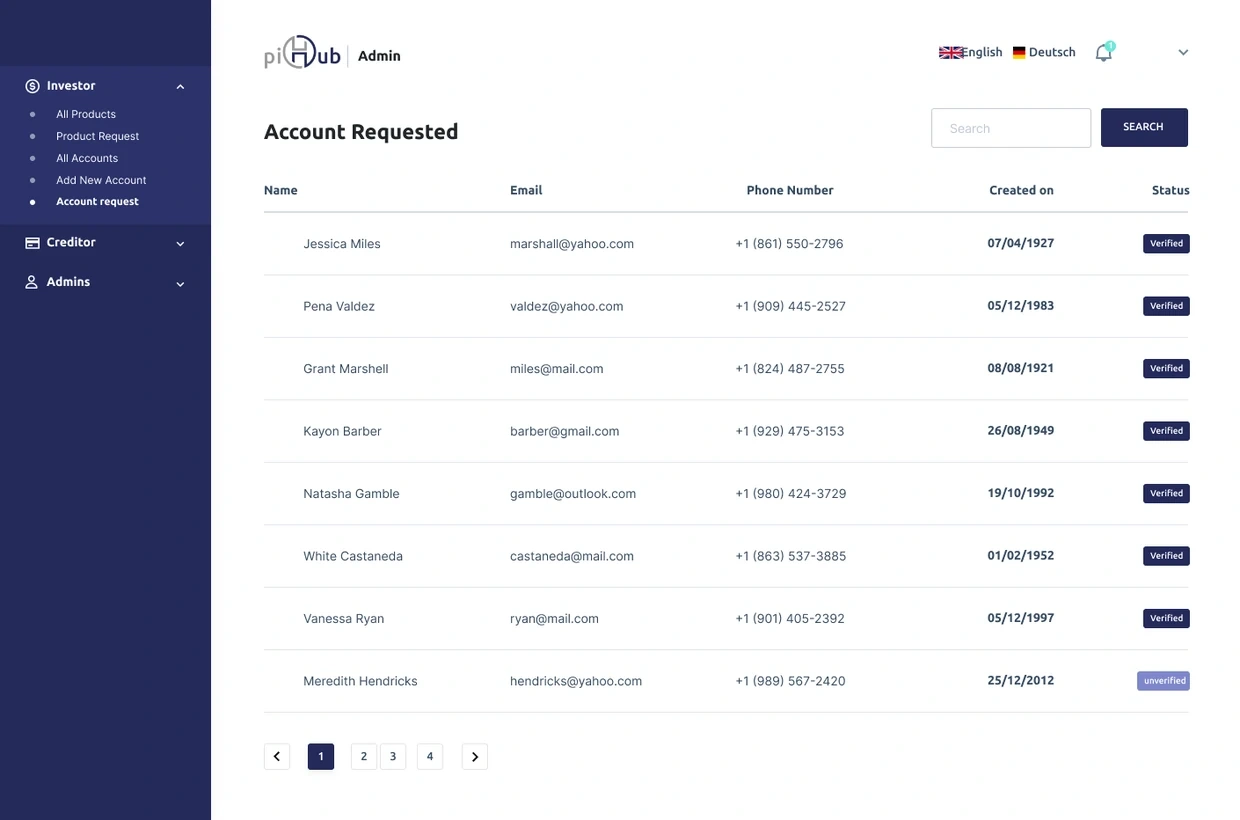
The administrator list makes requests available for review. Contact information is owner-confirmed sample data. Complete original Figma frame; sample design data.
Open image ↗
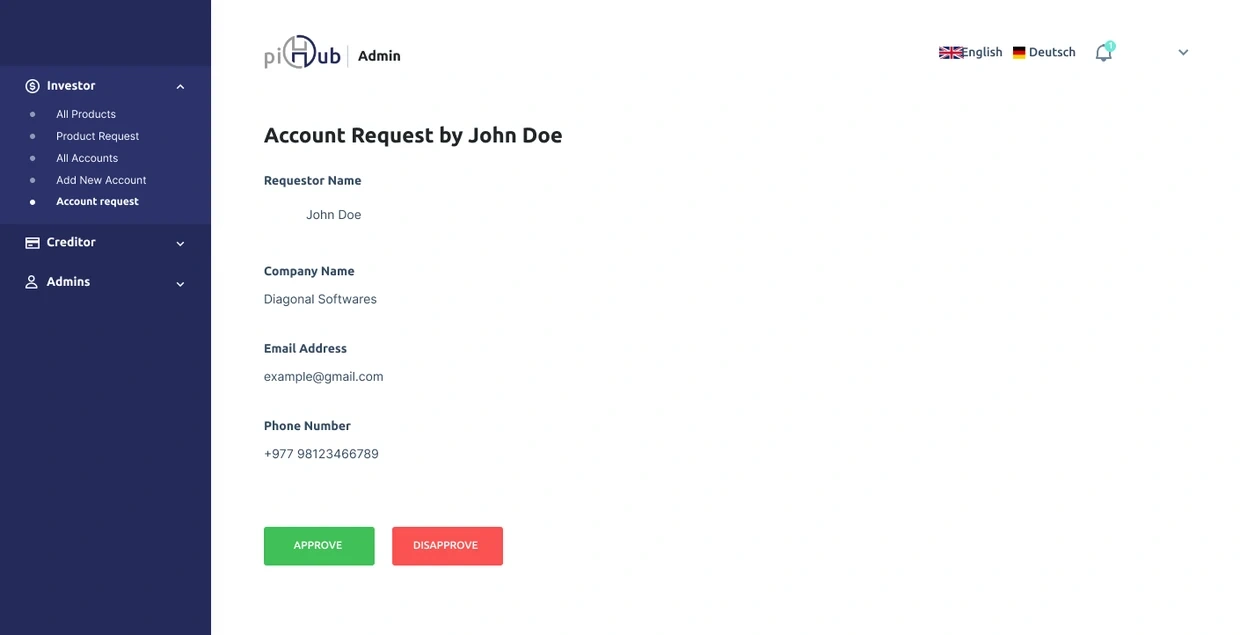
Account details give the administrator context before an approval decision. These are designed actions, not proof of server authorization. Complete original Figma frame; sample design data.
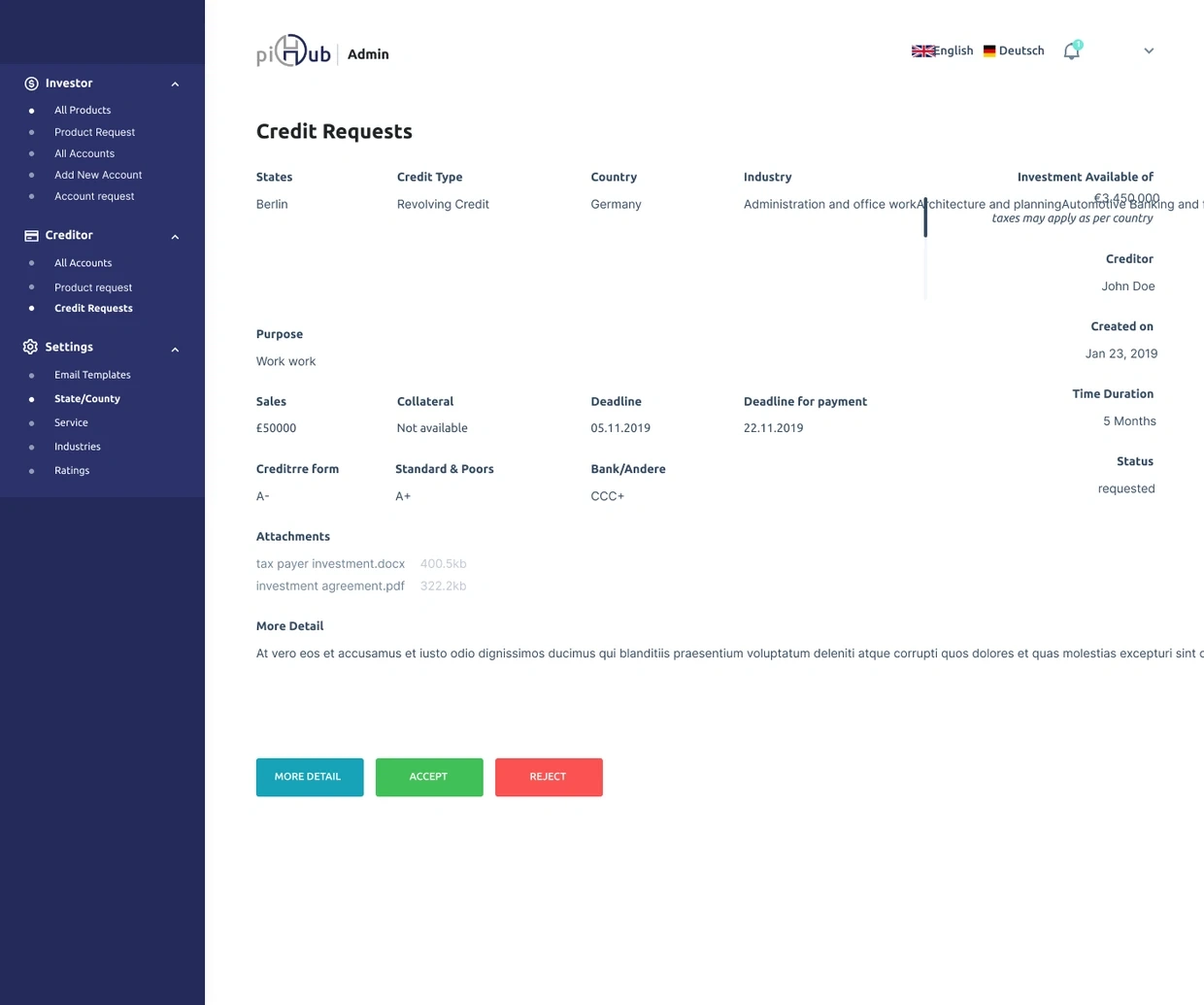
The review page collects request details, attachments and decision actions. All financial content is sample data. Complete original Figma frame; sample design data.

PiHub administrator access-denied screen gives the person an explanation and a Go Back action. Full original Figma frame; design content is sample data.
Review actions need enough context to support a decision; showing more financial fields alone does not make the decision clearer.
What I delivered
The creditor, investor and administrator designs show the application from different responsibilities. The additional review screens make the handoff visible within this case.
Outcomes and next steps
The design establishes a role-based structure and a shared way to discuss state changes. Live processing, uploads and synchronized notifications remain engineering work.
What I would test next
Ask a creditor to identify who owns the next step after submission and what would require a response.
Trace an application returned for changes across creditor, investor and administrator views; check that their status language describes the same event.
What I learned
Waiting is easier to understand when the interface explains the dependency. Sometimes the right next step belongs to another person.
About the screens
Original role prototypes with owner-confirmed sample financial and contact data. Separate screens do not establish working financial processing or permission enforcement.
Related work and reading
0 likes · 0 views · Nov 7, 2026
piHub fintech workflows: creditor, investor and admin views, forms, status language and review screens to make multi‑role financial flows understandable.
