
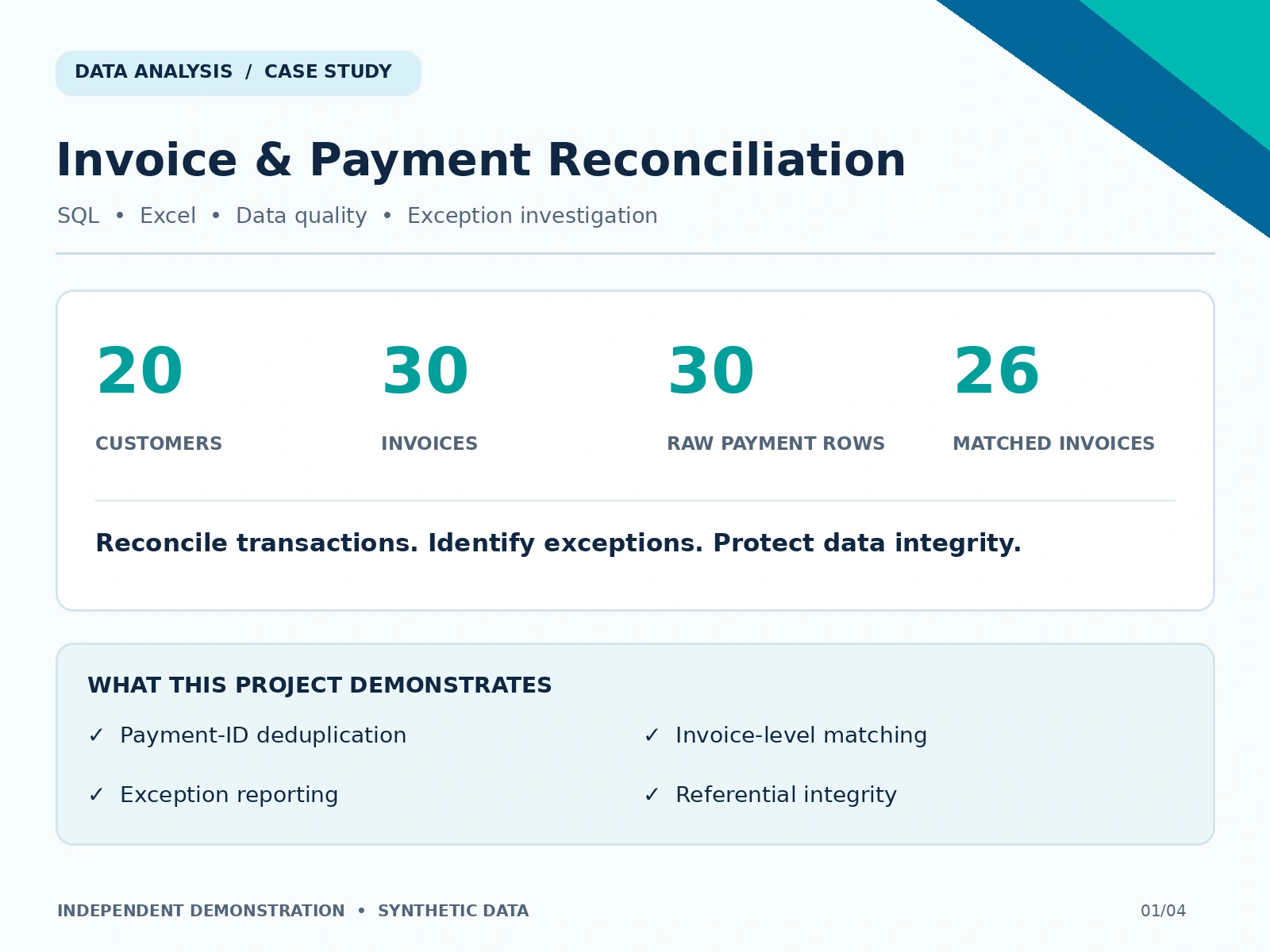
Invoice & Payment Reconciliation | SQL, Excel & Data Quality
Independent portfolio case study · Demonstration dataset
The Challenge
Businesses often manage invoices and payments across different systems, making it difficult to identify discrepancies, missing payments, duplicate records, and inconsistent financial data.
This case study demonstrates a structured approach to identifying and investigating these issues.
My Approach
1. Data Preparation & Validation
Reviewed invoice and payment datasets for missing values, inconsistent formats, duplicate records, and potential data quality issues.
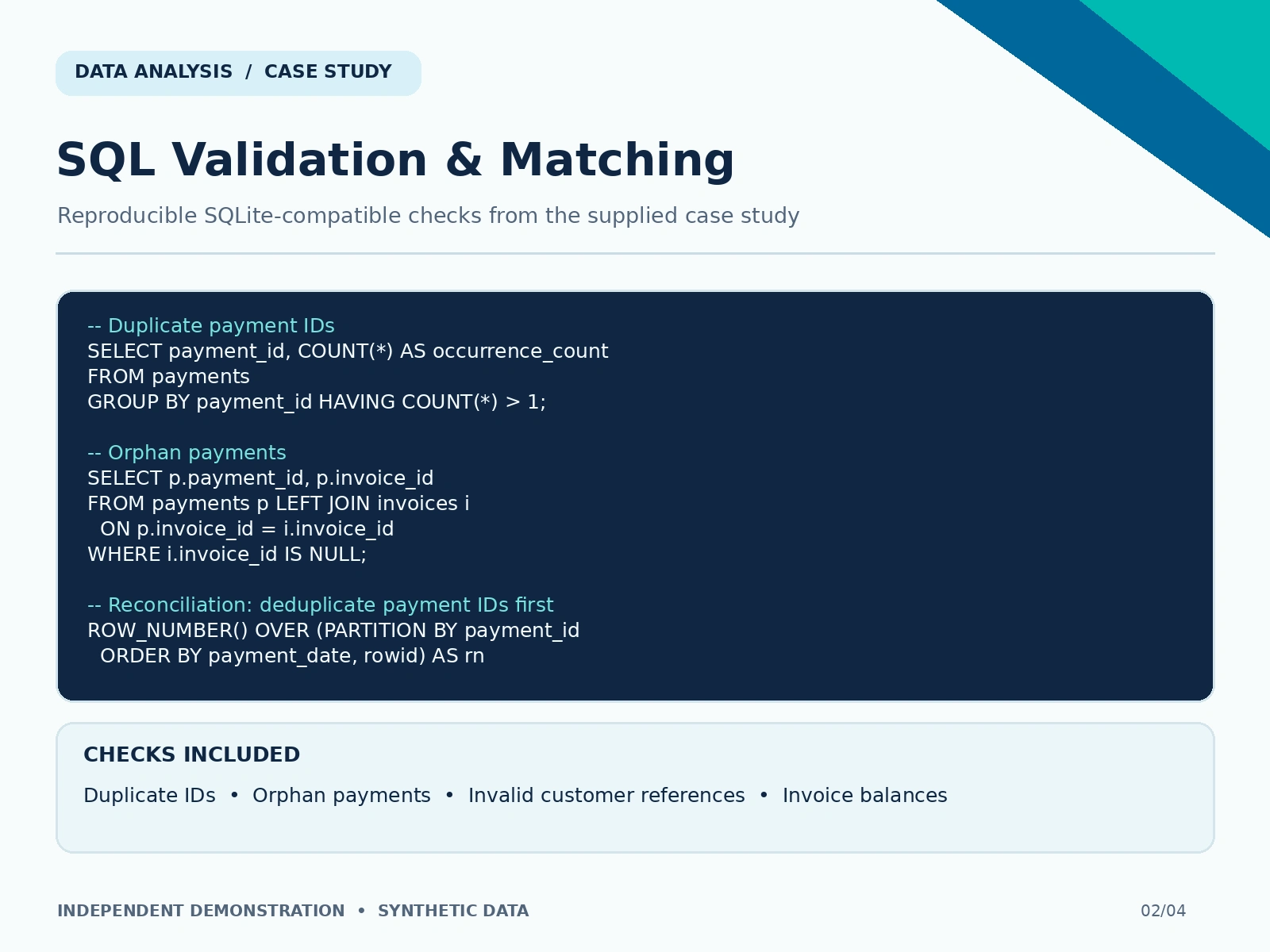
2. SQL Analysis
Used SQL-based validation and reconciliation logic to compare invoice and payment records, identify unmatched transactions, and investigate discrepancies.
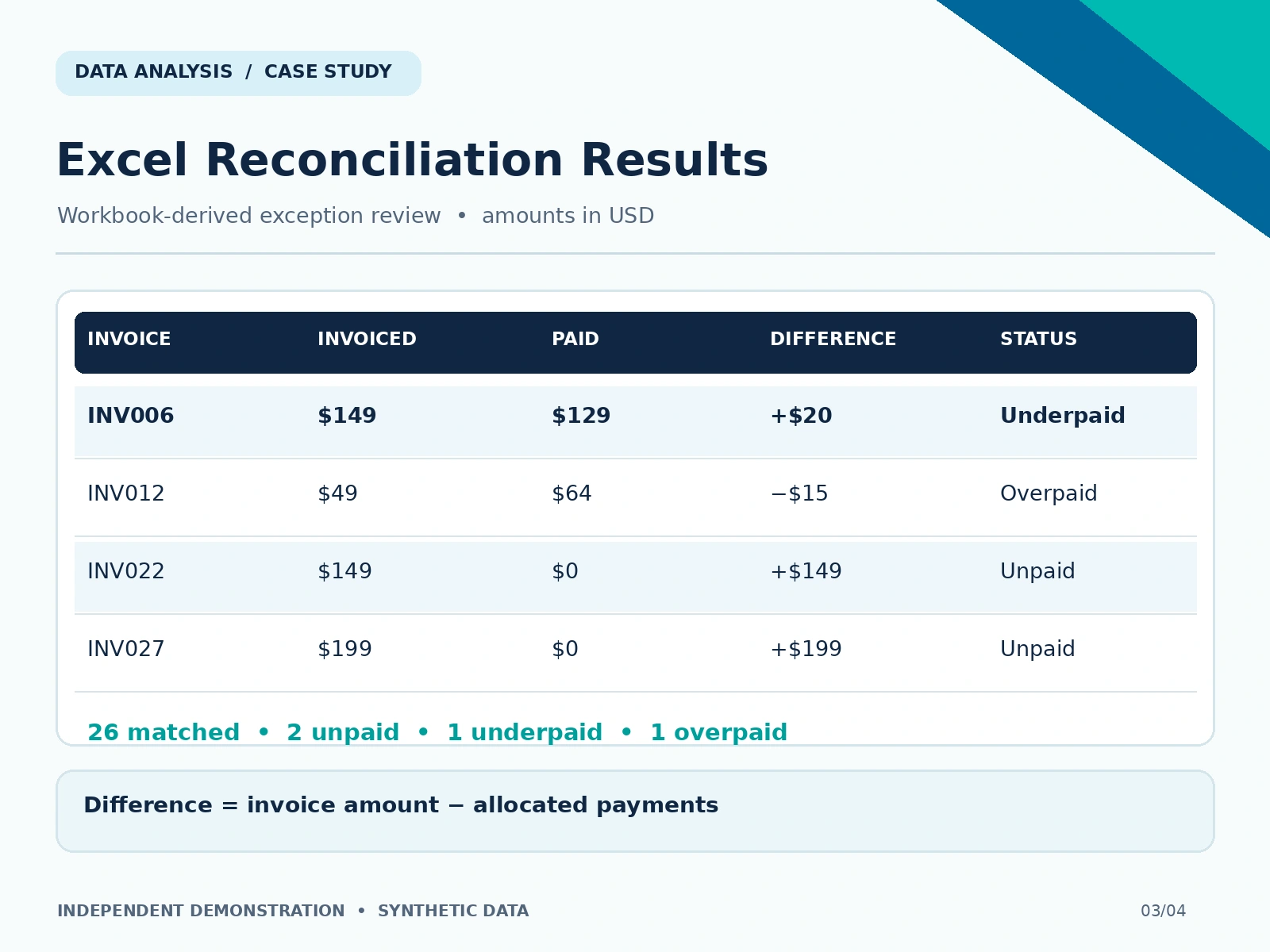
3. Excel Reconciliation
Organized findings in Excel to make discrepancies easier to review, classify, and investigate.
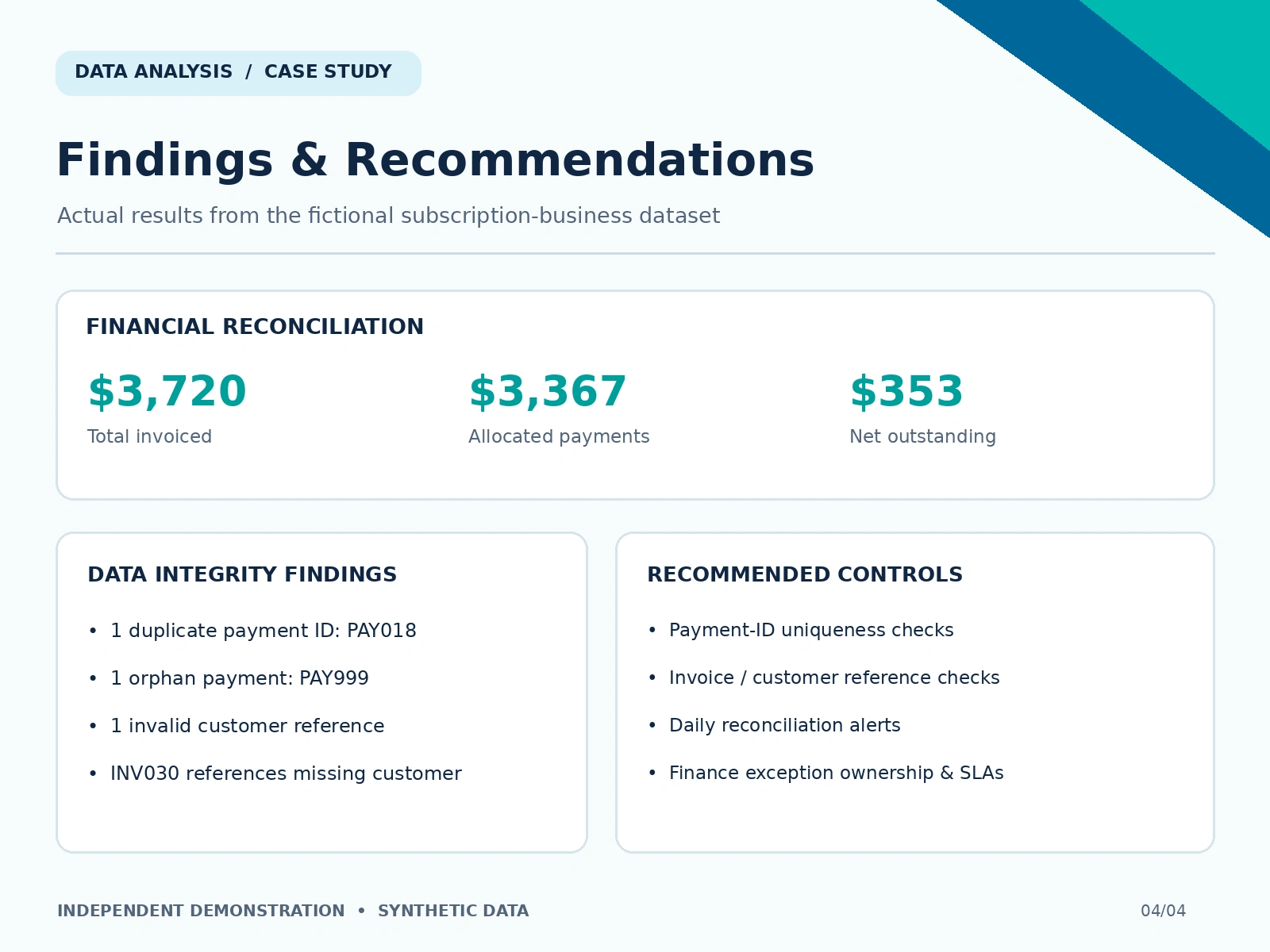
4. Findings & Recommendations
Documented identified issues and proposed practical validation controls to improve data reliability and reduce manual investigation.
Key Deliverables
Invoice and payment reconciliation analysis
SQL validation and matching logic
Excel-based discrepancy tracking
Data quality findings and exception reporting
Recommendations for improving reconciliation controls
Business Value
This approach demonstrates how structured data analysis can help businesses identify financial data inconsistencies, improve reporting confidence, and make reconciliation processes more transparent.
The findings are based on demonstration data; no live client implementation or measured financial results are claimed.
0 likes · 0 views · Nov 4, 2026
SQL and Excel reconciliation case study using synthetic data: 30 invoices, 26 matched records, payment exceptions, and data integrity checks.


