SafeSpaceEra Therapy Website Design

Shivangi Agarwal


Overview:
SafeSpaceEra is a self-initiated Framer website concept for mental-health professionals.
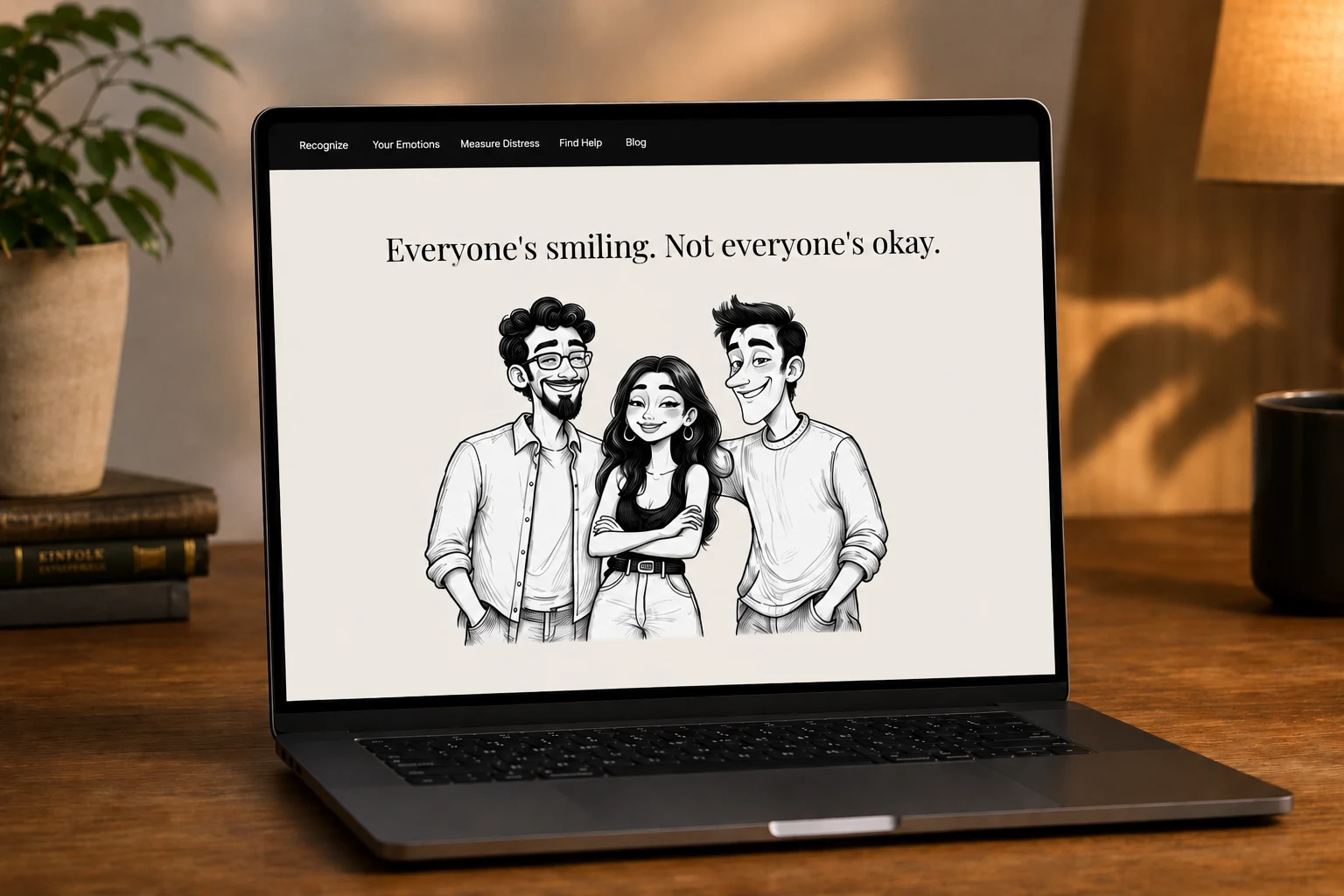
Many therapy website templates rely on polished but clinical, impersonal layouts. I wanted to explore a warmer alternative one that helps a visitor feel understood before they even begin reading. The result is an animated, editorial-style website that uses hand-drawn illustration, purposeful motion, and empathetic copy to make difficult first steps feel approachable.
Role: Framer Design, Web Design, Interaction Design
Tools: Framer, Claude
Project Type: Template Concept for Therapy Practices
The Creative Direction
The experience is built around one core insight: therapy can feel intimidating before a person ever books a session.
I used hand-drawn illustrations, soft editorial typography, and empathetic interactions to give the website a deeply personal tone. Each section moves the visitor through a small emotional journey from uncertainty and overwhelm to clarity and action.
The final interaction reveals the characters’ hidden thoughts and feelings on hover. Rather than treating animation as decoration, the movement introduces vulnerability and gives the opening section a reason to pause.
Key Interaction: The Hero Section
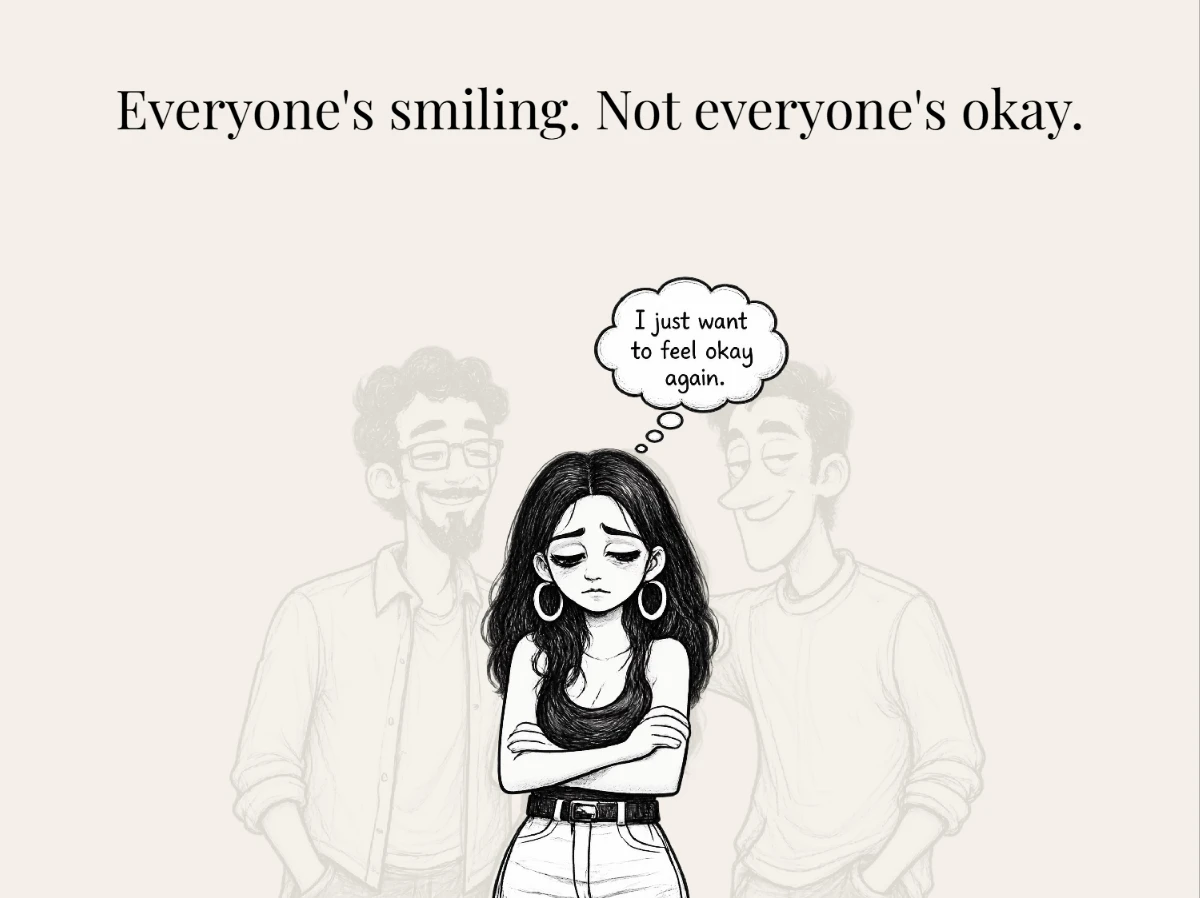
The initial hero concept was a familiar headline-and-illustration layout. While it communicated the message, it lacked character and warmth.
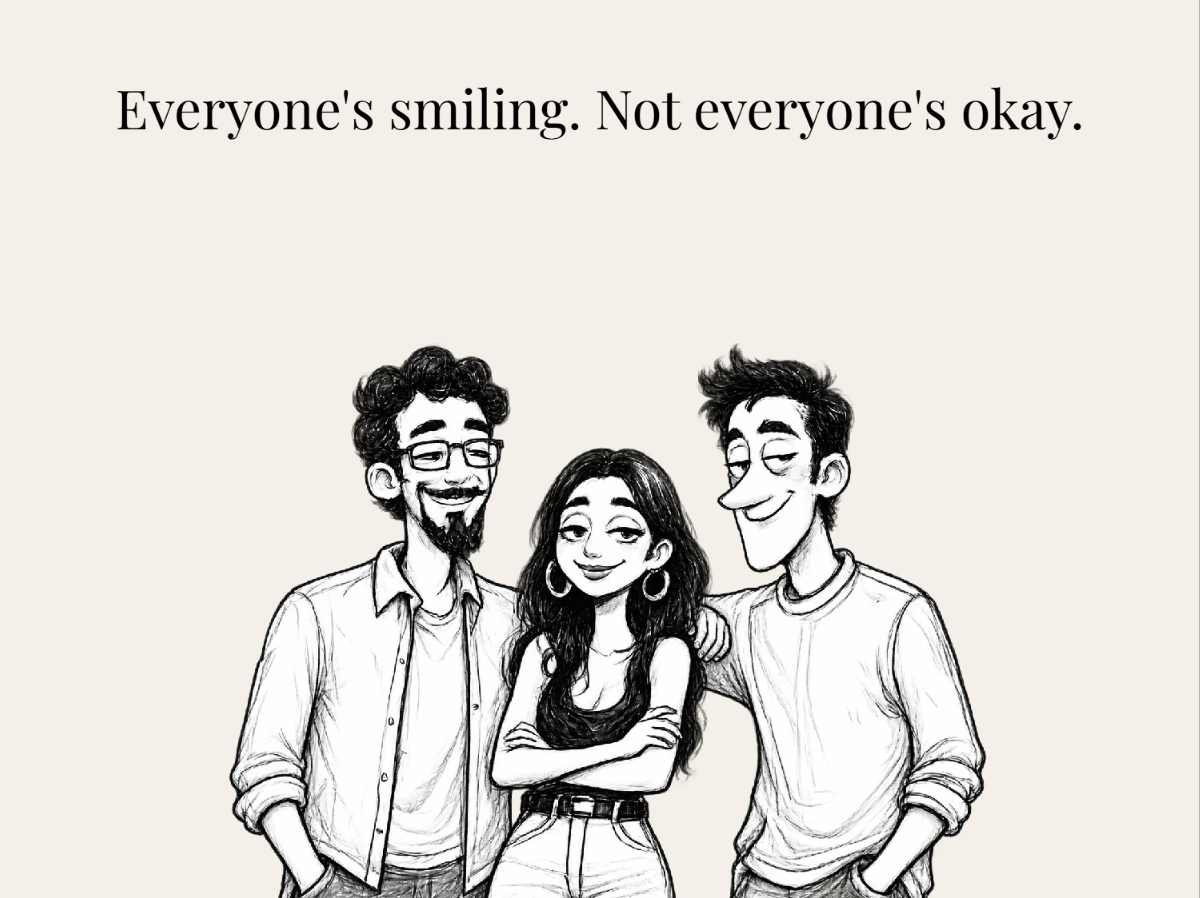
After exploring over 10 illustration styles, I landed on a hand-sketched direction. It felt imperfect, human, and closely aligned with the emotional tone of the practice.
In the hero section ("Everyone's smiling. Not everyone's okay."), visitors can tap or hover over characters to reveal their hidden thoughts and internal feelings. Rather than treating animation as mere decoration, the motion introduces vulnerability and gives visitors a meaningful reason to pause.
Building the Interactions
Custom Hero Interaction Code
A standard Framer component limited interactions to a single subject. Because I needed individual controls for multiple distinct characters, I collaborated with Claude to develop a custom-coded approach.
The initial script established the core trigger logic, but visual alignment required iteration. I designed individual overlay assets with uniform dimensions, adding scale and positional parameters to align each overlay state across screen sizes.
Turning Overwhelm into Clarity
Further down the page, an interactive canvas allows users to "drag to see beneath the surface" alongside a tangled visual metaphor. As users interact and scroll, the tangled visual unravels alongside key copy:
"Deal with it." — And so you did. Until you couldn't.
Buried things don't disappear... Therapy doesn't add more to your plate. It finally helps you put some of it down.
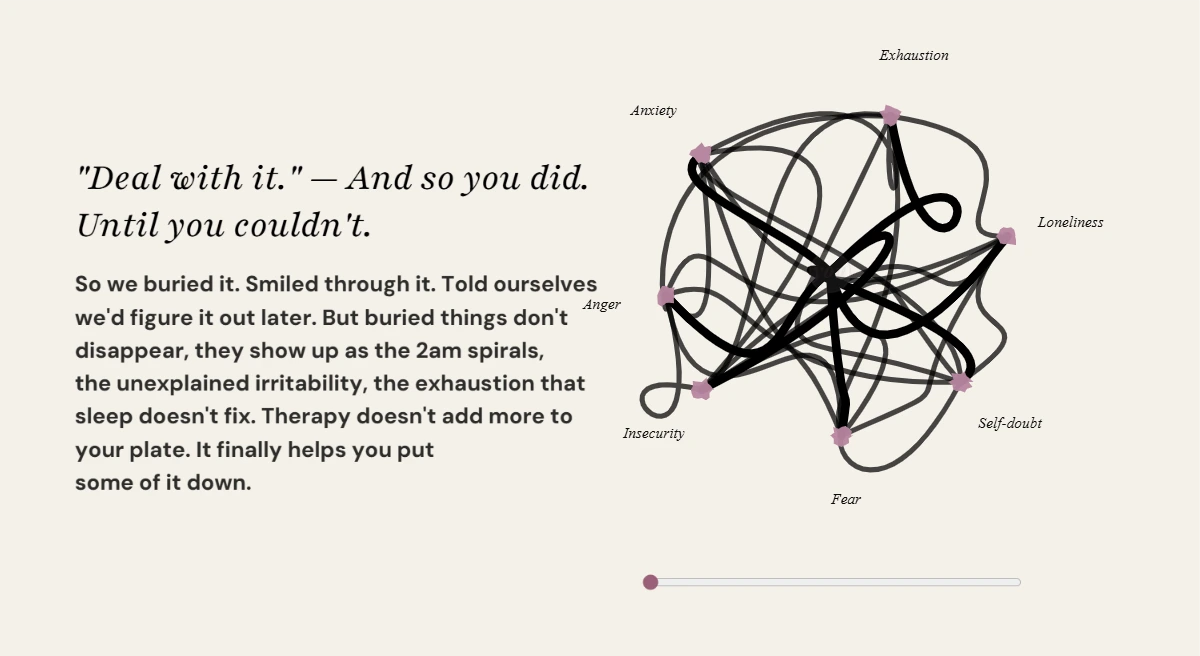
Screenshot from actual website (Rested state)
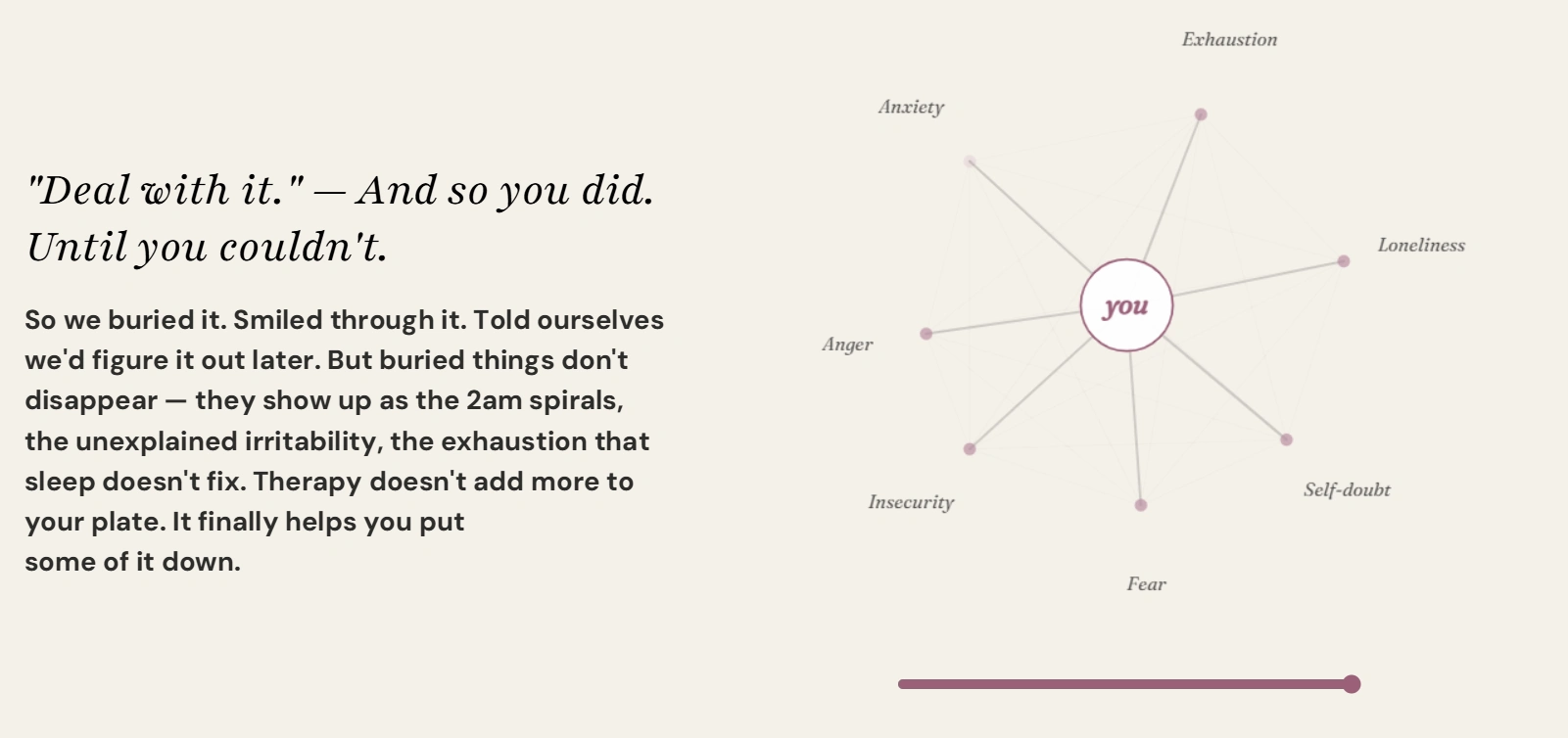
Screenshot from actual website
Core Sections & Experience Architecture
1. How It Works (Progressive Timeline Scroll)
The "How It Works" section uses a scroll-triggered timeline that progressively reveals four straightforward steps:
Reach Out – Send a simple message with no forms or commitments.
Just a Conversation – A brief call to discuss needs without pressure.
Get Matched – Pairing with a therapist suited to specific needs.
Start Sessions – Beginning regular sessions on a flexible schedule.
Complementing the procedural steps are subtle emotional cues ("Nobody asked me to have it all figured out"), reinforcing a gentle, guided pathway forward.
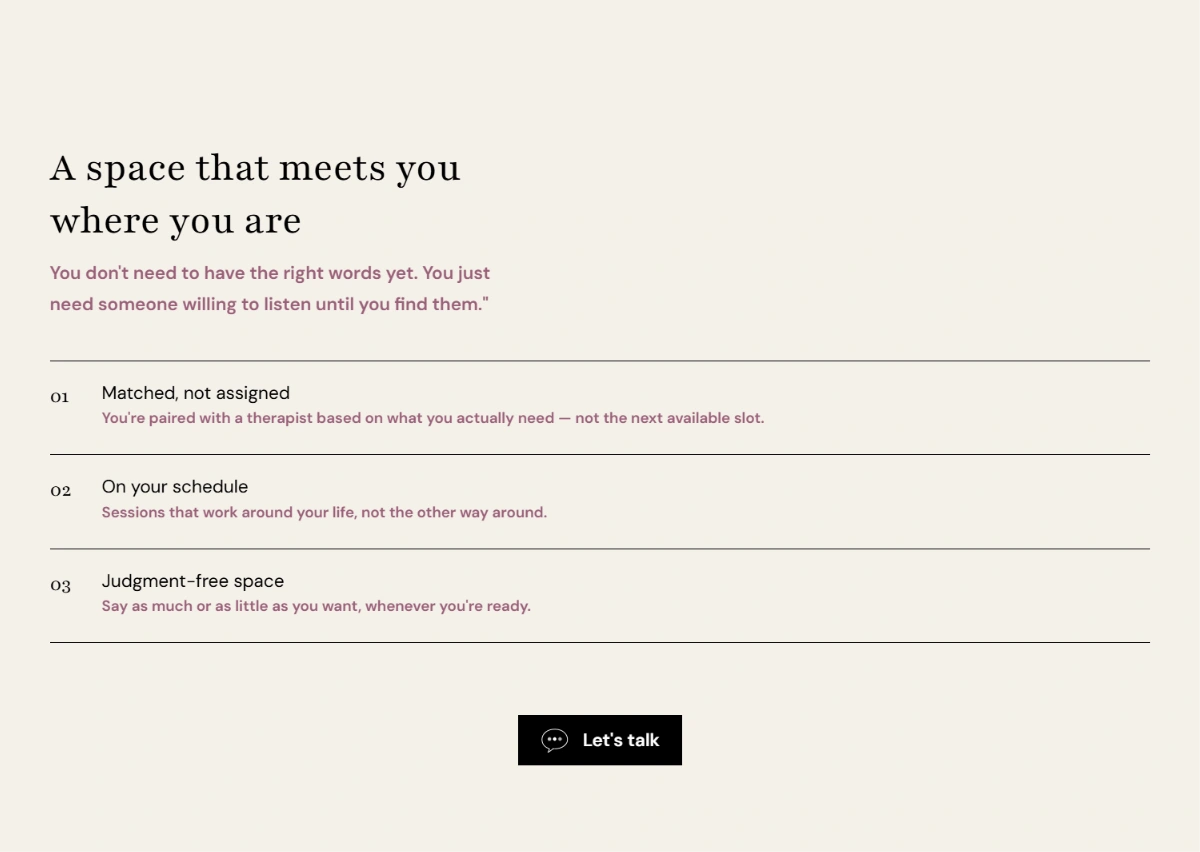
2. Solution Section: "A space that meets you where you are"
The dedicated Solution section shifts the narrative from internal confusion to structured support. It emphasizes three core pillars:
Matched, not assigned: Pairings based on genuine needs rather than open calendar slots.
On your schedule: Flexible sessions tailored around the client's life.
Judgment-free space: Encouraging open sharing at the visitor's own pace.
3. Social Proof: Testimonials Section
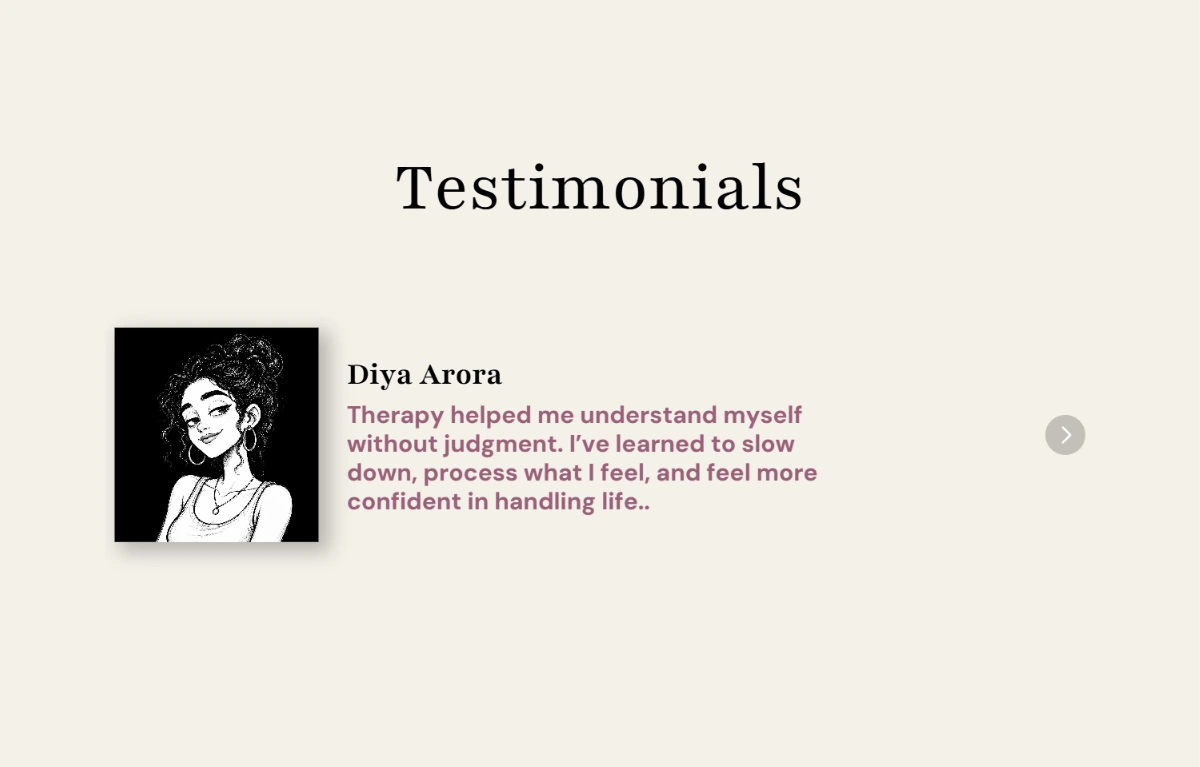
To build trust without feeling commercial, the newly added Testimonials section presents real human experiences. Cards highlight transformed mindsets, illustrating how visitors transitioned from feeling stuck or overwhelmed to finding calm and steady progress through therapy.
4. Interactive FAQ Section
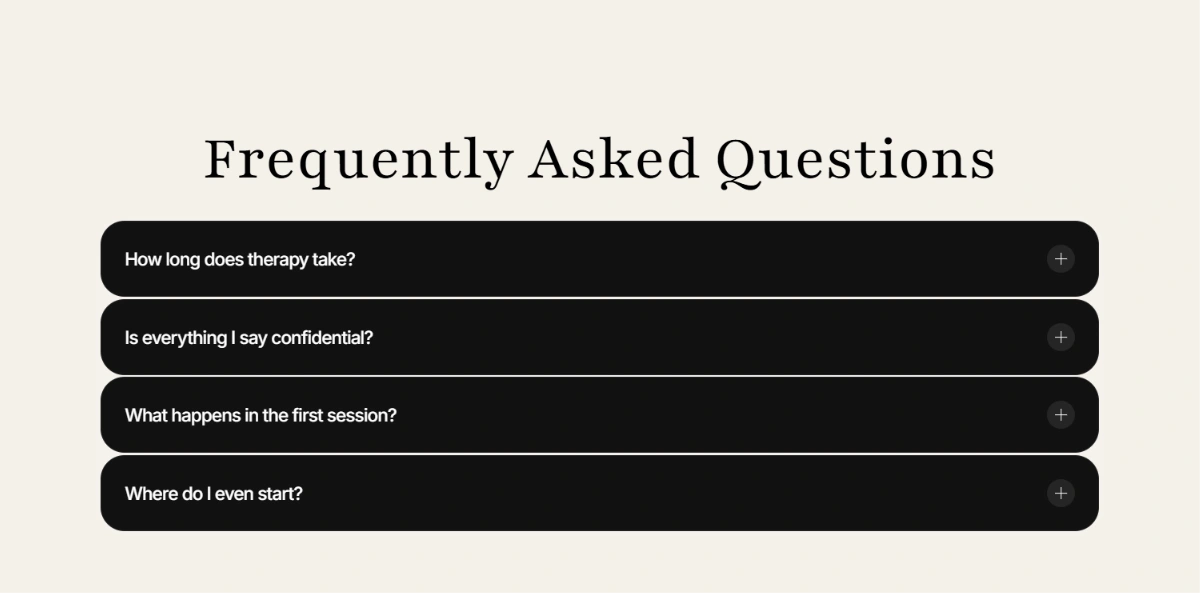
Addressing logistical and emotional barriers head-on, the FAQ accordion resolves lingering doubts regarding session structure, confidentiality, matching, and getting started.
Explore the live site
View the SafeSpaceEra Framer website
Like this project
Posted May 14, 2026
Where design meets empathy A fully animated Framer website built for mental health professionals who want more than just a pretty page.
Likes
0
Views
11