Why SaaS Monetization Is a Product Strategy Challenge

Abdulfatai Adebayo

For a long time, SaaS companies treated monetization as something separate from product design.
Product teams built features. Growth teams handled acquisition. Finance teams defined pricing structures.
Each function had a clear boundary.
But that boundary is starting to break.
And AI is accelerating that shift faster than most companies are prepared for.
Pricing Used to Sit Outside the Product
Traditionally, SaaS pricing followed a predictable logic:
Define tiers
Assign features to each tier
Adjust pricing based on market response
Once set, pricing remained relatively stable.
This worked because product value was predictable.
You built a feature → users accessed it → value was delivered in a linear way.
But that model assumes something important:
Product value does not change dynamically.
That assumption is no longer valid.
AI Changed How Value Is Created Inside SaaS
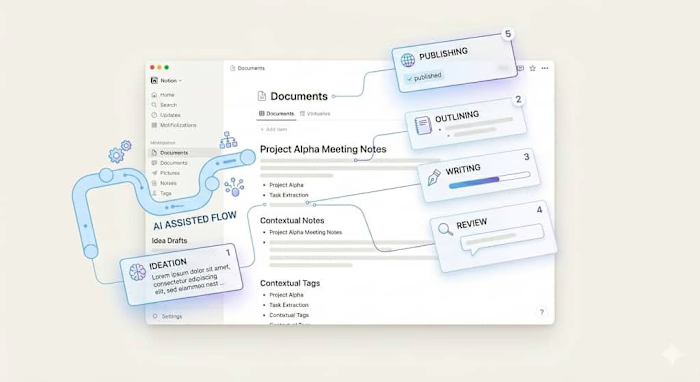
With AI-driven products, value is no longer tied to static features.
It is tied to:
Speed of execution
Automation depth
Reduction of user effort
Quality of output
This changes the nature of software entirely.
The product is not just what users interact with it is what the system actively produces for them.
And that makes pricing harder to separate from product behavior.
Monetization Starts Emerging From Product Behavior
In modern SaaS systems, especially AI-native tools like Cursor, monetization is increasingly shaped by usage patterns.
For example:
More AI-generated output changes cost structures
Increased automation changes user dependency
Workflow compression changes perceived value
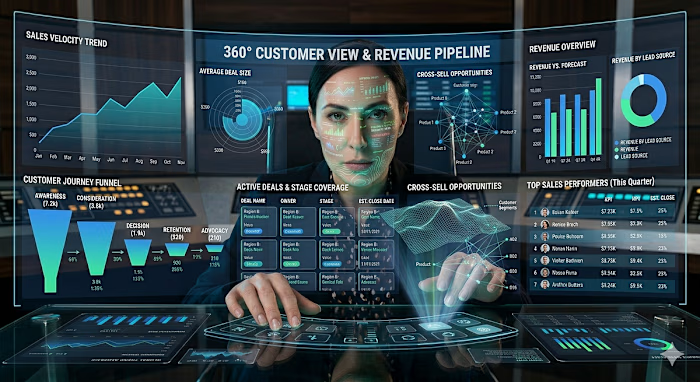
This means pricing is no longer just a financial layer. It becomes a reflection of how the product behaves.
Recommended by LinkedIn
The real shift is not in pricing models.
It is in how companies define value.
Instead of asking:
“What should we charge for this feature?”
SaaS teams now need to ask:
“How does this product create value and how should that shape revenue?”
That question sits at the intersection of:
Product design
User behavior
System architecture
Revenue logic
Which is why monetization is becoming a product-level decision.
What This Means for SaaS Teams
This shift introduces a new reality:
Product decisions now influence revenue directly
Usage patterns matter more than feature tiers
AI changes cost-to-value relationships
Pricing becomes dynamic rather than fixed
Monetization can no longer sit outside product thinking.
It is now part of it.
The Bigger Direction SaaS Is Moving Toward
As AI becomes more deeply embedded in software, we are likely to see:
More usage-based pricing models
Dynamic monetization systems
Real-time value tracking
Tighter coupling between product behavior and revenue
This is already visible in AI-native SaaS tools.
And it signals something important:
Monetization is becoming a design problem, not just a pricing decision.
The SaaS companies that will struggle are the ones still treating pricing as a separate function.
The ones that will adapt are those that understand this shift:
Product design drives value
Value drives monetization
Monetization must now be designed inside the product itself
That alignment is becoming a competitive advantage.
If you’re building or working on a SaaS product, I’d be curious how your team is thinking about monetization today as a pricing exercise, or as part of product design itself.
Do you think SaaS monetization is still a finance decision, or has it already become a product strategy problem?
Like this project
Posted Jun 28, 2026
A thought leadership article examining how pricing and monetization decisions increasingly shape product strategy, customer adoption, and long-term SaaS growth.
Likes
1
Views
1