
“We’ve already spent so much on it. We can’t stop now.”
This sentence has probably cost businesses more money than they realize.
Imagine a company has already spent $20,000 developing a product.
The product isn't performing.
So the team says:
“We should keep going. We've already invested $20K.”
But that $20K is already gone.
The better question is:
“If we had $20K today, would we choose to invest it in this project again?”
If the answer is no, the previous investment shouldn't automatically determine the next decision.
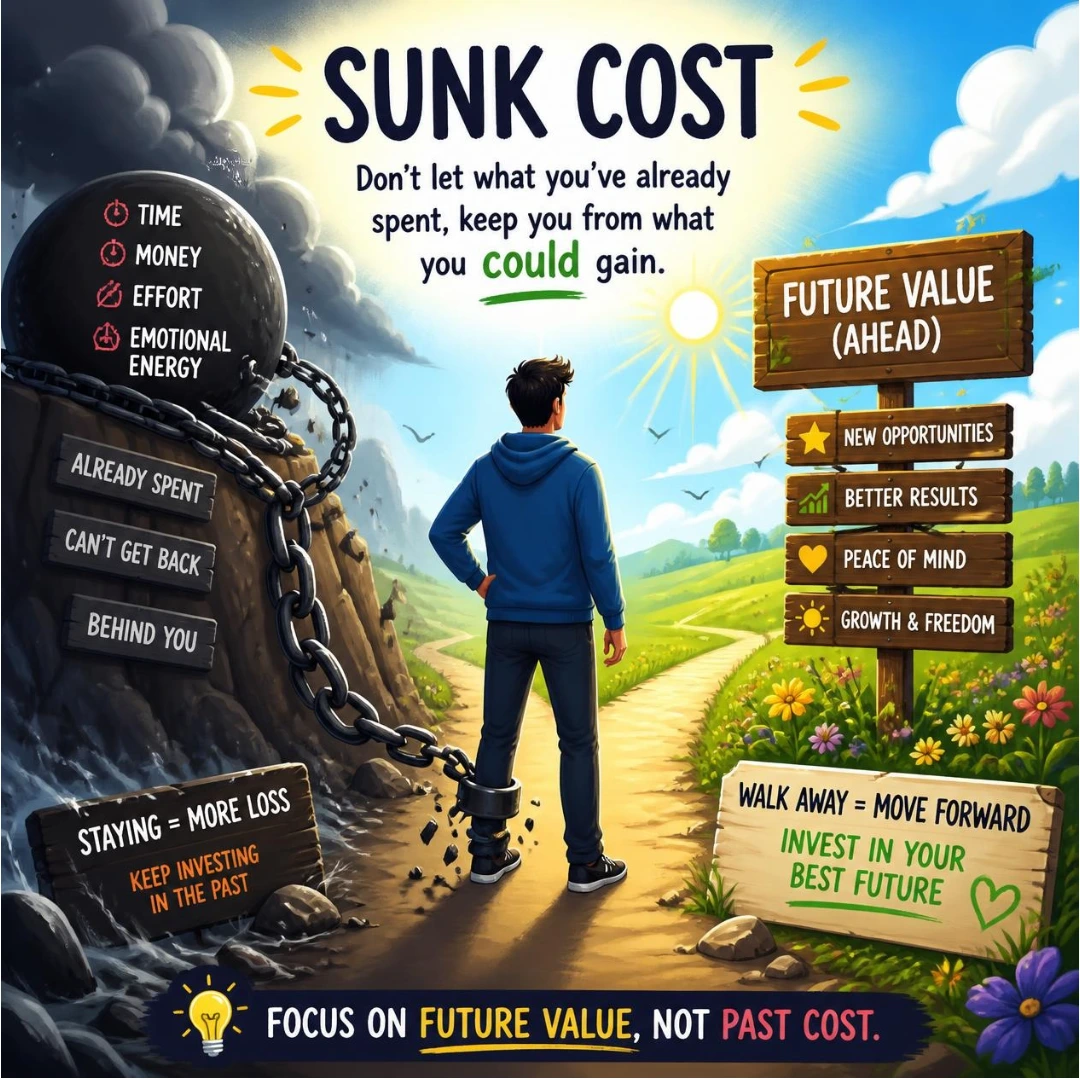
That's the idea behind a sunk cost.
And it shows up everywhere:
→ Continuing with software nobody uses
→ Keeping an unprofitable product line
→ Spending more on a marketing campaign that isn't converting
→ Holding excess inventory because “we paid for it already”
→ Staying with a process simply because the team has spent years building it
The difficult part isn't understanding the concept.
It's accepting that stopping can sometimes be the financially rational decision.
Good financial decision-making isn't about protecting every dollar you've already spent.
It's about deciding where the next dollar can create the most value.
So when reviewing an underperforming project, try asking:
“If we were starting from zero today, would we make the same decision?”
That question can reveal a lot.
💬 What's a business decision you've seen people continue mainly because they had already invested too much into it?
0 likes · 0 views · Aug 22, 2026
“We’ve already spent so much on it. We can’t stop now.” This sentence has probably cost businesses more money than they realize. Imagine a company has alread...

