Munim: Open-Source Multi-Account MCP Server

Vishal Gupta


The problem
Every SaaS provider allows one login at a time. Anyone looking after a dozen client accounts across Cloudflare, Vercel, Supabase, Gmail and the rest ends up juggling a dozen disconnected sessions, and an AI agent inherits the same limit.
What Munim does
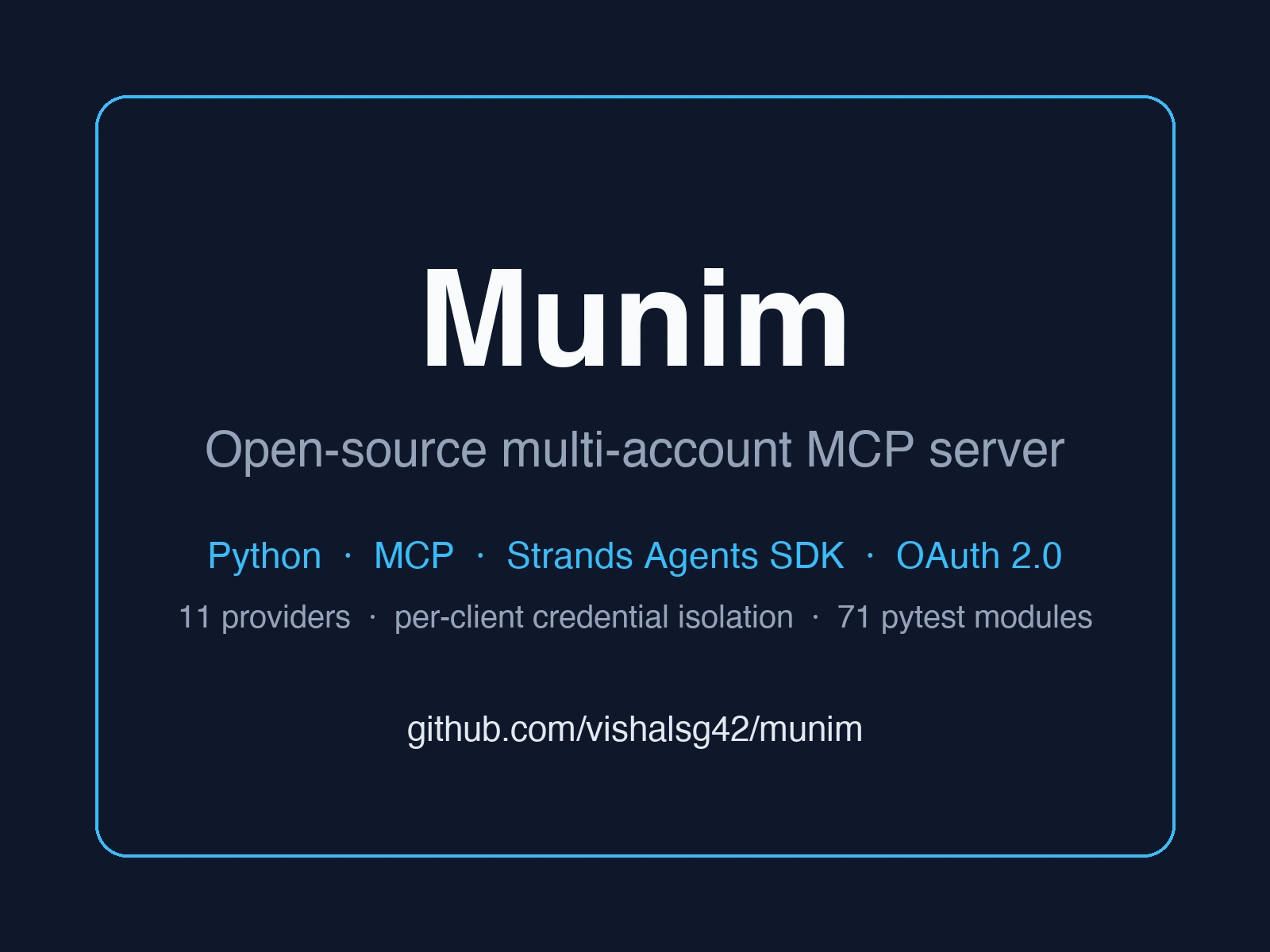
Munim holds an authenticated session per client in a single process across 11 providers, so one agent can read across every account and write only inside the client it was asked to.
Providers: Cloudflare, Gmail, Linear, Netlify, Notion, Resend, Sentry, Stitch, Supabase, Vercel and Zoho
Per-client OAuth credential isolation
A passthrough layer that forwards each provider's own MCP tools, supplies the right credential, and refuses any call that would send one client's credential to another host
Deterministic checks, audits and mail planning that never call a model; model use is opt-in
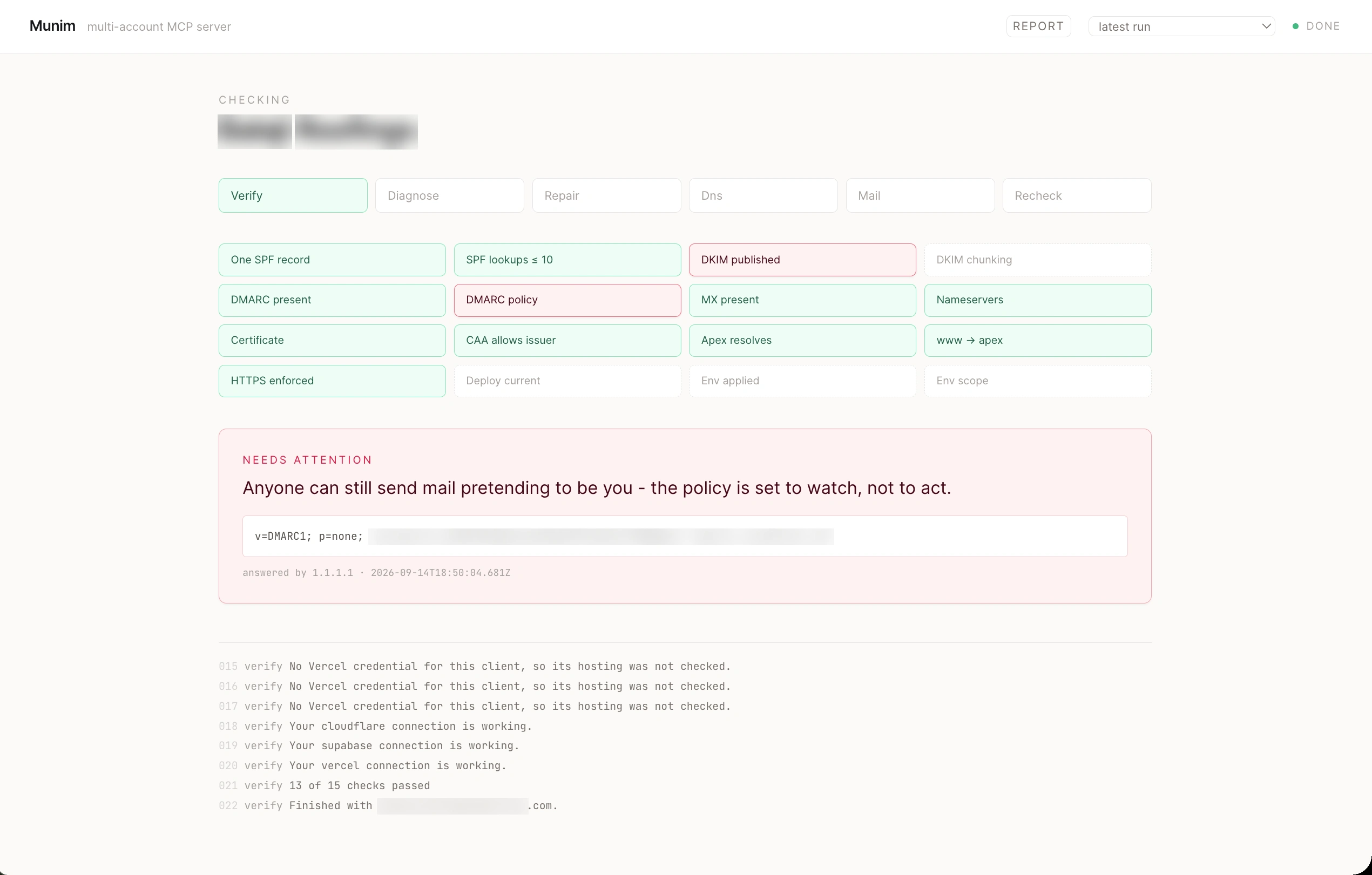
A verify run across a client's DNS, mail and hosting checks (client details blurred)
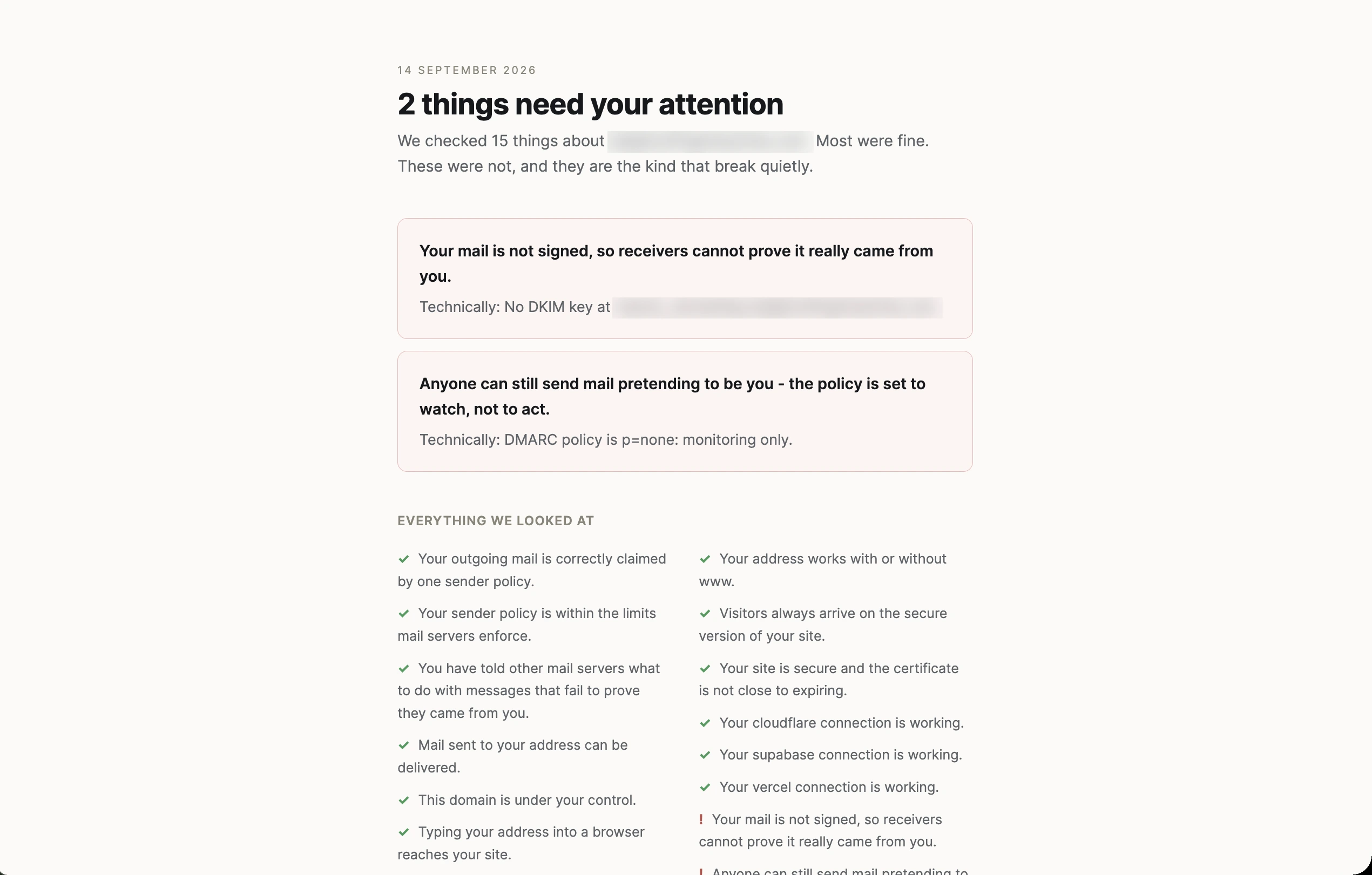
Plain-English report generated from the checks (client details blurred)
Architecture
Built in Python on the Strands Agents SDK. The model host is pluggable across Amazon Bedrock, Google Gemini and Anthropic.
Engineering quality
Published on PyPI under the MIT licence
71 pytest test modules
GitHub Actions workflows for tests, publishing and the documentation site
Documentation: architecture guide, numbered decision log, full CLI reference, a page per provider, and a roadmap stating what is deliberately not done
Links
Source: github.com/vishalsg42/munim
Package: pypi.org/project/munim
Submitted to the AWS Agents for Humans Hackathon (September 2026). Built with AI assistance (Claude Code), as disclosed in the README.
Like this project
Posted Sep 15, 2026
Open-source Python MCP server letting one AI agent work safely across many clients' SaaS accounts, with per-client OAuth isolation across 11 providers.