RIZZLA AI: EMOTIONAL INTELLIGENCE COACH

Imad Dhin


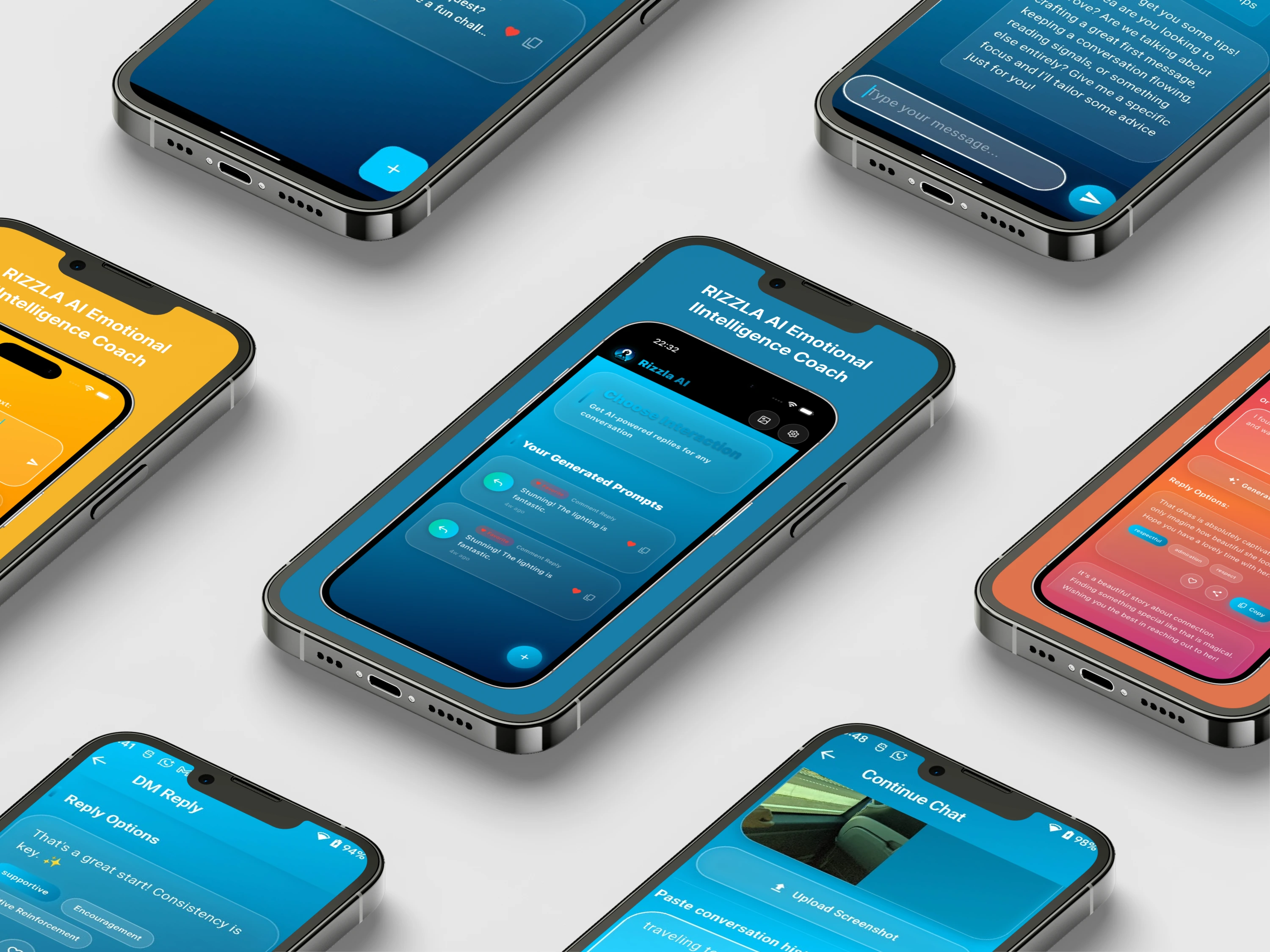
RIZZLA AI is an artificial intelligence platform designed to enhance social interactions and dating experiences. It functions primarily as a "dating assistant" that helps users generate engaging conversational content, witty replies, and improved profiles to increase their success rate in digital communication.
Here is a comprehensive summary of the concept and technical architecture based on the specifications provided.
1. Conceptual Overview
The core mission of RIZZLA AI is to bridge the gap in digital social confidence. By leveraging Large Language Models (LLMs), it acts as a real-time consultant for users navigating dating apps or social media.
Core Value Proposition: To eliminate "chat fatigue" and provide creative, personalized icebreakers and responses.
Target Audience: Individuals looking to improve their social presence, particularly in the dating app ecosystem (Tinder, Bumble, Hinge, etc.).
Primary Features:
Screenshot Analysis: Users can upload screenshots of their chats, and the AI suggests the best next move or witty reply.
Bio Generation: Crafting optimized, attractive profiles based on user traits.
Style Customization: Choosing different "vibe" settings (e.g., romantic, funny, bold) to match the user's natural voice.
2. Technical Architecture: Mobile App
The mobile experience is built for high performance and native feel, focusing on seamless integration with the user's gallery and notification systems.
Frontend Framework (Flutter): Provides a single codebase for iOS and Android with a highly reactive UI. This is critical for the "screenshot upload" workflow, ensuring smooth image cropping and processing.
Backend & Database (Firebase):
Firestore: Handles real-time user data and message history.
Firebase Authentication: Manages secure user login (Google, Apple, Email).
Cloud Storage: Stores uploaded screenshots for AI analysis.
Intelligence Layer (Gemini & Google Cloud):
Gemini API: The "brain" of the app. It uses multimodal capabilities to "read" the text within uploaded images and generate contextually aware responses.
Google Cloud Functions: Acts as the serverless middleware that handles the logic between Flutter and the Gemini API, ensuring API keys remain secure and hidden from the client side.
Monetization (RevenueCat): Manages complex in-app subscriptions and "pro" features across different app stores, handling trial periods and entitlement checks.
3. Technical Architecture: Web App
The web version serves as a landing hub and a desktop-accessible version of the tool, optimized for SEO and conversion.
Frontend Framework (Angular): A robust, enterprise-grade framework used to build a structured Single Page Application (SPA). It provides a high-speed interface for users to manage their accounts or generate text-based "Rizz" without needing their phone.
Backend (Firebase): Syncs perfectly with the mobile app. A user can start a session on the web and see their history on the mobile app due to the shared Firebase project.
Payments (Stripe): Unlike the mobile app (which uses RevenueCat for App Store compliance), the web app uses Stripe to process credit card payments directly. This allows for lower transaction fees and easier management of web-based promotional codes.
4. Workflow Summary
Input: User uploads a screenshot (Mobile/Flutter) or types a prompt (Web/Angular).
Processing: The data is sent to Google Cloud Functions, which passes it to the Gemini model.
Contextual Logic: The AI analyzes the tone of the conversation and the specific "Rizz" style selected.
Output: Suggestions are pushed back to the UI via Firebase.
Entitlement: RevenueCat or Stripe verifies that the user has an active subscription before revealing the premium AI suggestions.
Start using the app !
Play store: https://bit.ly/4bCNz8P
App store: Coming soon
Web: rizzlaai.com
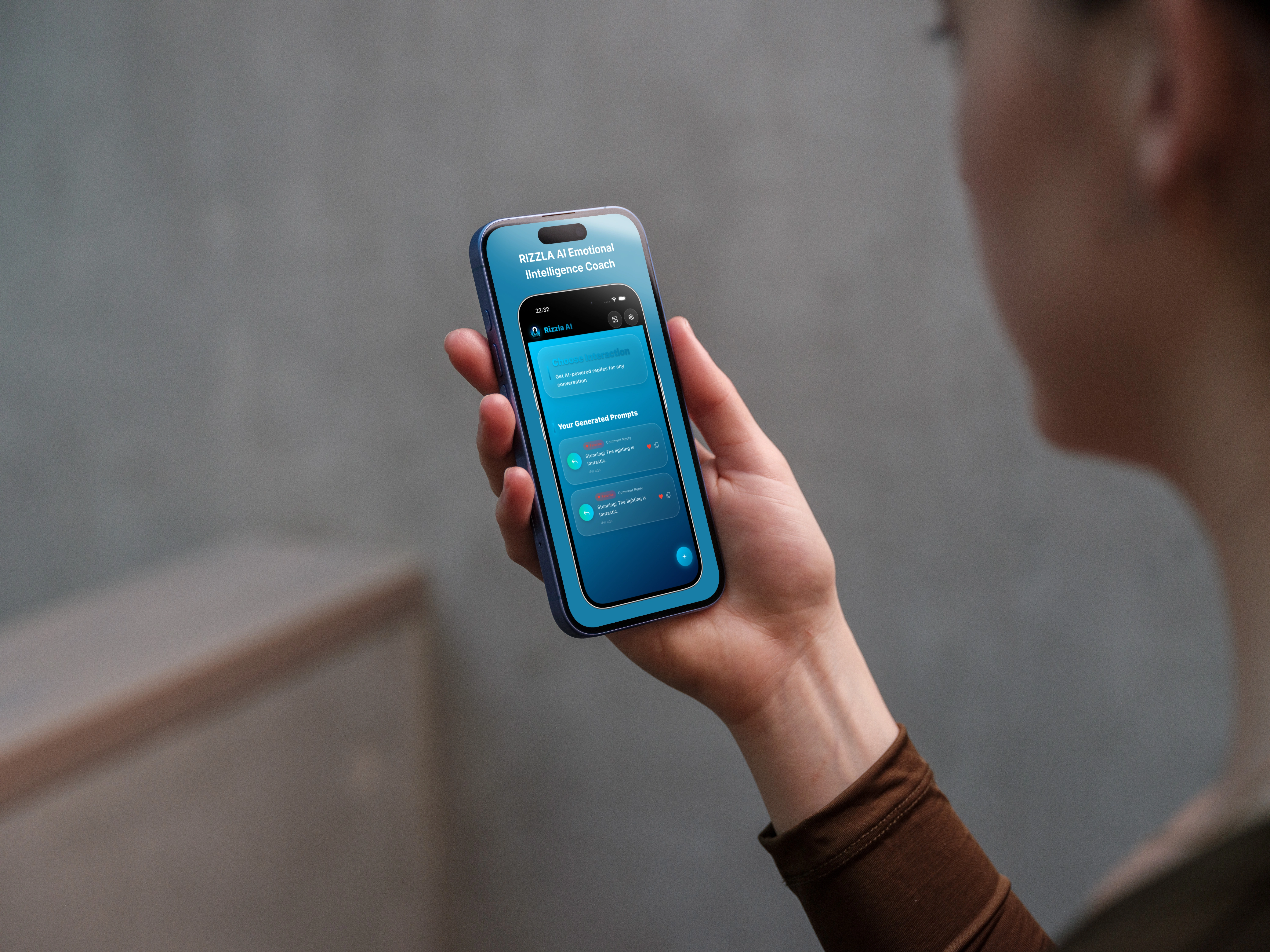
RIZZLA AI App
Like this project
Posted Jan 28, 2026
Rizzla AI helps couples build deeper emotional connections through intelligent, personalized guidance. Generate matched custom replies, messages, and ...
Likes
1
Views
45
Timeline
Dec 1, 2025 - Jan 20, 2026