Breaking Barriers: Making Loans Accessible to Everyone

Adaeze Chamberlain

Why
Loana is a digital lending platform that gives everyone access to loans, regardless of their credit score. Born from an existing lending business that needed to scale, this project was about bringing financial inclusion to more Nigerians through better design and accessibility.
In Nigeria, traditional banks turn away millions who don't fit their loan requirements. Loana sits in the middle, we lend to everyone but collect personal information for accountability. The goal: make borrowing simple, transparent, and accessible to people locked out of formal financial services.
Role
UX Designer
Challenge
Understanding an unfamiliar space.
When I joined the project, I knew little about how loan platforms worked. Different companies handle lending differently, some use credit scores, others require collateral. I needed to understand not just how loans worked, but how THIS business worked and translate it digitally.
Questions I Had
What makes someone approve or reject a loan application?
How do we verify people without traditional credit checks?
What information is actually necessary vs. what's just standard practice?
How do we build trust digitally when trust was previously built face-to-face?
The Users' Reality
Many applicants had been rejected by banks multiple times
They needed quick access to funds (emergencies, business capital, rent)
They were skeptical of "too good to be true" offers
Financial literacy varied widely, some understood interest rates, others didn't
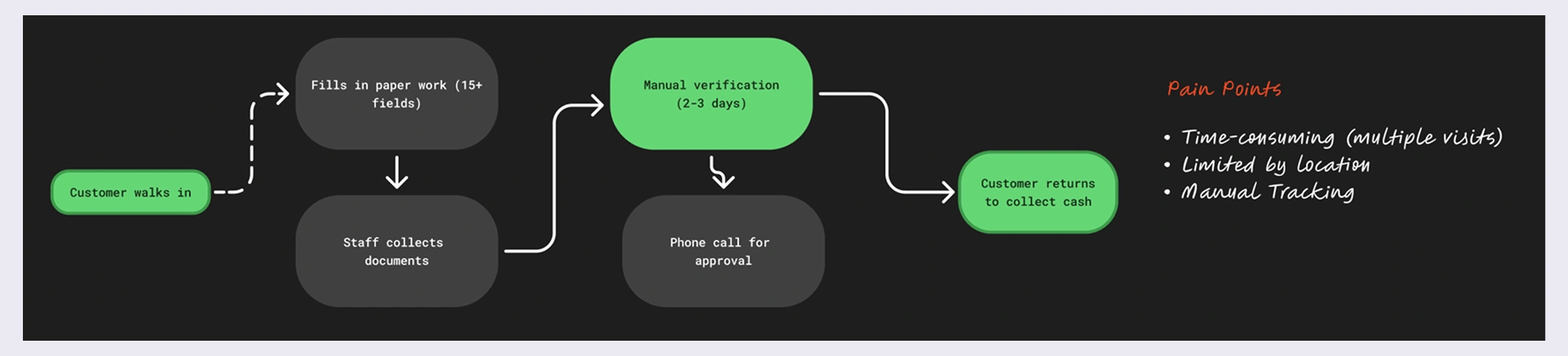
The Solution
Designing for trust and simplicity based on my research, I identified three core design principles that would guide every decision:
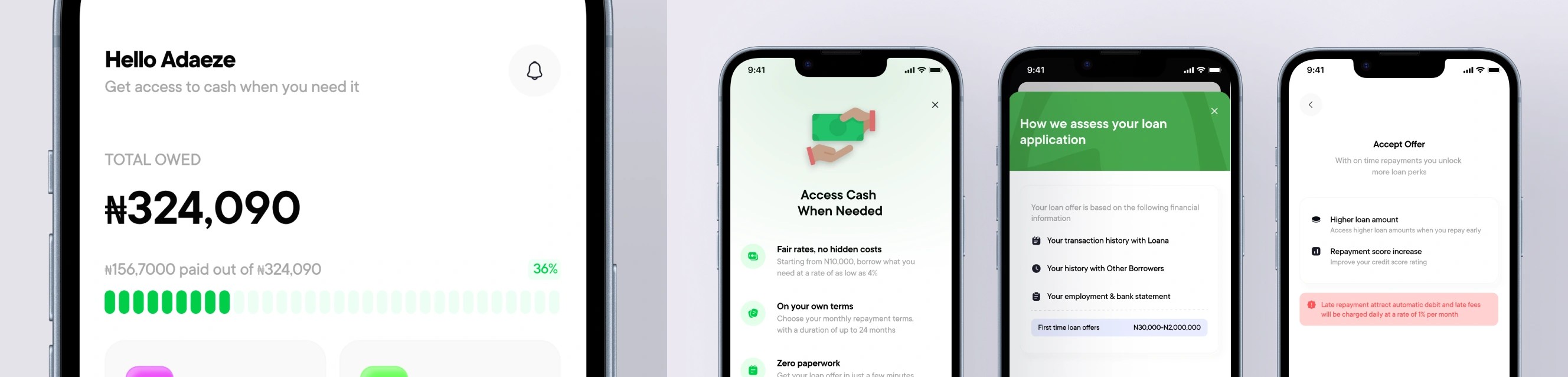
Transparency: Users needed to understand what they were signing up for. No hidden fees, no confusing jargon, no surprises after approval.
Progressive Disclosure: Don't overwhelm people upfront. Ask for information gradually and explain why its needed.
Human-Centered Copy: The interface had to replace the reassuring human staff member. Every word mattered.
Key Design Decisions
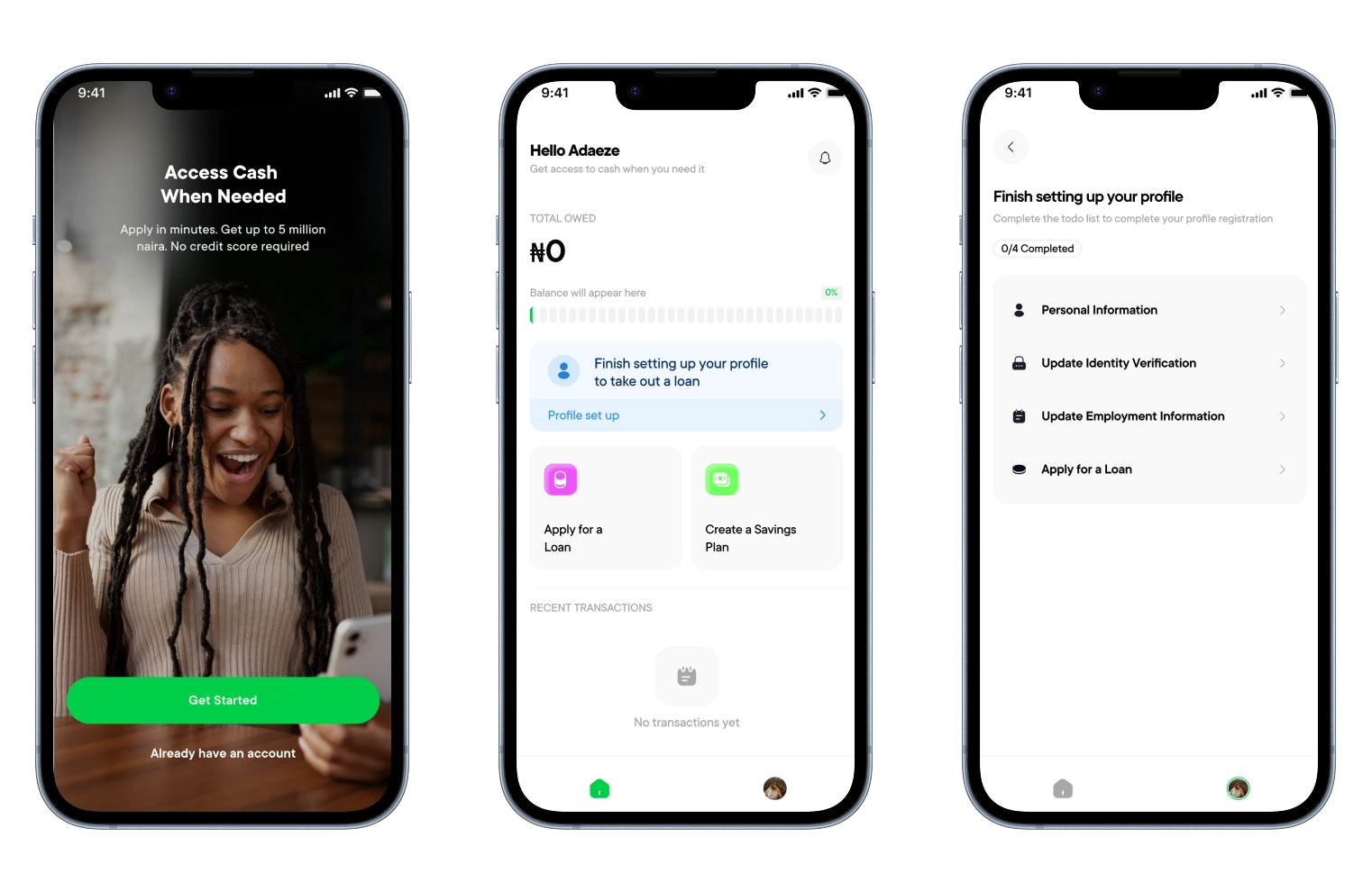
Lead with the promise: The fear needed to be addressed immediately 'Access Cash When Needed'
Collect information early, so applying feels instant later: Users set up their profile once after signing up: personal details, ID, employment.
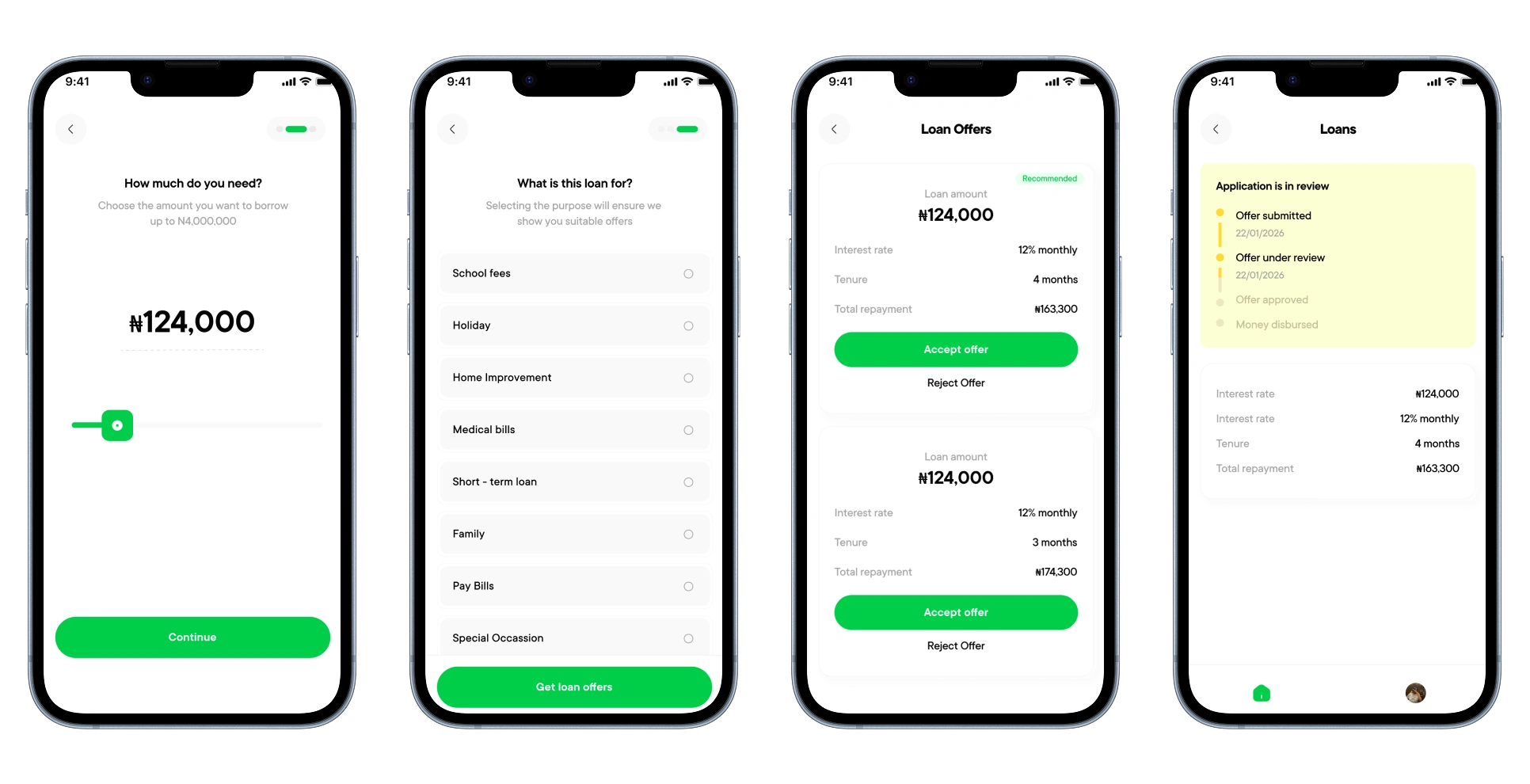
2-step application: Because the profile is already done, applying for a loan is just two inputs: “How much do you need?”, “What's it for? “No re-entering details. No extra forms. This was a deliberate choice.
Multiple offers to choose from: Before accepting, users see exactly what they'll pay. This is where trust is either built or lost.
Status transparency: The offline business called people back, calling was not the most efficient way So I added a status tracker: Submitted → Under Review → Approved → Disbursed. Users know exactly where they are and what's next.
What I Learned
Familiar territory doesn't mean easy territory. Lending is simple in concept, complex in execution, and the right approach depends entirely on who you're designing for. Understanding the users before touching the interface was what made every decision after that feel intentional.
Trust isn't one thing. It's the sum of small choices: showing exact amounts upfront, explaining why we need personal information. Each one is minor. Together, they're the difference between an app people trust and one they abandon.
Restraint is a strategy. I could have built loan comparisons, credit builders, financial guides. But the core need was simple: quick, transparent access to money. Version 1 did one thing well. Everything else can come later.
Impact
Transformed a walk-in business into a scalable digital platform
Reached anyone in Nigeria with a phone
Loan application reduced to just amount + reason
Like this project
Posted May 13, 2026
Loana was created to bring financial inclusion to more Nigerians through better design and accessibility.
Likes
0
Views
4