
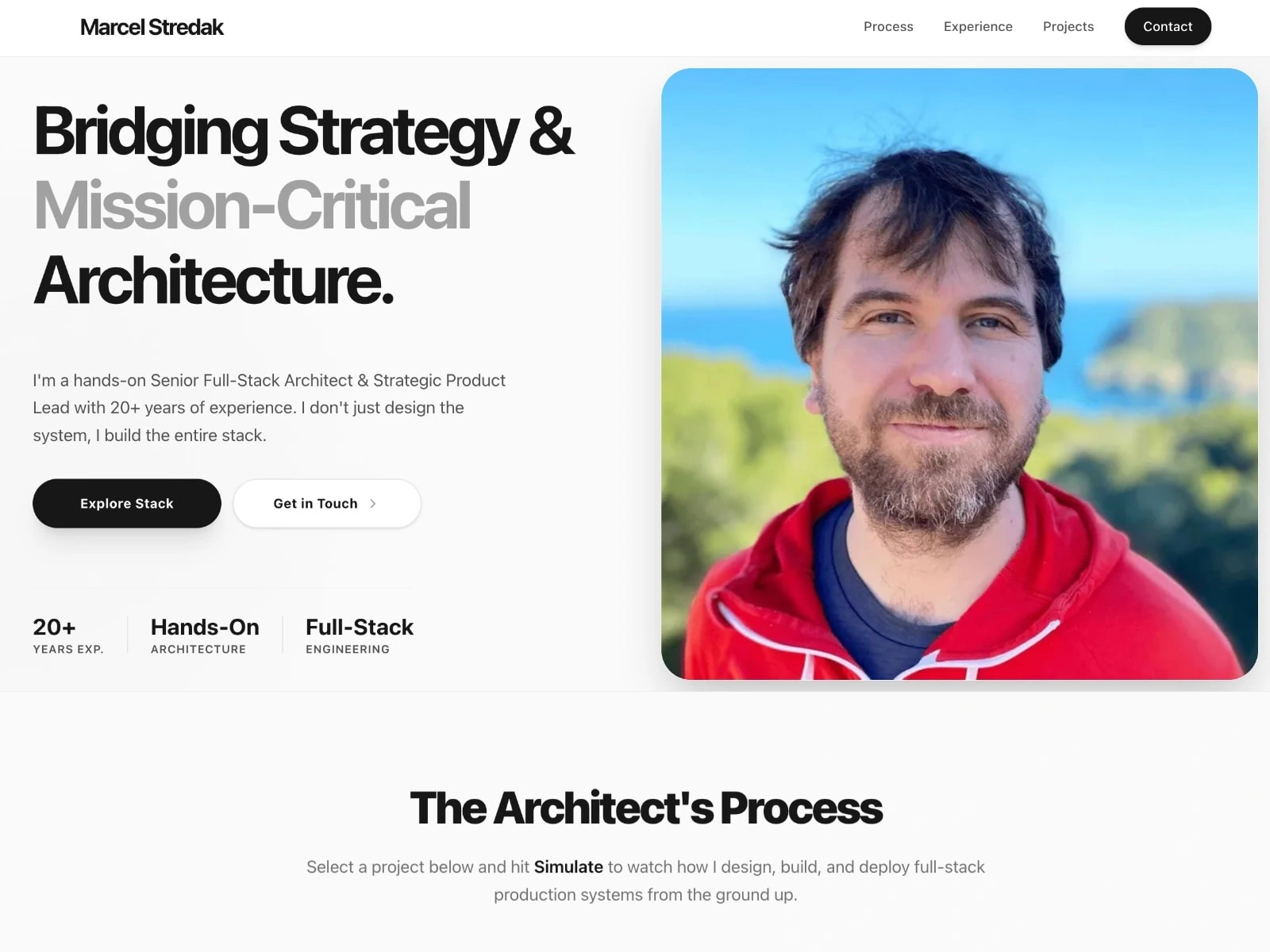
Interactive Portfolio: Architectural Simulation and System Design
The Mission
Demonstrating enterprise-grade engineering through a living proof platform.
Standard portfolios rely on static mockups and bullet points. I architected this platform to serve as a functional simulation of my methodology. It takes complex requirements and turns them into a visual, interactive experience. This project proves that I can ship highly complex UIs while maintaining the performance and security standards required for production-grade software.
The Strategy: Performance as a Feature
Achieving exceptional Lighthouse scores on a feature-heavy site required strict architectural discipline. I focused on eliminating the technical debt that usually plagues high-motion websites.
Architectural Performance
Mathematically Optimized Loading: I utilized aggressively isolated Client Components and zero-JS Tailwind state transitions. This prevents React hydration from blocking the main thread and eliminates serverless cold starts.
Global Edge Performance: I architected a self-hosted infrastructure using Coolify on a private server. By integrating Cloudflare for global edge-caching, I achieved sub-second load times for users worldwide. This setup provides the performance of a managed platform with the security and cost-efficiency of a private cloud.
Interactive Decision Visualizer
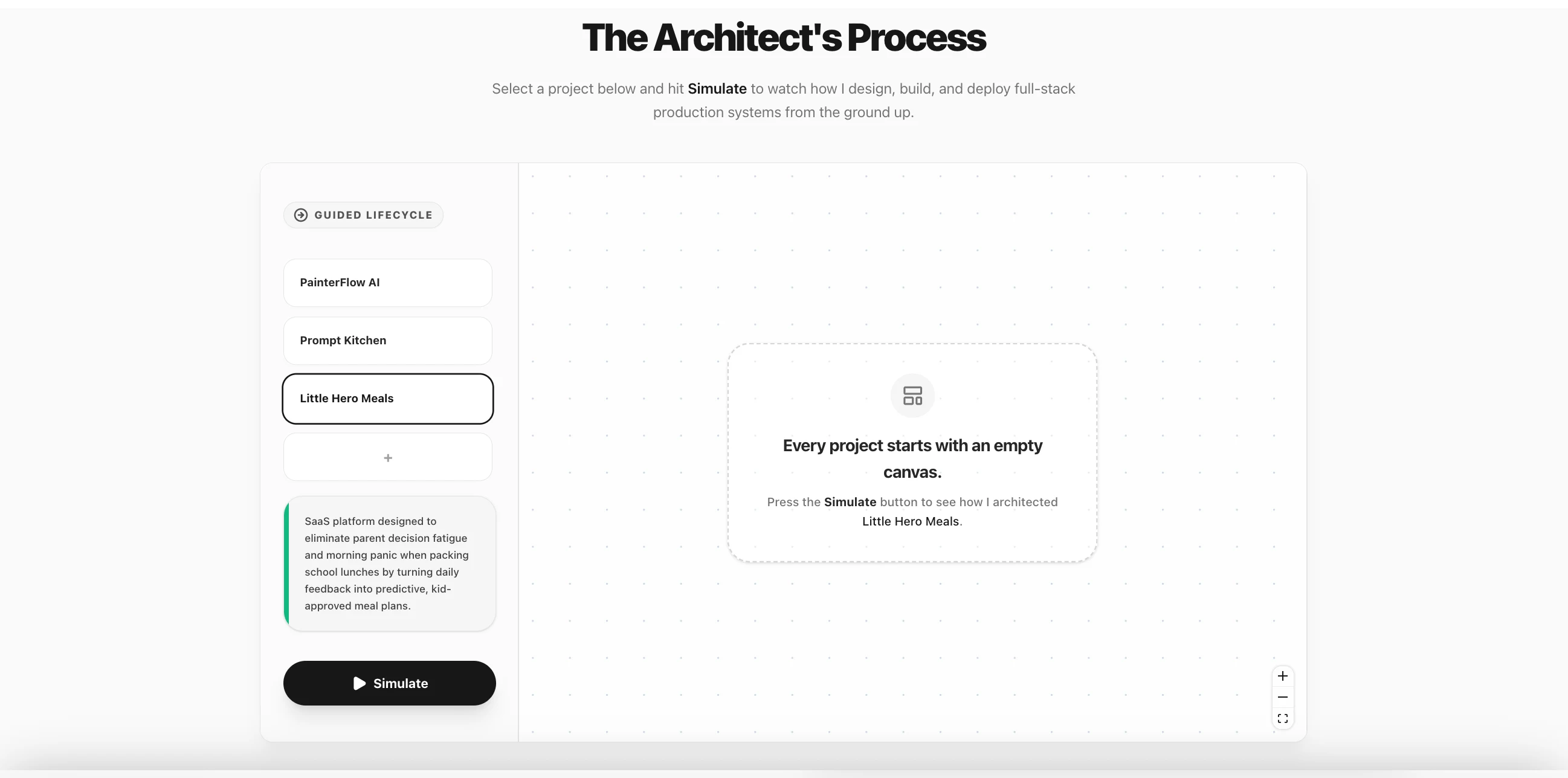
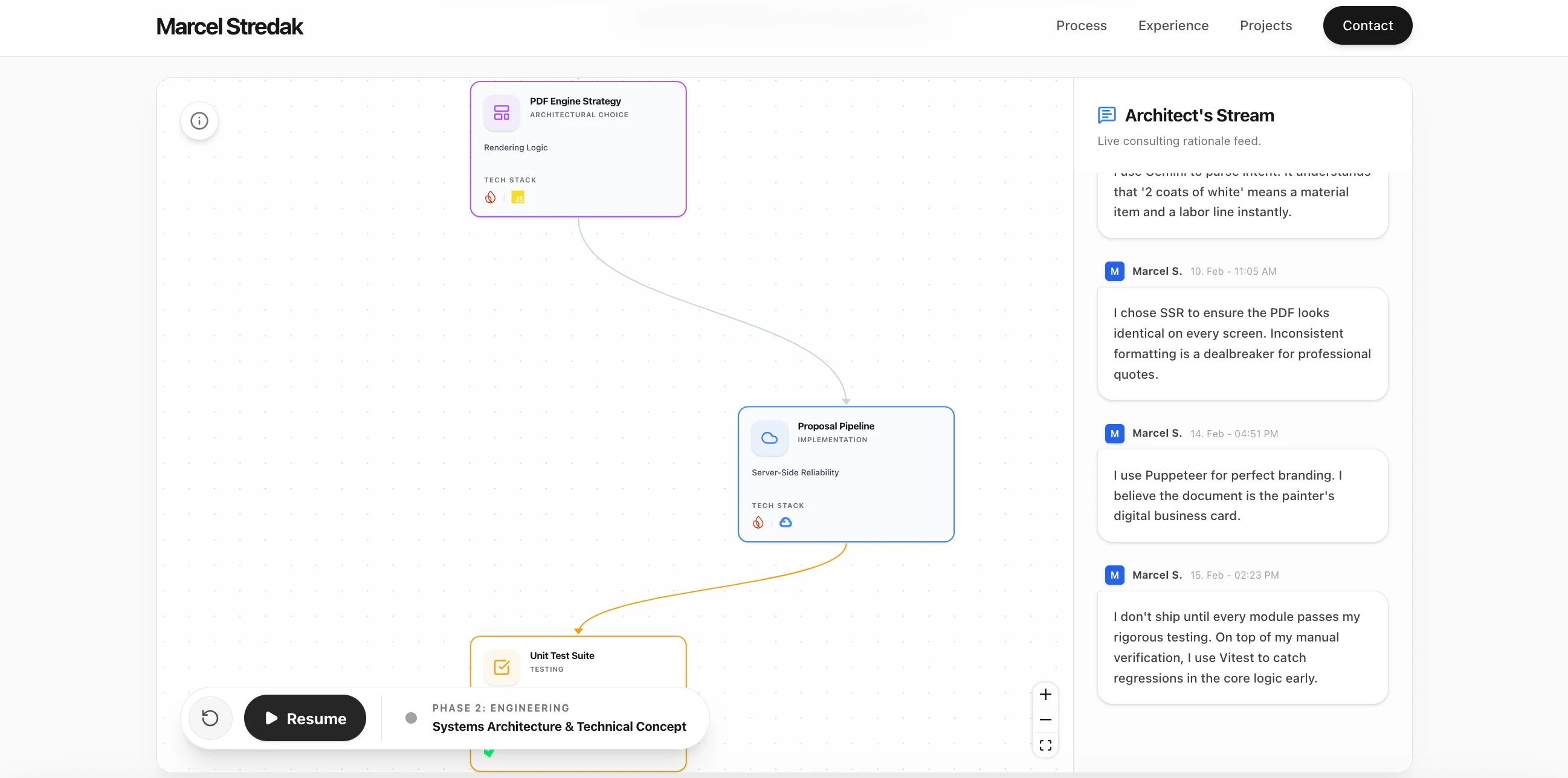
The System Simulator: Using xyflow/react, I implemented a dynamic UI that allows strategic partners to follow my technical decision-making process. It visualizes the construction of a SaaS from an empty whiteboard to a scalable architecture.
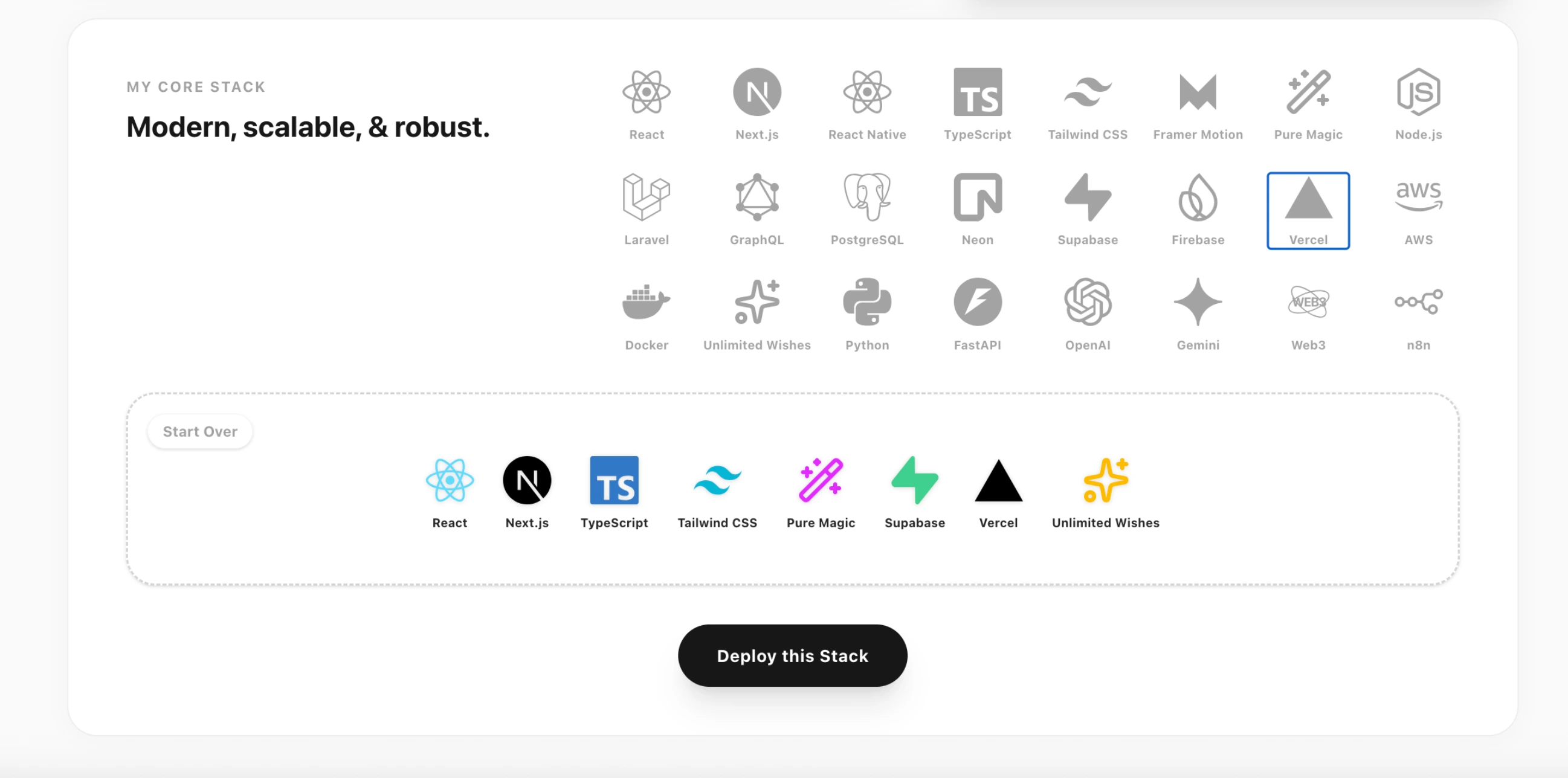
The Stack Analyzer: I built a custom rules engine that evaluates tech stack selections in real-time. It detects structural anti-patterns, such as pairing incompatible databases or deployment environments, demonstrating deep engineering knowledge.
Standard portfolios show what you built. This platform shows how I think. It is a sandbox for architectural logic.
Technical Architecture
Even for a personal project, I enforced the same strict enterprise standards I use for global clients.
Frontend: Next.js 16.1 (App Router), React 19.2, and Tailwind CSS v4.
Infrastructure: Self-hosted via Coolify on a private server with Cloudflare edge-caching.
Logic and Motion: Deeply typed with TypeScript 5.9 and animated with Framer Motion for high-end micro-interactions.
Quality Control: The repository uses rigorous constraints, including Vitest for isolated logic testing, Husky git hooks, and automated CI pipelines.
Rendering Engine: Integrated xyflow/react to create the interactive architectural canvas.
The Outcome
This platform serves as a high-performance benchmark for my technical capabilities.
Exceptional Lighthouse Scores: Maintained a near-perfect performance profile despite complex interactive components.
Interactive Methodology: Successfully translated 20 years of experience into a visual simulator that builds client trust instantly.
Zero-Regression Codebase: Built with a focus on long-term scalability and code health.
Interactive System Simulation
Technical Rationale and Logic Stream
The Stack Analyzer Engine
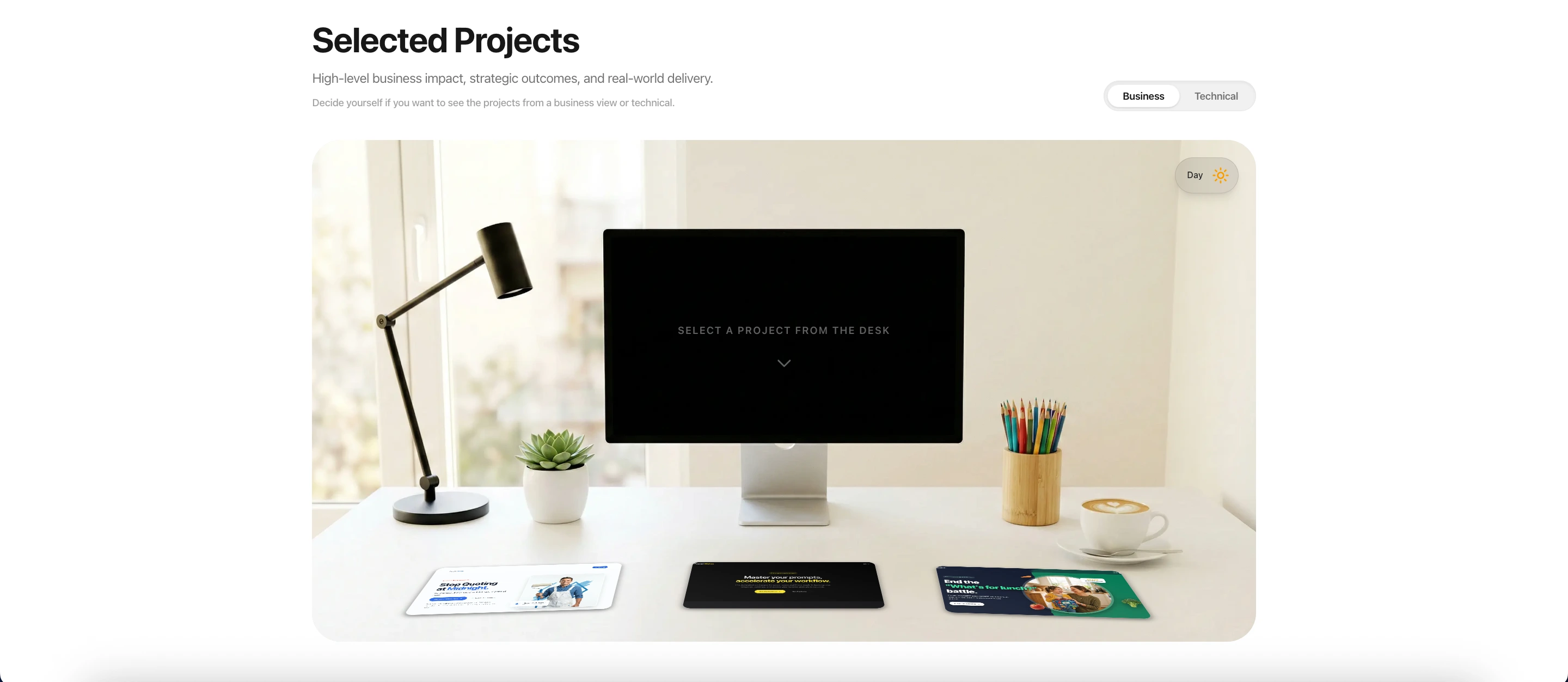
Business and Technical Project Navigation
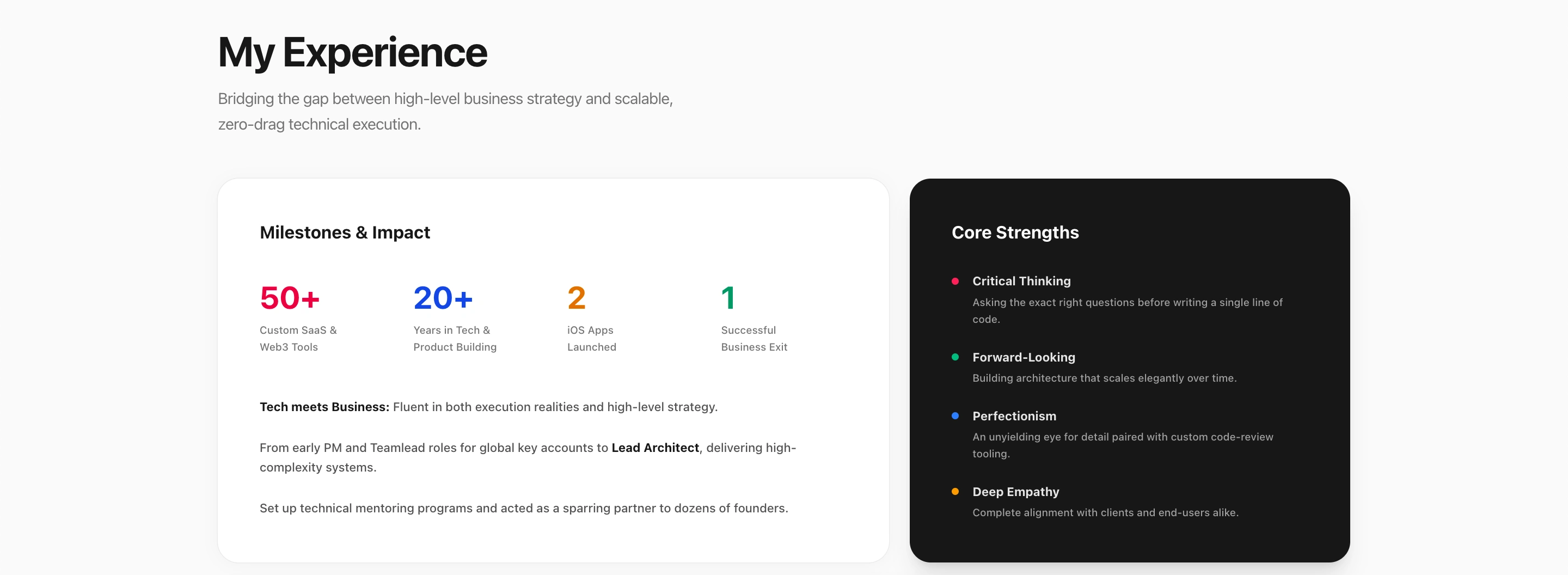
Enterprise Experience and Core Strengths
1 like · 40 views · Mar 22, 2026
I built a high-performance portfolio that simulates the architectural lifecycle. It features a custom tech-stack rules engine and interactive system design.


