
Colectia - Automatic Debt Colection Platform
Role:
Product direction, UX/UI, development and AI integration
Technologies used
React
Vite
Tailwind CSS
Python, FastAPI
PostgreSQL
Twilio
ElevenLabs
Highlights
Processed over $50,000 USD in recovered debt.
Connected WhatsApp, voice calls and payment requests.
Built account workflows and portfolio reporting.
A conversation is only one part of recovering a debt
Collections work follows an account across several steps. Someone needs to understand the outstanding balance, make contact, record an agreement and check whether a payment arrived. An automated message only handles part of that work.
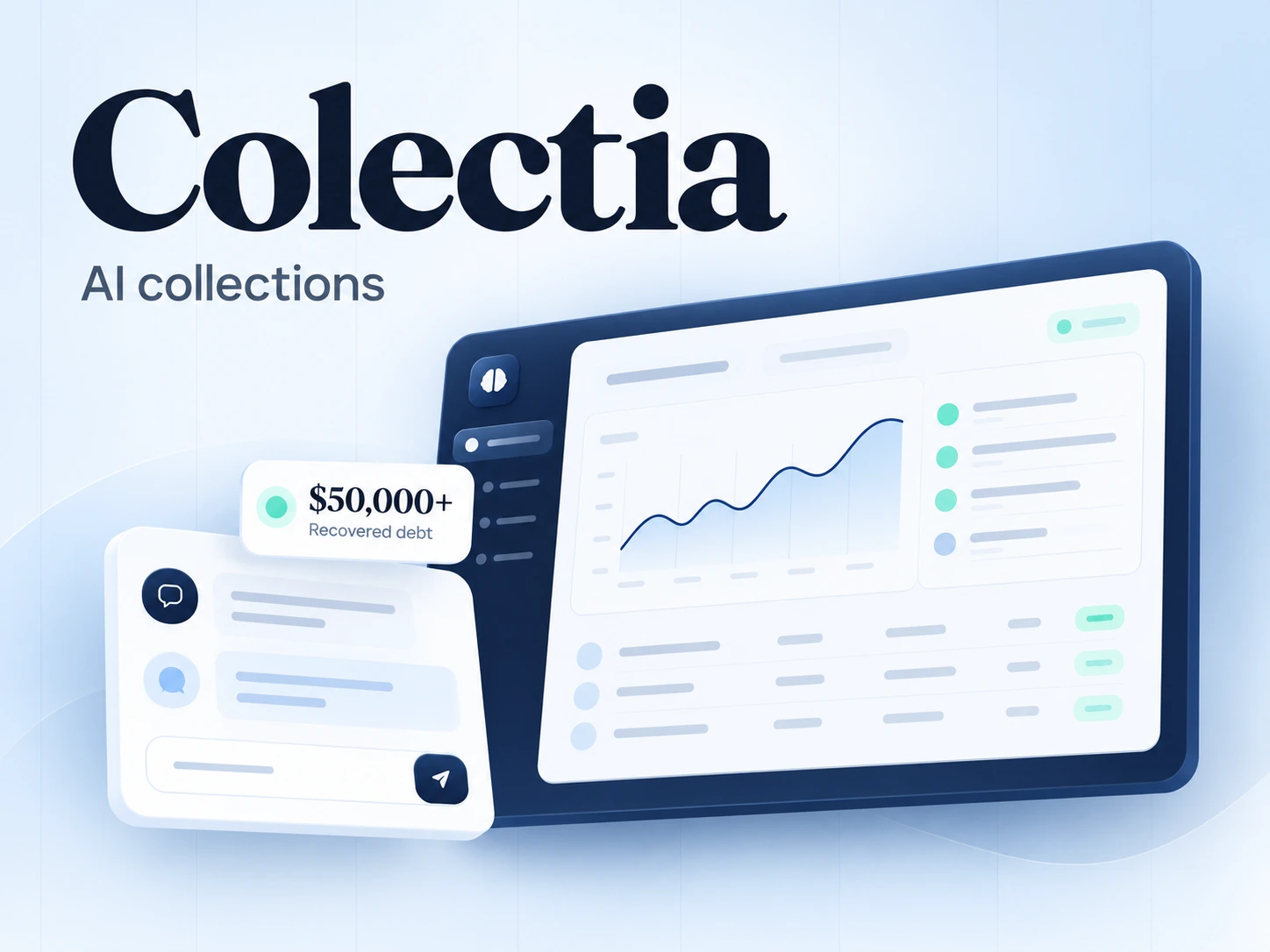
Colectia brings the account and the follow-up process into a shared web application. It combines customer records with WhatsApp conversations, voice calls, payment requests and reporting. The product has processed more than $50,000 USD in recovered debt.
My contribution covered product direction, UX/UI, development and AI integration. I worked across the experience, from how an operator finds an account to how the team reviews collection activity. The deliverable included the web application and its public website.
Start with the account and the next actions
The dashboard puts clients and their debts at the center of the interface. Operators can search for a client, start a conversation or add a record from the same working area. The account list connects outstanding balances with contact history.
That structure gives the operator a practical starting point: which account needs attention, what context is already available and where to continue the work. The navigation keeps customer management, conversations, reports and payment requests within reach.
I treated the interface as a working tool for repeated daily tasks. Clear action labels and visible statuses matter here because an operator needs to understand the state of an account before contacting someone or recording a payment.
Keep communication connected to collection work
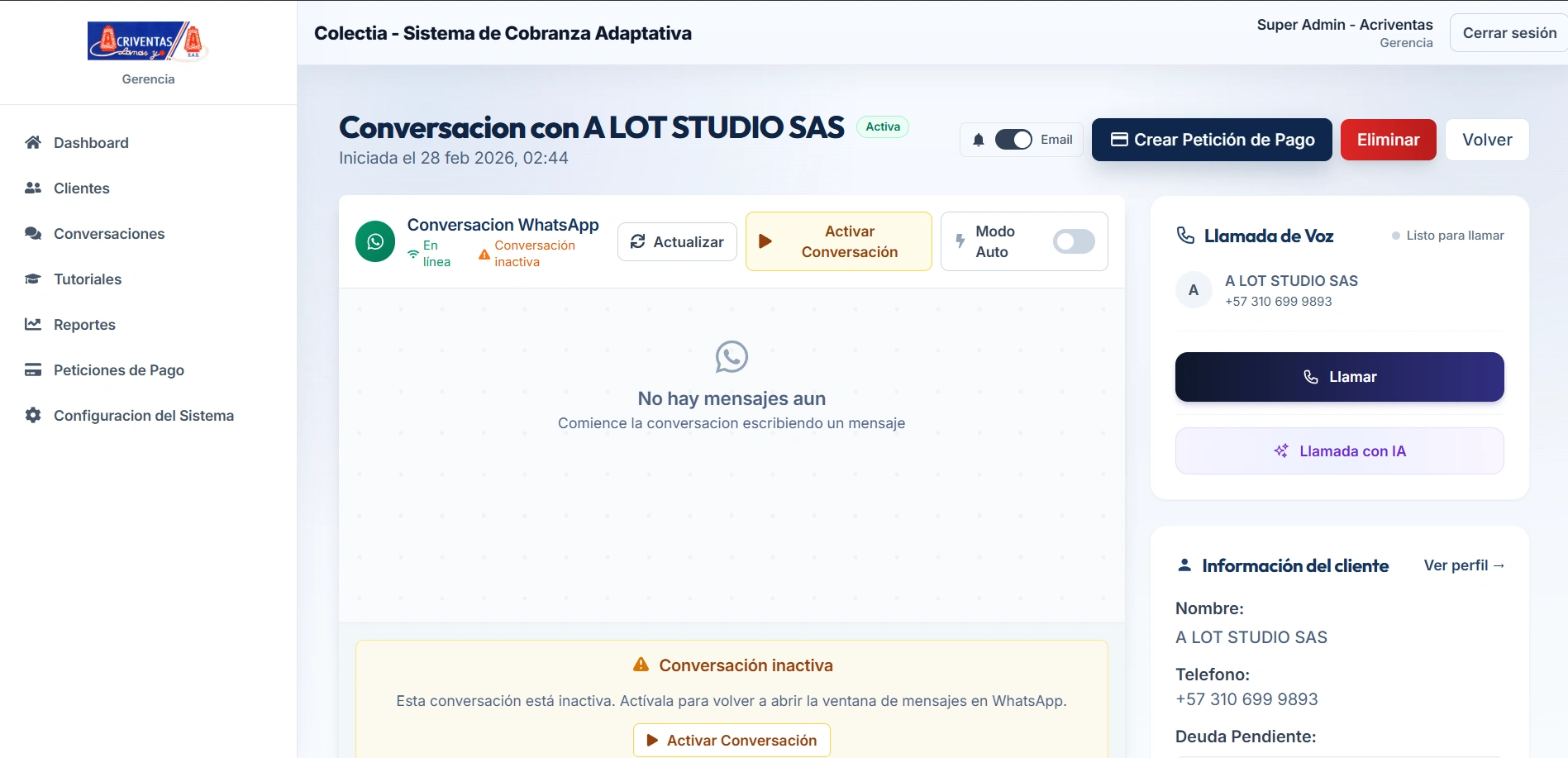
The conversation workspace brings WhatsApp and voice controls into the account experience. It includes manual calling and an AI calling option, alongside controls for automated conversation handling. Operators can also create a payment request from the conversation area.
The AI integration belongs inside that workflow. Customer context gives the interaction a starting point, while the surrounding interface gives the team a place to manage the account. Manual controls remain visible alongside automation.
The implementation combines a React application with a Python/FastAPI backend. Twilio supports the calling layer, and the AI voice service uses ElevenLabs. These integrations support specific collection tasks within the product.
Make payment progress readable
Payment requests have distinct states, including pending and confirmed. Each request shows the amount alongside the previous and remaining balance. This gives the operator a view of the account after a proposed or recorded payment.
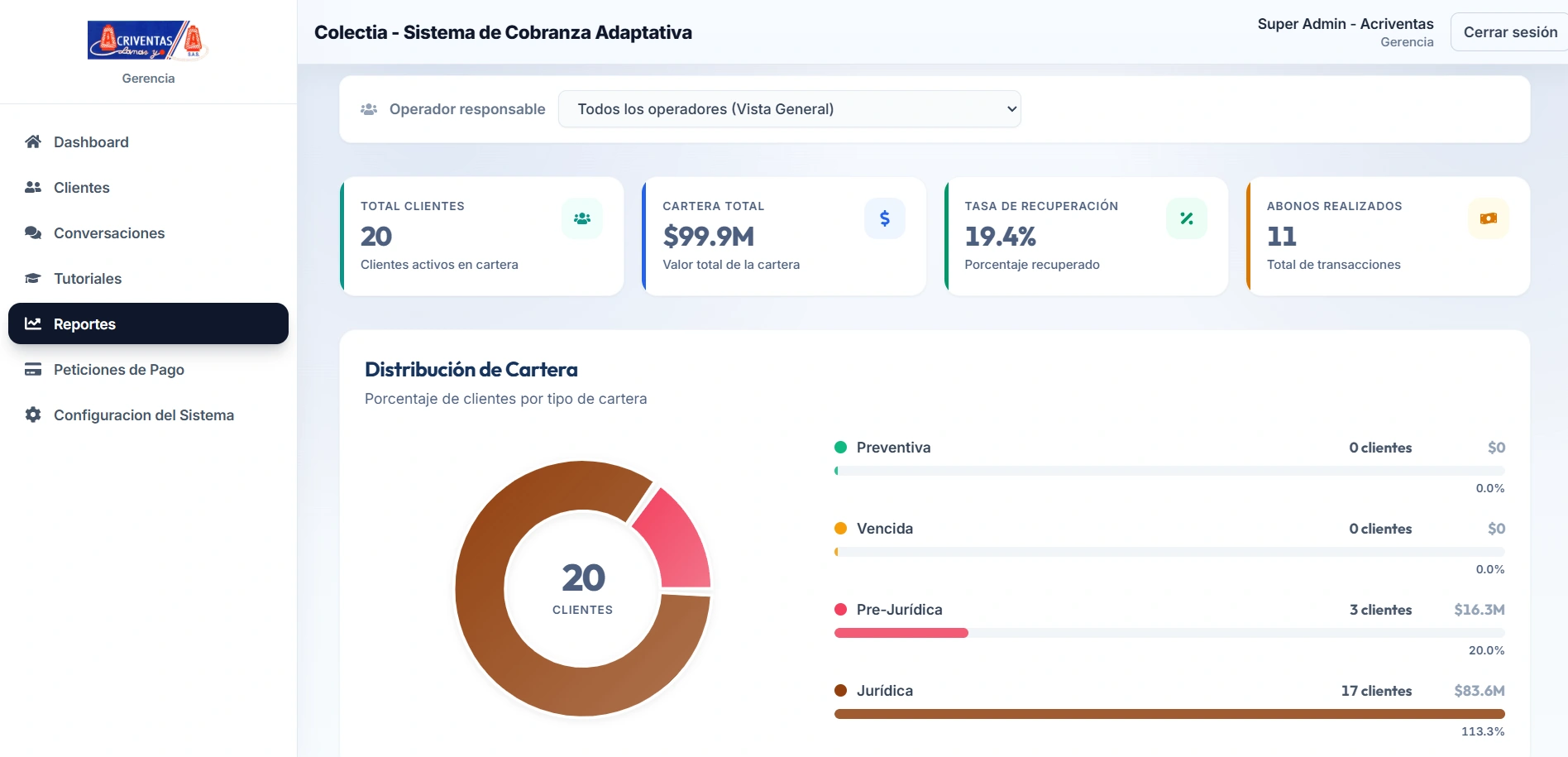
Reporting provides a different level of detail. Portfolio totals, recovery rate and payment activity sit above a breakdown by collection stage. The operator can work on an individual account; management can review the wider portfolio.
The public website explains the same operating model through capabilities, an implementation flow and a demo request. It gives prospective customers a way to understand the application before entering it.
Delivered result
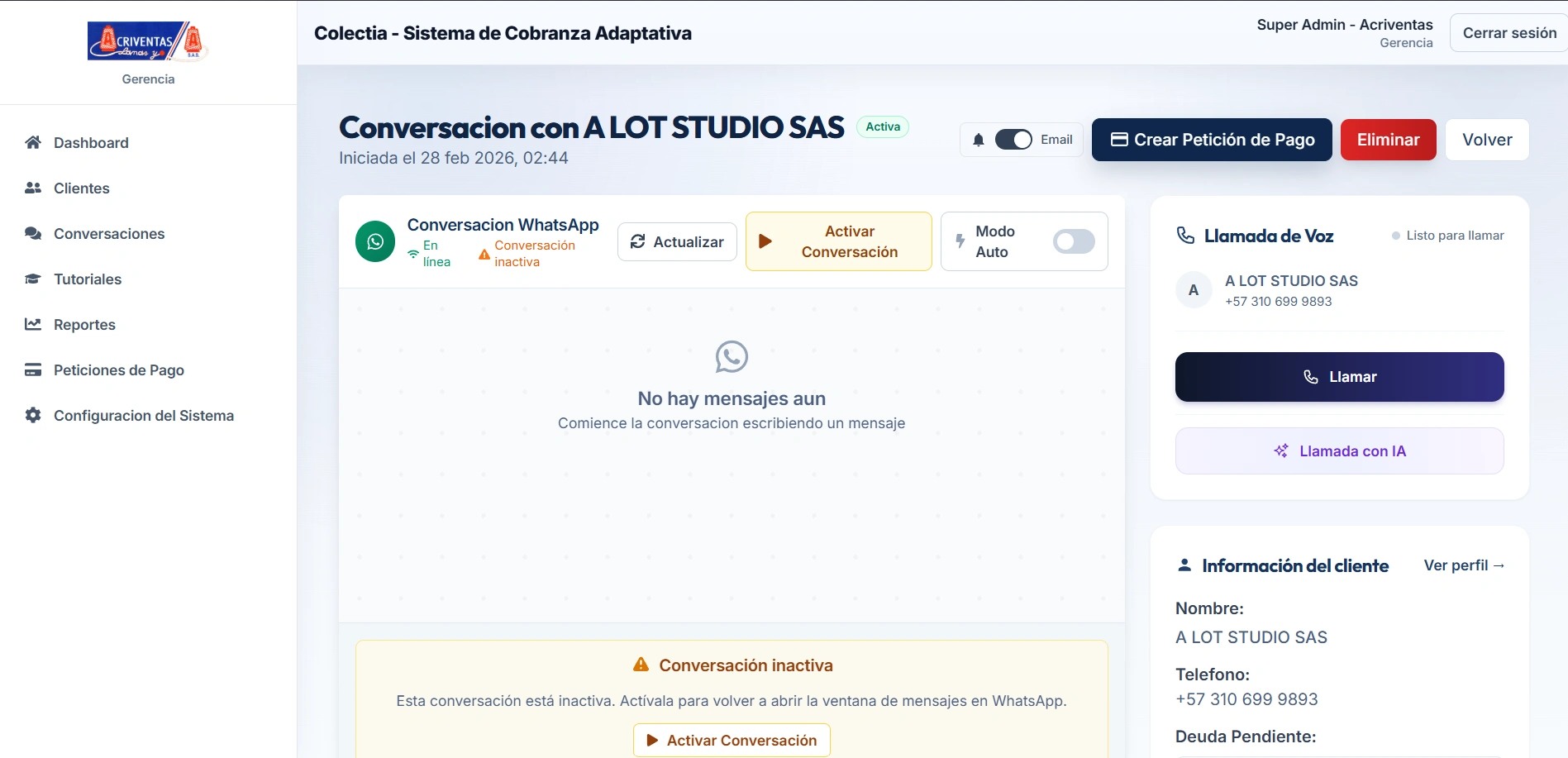
The delivered product connects collection activity with account records and payment follow-up. It gives teams an interface for using automation within their existing collection work.
The confirmed business result is more than $50,000 USD in recovered debt processed through Colectia. The reporting screen shows a captured portfolio view; the recovery result covers the product's wider use.
Work with me
Have a product or workflow you want to build?
0 likes · 0 views · Oct 19, 2026
Debt collection web application with AI integration for Acriventas


