Redesigning Scalable Mentorship Platform

Derrick Amenuve


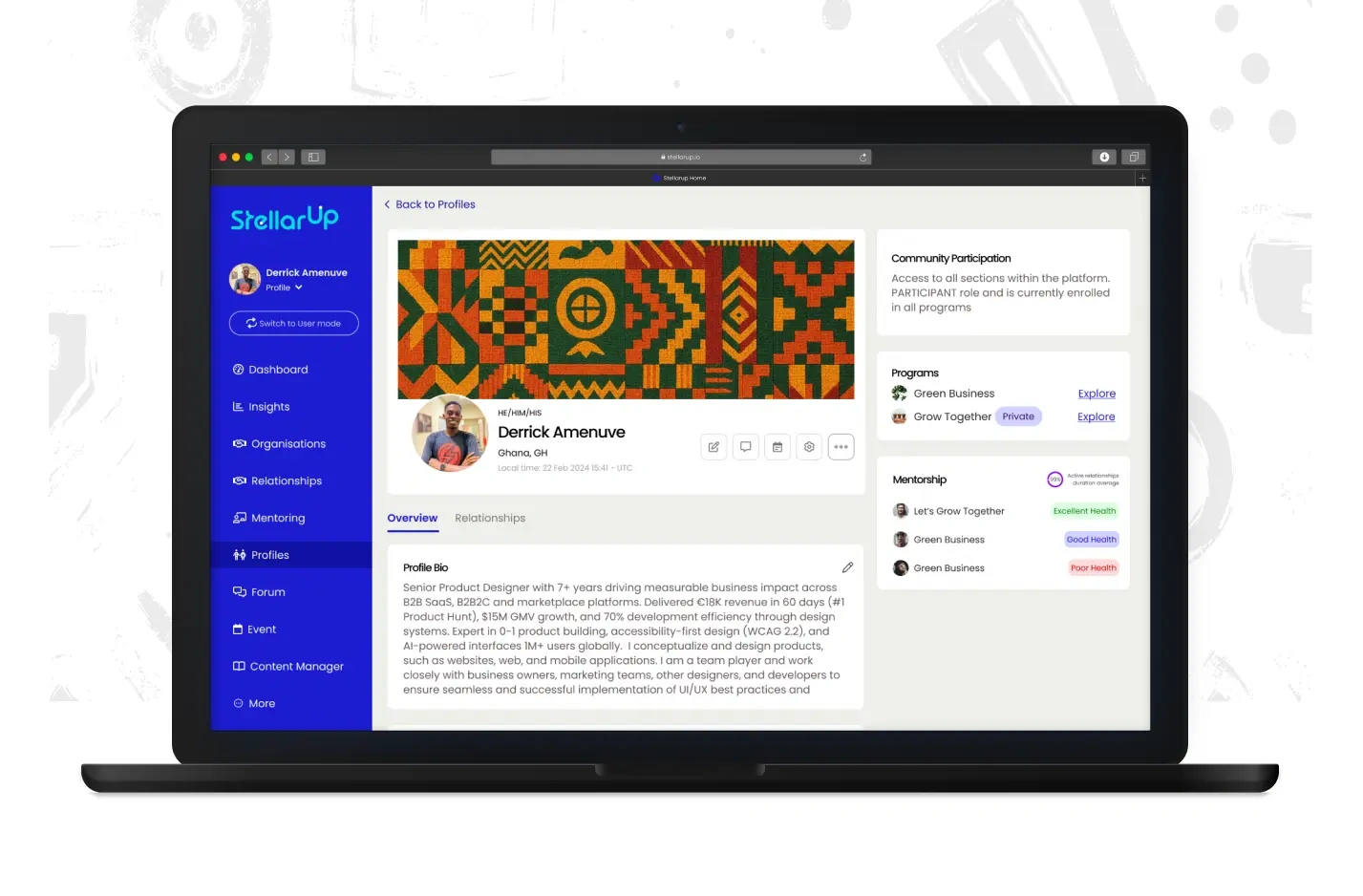
Redesigning Mentorship Platform cover image
Thesis: A five-year legacy application with feature bloat needed a design system foundation before iterative improvements could scale.
Outcomes: 50+ reusable components (70% dev time reduction) • DAU: 32% → 47% • 40% increase in successful mentor-mentee matches • 10,000+ messages/month • Contributed to Ruby implementation
Before → After: Feature-bloated legacy app → Systematic, scalable design • Inconsistent UI → Unified design system • 32% DAU → 47% DAU • Manual matching → Smart algorithm-driven matching
The Challenge
Stellarup secured €500K in seed funding with a clear mandate: improve UX and drive sales. The product—a mentorship platform connecting professionals—was functionally sound but, after five years of unstructured feature additions, it was bloated and inconsistent.
What I inherited:
Five-year legacy application with no design system
Feature bloat masking core value
32% DAU despite 5,000+ users
Manual matching that wasn't scalable
The brief: Transform UX, establish design foundations, and improve engagement.
Strategic Roadmap: Systems Before Features
I spent two months conducting a comprehensive UX audit—reviewing every feature, mapping flows, and identifying technical debt.
The critical insight: Before fixing individual features, the product required a design system foundation. Without it, every improvement would compound existing debt.
I partnered with Julian Roux-Stevens (CPTO) to build a phased roadmap:
Design System → Foundation for scale
UX Refinements → Fix core features
Smart Features → Matching algorithm and data visualisation
Building the Design System
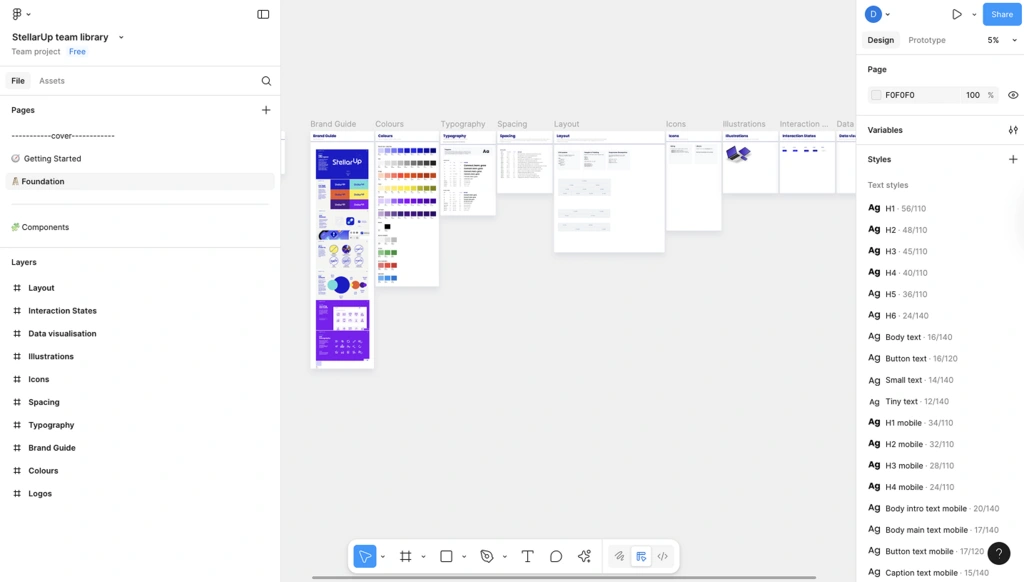
I led design system development in Figma and contributed to Ruby implementation using ViewComponent (GitHub's architecture framework), Lookbook (component previews), and Stimulus JS (interactivity).
dESIGN_SYSTEM.png 200 KB
Key Deliverables:
Foundation: Colours, typography hierarchy, 4px grid spacing, icons, illustrations
80+ Components: Buttons (with interaction states), forms (inputs, validation), cards (content, profile, tooltips), sortable tables, navigation, data visualisation
Documentation: Voice, tone, layout principles in Confluence • WCAG 2.1 AA accessibility standards
Impact: 70% reduction in development time for new features, unified UI, scalable foundation.
UX Refinements & Smart Features
With the system in place, I focused on iterative, data-informed improvements.
Core UX Fixes
Before vs After - dashboard.png 1.61 MB
Before vs After - Page Header.png 368 KB
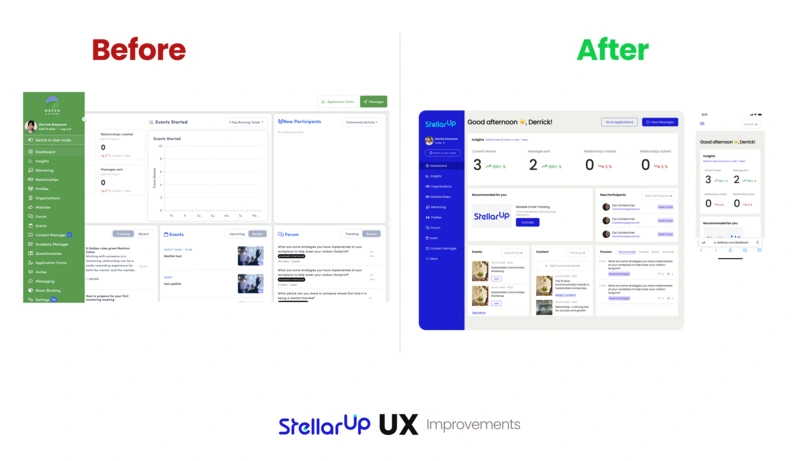
Dashboard: Reduced sidebar items using contextual tabs, added tooltips to Insight cards
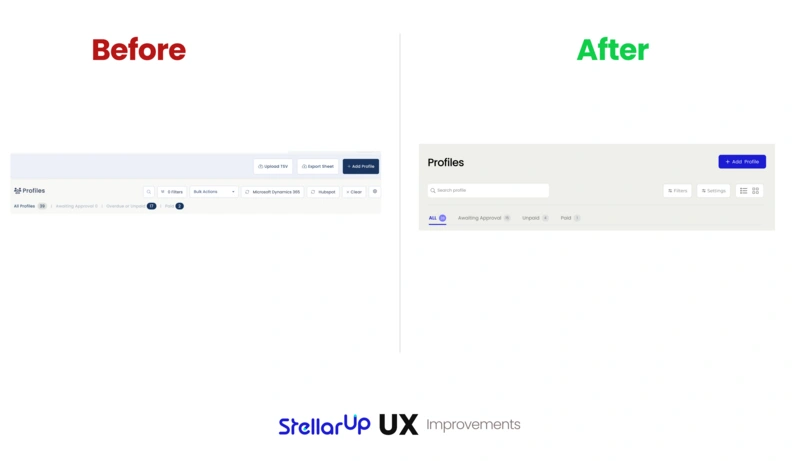
Programme Management: Streamlined CRUD flows, tile/list views, sortable tables
Smart Matching Algorithm
I designed the UX for a collaborative filtering system that analysed user profiles (skills, goals, industry, availability) and suggested optimal mentor-mentee pairings with match scores.
How it worked: The algorithm analysed profile compatibility and surfaced high-percentage matches with clear reasoning (e.g., "92% match: Both interested in AI product design").
Impact:
40% increase in successful connections
10,000+ messages/month across 5,000+ users
Data Visualisation
I redesigned the Insights dashboard to show:
Real-time messaging metrics (response rates, active conversations)
Usage patterns (peak activity times, active segments)
Forecast vs. actual engagement
Impact: DAU improved from 32% to 47%—a 15-point increase achieved through behavioural analytics and A/B testing.
Pages combined.png 2.82 MB
Impact
Metric | Before | After | Delta
Daily Active Users (DAU) | 32% | 47% | +15 points
Component Reusability | 0 | 50+ | 70% dev time reduction
Successful Matches | Manual/Low | Algorithm-driven | 40% increase
Monthly Messaging | N/A | 10,000+ messages/month | High Engagement
What I Learnt
Systems > Screens
The 70% dev time reduction proved design systems are infrastructure, not cosmetics. Building foundations first enabled everything that followed.
Audit deeply before acting
Two months of understanding legacy pain points prevented building on broken foundations. Strategic patience pays off.
Code + Design = Force Multiplier
Contributing to Ruby implementation let me bridge design and engineering, shipping faster with fewer handoff errors.
Metrics validate, intuition guides
DAU improving from 32% to 47% was the result of data-informed iteration. But building the design system first? That was conviction.
Role: Product Designer
Team: Julian Roux-Stevens (CPTO), Product & Engineering Team
Timeline: October 2023 – present
Impact: 50+ components • 70% dev time reduction • DAU 32% → 47% • 40% match success • 10K+ messages/month
Like this project
Posted Jul 30, 2026
Led Design System and UX Transformation for Dutch Startup's €500K-Funded Platform Redesign—Increasing DAU from 32% to 47%
Likes
0
Views
0
Timeline
Oct 1, 2023 - Ongoing