Nomba Expense - manage business expenses with ease

Kehinde Omopariola
1 collaborator


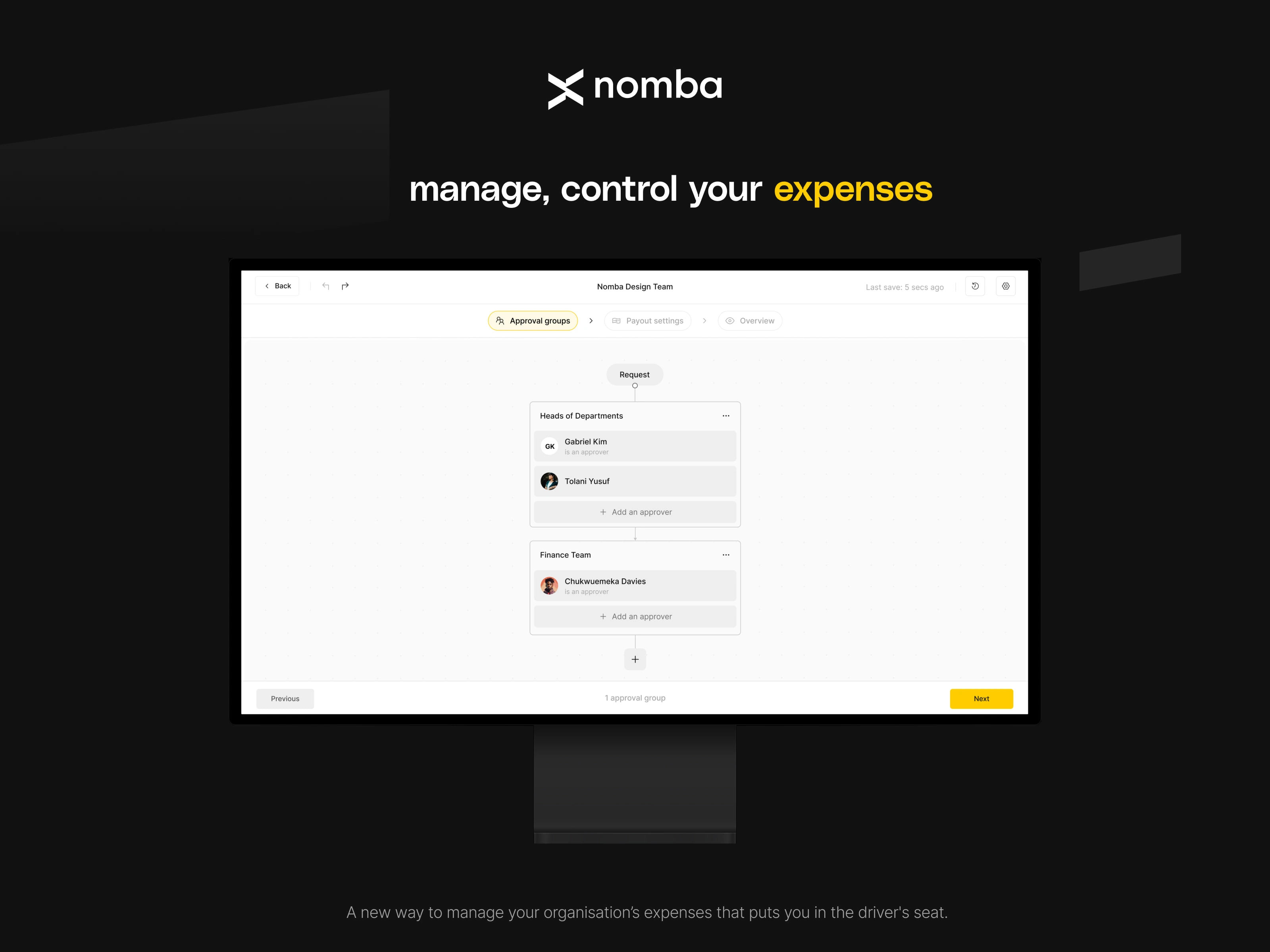
Nomba Expense is a comprehensive business financial management solution designed to streamline how organizations handle bill requests, approvals, and disbursements. Built to operate directly from a user's Nomba wallet, the application tackles the chaos of manual expense tracking by digitizing the entire lifecycle of a payment request; from initiation to final disbursement.
The goal was to build a robust, scalable frontend architecture that could handle complex approval logic, provide real-time financial insights, and integrate seamlessly with external accounting software.
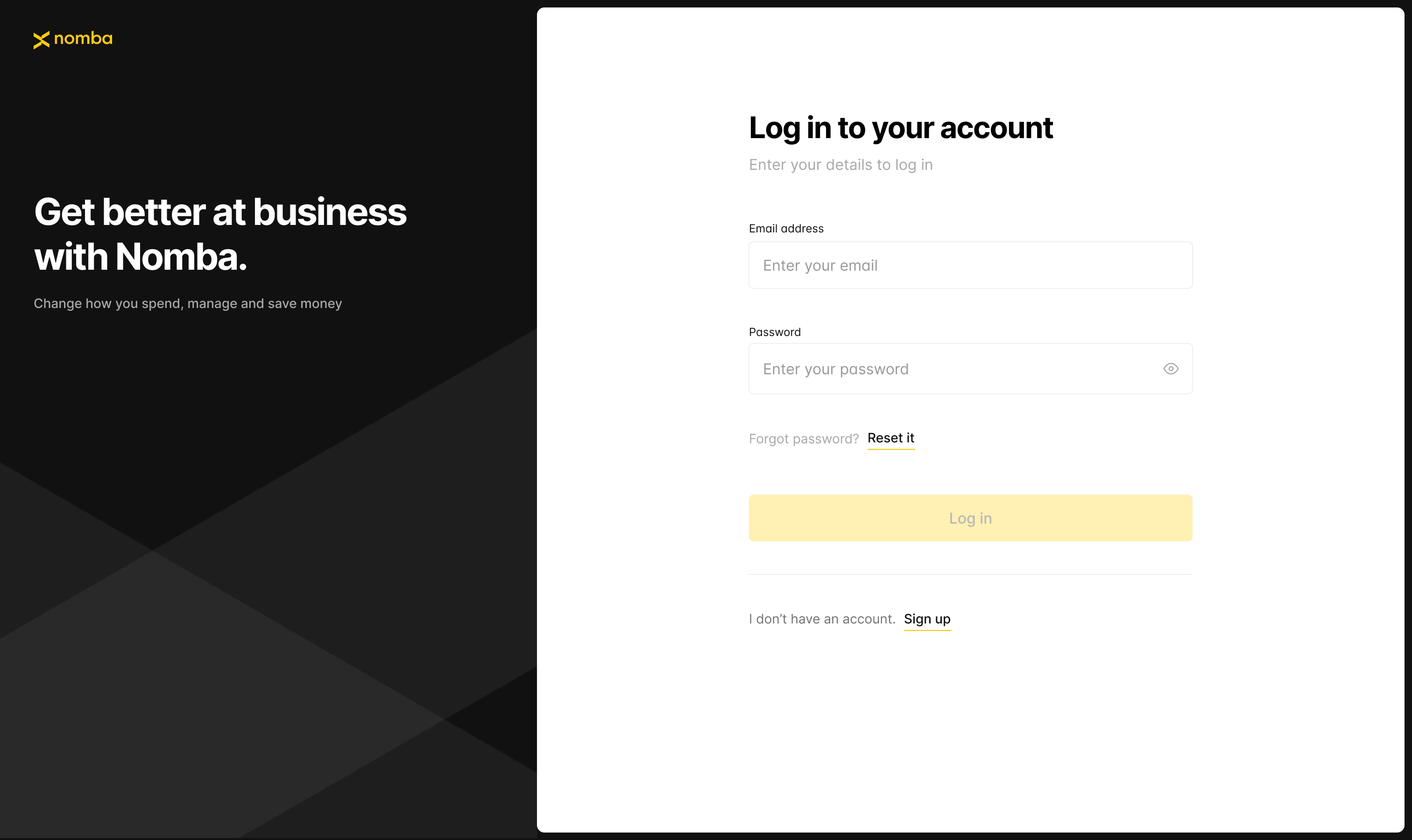
Login page - Entry
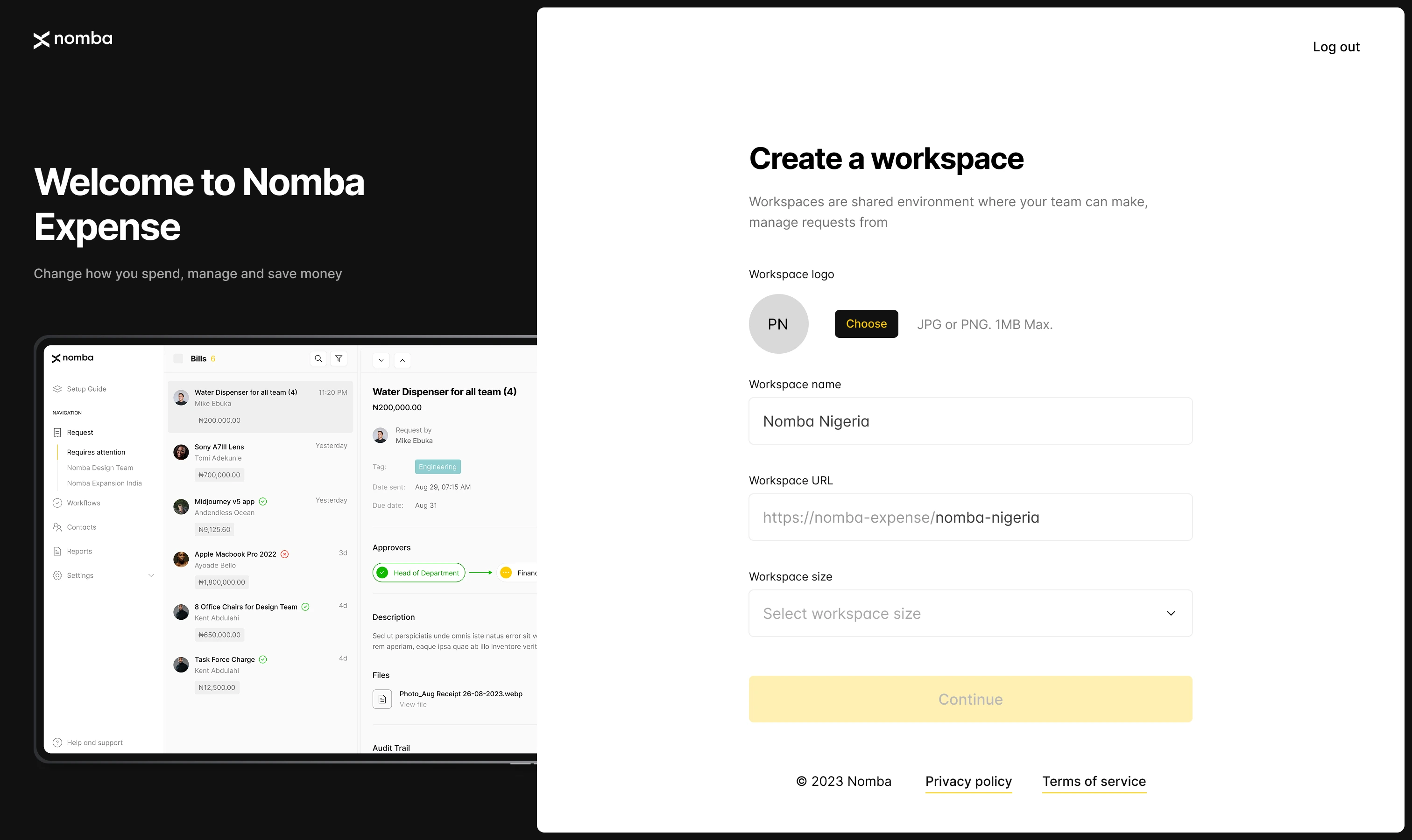
Create workspace page, after signup flow
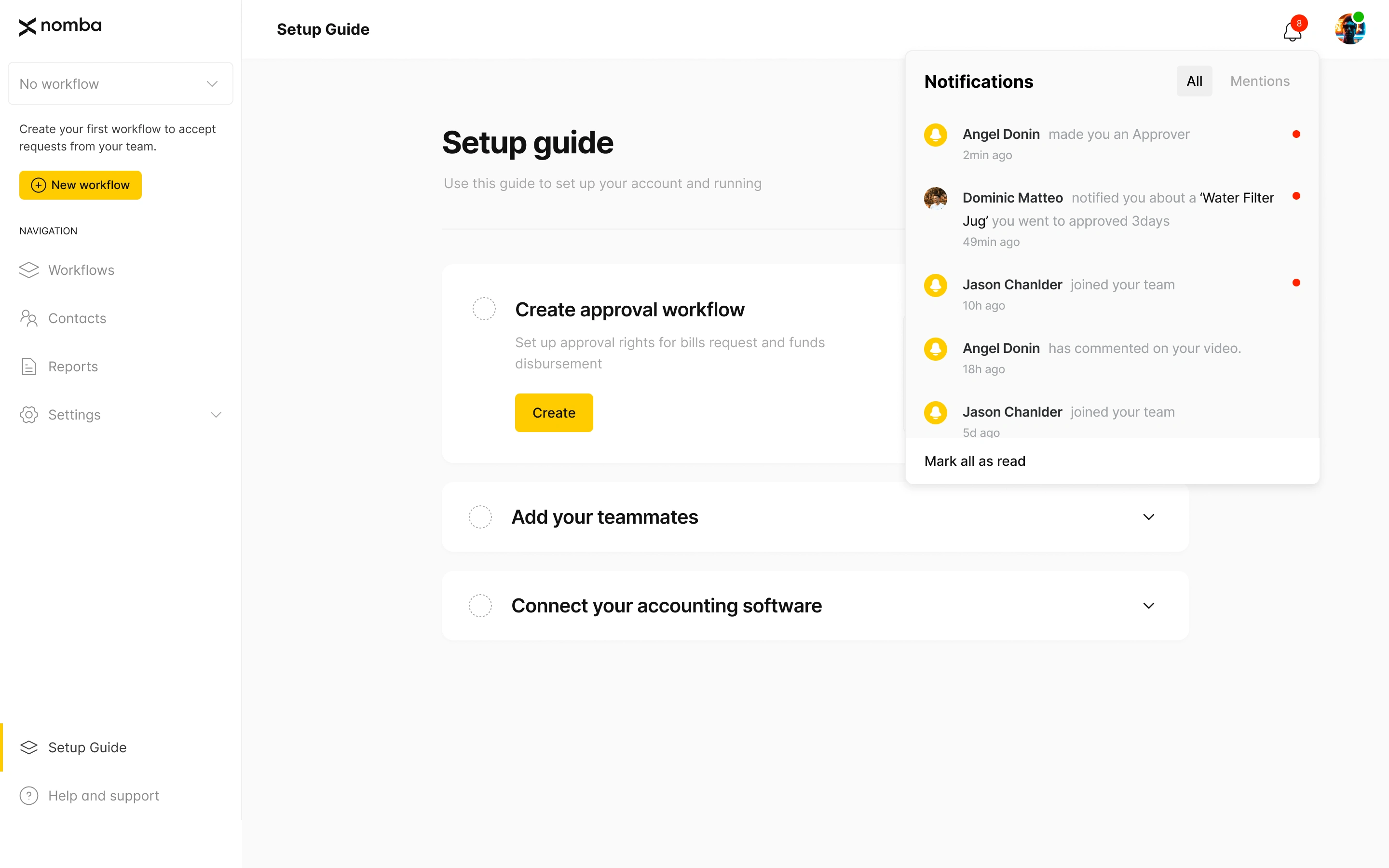
Notification popover - with real-time notification items
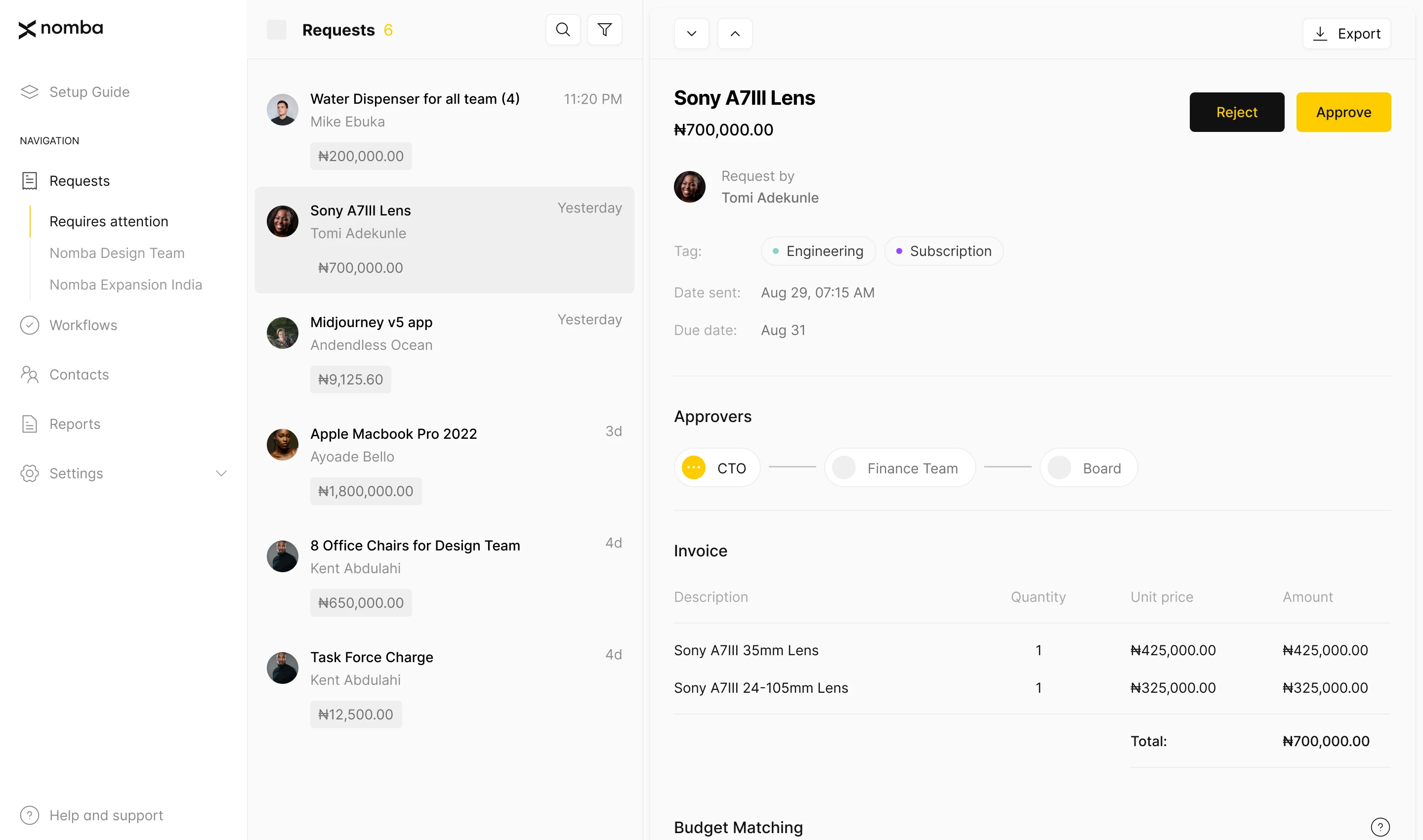
Request page, you get redirected to the first request automatically if setup is complete
The Team & My Role
MakerStudio Inc. hired me to bring this vision to life as part of a specialized, high-impact team of four: a Team Lead (Full Stack), a Backend Engineer, and two Frontend Engineers (including myself).
We operated with a high degree of autonomy and shared ownership. While we tackled the core development equally, we divided our focus during the optimization phase to leverage our individual strengths:
🎨 My Focus - Design Thinking & UX Polish: I championed the user experience, utilizing my design thinking background to refine interactions and eliminate "jank." I smoothed out UI transitions and polished key workflows to ensure the app didn't just work, but felt delightful to use.
⚡ Performance & Architecture: My frontend partner focused on deep performance optimizations and code cleanups, ensuring our shared codebase remained performant under heavy loads.
The Tech Stack
To meet the requirements of a high-performance fintech application, we selected a modern, type-safe stack focused on scalability and user experience.
⚡ Core Framework: Next.js 13.4 (React 18) – Chosen for its server-side rendering capabilities and the new App Router.
📘 Language: TypeScript – Essential for maintaining code quality across complex data structures like transaction objects.
💅 Styling: Stitches & Radix UI – Allowed us to build accessible primitives styled with a zero-runtime CSS-in-JS solution.
🎭 Interactions: Framer Motion & Lottie – I utilized these libraries to create fluid micro-interactions and engaging empty states, making the financial data feel less sterile.
📝 Form Management: React Hook Form & Yup – Handled complex validation logic for multi-step onboarding flows.
Key Features & Implementation
1. Dynamic Approval Workflows
One of the most technically challenging aspects was the Workflow Engine. Businesses need custom rules for spending; for example, a request over ₦500,000 might require specific approval.
I implemented a flexible workflow builder that allows users to create logic-based approval chains. This involved handling deeply nested state objects to define rules, conditions, and assigned approvers.
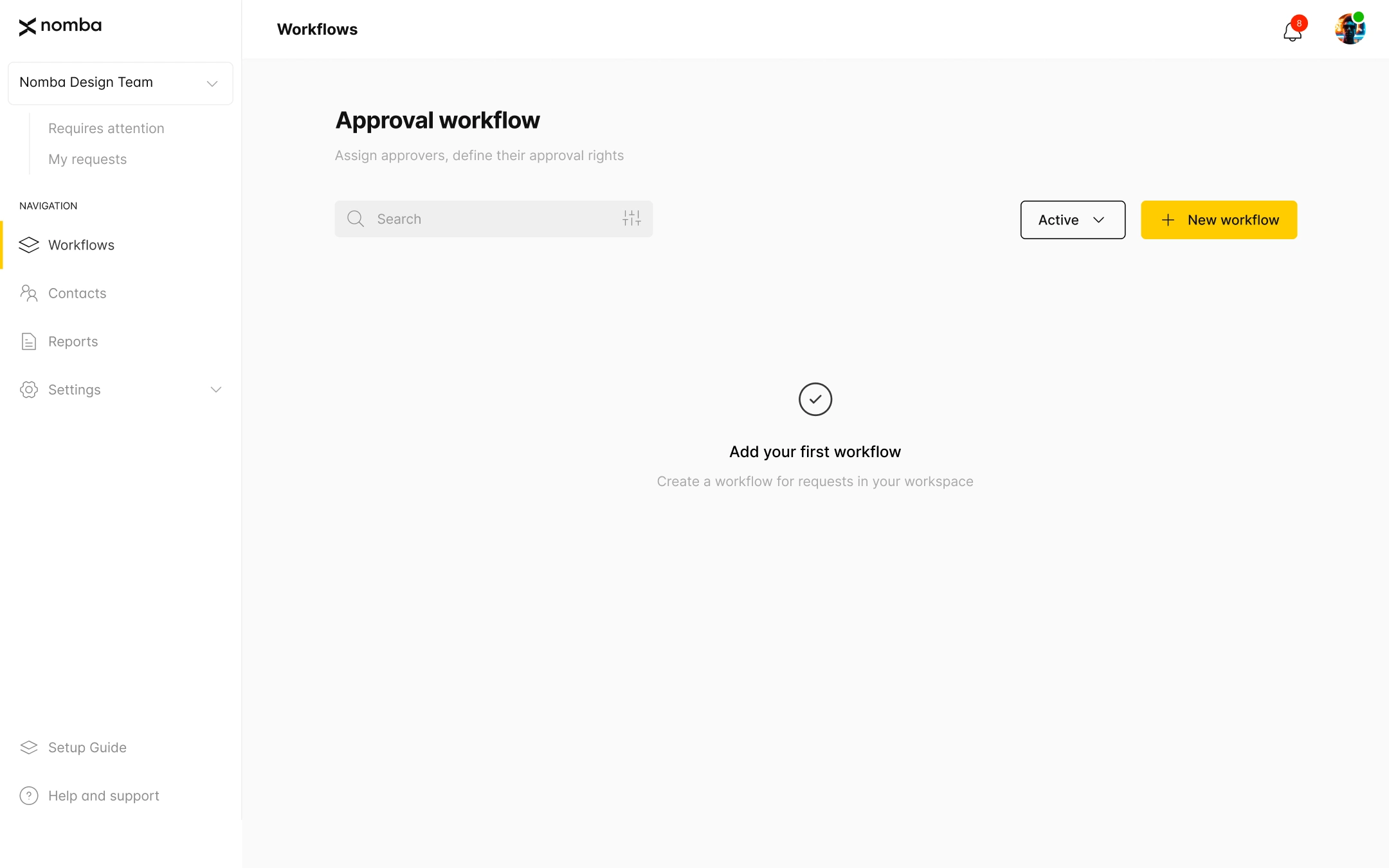
Create your first approval
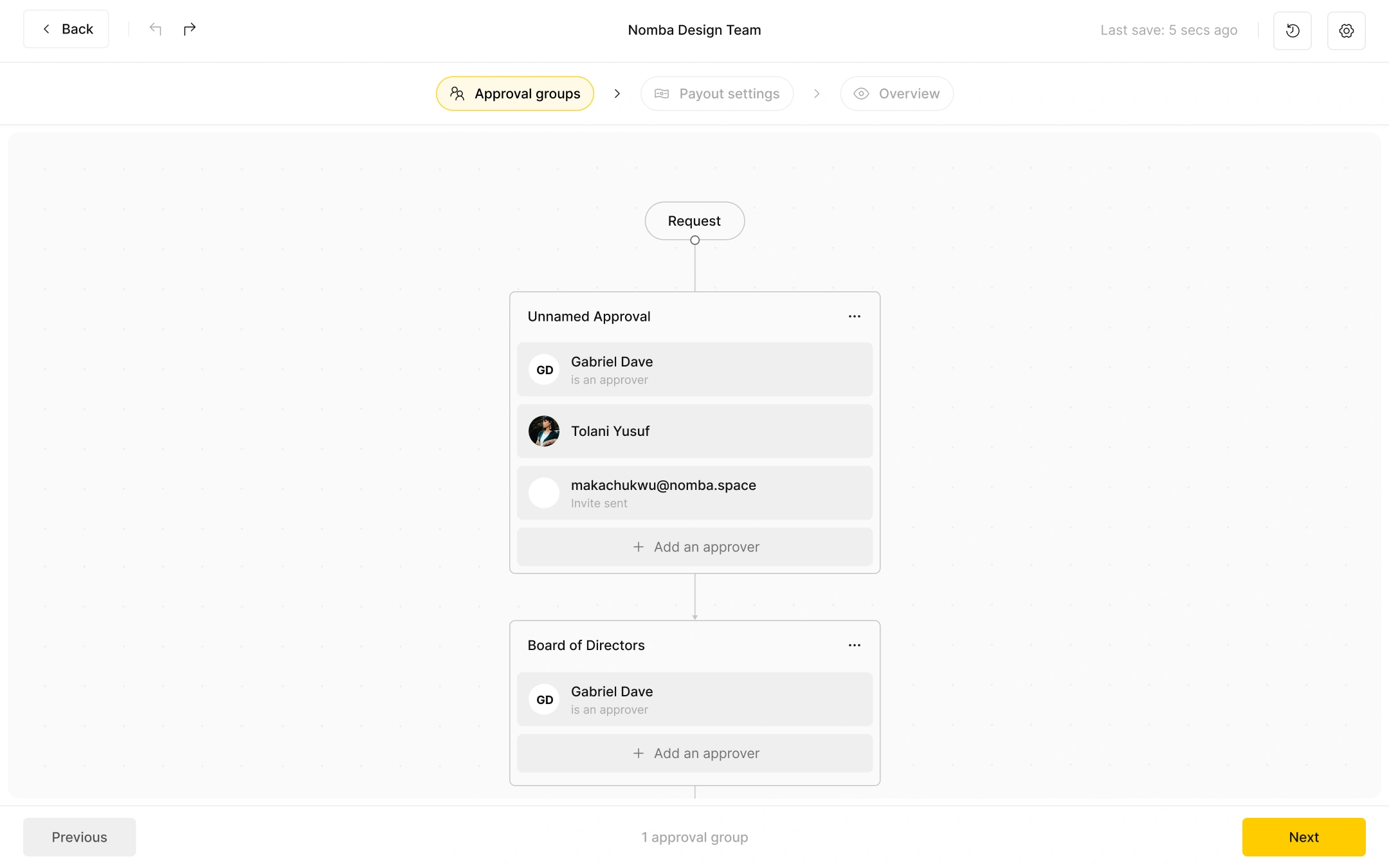
Approval groups screen
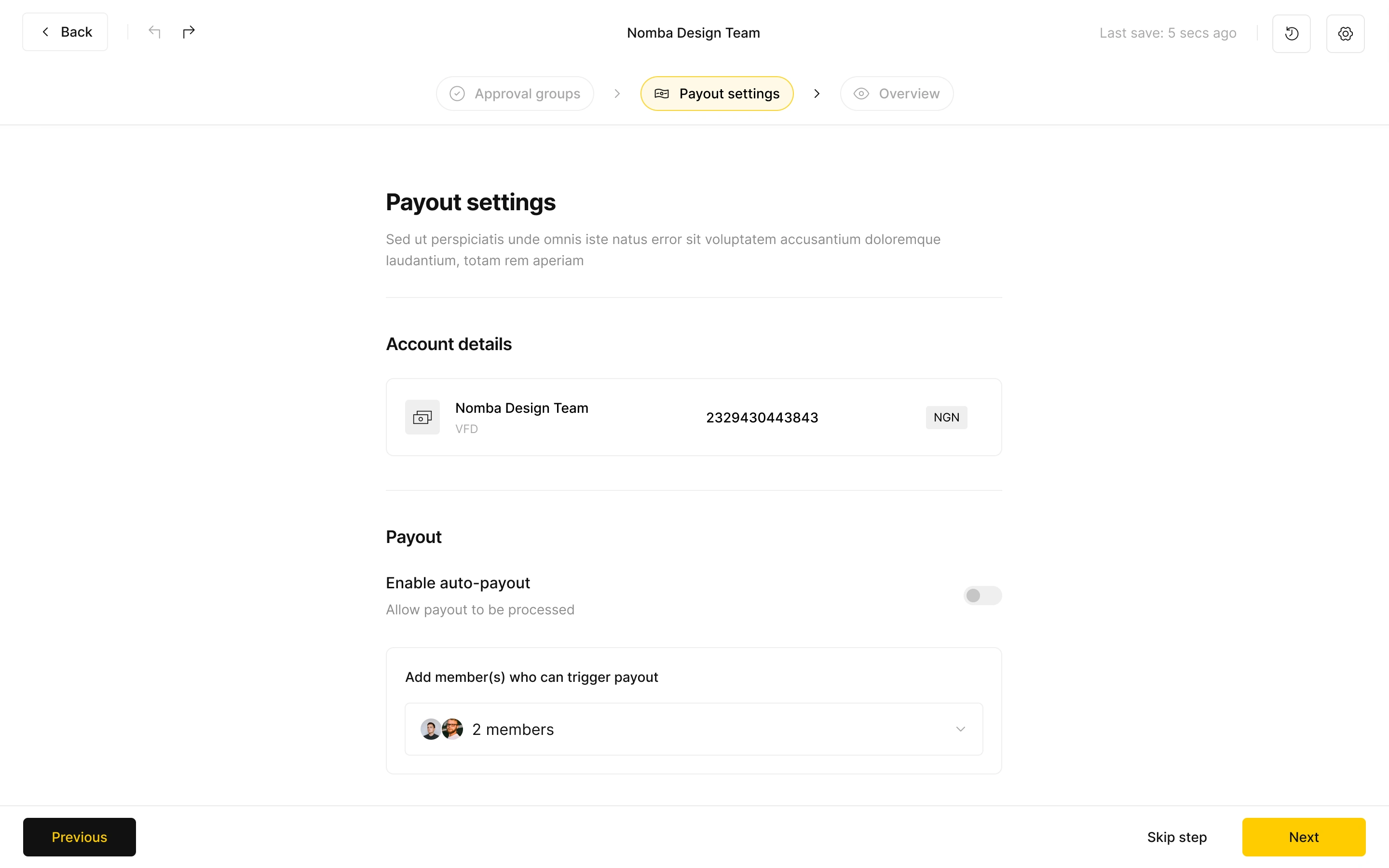
Payout settings - workflow
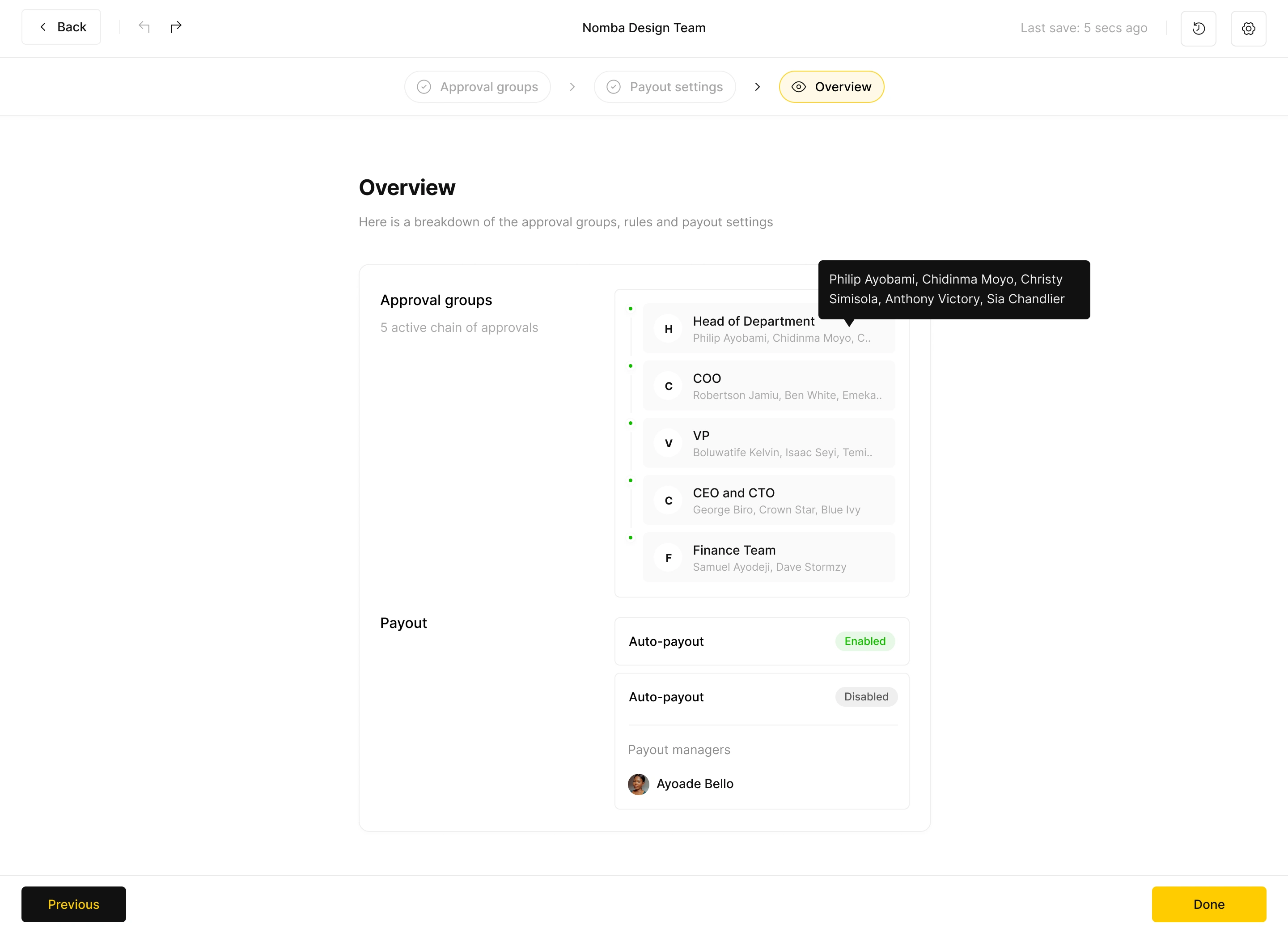
Overview approval - workflows
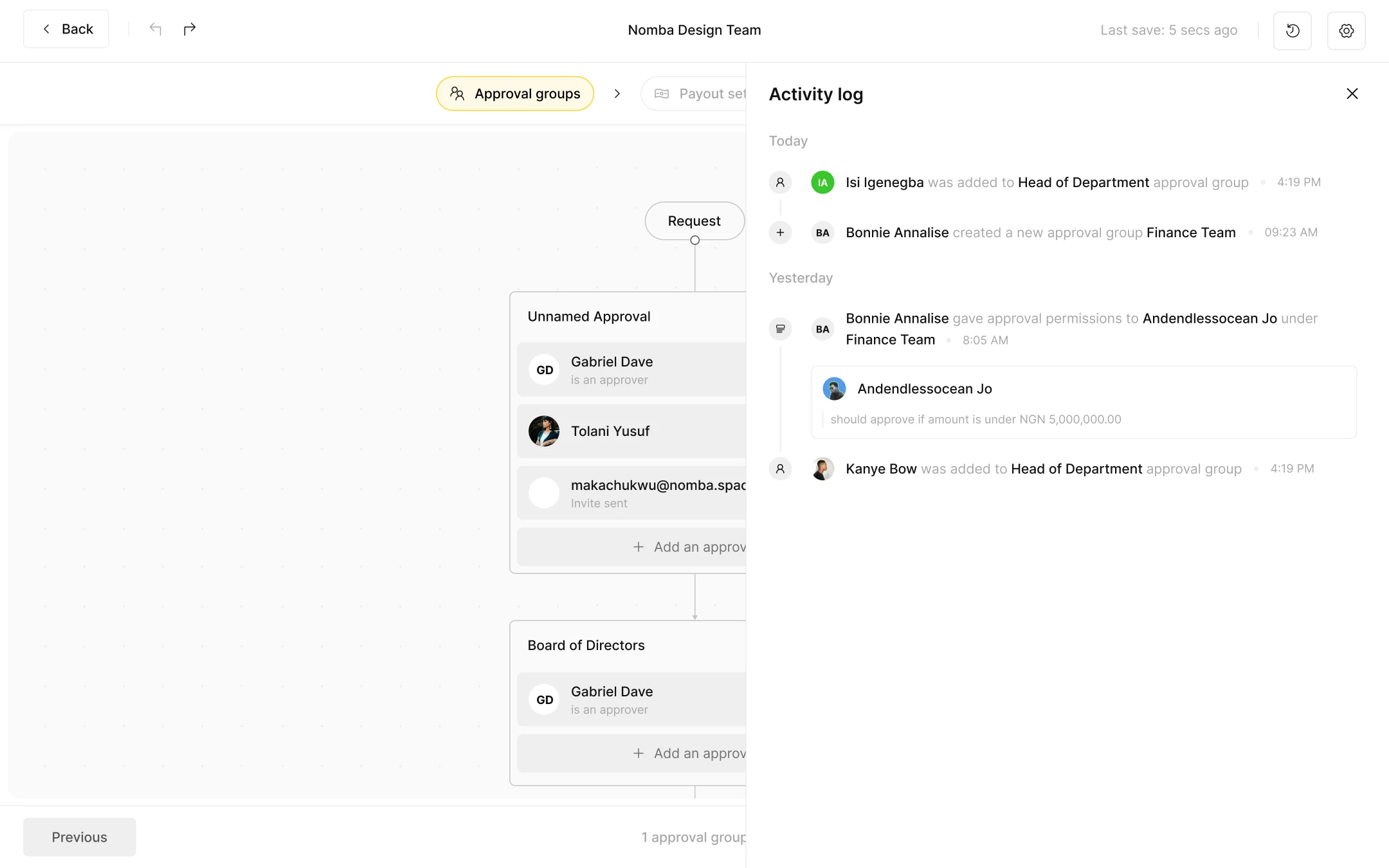
Activity log - workflow
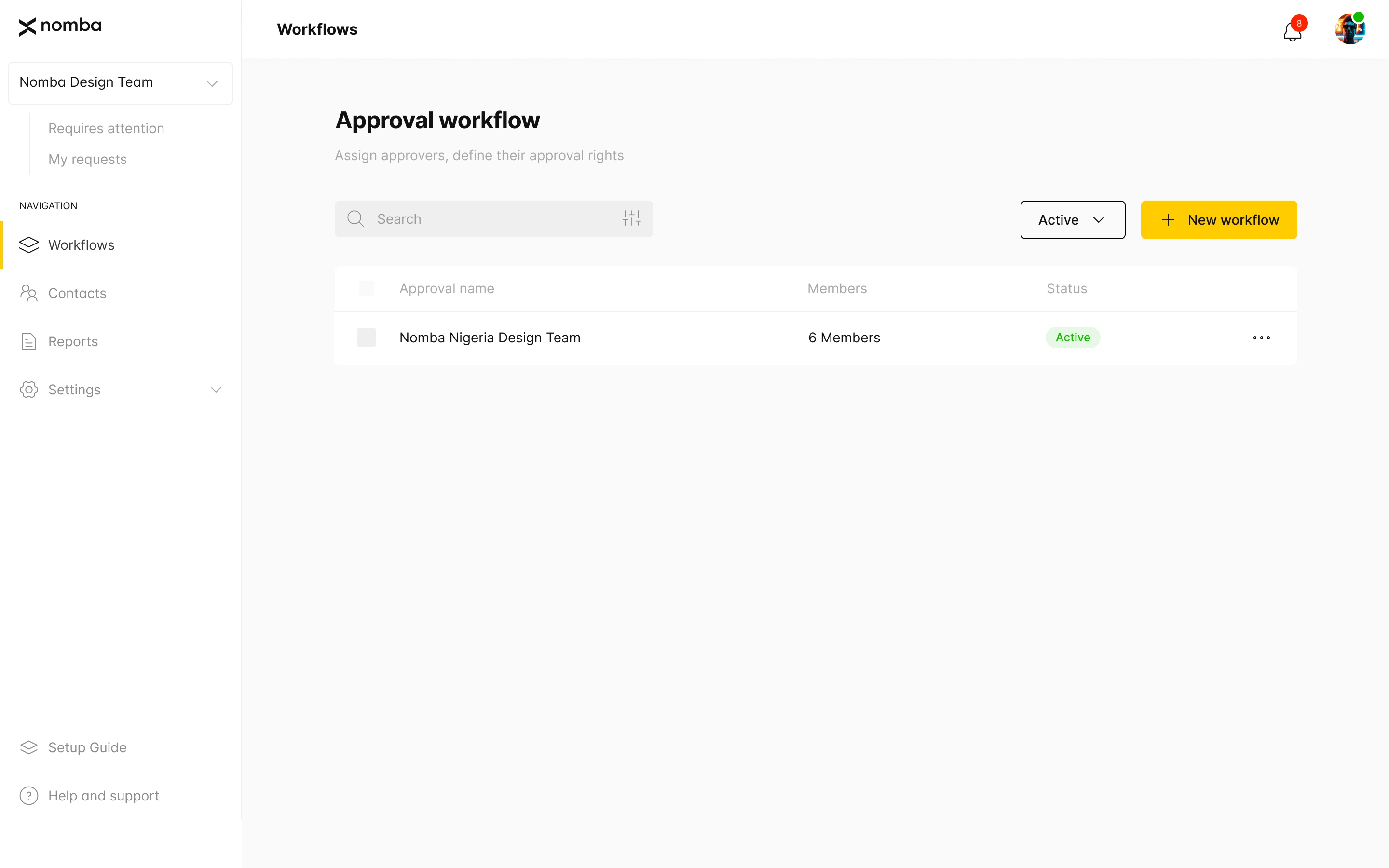
Created Approval workflow
2. Interactive Financial Reporting
Data is only useful if it's understandable. I built a dedicated Reports Module utilizing
ApexCharts to aggregate transaction data into visual insights. Users can filter data by date ranges and view breakdowns by budget categories or tags.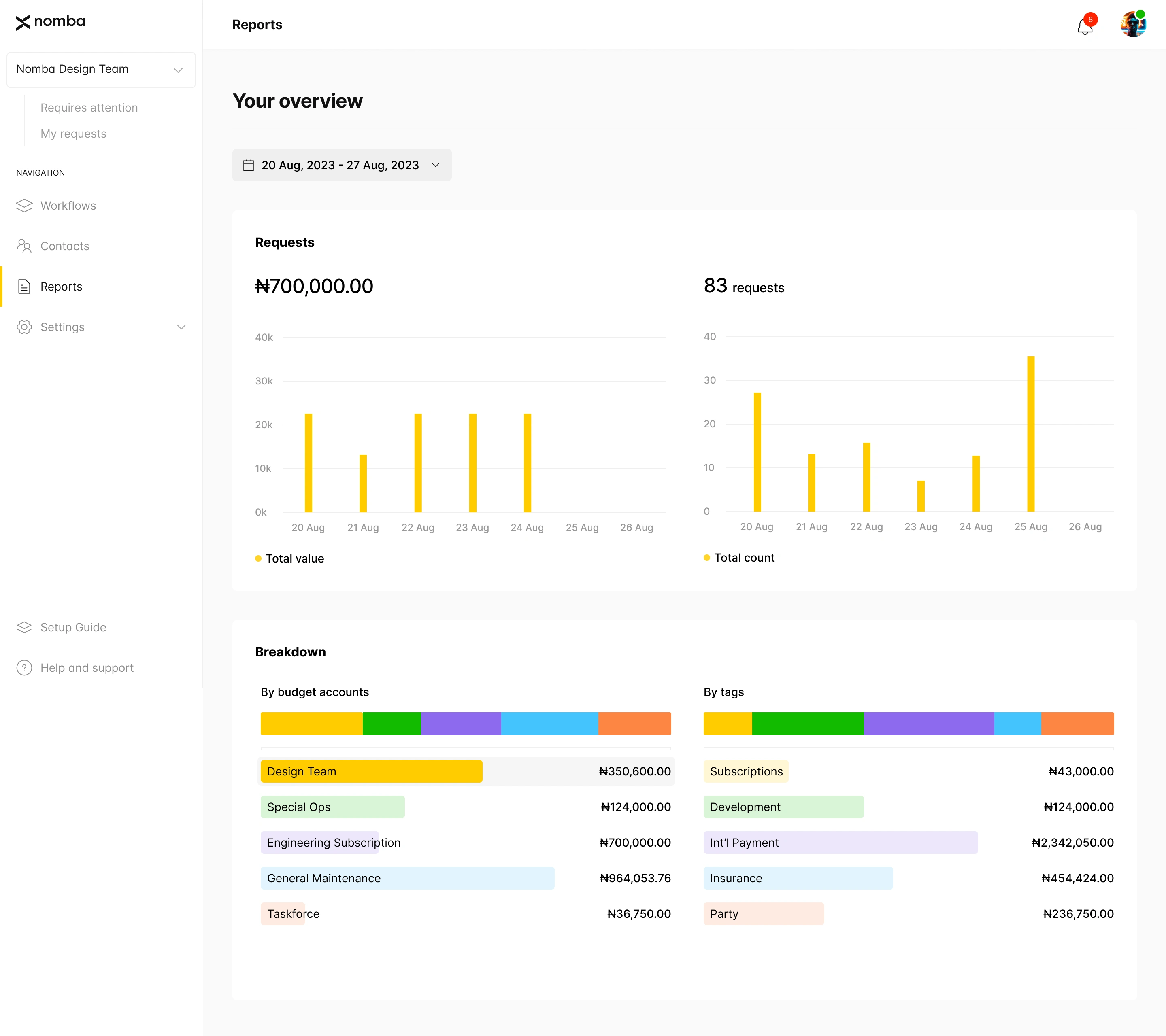
Financial Reports Page
3. Smart Onboarding & Setup Guide
To reduce churn, I developed an interactive Setup Guide. This feature tracks the user's progress through critical actions - like "Create Integration" or "Add Team Member" - visualizing completion with a radial progress indicator
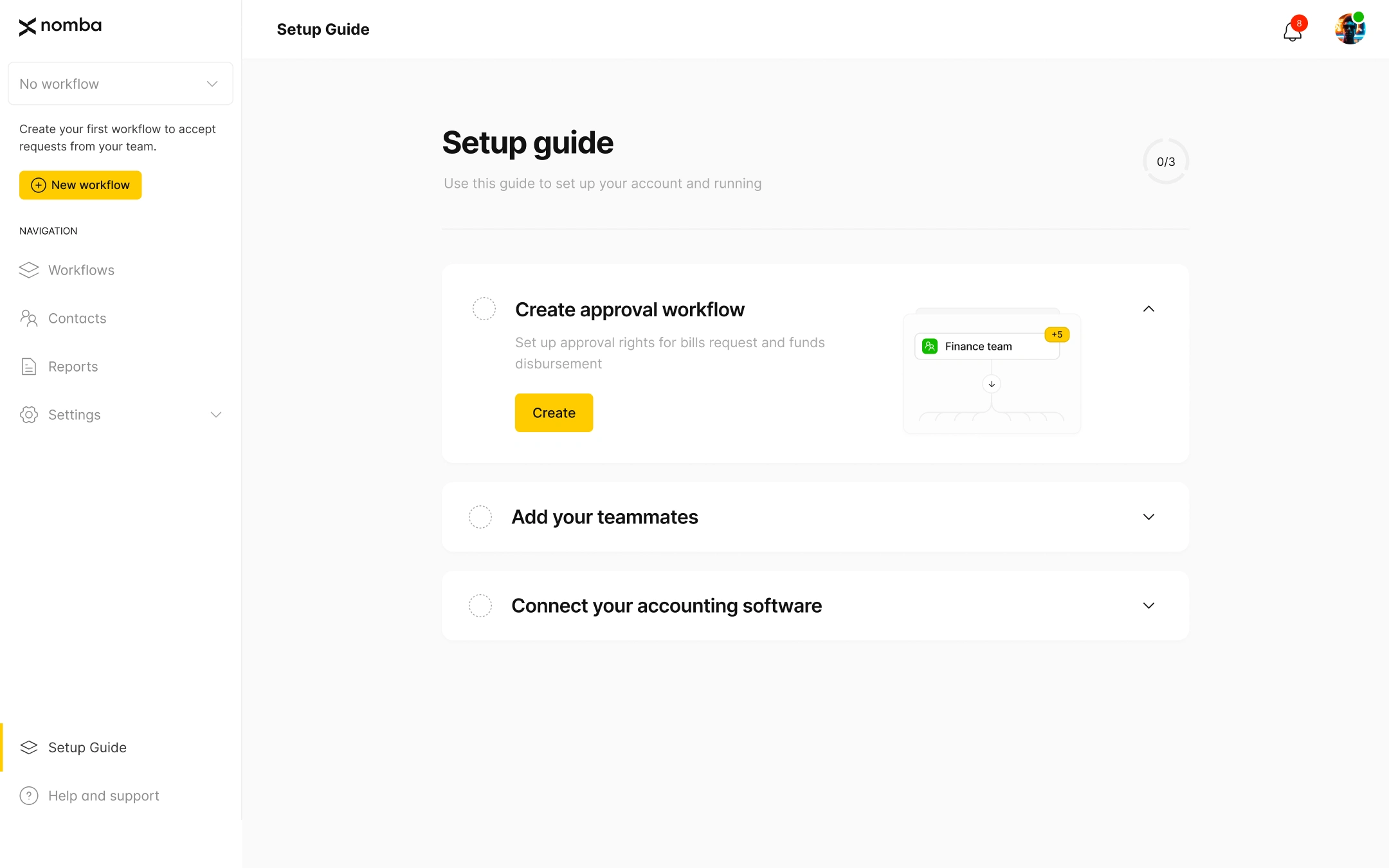
User Onboarding and Setup Guide
4. Seamless Accounting Integrations
I built the frontend interface for connecting third-party accounting platforms like Xero, QuickBooks, and Sage. This allows users to sync expense data automatically, removing the need for manual entry.
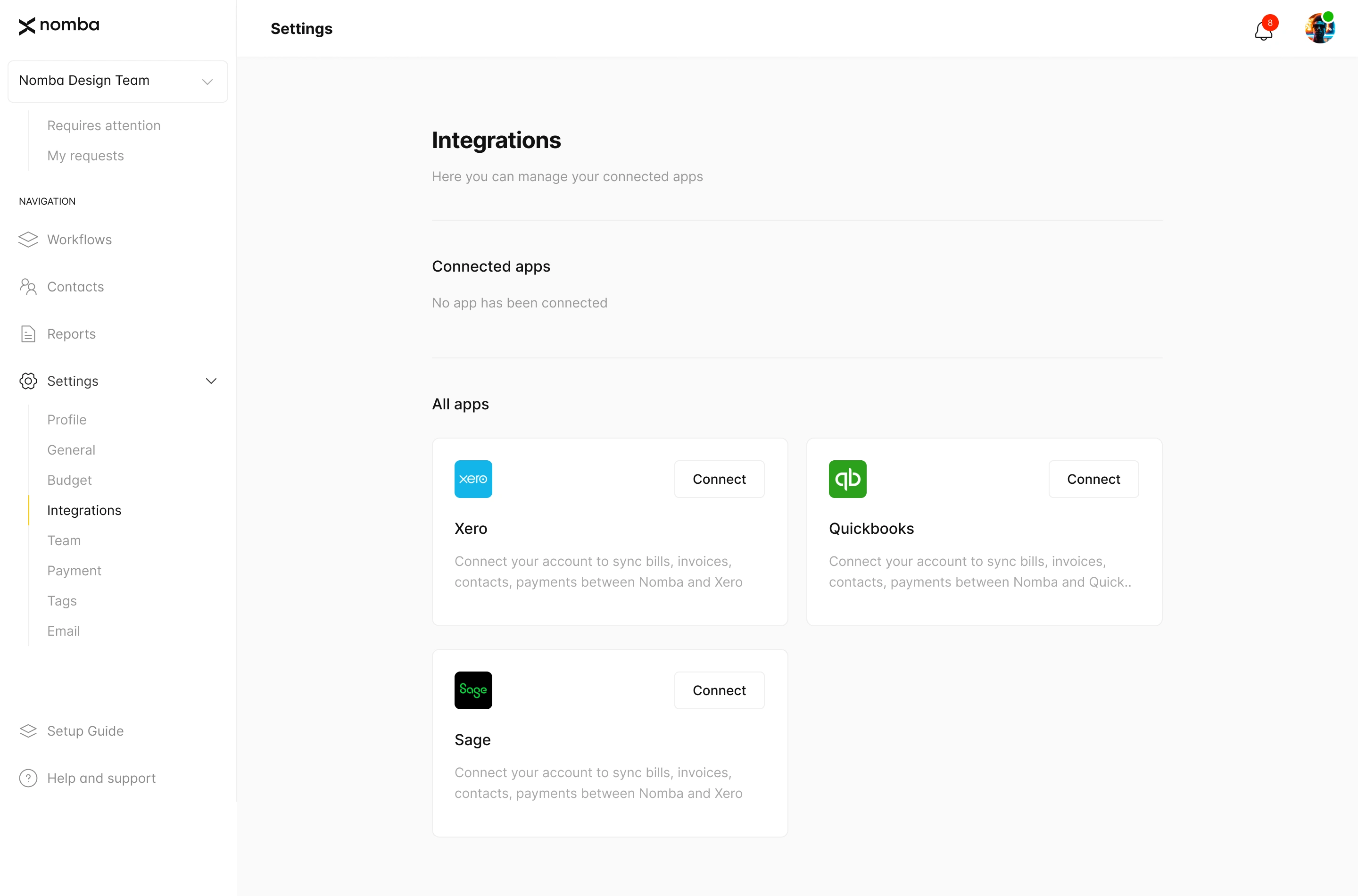
Accounting Software Integrations - No connected apps
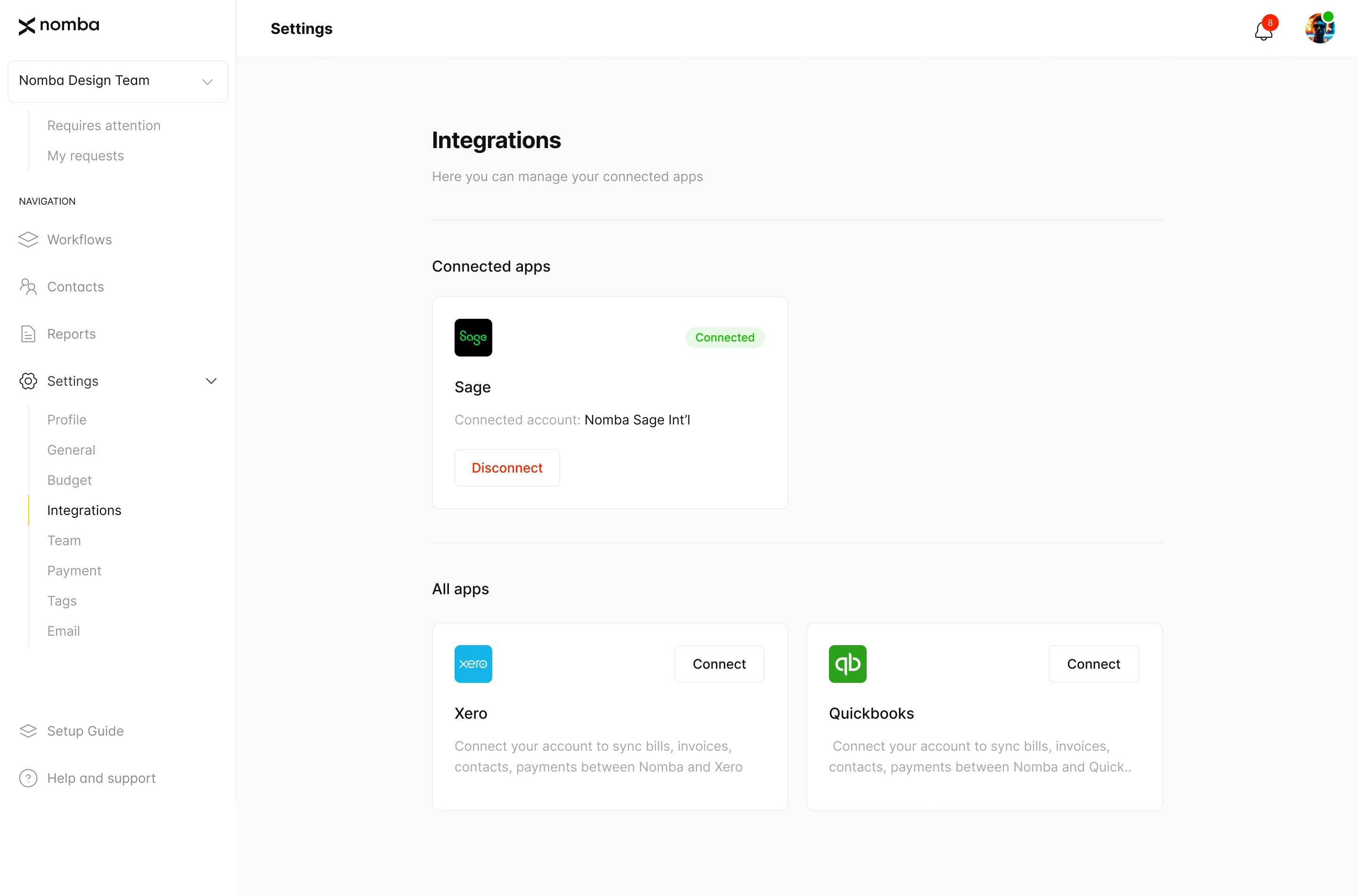
Accounting Software Integrations - Connected apps
UX & Design Highlights
🧠 Design-Driven Development
Leveraging my background in design thinking, I focused heavily on the "feel" of the application. I conducted reviews of key interactions to ensure they weren't just functional, but fluid. This involved:
Refining Transitions: Using Framer Motion to smooth out layout shifts when opening modals or switching dashboard tabs.
Engaging States: Implementing Lottie animations for loading states and empty screens (like the "Empty Requests" view) to keep users engaged even when there is no data to show.
♿ Accessibility First
By leveraging Radix UI, I ensured that all interactive components - modals, dropdowns, and switchers- were fully accessible (WCAG compliant) and keyboard navigable, ensuring the platform is usable by everyone in a diverse corporate environment.
Conclusion
Nomba Expense stands as a robust solution in the Nigerian fintech space. Working with MakerStudio Inc allowed me to not only tackle complex architectural challenges but also apply a design-centric lens to fintech development, resulting in a product that is as delightful to use as it is powerful.
Like this project
Posted Dec 3, 2025
Focus on what matters most, not on paperwork. Nomba Expense introduces a new way to manage your organisation’s expenses that puts you in the driver's seat.
Likes
2
Views
407
Timeline
Sep 3, 2023 - Jan 31, 2024
Clients
Nomba
Collaborators