NextJS + TailwindCSS + Supabase + Stripe based LMS Platform

Waleed Shahid


Overview
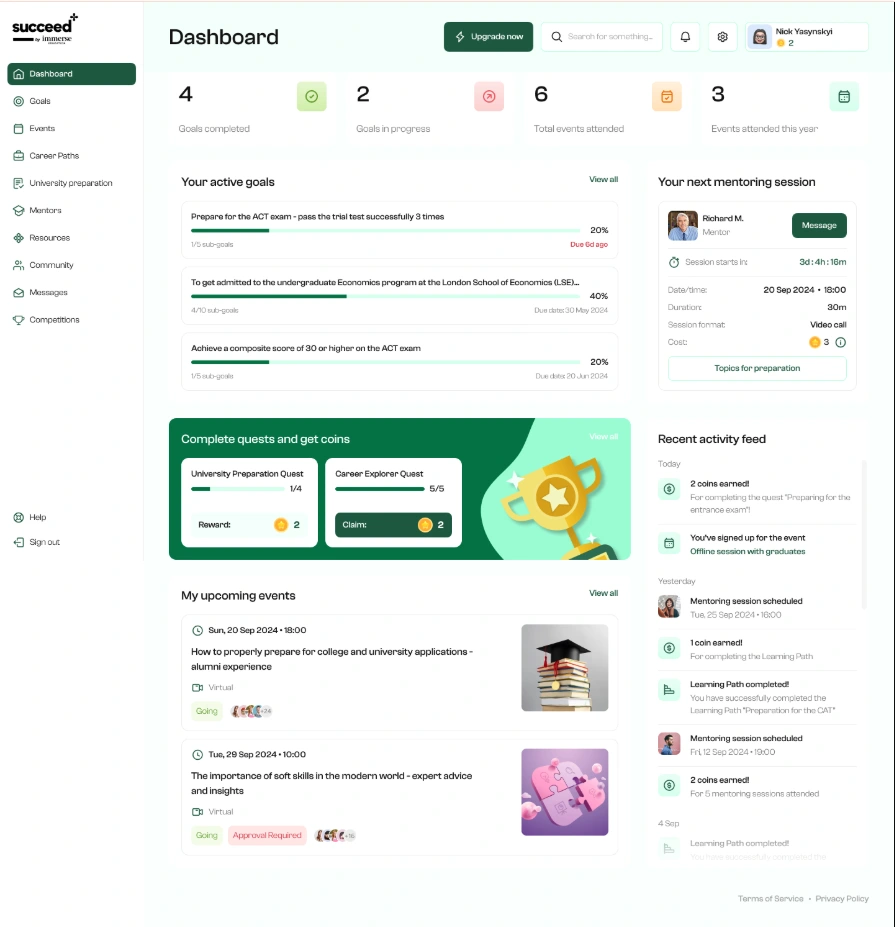
This project involved designing and developing a dynamic, multi-role web application leveraging NextJS + TailwindCSS as the frontend and Supabase as the backend infrastructure. The application was created based on detailed Figma designs, ensuring both aesthetic consistency and functional performance across all devices.
The objective was to deliver a scalable, secure, and user-friendly solution with distinct experiences for different user types, along with deep integrations with several third-party services.
Key Objectives
Transform Figma Designs into a Functional Web App
Using WeWeb, the visual designs were converted into fully functional pages and components while maintaining pixel-perfect accuracy and responsiveness.
Ensure Cross-Device Performance
Every layout and interaction was optimized for smooth performance across desktops, tablets, and mobile devices, ensuring accessibility and usability for all users.
Develop Role-Based Dashboards
The system featured custom dashboards for different user roles, each with tailored navigation, data views, and permissions. This approach improved clarity and focus for users, aligning with their responsibilities within the platform.
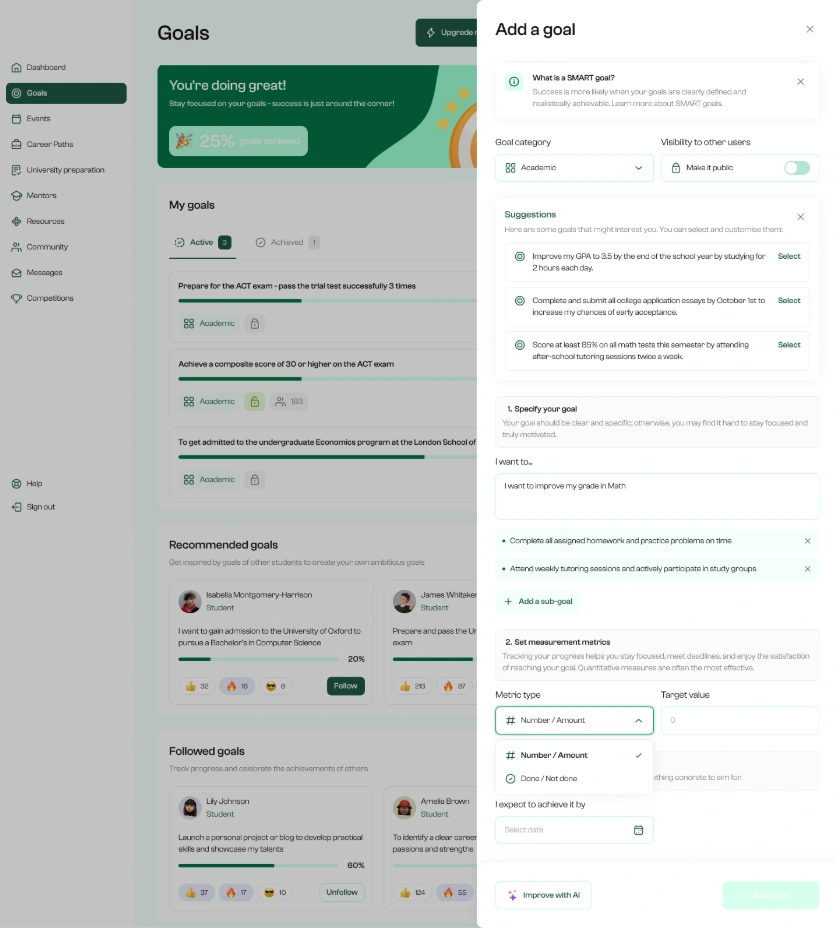
Student Goals Dashboard
Implement Separate Sign-Up Flows
To streamline onboarding, distinct sign-up processes were designed for each user type. This included dynamic forms, conditional logic, and guided onboarding steps that adapted to user roles.
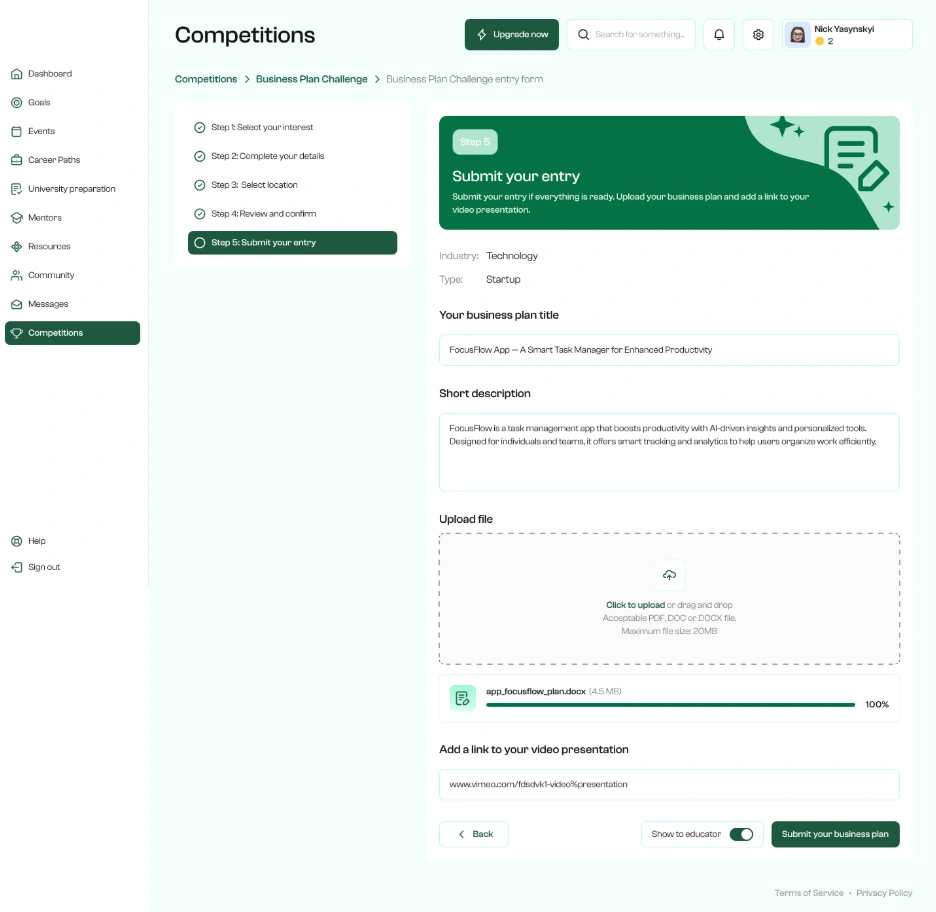
Competition Form
Integrate Third-Party APIs
Several APIs were integrated to enhance the application’s capabilities:
OpenAI API for generating intelligent content and automations.
Luma API for event management and scheduling.
PDF.co API for document generation, processing, and conversion tasks.
Each integration was carefully optimized for performance, error handling, and data security.
Build a Scalable Backend in Supabase
The backend architecture was designed with Supabase, providing:
A PostgreSQL database for structured data management.
Authentication and authorization layers tailored for different user roles.
Edge functions and APIs for handling dynamic requests efficiently.
Built-in scalability to handle growing user activity without performance loss.
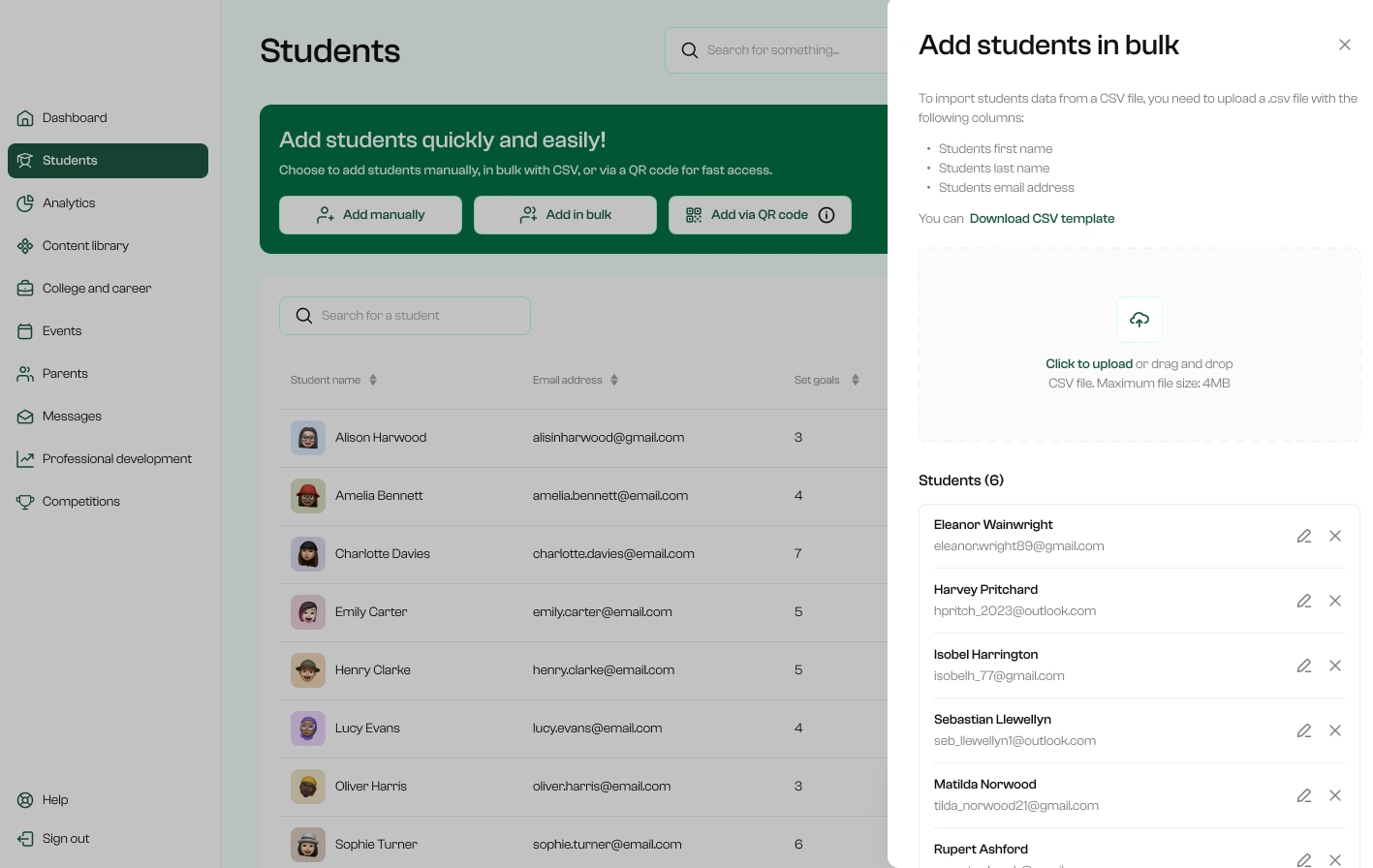
Bulk Import
Implement Security Best Practices
Security was treated as a core principle. The following measures were integrated:
Secure API key management and environment variable handling.
Role-based access control (RBAC) within Supabase policies.
HTTPS-only communication between frontend and backend.
Input validation and sanitization to prevent data breaches or injections.
Results & Impact
The final product delivered a seamless user experience with high performance, secure data handling, and role-based efficiency. The modular structure of the frontend and scalable Supabase backend ensures long-term maintainability and future expansion.
By integrating multiple APIs and building with best-practice architecture, the platform now provides advanced functionality while maintaining excellent usability across devices.
Tech Stack: NextJS, TailwindCSS, Supabase, OpenAI API, Luma API, PDF.co, Figma
Like this project
Posted Oct 27, 2025
Built NextJS Web app from Figma with responsive UI, role-based dashboards & signups, OpenAI/Luma/PDF.co APIs, secure scalable Supabase backend.
Likes
1
Views
10
Clients
Immerse Education