Android Architecture & Gemini AI Integration

Ahmed Tikiwa


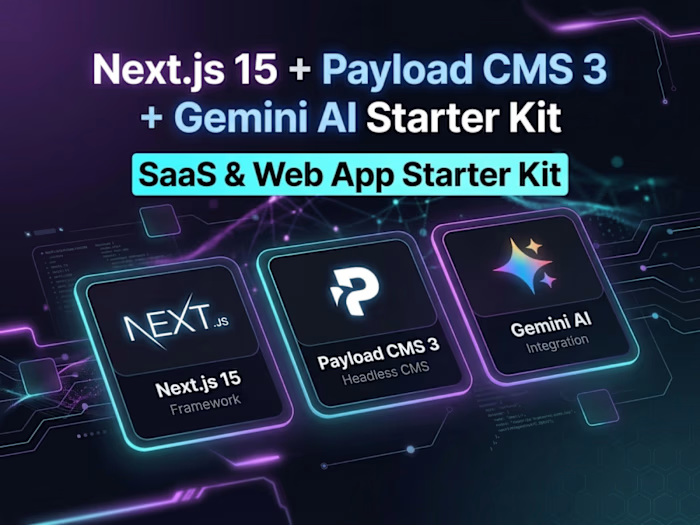
I architect production Android applications using multi-module clean architecture with Jetpack Compose, Hilt, Room, and Gemini AI integration.
Architecture Approach
My approach uses feature-based modularization with strict layer separation:
app/ — Application entry point and navigation
feature/ — Self-contained feature modules (each with its own UI, ViewModel, and domain logic)
core/data — Repository implementations and data sources
core/model — Domain models shared across features
core/network — API clients and network configuration
core/database — Room entities, DAOs, and database setup
core/ui — Shared Compose components and theming
This structure enables teams to scale without stepping on each other. Each feature module depends only on core modules, never on other features.
Gemini AI Integration
I have integrated Gemini AI using two different approaches depending on project requirements:
Official SDK — Using com.google.ai.client.generativeai for standard chat, content generation, and multimodal features. Best for straightforward integration with structured JSON output via responseMimeType.
Custom REST Wrapper — Using HttpURLConnection with kotlinx.serialization when features like Google Search Grounding, custom timeout controls, or response schema enforcement are needed beyond what the SDK offers.
Both approaches include production guardrails: gibberish input detection, dynamic context injection, and structured JSON output with validation.
Results
I have built and sold 3 products to major technology companies using this architecture. Each project ships with comprehensive testing (unit, integration, and Maestro E2E), CI/CD pipelines, and code quality gates.
Like this project
Posted Jul 26, 2026
Production Android architecture with multi-module clean architecture, Jetpack Compose, and Gemini AI integration.