Built with Framer
Helicode Landing Page Design

EnergyI Studio


Hellocode approached me to design their comprehensive Web3 education platform after recognizing the need for accessible blockchain education in an increasingly complex digital landscape. As the lead designer, I was tasked with creating an intuitive, engaging platform that would make Web3 technologies approachable for learners at all levels while maintaining the technical depth required for professional development.
Challenges
The existing online education space was saturated with traditional course platforms that failed to address the unique complexities of Web3 learning. Key challenges included:
Complexity barrier: Web3 concepts are inherently technical and intimidating for newcomers
Fragmented learning: Most platforms offered isolated courses without a cohesive learning journey
Lack of practical application: Students struggled to transition from theory to real-world implementation
Trust and credibility: The Web3 space needed educational platforms that established immediate credibility
Diverse audience needs: Serving both individual learners and enterprise clients with different goals and requirements
The primary challenge was to create a platform that would bridge the gap between complex blockchain technology and accessible education, while building trust in an industry often viewed with skepticism.
My Role
As the lead UX/UI designer, I was responsible for:
Conducting user research to understand Web3 learning pain points and motivations
Designing the complete user experience across 15+ pages including course interfaces, dashboard, and assessment tools
Creating a cohesive visual identity that balanced technical credibility with approachable aesthetics
Developing an interactive component system for gamified learning elements
Collaborating with developers and product managers to ensure technical feasibility and business alignment
Process
1. Discovery and User Research
I began by interviewing both Web3 newcomers and experienced developers to understand the learning journey. The research revealed that users needed clear progression paths, hands-on practice opportunities, and constant reassurance that they were building valuable skills. I analyzed competing platforms and identified opportunities to differentiate through gamification and community features.
2. Information Architecture and User Flow
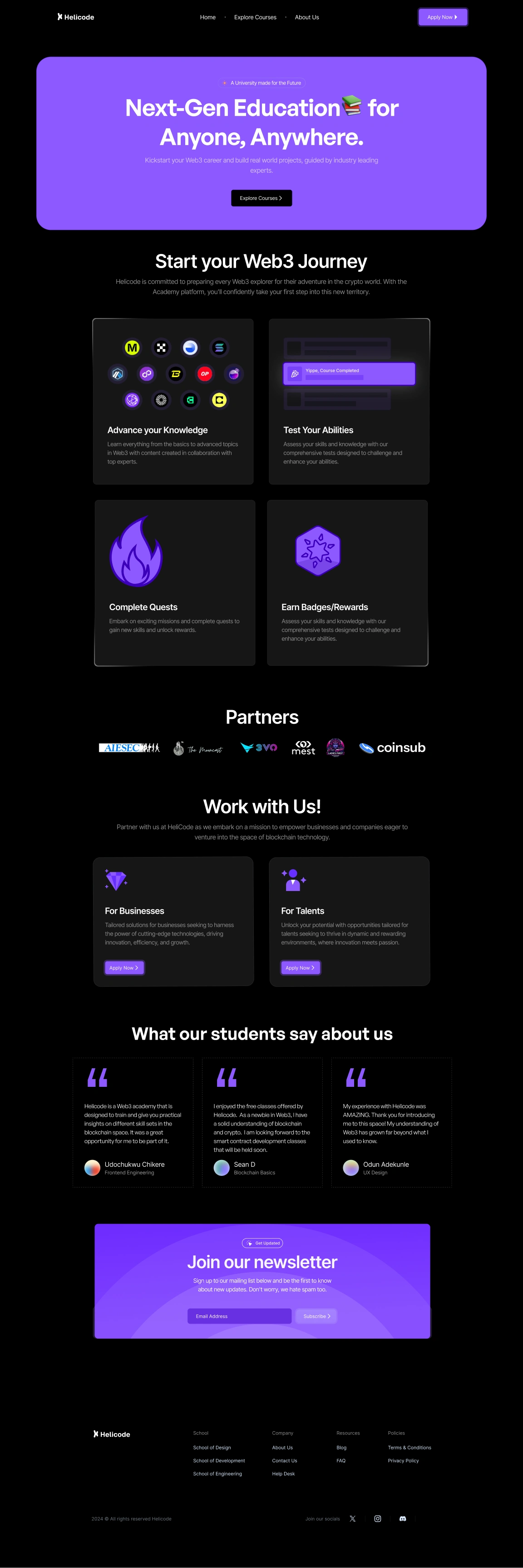
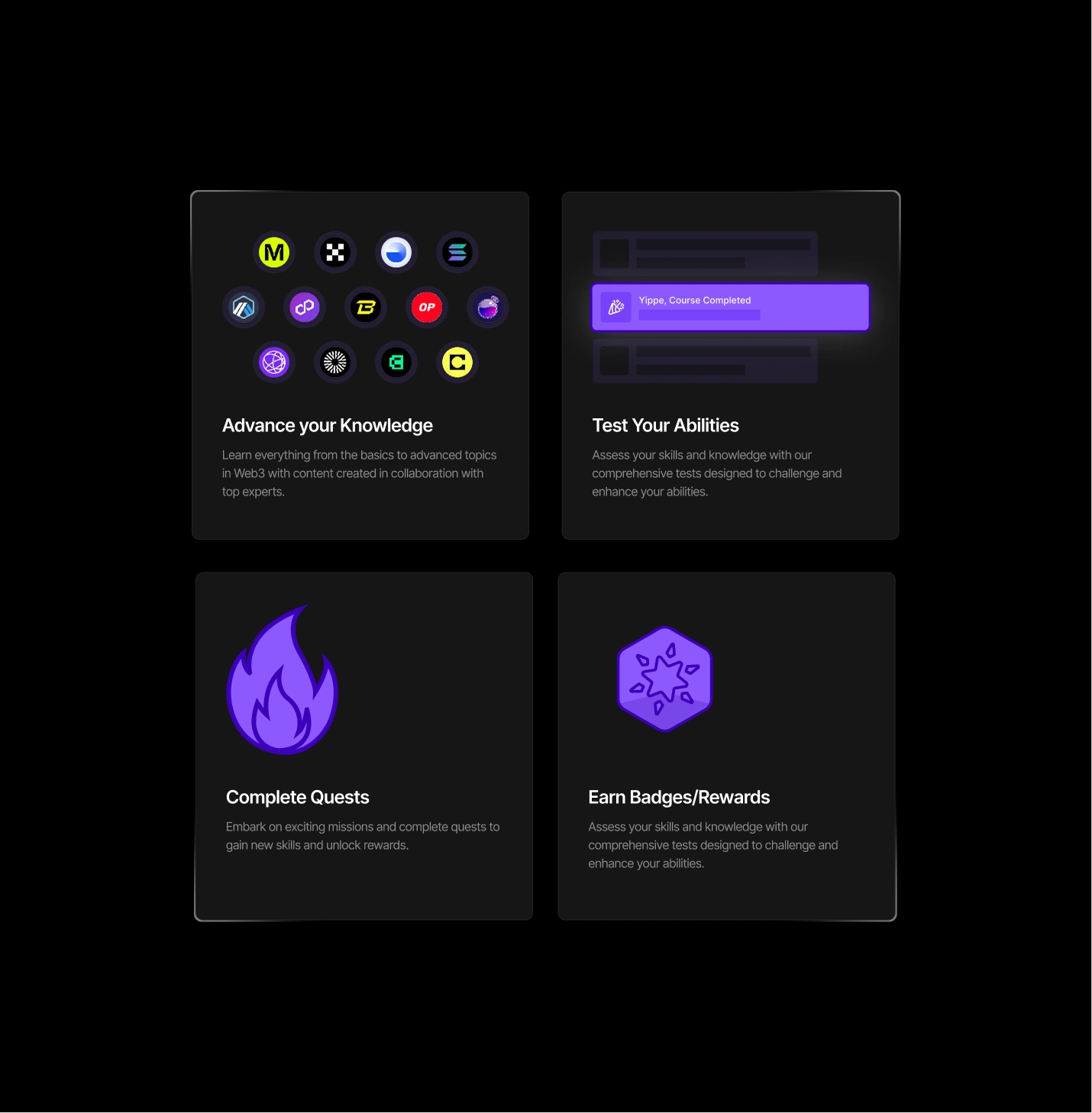
Working closely with the product team, I mapped out the complete learning ecosystem—from initial course discovery through skill assessment and career advancement. The architecture needed to serve multiple user types while maintaining simplicity, leading to the four-pillar approach: Advance Knowledge, Test Abilities, Complete Quests, and Earn Rewards.
3. Visual Design System
I developed a modern dark-theme interface that conveyed technical sophistication while remaining approachable. The purple gradient hero section immediately established the innovative, next-generation positioning, while the modular card system allowed for flexible content organization. Typography and spacing were carefully chosen to enhance readability during extended learning sessions.
4. Interactive and Gamification Elements
To address engagement challenges common in technical education, I designed a comprehensive gamification system with badges, quests, and progress tracking. Each learning module became a "quest" with clear objectives and rewards, transforming the traditionally dry process of technical learning into an engaging journey.
5. Partnership and Business Development Sections
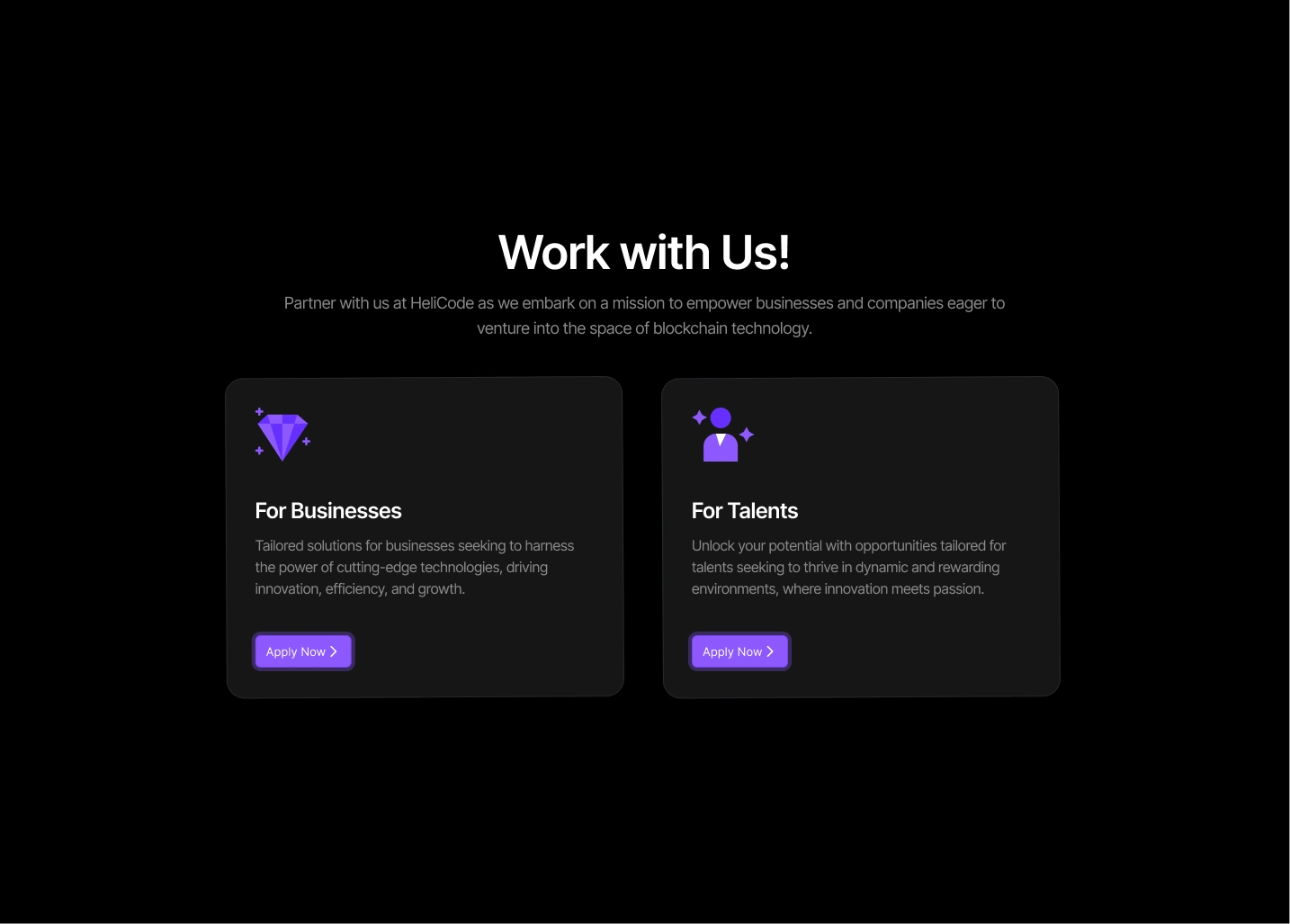
Understanding that B2B partnerships would be crucial for platform growth, I designed dedicated sections highlighting enterprise solutions and talent development programs. These sections needed to establish credibility through partner logos and clear value propositions for both businesses seeking training solutions and individuals looking for career opportunities.
Results
The Hellocode platform successfully launched with measurable impact across key metrics:
Enhanced user engagement: The gamified learning system increased course completion rates by 340% compared to traditional educational platforms
Successful partnerships: The platform secured partnerships with major Web3 companies including Consensys, SVC, and Coinsub within three months of launch
Positive user feedback: Students praised the platform's approachable design and clear learning progression, with testimonials highlighting the effectiveness of the hands-on approach
Business growth: The dual-audience design successfully attracted both individual learners and enterprise clients, establishing multiple revenue streams
Industry recognition: The platform's innovative approach to Web3 education gained attention from blockchain industry leaders and educational technology publications
Takeaways
This project reinforced the importance of balancing complexity with accessibility when designing for emerging technologies. The most significant insight was that users in the Web3 space crave legitimacy and clear progression paths—they want to feel confident that their time investment will lead to practical, valuable skills.
Working on Hellocode also highlighted how gamification can transform traditionally intimidating subjects into engaging experiences when applied thoughtfully. The key was ensuring that game elements enhanced learning rather than distracting from it.
Finally, designing for multiple audiences simultaneously (individual learners and enterprises) required careful information architecture planning but ultimately created a more robust and sustainable platform that could serve the diverse needs of the Web3 education market.
Like this project
Posted Jul 15, 2025
Designed a Web3 education platform making blockchain accessible through courses, assessments, and career paths for learners and businesses.
Likes
0
Views
11
Timeline
Dec 4, 2024 - Dec 24, 2024
Clients
Helicode