Smooch: a shared space for couples | iOS app

Anastasiia Barbashyna


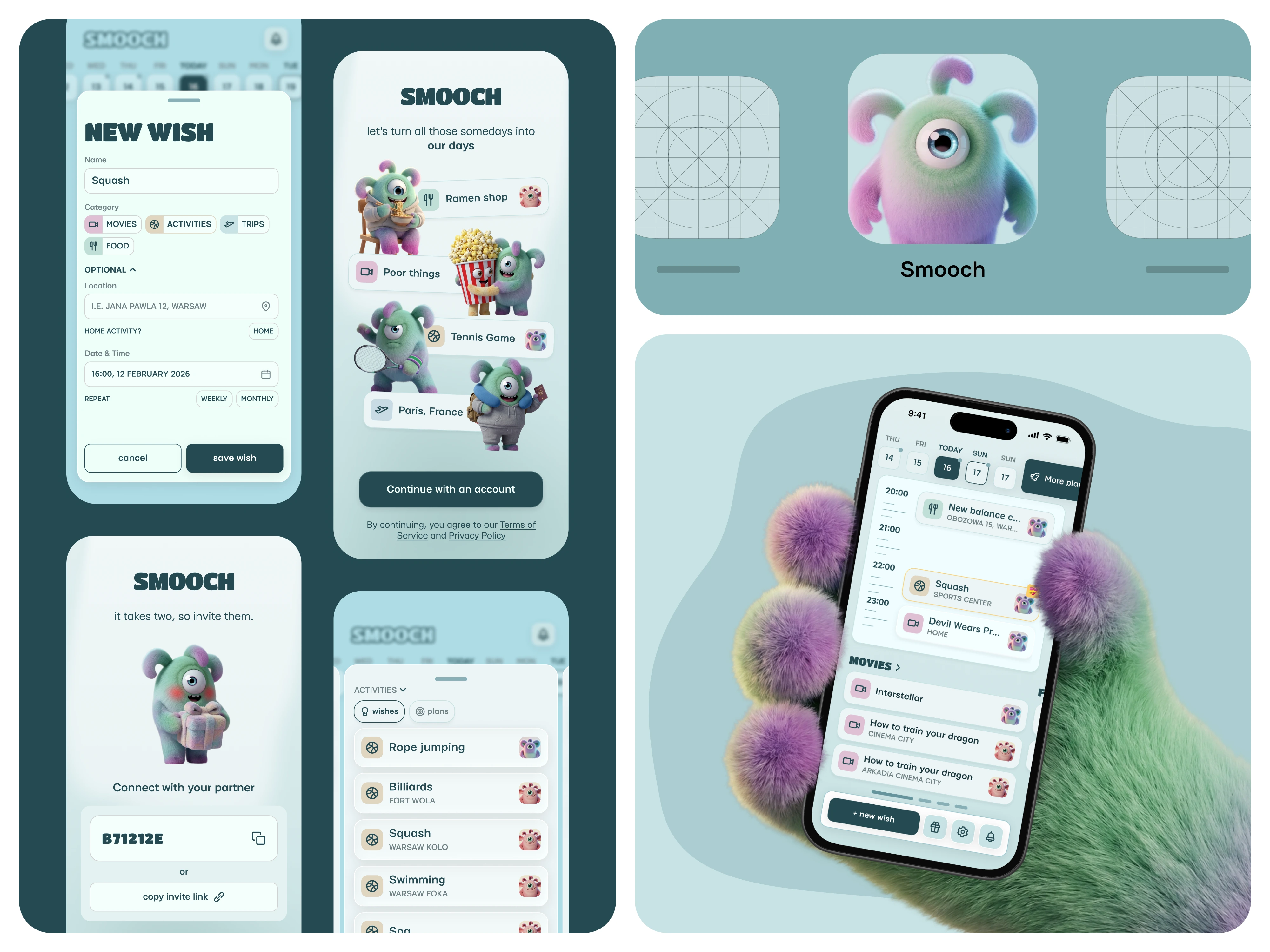
Smooch is an iOS app for couples. It’s a shared space for all the small “we should try this someday” ideas, like a movie, a new place to eat or a gift, and a simple way to turn them into experiences.
I made it on my own, from product and design to the build with Lovable. Apple approved version 1.0 on 9 October 2026, after a few rejection rounds and 60 builds.
Role: solo founder, covering research, product, design, development and a bit of legal
Stack: Lovable, Capacitor/Ionic, RevenueCat, Sign in with Apple & Google, Framer
Timeline: January 2026 – September 2026
Status: Live on the AppStore
Where it started
In January my partner and I were planning March and May: a few activities, a couple of trips. Halfway through the conversation we realised we’d completely forgotten a movie we wanted to watch and a new Korean place we wanted to try. The big plans were fine. The small ones kept slipping away.
Those ideas lived everywhere at once: in a messenger, in notes on my phone, in my partner’s paper notebook, and mostly in our heads. Gift ideas were the hardest, because on top of everything they had no real place.
So I wanted one space for both of us, where small ideas don’t get lost and can easily become plans.
How it works
You pair with your partner using a code and end up in one shared space. Each of you saves ideas there with a category: movies, food, activities, trips, gifts, important dates. When you’re ready, you drag an idea onto a day, pick a time, and it lands on your shared timeline.
*From “someday” to Saturday.*
Early on I decided Smooch shouldn’t feel like a calendar or a to-do list. It’s about time together, not task management, so I call it a space rather than a wishlist. The timeline is there to help you actually have plans, not to organise your week.
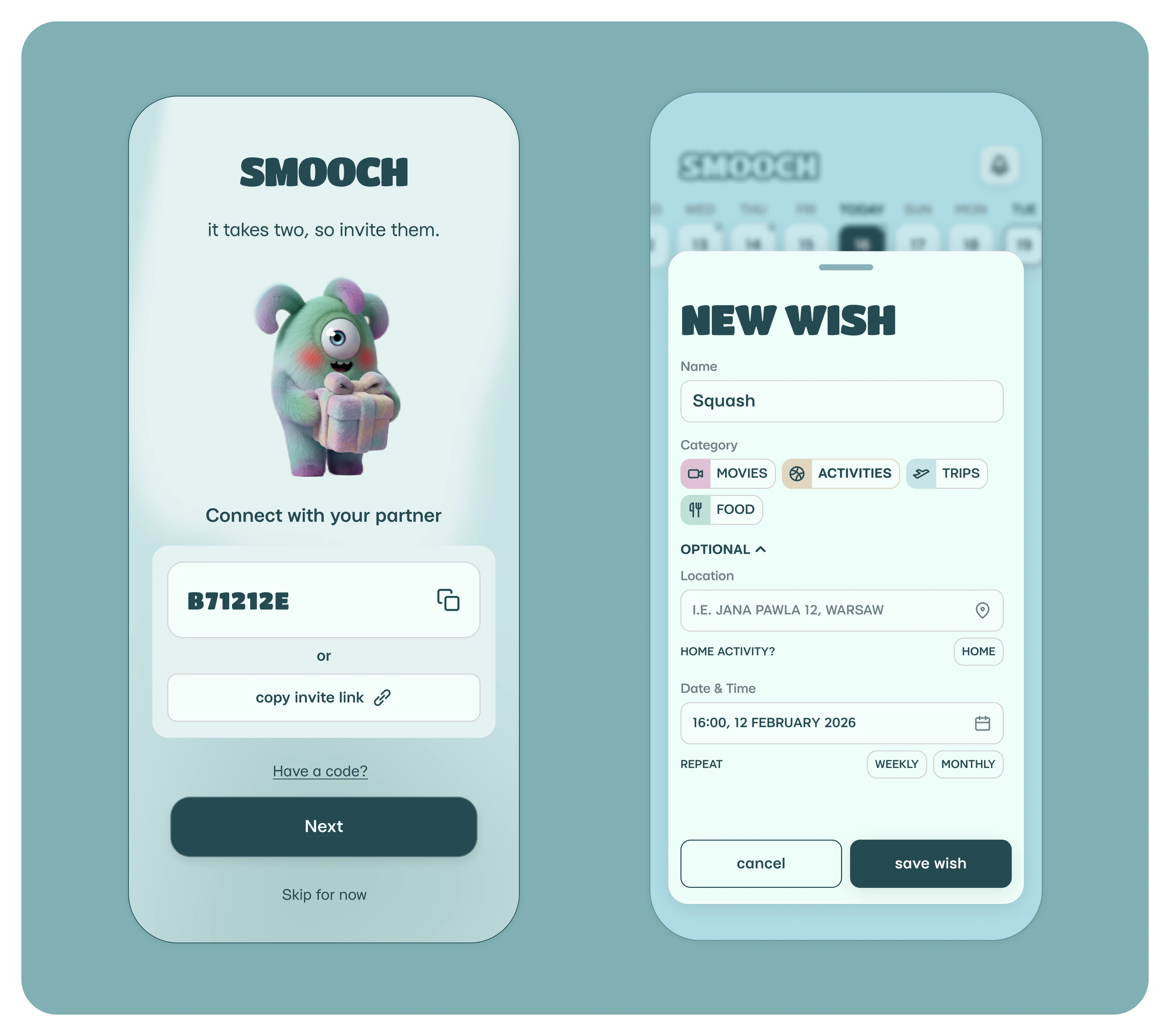
Pairing screen + new wish screen
A few decisions I’m happy with
Lots of Smooches instead of photos. There are no photos in Smooch. Each person picks a fluffy character with its own look and mood. Most of us don’t call the person we love by their name, we use something cute and personal, and the characters play that role. It also meant no photo uploads and no camera permission.
Also, I’ve always loved cartoons. Big Hero 6, par-la-laaa-la.
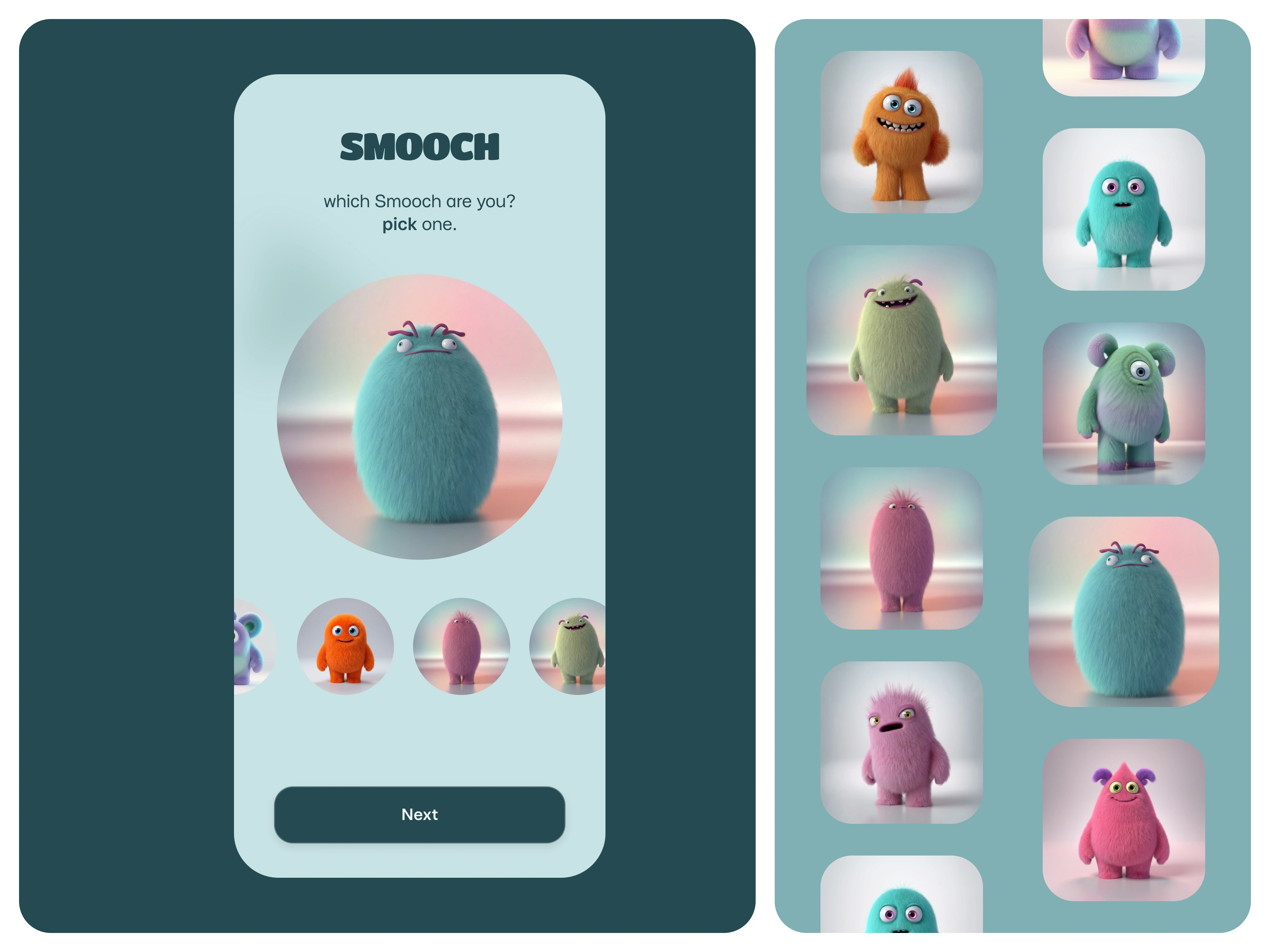
Pick your fluffy-fluffo
Ask for less
Sign-in is Apple and Google only, no Facebook SDK. There’s no analytics SDK either: product insight comes from aggregate queries over data the app already stores. So no extra third parties and no consent pop-up.
Surprise dates
One partner plans something and keeps it secret, while the other only gets a notification that a surprise is coming. During testing I found the surprise title still showed up in a few places for the other person, so I went through the whole app to close those gaps.
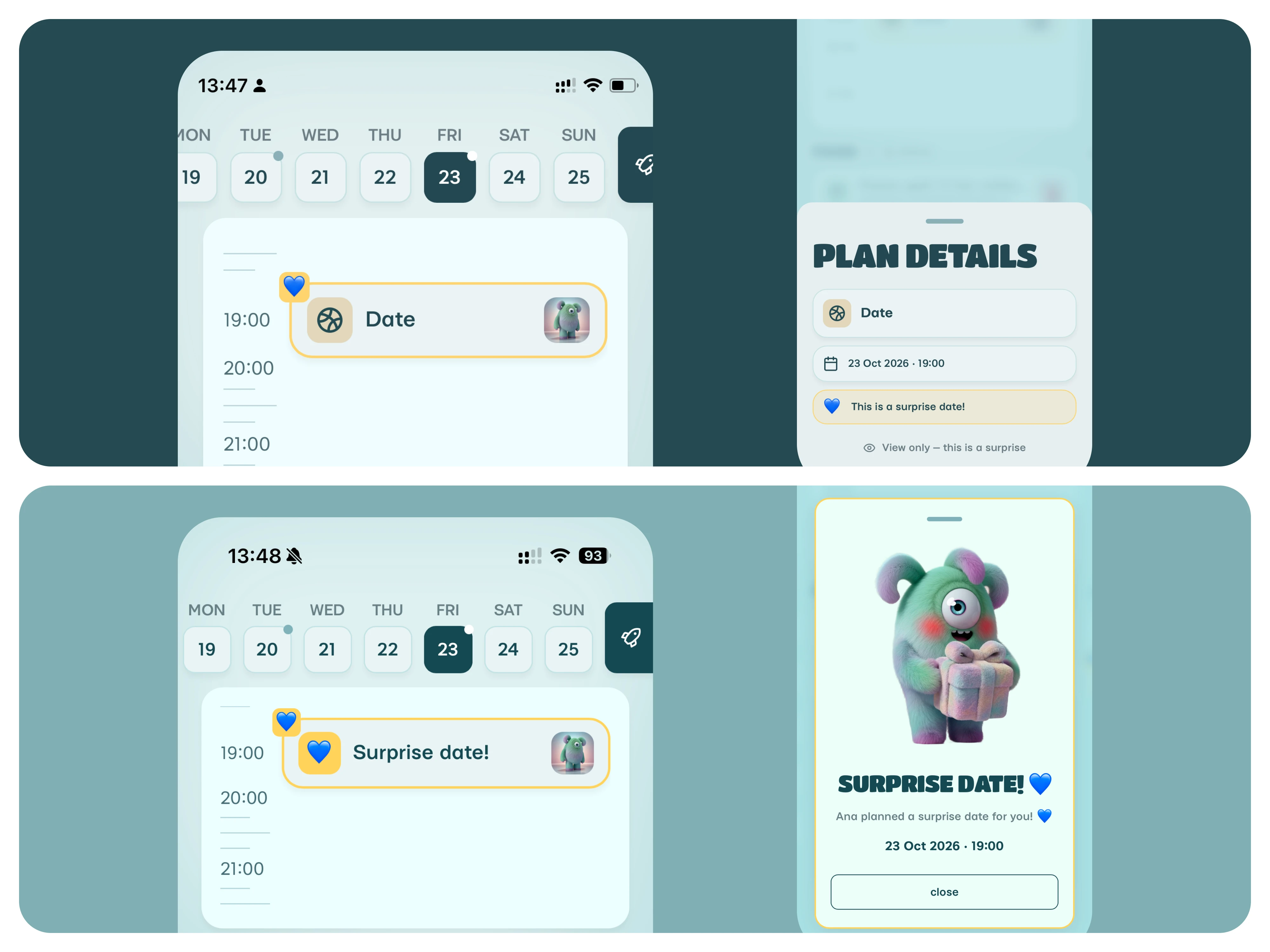
the planner’s view vs the partner’s view of the same surprise.
One couple, one subscription
$3.99 a month or $39.99 a year per couple. One person pays, both get access. The free week belongs to the couple’s space, not to a person: 7 days from the moment the space is created. A partner who joins later gets whatever is left of it, which can be zero days, and nobody ever pays twice.
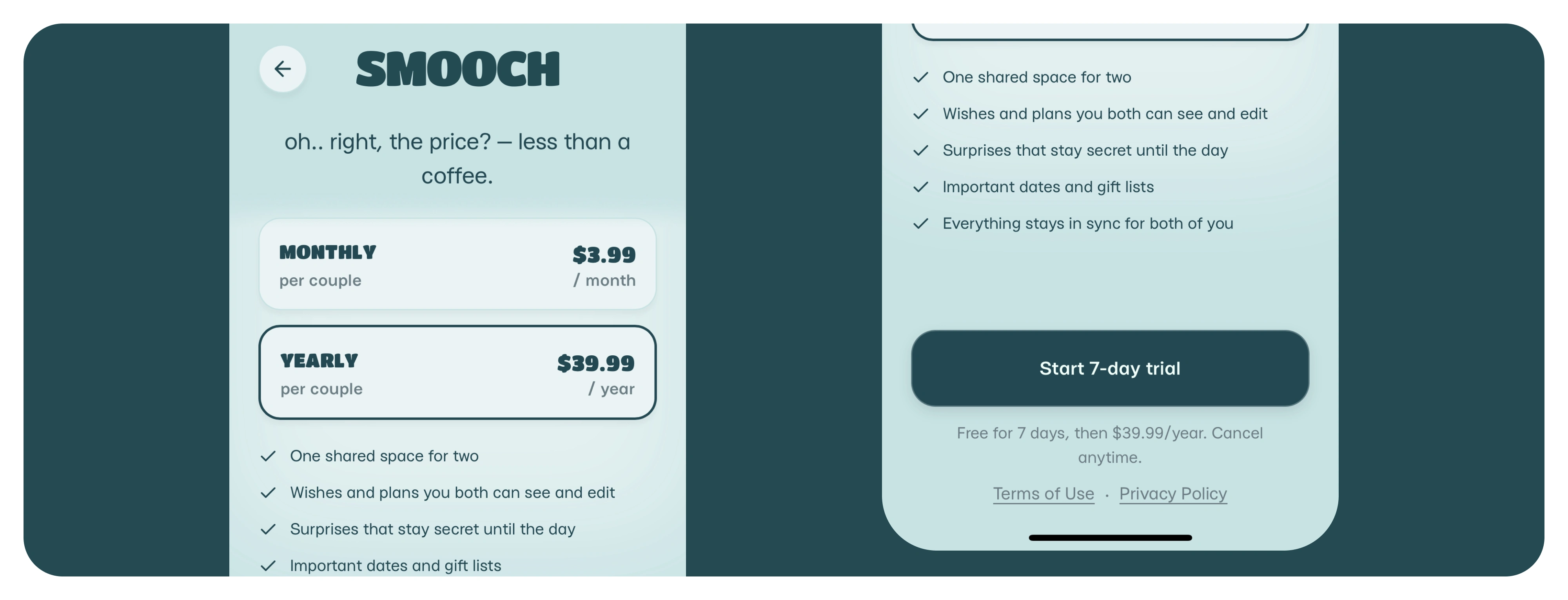
Paywall screen
What was hard
Notifications and the 2am squash. Notifications gave me nightmares. Every time I thought they were fixed, nope-nope. At one point a timezone mix-up had us going to squash not at 2pm, but at 2am.
The paywall and a gazillion scenarios. Free trials, restores, a partner joining halfway through the free week. While testing with expired sandbox subscriptions, I found you could get past the paywall with a force-quit and relaunch. The fix was to stop trusting the device: a server-side function now checks every subscription with RevenueCat before anything unlocks.
App Review. A few rejection rounds before approval. Smooch is built for two, so a fresh account starts empty and there’s nothing to review. Reviewers get a prepared partner space with sample content and a one-time invite code. The code burns on use, so no permanent codes sit in submission docs.
A bit of legal. I put the Privacy Policy and Terms together with AI help. My part was making sure they describe what the app actually does. Account deletion lives in Settings and is immediate and permanent. When one partner deletes their account, only their entries go: the other partner’s stay, and the space becomes theirs alone.
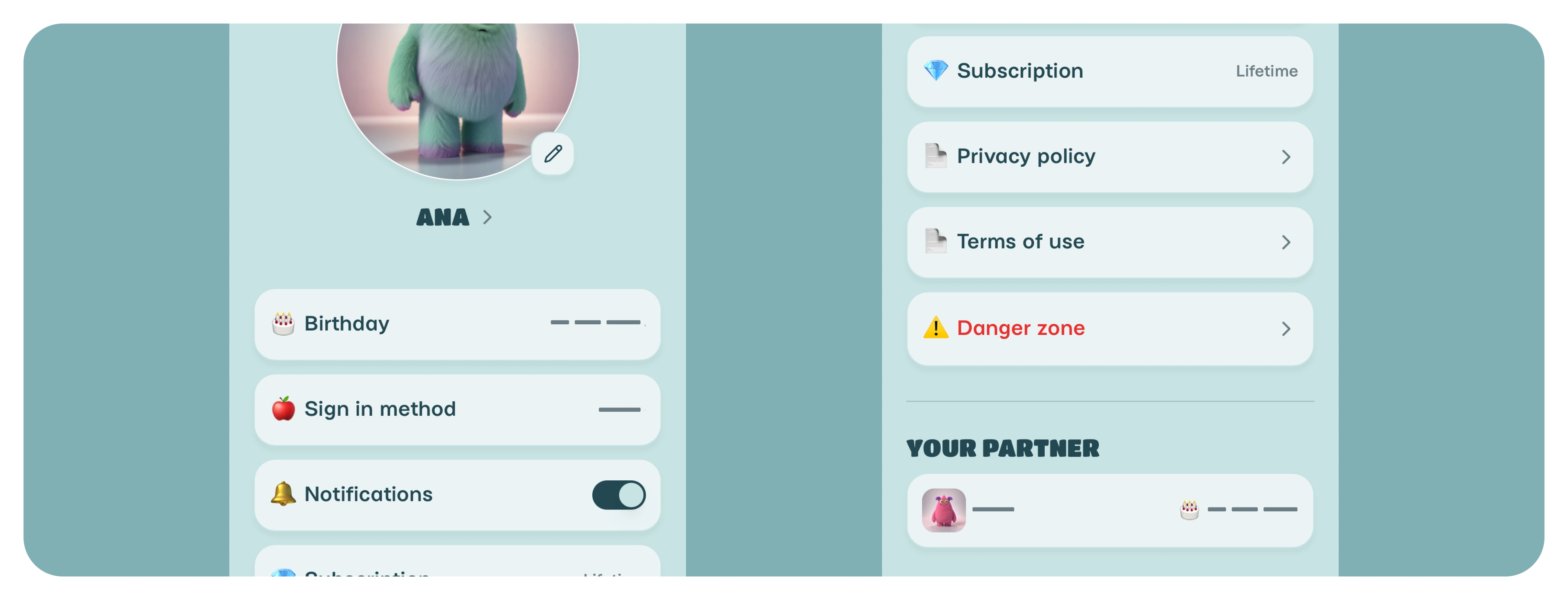
Settings → Delete Account
Making App review painless
Smooch is built for two, so a fresh account starts empty and there’s nothing to review. Reviewers get a prepared partner space with sample content and a one-time invite code. The code burns on use, so no permanent codes sit in submission docs.
The website and the blog
Smooch needed a home outside the App Store too, so I built the site in Framer: how it works, pricing, FAQ, an Our Story page, and the Privacy Policy and Terms. The fluffy dudes carry every section: one hugs a box of popcorn for movies, one holds ramen for food, one is packed for a trip.
The blog was its own chunk of work: four articles for couples, from 40+ couple goals and setting relationship goals together to date night ideas at home, 100+ conversation starters and more to come 😄
marketing website
⭐ Outcome
The obvious, the app is live! Yaaay!
For us as a couple, it changed more than I expected. We feel more connected, we have more memories, and all those “somedays” finally happen. Cheesy? For sure. But that’s our story.
💭 What I’d tell past me
Bugs found before launch aren’t a sign you’re failing. Finding them is the whole point.
The server decides who paid. The app just displays it.
Unknown user = not mine.
Before yelling at your dev tool, check whose mess it is. (It was mine.)
Building an app and need someone who cares about the user experience as well as pixels and the paywall?
Ping me!
Like this project
Posted Oct 11, 2026
Designed and built Smooch solo: an iOS app where couples save their “someday” ideas and turn them into dates. Product, UX/UI, build, website.
Likes
0
Views
7
Timeline
Jan 16, 2026 - Sep 30, 2026