Empowering UX Design for Job Seekers at Black UX Labs

Jonathan Martinez
Verified

Case Study
Black UX Labs × DScout: Turning Research Into Opportunity Through UX, Data, and Storytelling
00. Overview
I joined Black UX Labs as a participant in a coaching program created to support emerging Black and Brown UX professionals. What began as an opportunity to grow quickly evolved into a multi-dimensional project where I contributed across research, product design, UX analysis, and public speaking.
In the span of the program, I:
Participated in a structured UX research study with DScout
Analyzed real performance data to uncover usability friction
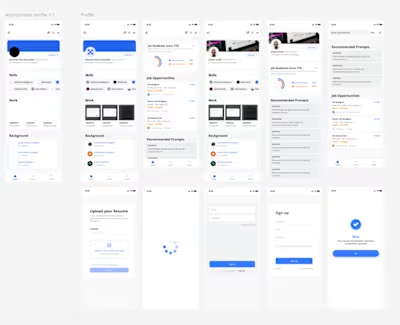
Designed a job-matching product concept informed by those insights
Redesigned a program landing page to improve clarity and conversion
Spoke publicly about the work to a global UX audience
This is the story of how I used design and research to illuminate the challenges job seekers face — and how I transformed those insights into meaningful experiences.
01. The Coaching Program: A Launchpad for Growth
Black UX Labs helps rising UX talent navigate the realities of the tech industry with mentorship, community, and career strategy. As a participant, I gained:
Critical feedback on my design process
Personalized guidance on career positioning
A supportive network of UX professionals
Hands-on opportunities to contribute to real initiatives
But rather than just receiving coaching, I used the program as a sandbox to practice design leadership, data synthesis, and storytelling.
02. Participating in the DScout UX Research Study
As part of the program, we conducted a research initiative examining the job-search experience for tech workers — especially those navigating layoffs, career transitions, or systemic barriers.
Participants completed tasks inside a prototype job-search tool, generating:
Screen recordings
Clickstream data
Time-on-task metrics
Qualitative reflections
My role was to participate in the study and later analyze the results as part of my design development.
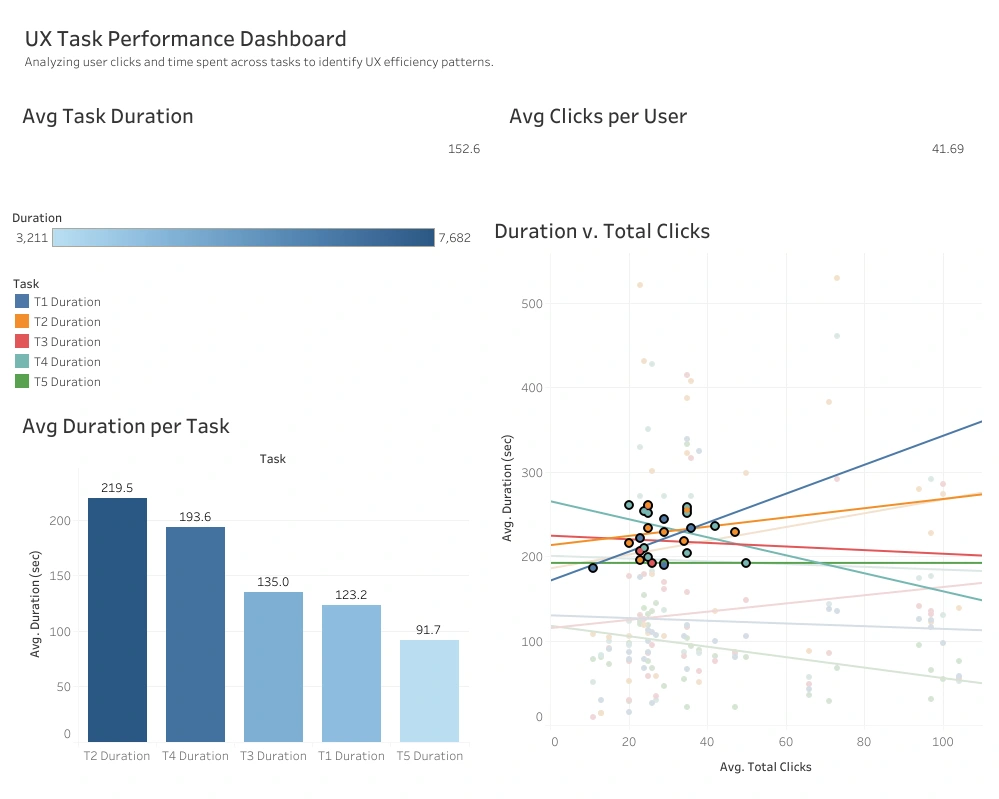
03. UX Performance Dashboard: Interpreting the Data
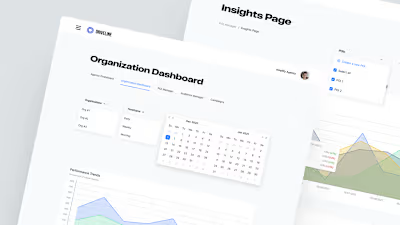
I worked with a performance dashboard visualizing:
Average task duration
Average clicks per user
Scatterplots of duration vs. click volume
Task-by-task breakdowns of friction points
Key Insights I Identified
High Cognitive + Interaction Load
Avg task duration: 152.6 seconds
Avg clicks/user: 41.69
Users were working too hard to complete simple actions.
Task 2 Was the Primary Bottleneck
Task 2 duration: 219.5 seconds (the highest)
This pointed to unclear instructions, poor hierarchy, or overwhelming inputs.
Inefficient Onboarding Experience
Sessions showed hesitation, backtracking, and long pauses. Users weren't confused by interfaces — they were confused by expectations.
Mobile Considerations Became Crucial
Most participants behaved as mobile-first users, even when using desktop prototypes. This influenced my later design pivot.
These insights became the backbone of my redesign strategy.
04. Product Concept: A More Human Job-Matching Experience
Drawing from the research and data patterns, I designed a concept for an improved job-matching tool — one that actually reflects the realities, emotions, and constraints of today's job seekers.
Design Goals
Reduce cognitive load
Lower interaction cost
Increase trust and clarity
Support non-linear career paths
Focus on skills, not "perfect resumes"
Core Principles Behind My Redesign
Mobile-first UX
thumb-friendly targets, cleaner navigation, fewer decisions
Progressive disclosure
breaking onboarding into digestible steps
Emotional clarity
friendly microcopy, affirming tone, clear next steps
Skill-first identity
users share what they can do, not just traditional titles
Reduced friction
fewer inputs, lighter language, streamlined flows
This design direction grew naturally from my previous work on Helpful Hand AI, where emotional UX and minimalism were central themes.
05. Landing Page Redesign for the Coaching Program
Separately from the product concept, I redesigned the program's landing page to improve storytelling, inclusivity, and conversion.
Challenges
The original page:
Was functional but lacked emotional resonance
Didn't clearly communicate the depth of the program
Felt generic rather than community-centered
Needed stronger value framing to justify a higher price point
My Approach
Crafted narrative-driven copy focused on empowerment and outcomes
Used ethical, inclusive imagery to reflect the community
Created a structured, scannable layout that reduces overwhelm
Tailored the experience to UX professionals seeking growth, clarity, and belonging
This work built directly on my experience redesigning value-driven landing pages like Design for Impact, where inclusive UX storytelling played a key role.
06. Public Speaking: Sharing the Work with DScout
Toward the end of the program, I spoke on a DScout People Nerds panel featuring UX leaders and researchers. This was a milestone moment — the first time I publicly articulated:
My personal journey in UX
My reflections on the research
What job-seeking feels like from an emotional and systemic perspective
How equity-centered design can reshape hiring tools
The speaking engagement positioned me not just as a designer, but as a storyteller and advocate for underrepresented talent in tech.
07. What This Experience Means for My Practice
This project was a turning point. Across design, research, and communication, I learned:
Design can restore clarity.
Removing friction isn't just a task — it's an act of care.
Research reveals humanity, not just usability.
The most important insights came not from clicks, but from hesitation, emotion, and context.
Equity-centered UX requires courage and nuance.
Good design doesn't just "work"—it fosters belonging.
I'm at my best when blending strategy + emotion + storytelling.
Design, data, and narrative aren't separate skills for me — they're one practice.
Like this project
Posted Dec 19, 2025
Contributed to UX research and design project to improve job-matching tools and program landing pages.
Likes
0
Views
0
Timeline
Jun 26, 2024 - Jul 23, 2024
Clients
Black UX Labs