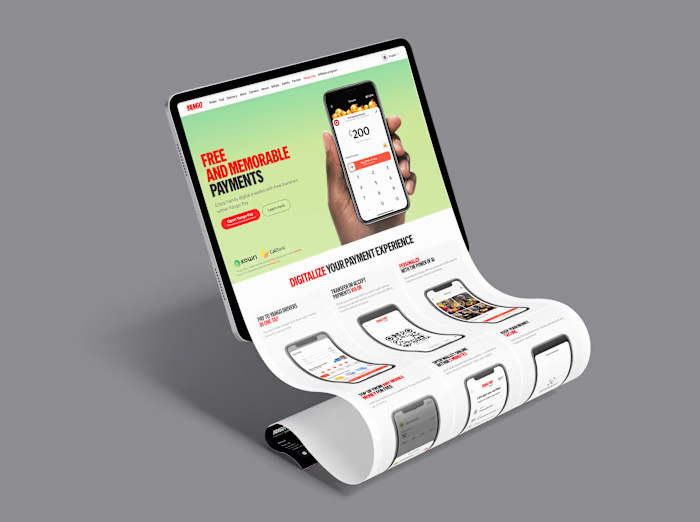
Pilates.me Website Design and Build

Alexander Nevsky

Pilates.me — a Framer website, and why I eventually moved beyond Framer
I designed and built this website for Pilates.me in Dubai entirely in Framer.
For visual websites, Framer is still one of the best tools I’ve used. You can control layout, typography, responsive behavior and animation directly, without the usual gap between what was designed and what eventually appears in production. Its CMS is also genuinely convenient for smaller content-driven websites, and publishing changes is almost frictionless.
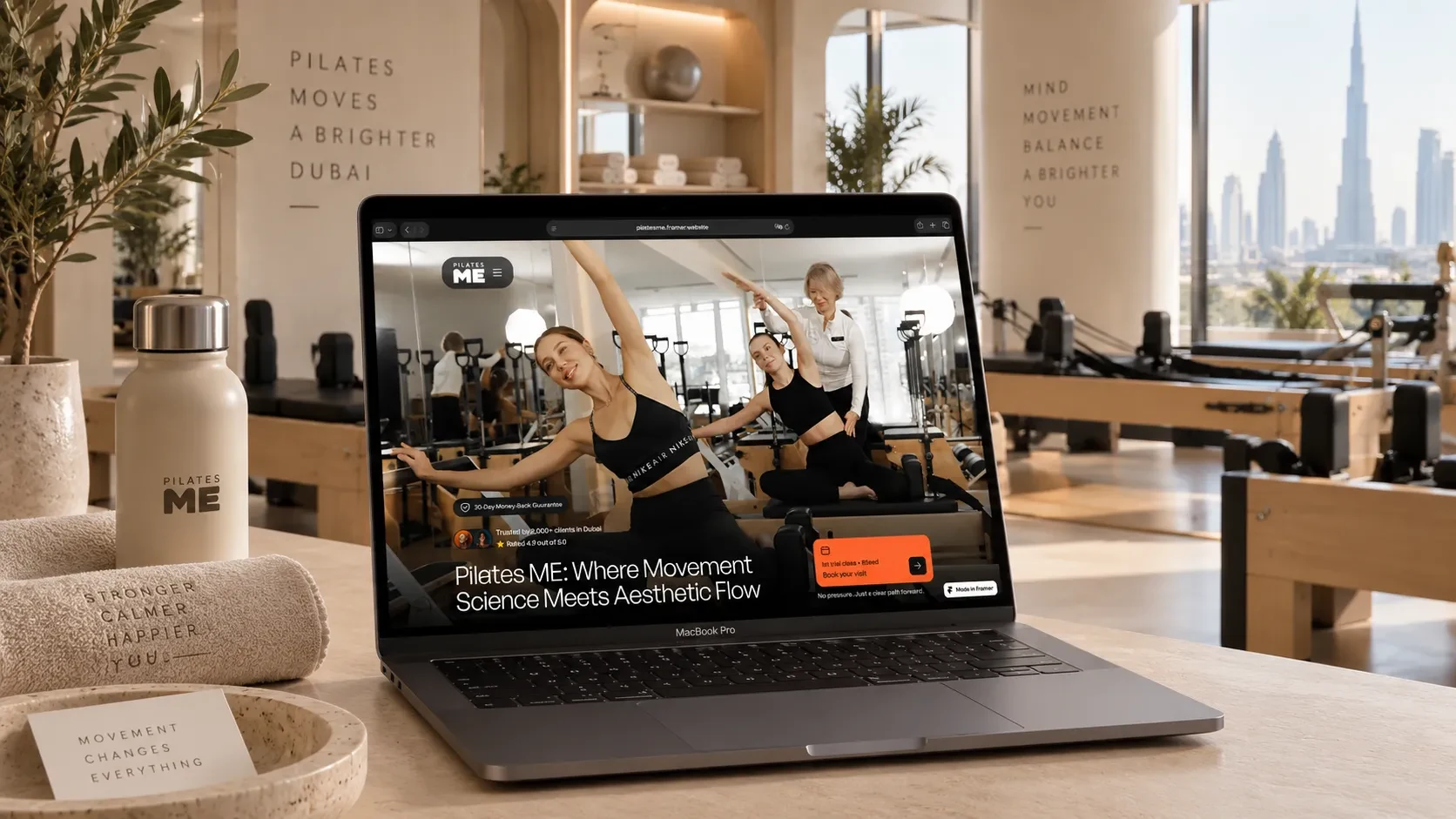
Home Page
That directness is exactly why I used it for Pilates.me.
But after building more sites with Framer, I started running into the other side of the trade-off.
The platform becomes noticeably more expensive as projects grow. Framer’s current paid plans start at $10/month and Pro at $30/month on annual billing, with additional editors, localization and some advanced hosting capabilities charged separately.
More importantly for me, I wanted much more control over the infrastructure and the codebase.
Framer is fundamentally a managed platform: hosting, rendering, image optimization, fonts and publishing are deeply integrated into its own infrastructure. Framer has recently added more data-portability options, and third-party export tools now exist, but that is still a very different model from owning a clean source repository that I can structure, test and deploy wherever I want.
That became one of the reasons I gradually stopped building most of my new websites directly in Framer.
My workflow now usually looks different:
I may still use Framer to explore the visual direction, composition and motion — but once the design language is clear, I rebuild the site as a custom codebase with AI coding agents.
For content-first websites I increasingly use Astro + TypeScript, then deploy static builds to Cloudflare.
For my current static sites, that means the hosting cost is effectively $0 within Cloudflare’s free tier: static asset requests on Pages are free and unlimited, while the free plan also includes its own build limits.
Over the last year I’ve moved several sites away from builder-style infrastructure and rebuilt them as custom, maintainable codebases. The result is more control over SEO, performance, routing, content architecture, deployment and future integrations — without paying a recurring site-builder subscription for every project.
It also fits much better with how I work now.
After 15+ years in product design, AI-assisted development means I no longer have to stop at the visual layer. I can define the design and interaction model, then continue directly into the implementation and production infrastructure.
That said, I haven’t abandoned Framer.
My own nevskii.me is still running on Framer, and when a client needs a visually polished marketing site that should be easy to manage and launch quickly, Framer can still be a very good choice.
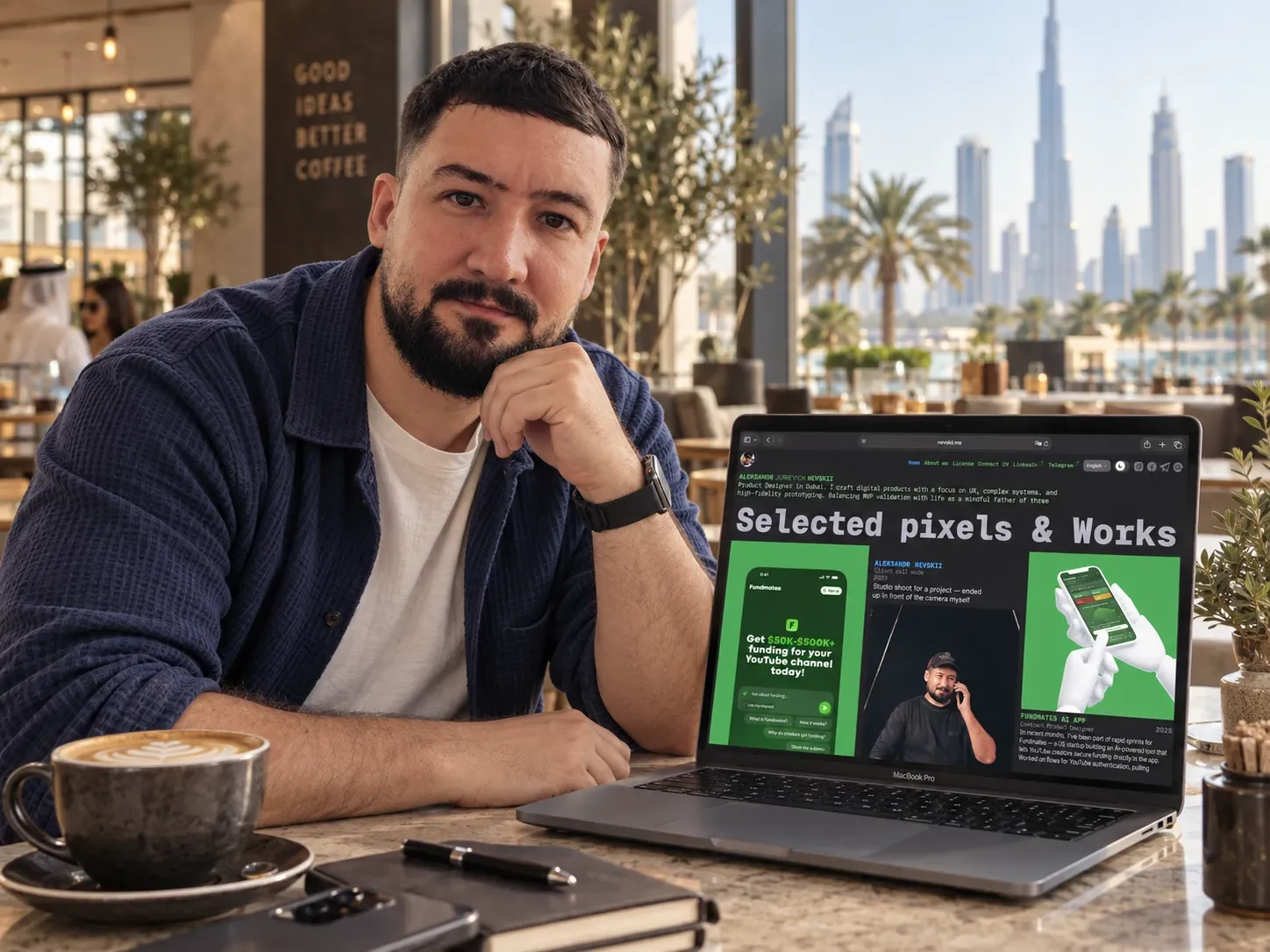
My own portfolio is still built on Framer — proof that I haven’t abandoned the tool, I’ve just become more selective about when to use it • https://nevskii.me
So if you specifically want your site built in Framer — no problem. I can still design and build it there.
I just no longer assume that Framer is automatically the best final platform for every website.
Like this project
Posted Sep 16, 2026
Designed and built the Pilates.me website in Framer.
Likes
0
Views
0