12 Blogging Mistakes Killing Your Growth

Roseline Oyedeji



12 Snaky Blogging Mistakes Killing Your Growth
Let’s face it.
Writing blog posts no one ever reads stings worse than a bee.
You pour your heart into every post, hitting publish like clockwork, only for your work to vanish into the endless space of content.
Frustrating? Isn’t it?

Most bloggers (especially new bloggers) in today’s fiercely online space face this challenge.
That’s why I ventured out to research the most overlooked blogging mistakes that choke your growth, whether you’re a new blogger or a seasoned pro who’s hit a plateau.
And more importantly, how to sidestep those traps.
Let’s dive in.
1. Not Carving Out Your Blog’s Purpose
Many people dive into blogging without a crystal-clear purpose. But if you’re serious about building a successful blog, you’ve got to treat it like a business.
First step?
Nail down your vision, as this sets the bedrock of everything else you’ll build.
Take a moment, grab a pen (or your favorite note app), and dig deep into these questions:
What’s the goal of my blog?
What do I want to achieve by sharing my content?
Who am I trying to reach?
Every successful blog has a specific purpose; they don’t churn out random posts or scatter content to the wind.
Instead, they craft every piece to address the hearts and minds of their audience.
2. Not Niching Down
Niching down sounds absurd at first; you might think covering more topics means reeling in more readers.
But it doesn’t.
Most bloggers try to cast a wide net juggling multiple topics on their blog.
When you do this, you dilute your brand and confuse your audience.
So, choose a super niche (a narrow niche).
Instead of being a tiny fish in an endless ocean, you’ll position yourself as a big fish in a smaller, thriving pond.
Don’t take my word for it; these stats from wecantrack speak well for themselves:
72% of top bloggers say niching down was the secret to their success.
Niche websites grow 53% faster than general blogs.
67% of consumers trust niche blogs for product recommendations.

So, a niche blog isn’t just a trend; it’s the backbone of a winning strategy.
How do you pick the right niche?
I’m glad you asked.
Backlinko breaks it down into three categories:
Passion : What lights you up and keeps you excited?
Potential : Is there a hungry audience searching for it?
Profitability : Can you make money from it?
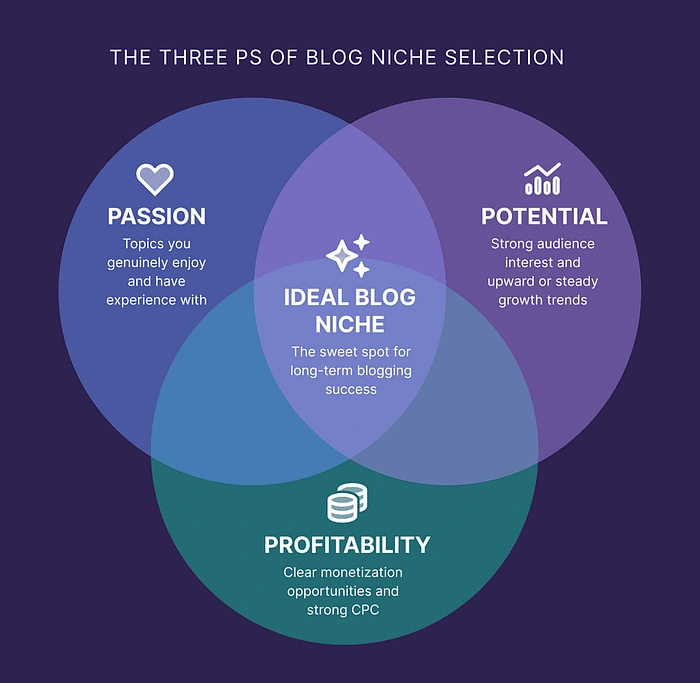
Aim for the sweet spot where all three overlap if you want to crush it in the long haul.
3. Using Free Domains & Hosting
Anyone can start a free blog, but if you’re serious about crushing it, get a self-hosted platform like WordPress and purchase a domain name.
When I was learning about blogging and SEO, I opened a free WordPress account to get familiar with the platform. Though, it’s not all bad.
But you can’t use the essential customizations and plugins.
Free platforms are okay only for getting your feet wet. If you’re aiming high, you need a real foundation.
Pro tip: Avoid dirt-cheap hosting options. They can tank your site with slow load times and weak security.
Your domain name and hosting are the bedrock of your blog’s success, so invest in quality from the get-go.
4. Not Building a Community
Building a community with your blog doesn’t have to be rocket science.
One simple way to start?
Create a Facebook group where readers can connect, share ideas, and tackle problems tied to your blog’s focus.
Introvert, Dear is an example of a thriving community with over 400,000 followers.

Truly, all this can feel overwhelming and mentally draining when you’re just starting.
But building a connection with your readers doesn’t require grand gestures.
A small but powerful step is to reply to your blog’s comments.
It’s a tiny detail that’s often overlooked, but it’s incredibly important.
Another fundamental tip: start building your email list.
You’ve probably seen countless blogs inviting you to “Subscribe to our newsletter.”
Whether it pops up unexpectedly or sits neatly on the blog — it’s not for decoration, it’s a way to keep the conversation going and a proven method for turning casual readers into loyal fans.
According to this stat from WeCanTrack, sixty-five niche bloggers say email marketing helps them make more money than any other channel.
5. Not Investing in Growth
One of the biggest blogging mistakes is relying too heavily on free tools.
Sure, they help get started, but can hold you back in the long run.
As the saying goes, “If you don’t pay for something, you won’t value it as much.”
And you know what? It’s partly true.

Free tools have their place, but paid tools offer so much more:
Advanced features to give you an edge
Regular updates to keep your blog running smoothly.
Reliable support when you hit a snag.
Investing in the right tools not only boosts your blog’s success but also saves you precious time and effort.
6. Lack of Content Strategy
This goes hand in hand with choosing the super niche we discussed earlier.
If you want to gain traction and attract dedicated readers, scattering your focus is a surefire way to fall flat.
Nobody cares about what you had for breakfast.
So, create a content plan that consistently feeds value to your audience. Don’t ramble about whatever crosses your mind.
Your content needs to be intentional, crafted with your audience’s needs in mind, and optimized for visibility.
Why?
Because you’re laying the groundwork for the future.
If you plan to sell a product down the line, it’s only wise to create content now that aligns with that goal.
Also, having a solid content plan keeps you accountable to your blog’s purpose, ensuring you’re not chasing every shiny idea that pops into your head.
7. Sacrificing Quality over Quantity
There’s been an endless debate over the perfect blog post length, and honestly, it’s not ending anytime soon.
Hearing that 1500+ words rank sixty-eight better in search engines might tempt you to pull up a chair and start typing out your next marathon post, hoping for a magic ranking boost.
But even a comprehensive article (say, 20,000 words) might not outrank a concise one (around 1,300 words) if the shorter piece comes from a website with stronger domain authority and more backlinks.
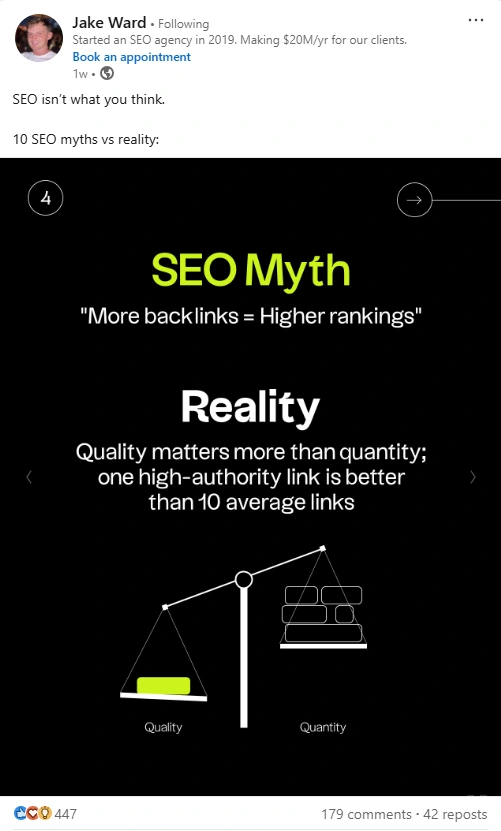
The takeaway?
While both short-form and long posts have their place, there’s no definitive ideal blog post length.
What matters is delivering high-quality, detailed, and relevant content that answers your audience’s questions and provides real value.
That’s what keeps readers coming back and search engines rewarding your efforts.
8. Not Formatting Your Post
You’ve heard this before: nobody wants to read a wall of text.
Imagine slogging through a 2,000-word post with no white-space, no bullet points, and no visual breaks.
Would you bother wasting your precious time to read? Probably not.

I found out that blogs that are easy to read consistently outperform those that are cluttered or poorly formatted, because people value content they can quickly digest and navigate.
9. Inconsistent Publishing
You might be wondering, Should I post every day?
Writing sporadically or leaving your blog untouched for long stretches can hurt your traffic and cause readers to lose interest.
Just like any business, consistent effort leads to success. But consistency doesn’t mean cranking out posts every single day.

The pressure to churn out daily content can take a toll on quality.
And when quality drops, so does your blog’s credibility and impact.
Instead, focus on creating a realistic schedule that works for you without sacrificing the value of your content.
10. Not Doing Keyword Research
Having a brilliant content idea is great, but only if your audience is searching for that information.
Before diving into writing, it’s crucial to check whether your topic has the potential to rank on search engines.
Pay attention to its scope and relevance.
Use tools like Ahrefs, Ubersuggest, or SemRush to analyze your keyword’s intent.
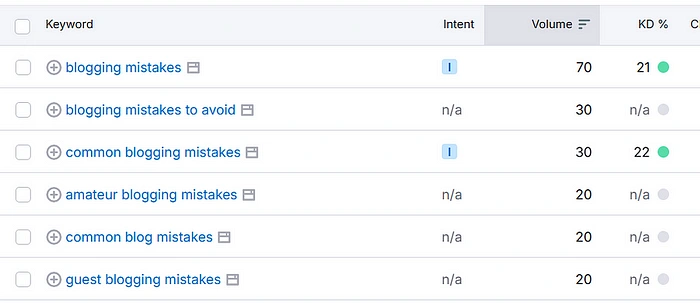
This ensures your content aligns with what your audience wants and increases its chances of being discovered.
Also, stay on top of growing SEO practices. The digital world changes often, and there’s always more to learn to keep your blog competitive.
11. Keyword Stuffing
You’re dreaming of the day your blog pulls in boatloads of readers.
In a rush to make it happen, you stuff your content with keywords, hoping it’ll crack the code for instant traffic.
The truth?
Search engine algorithms are smarter than that. Keyword stuffing doesn’t fool them; it flags you.

While it’s smart to include keywords in strategic spots like headings, subheadings, and meta descriptions, keywords alone won’t do the heavy lifting.
Let your writing flow naturally, prioritizing clarity and usefulness. When you strike a balance, the search engines and your audience will notice.
12. Ignoring Social Media
With blogs and social media, there’s really no competition. Together, they drive steady traffic to your site.
Sharing your blog with your online followers is one of the fastest ways to gain traction.
Platforms like Facebook, Twitter, and LinkedIn can amplify your reach and spark meaningful engagement.

So, use it wisely to boost your blog’s visibility and grow your audience.
Wrap Up
Starting a blog without proper education is easy, but often leads to a lot of trial and error.
Don’t be overwhelmed.
Building a successful blog takes time, but with consistent effort and by avoiding these blogging mistakes, you’ll see your traffic grow in leaps and bounds.
What other blogging mistakes will you add to this list? Let me know in the comments.
Like this project
Posted Jun 28, 2025
Researched and wrote about common blogging mistakes and strategies to avoid them.
Likes
0
Views
0
Timeline
Mar 27, 2025 - Jun 2, 2025