
Owais Raza
Full Stack Developer | Agentic Systems | MVP & SaaS Platform
- 1
- Followers


Just launched a powerful SaaS project: One-Click SEO Audit Marketplace
Built a complete platform that helps users analyze and improve their website SEO in seconds. From technical audits to keyword insights and performance tracking, everything is streamlined into a simple, user-friendly experience.
The platform scans websites, identifies SEO issues, and provides clear, actionable recommendations to boost rankings and traffic
Key highlights:
• Instant SEO audits with detailed reports
• Multi-site management dashboard
• Credit-based service marketplace
• Scalable SaaS architecture
Designed for agencies, marketers, and business owners who want fast, data-driven SEO decisions without complexity.
Check it out: https://oneclickseo.ai/
1
129
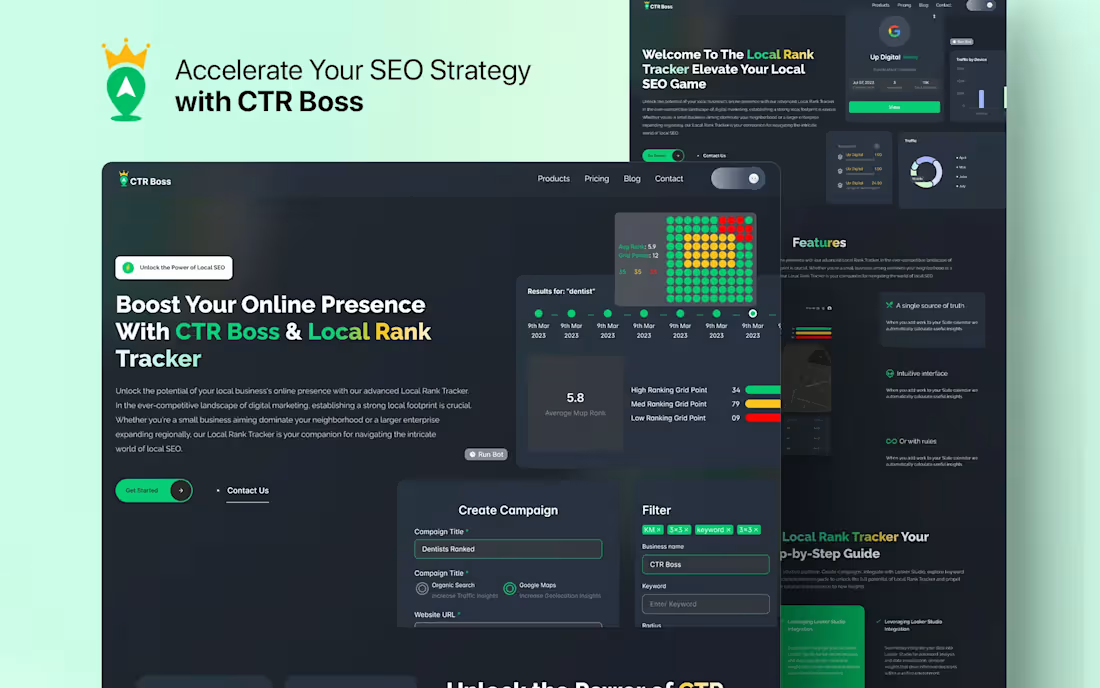
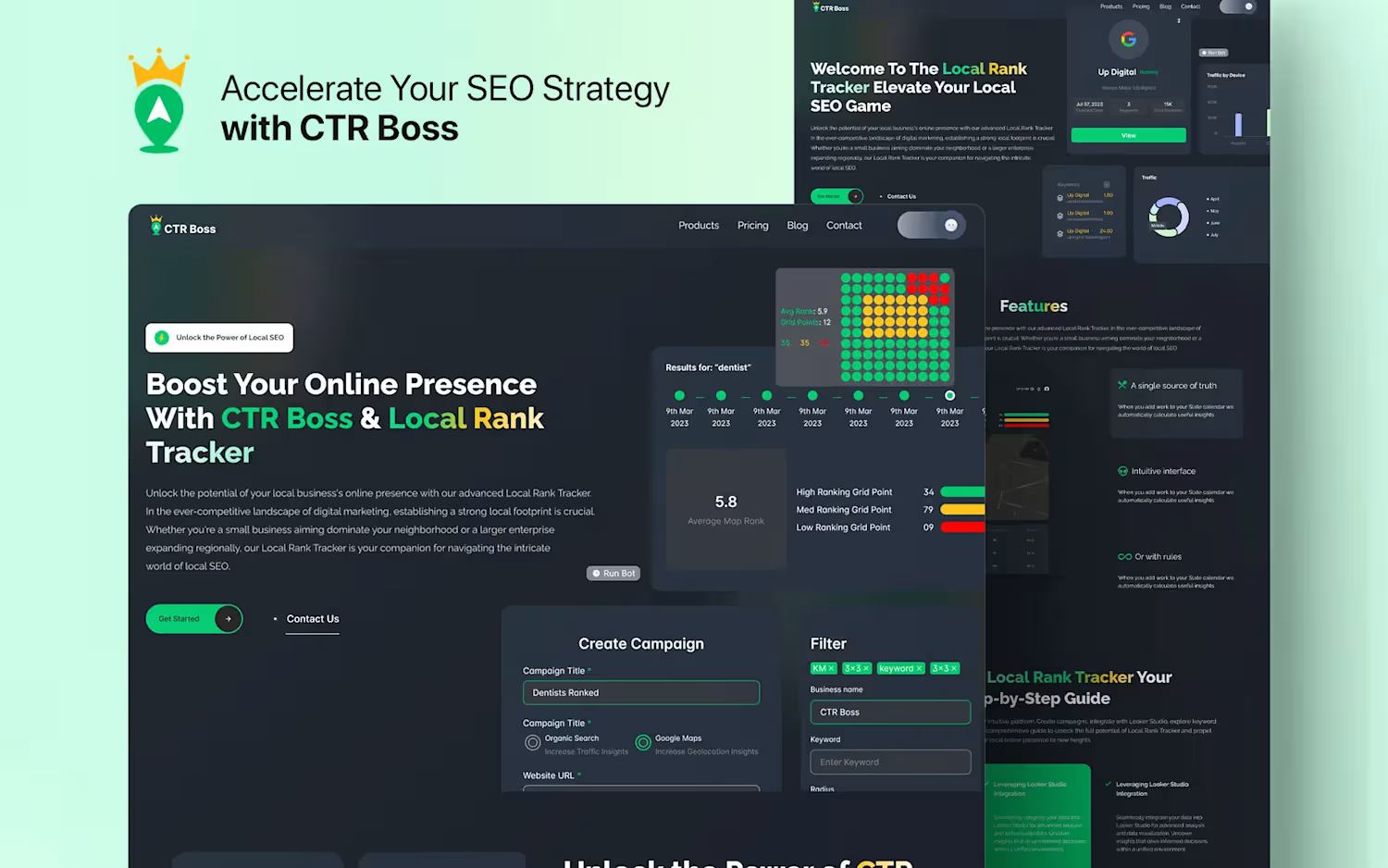
CTRBoss, Programmatic CTR Optimisation & Local SEO GeoGrid Rank Tracking SaaS
Built an enterprise-grade CTR optimisation and local SEO rank tracking platform for digital marketing agencies combining stealth browser automation, geo-targeted proxy routing, smart traffic scheduling, and geographic GeoGrid rank visualisation into a single fully automated system.
Running CTR campaigns at scale is one of the most technically demanding challenges in SEO. Every bot session has to appear indistinguishable from a real human user across browser fingerprint, user agent, proxy IP, search behaviour, and on-site activity. Off-the-shelf automation tools get detected and blocked immediately. Agencies needed a platform that could run hundreds of realistic sessions per day across multiple client campaigns, target specific geographies, and visualise local SEO performance all without manual intervention.
CTRBoss is built on Django, Flask microservices, React, Next.js, and PostgreSQL. The core bot engine runs Undetected ChromeDriver with selenium-stealth, removes webdriver flags via Chrome DevTools Protocol, sets device-specific user agents, and routes every session through geo-targeted residential proxies from Geonode and Proxy Empire with country, state, and city-level granularity. For organic search campaigns, the bot types the keyword into Google, locates the client's website across organic results, Knowledge Panel, and paginated SERPs, clicks through, and spends session time on-site with multi-page browsing and gradual scrolling to mimic real human behaviour. Google Maps campaigns use a three-tier detection system covering the Knowledge Panel, the local 3-pack, and full Maps results with pagination.
The Django smart scheduler runs every minute implementing time-of-day traffic ramping so sessions are light overnight and peak during business hours, enforcing per-keyword interval rules and daily search limits, pre-verifying proxies before each run, and auto-restarting the Flask bot server on consecutive errors. Up to 12 parallel keyword campaigns run simultaneously across multiple clients. The GeoGrid rank tracker queries DataForSEO's Google Maps SERP API across a coordinate grid producing a visual map showing exactly where a Google Business Profile ranks across its target area and where competitors dominate. Three payment gateways Stripe, PayPal, and Braintree with a credit-based billing system made the platform commercially ready at launch.
Tech Stack: Django · Flask · React · Next.js · PostgreSQL · Celery · Redis · Selenium · Undetected ChromeDriver · Playwright · Geonode · Proxy Empire · DataForSEO · Stripe · PayPal · Braintree · ApexCharts
1
127
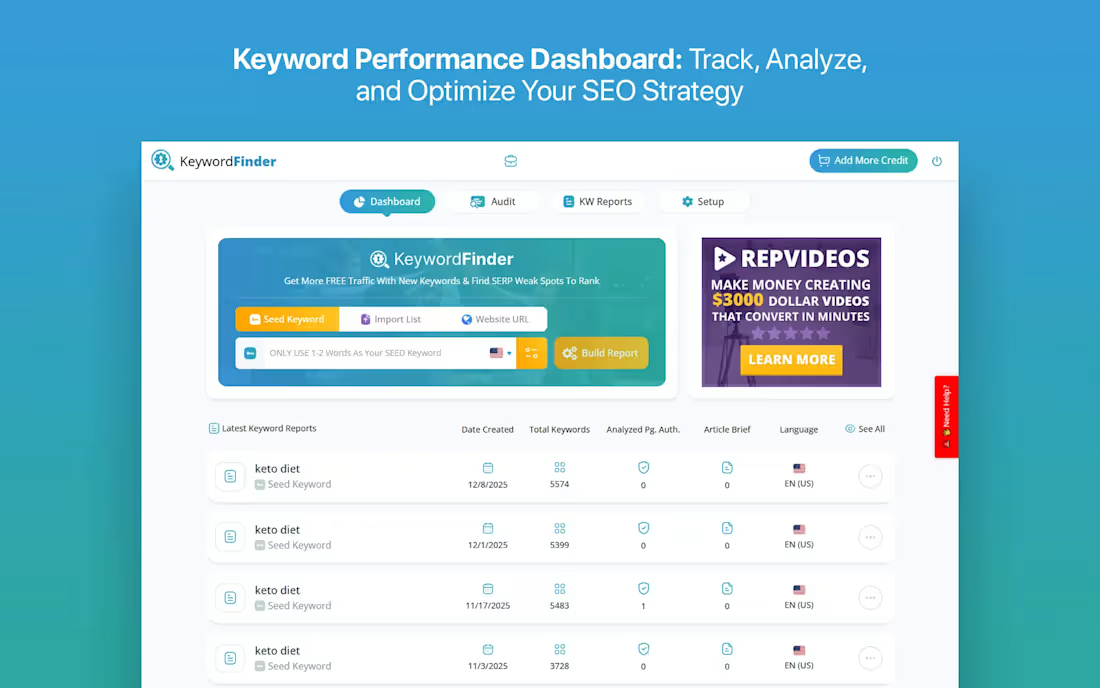
Keyword Finder, AI SEO Keyword Research & SERP Intelligence SaaS
Built a distributed SEO research platform that expands a single seed keyword into thousands of opportunities combining Google Ads volume data, live SERP analysis, NLP competitor scoring, domain authority metrics, and AI content brief generation into one unified workflow with no CSV exports or tool-switching.
SEO agencies were stitching together four or five separate tools a keyword research tool, a SERP analyser, a domain authority checker, an NLP scorer, and a rank tracker and manually reconciling their exports in spreadsheets. Scaling that workflow across multiple clients and thousands of keywords every month was unsustainable.
Keyword Finder is built on Django 5, FastAPI, Flask microservices, React 18, and GPT-4o. The platform supports 4 keyword generation modes — Seed, URL, Competitor, and Bulk. In Seed mode it builds prefix, suffix, and alpha combination lists, fires them to Google Autocomplete in parallel with rotating proxies, then runs a second deep expansion round before fetching volume, CPC, and competition data from the Google Ads API via OAuth2. SERP analysis jobs are distributed across a dedicated Flask scraping microservice fleet with round-robin load balancing and a four-tier fallback chain direct, Bright Data, scraping.narf.ai (http://scraping.narf.ai), and CrawlBase — ensuring near-100% page retrieval success regardless of target site protection. Each competitor URL is processed through a full NLP pipeline using YAKE and NLTK, with domain authority pulled from Moz and Majestic via DomDetailer and cached locally to avoid redundant API calls.
The Ranking Recipe lets agencies define custom Easy, Medium, Hard, and Easiest thresholds across 12 metrics turning keyword prioritisation from guesswork into a data-driven decision. AI content briefs are generated using GPT-4o and Cohere with full keyword context, cutting brief writing time from hours to minutes. Real-time job progress is delivered via Django Channels WebSockets, with Celery and Redis managing the async scraping queue. Supports 200+ Google country domains for multi-market research.
Tech Stack: Django · FastAPI · Flask · React · GPT-4o · LangChain · Celery · Redis · PostgreSQL · Google Ads API · Bright Data · YAKE · NLTK · Moz · Majestic · Material UI · Redux
1
246
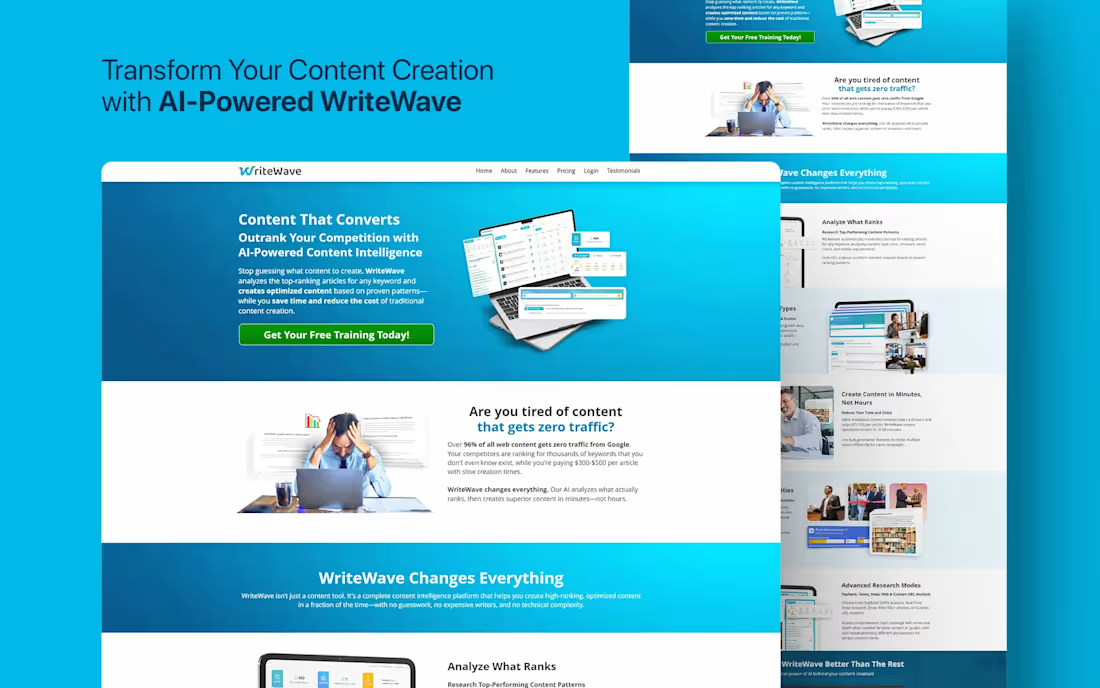
WriteWave, Enterprise AI Content Automation SaaS for Agencies
Built an end-to-end AI content automation platform for digital marketing agencies covering everything from SERP competitor research and NLP keyword extraction through AI article generation, image creation, schema injection, and auto-publishing to 10+ CMS platforms, all with zero manual steps between brief and live URL.
Agencies managing content for multiple clients were stuck repeating the same manual workflow for every article SERP research, keyword extraction, writing, sourcing images, adding schema, scheduling, and publishing across dozens of clients. Scaling to hundreds of articles per month was operationally impossible without full automation.
WriteWave is a multi-tenant agency SaaS built on Django 5, Celery, React 18, and GPT-4o. The platform offers 8 distinct article generation modes including a one-click engine that scrapes top SERP competitors, extracts NLP keywords via YAKE and NLTK, builds an optimised outline, generates full HTML content, creates AI images per section, injects internal links from sitemap crawls, adds DoFollow and NoFollow external links, embeds YouTube videos, and scores every article from 0 to 100 against NLP targets. A reading-level humanisation system adjusts vocabulary complexity from Grade 5 through college graduate.
The standout feature is an Agentic AI Journalist powered by VAPI an AI phone agent that autonomously calls real human experts, conducts a structured interview, transcribes the conversation, and generates a complete publishable article from the transcript. Agencies get genuinely expert-sourced content at scale without journalist hours. Business Profile articles pull live Google reviews, Maps photos, and inject JSON-LD LocalBusiness schema automatically. All 10+ publishing integrations — WordPress, Shopify, LinkedIn, Wix, Squarespace, Medium, and more — adapt HTML per platform so no manual reformatting is ever needed.
Real-time article generation progress is delivered via Django Channels WebSockets, with Celery and Redis handling async workloads at agency scale.
Tech Stack: Django · React · GPT-4o · LangChain · Celery · Redis · PostgreSQL · VAPI · OpenAI · NLTK · Material UI · TipTap · Redux
2
1
286