
Olesya Bezkorovaina
Research analyst turning messy info into clear reports
New to Contra
Olesya is ready for their next project!


I have been a research assistant at the University of Washington, Seattle for 4 years The data I collected and analyzed has been used by Scott Radnitz to write a book "Revealing Schemes. The Politics of Conspiracy in Russia and the Post-Soviet Region" (published by Oxford University Press). The research investigates why politicians in the Post-Soviet region promote conspiratorial claims and sheds light on the rise of conspiracy as a mainstream political discourse in democracies.
0
22

I compiled and screened international grant opportunities for a non-profit, assessing eligibility and alignment with organizational goals. I built a structured tracker including donor/program names, direct links, grant amounts, deadlines, months, and status (Applied/In Process/Didn’t Apply), with detailed notes on requirements and fit. This tool improved funding prioritization, deadline tracking, and grant planning efficiency.
0
22
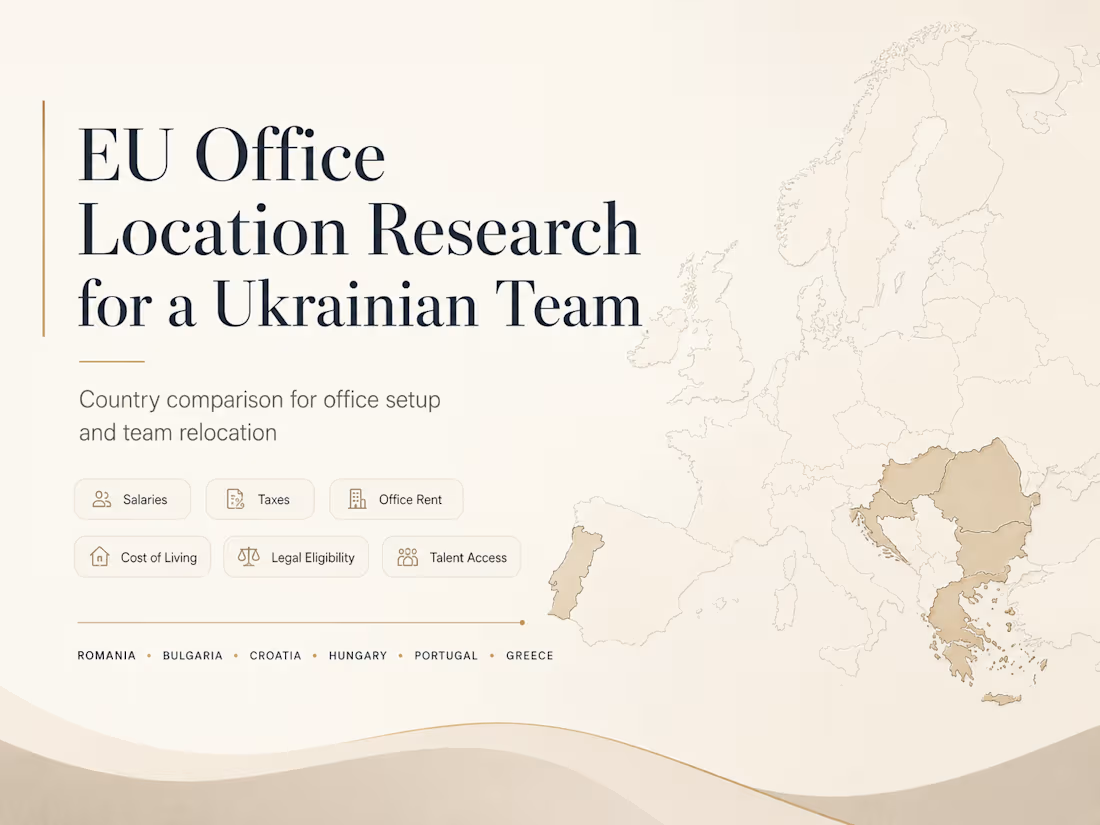
I researched multiple EU countries to help a client assess options for opening an office for their Ukrainian team. I gathered and verified data on salaries, taxes, cost of living, office rental ranges, major cities, universities, English proficiency, and legal conditions for Ukrainians (work eligibility and temporary protection). Results were delivered in a clear comparison spreadsheet with concise country summaries.
0
38
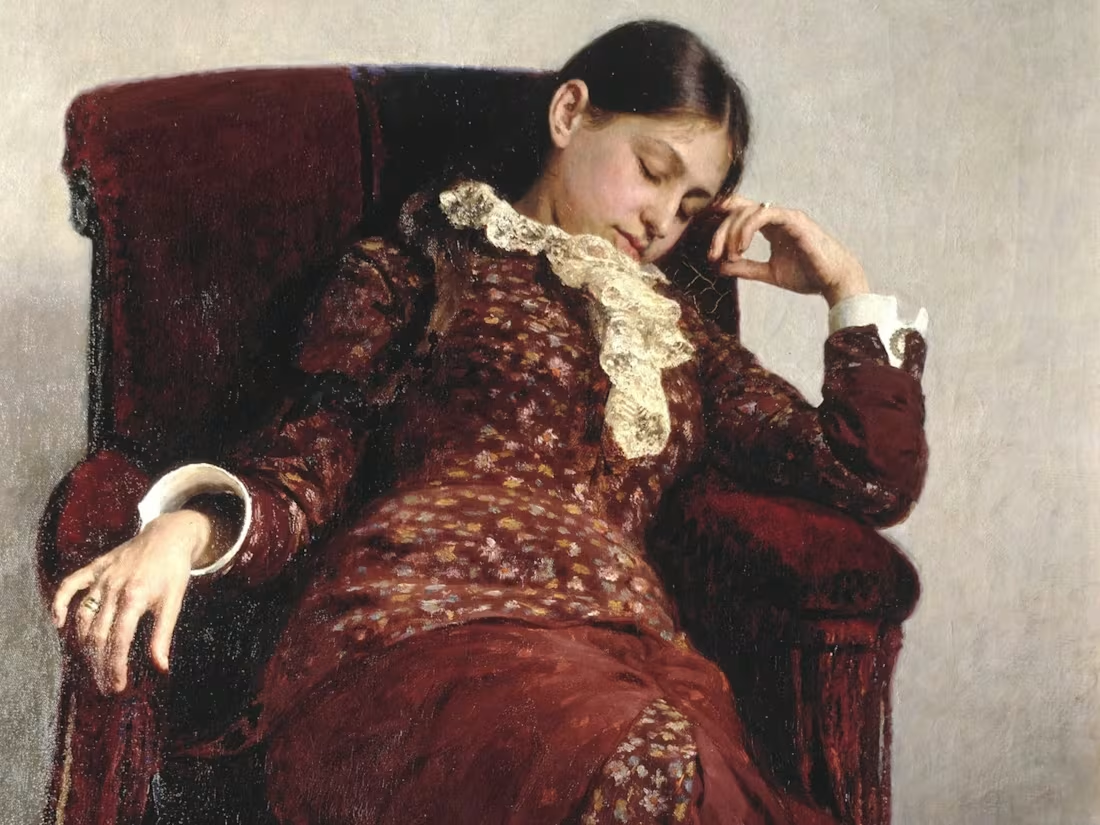
One of my favorite research projects was a deep dive into Ilya Repin’s signatures across his 500+ paintings. The client asked me to investigate how Repin signed his own name because there was an ongoing debate over whether his name should be transliterated into modern Russian as “Repin” or Ukrainian as “Ripyn.” The debate centered on the letter yat (ѣ), a historical Cyrillic letter used in Church Slavonic and older East Slavic orthographies, including both Russian and Ukrainian. Because yat corresponds to different sounds and spellings in modern Russian and Ukrainian, Repin’s original signature could be read differently depending on the transliteration system.
The project required more than cataloging images. I reviewed his paintings, examined signature patterns, read research papers and history book excerpts, and reached out to professors who had studied Repin. I also looked closely at the historical and political context of his life: he was born in present-day Ukraine and used Ukrainian motifs in his work, but was educated, professionally formed, and socially positioned within the Russian Empire.
A key finding was that some of his works included signatures in non-Cyrillic script, such as French, where he wrote his name as “Repin.” That evidence helped clarify how he presented himself in an international context. My conclusion was that Repin should be understood as a product of his time and environment: an artist with deep ties to Ukraine, but one who operated within a Russian imperial cultural system where advancement required Russian language, identity, and presentation.
0
69