
Obidare Elijah
Your complete ebook partner, from manuscript to publishing!!
- 1
- Followers

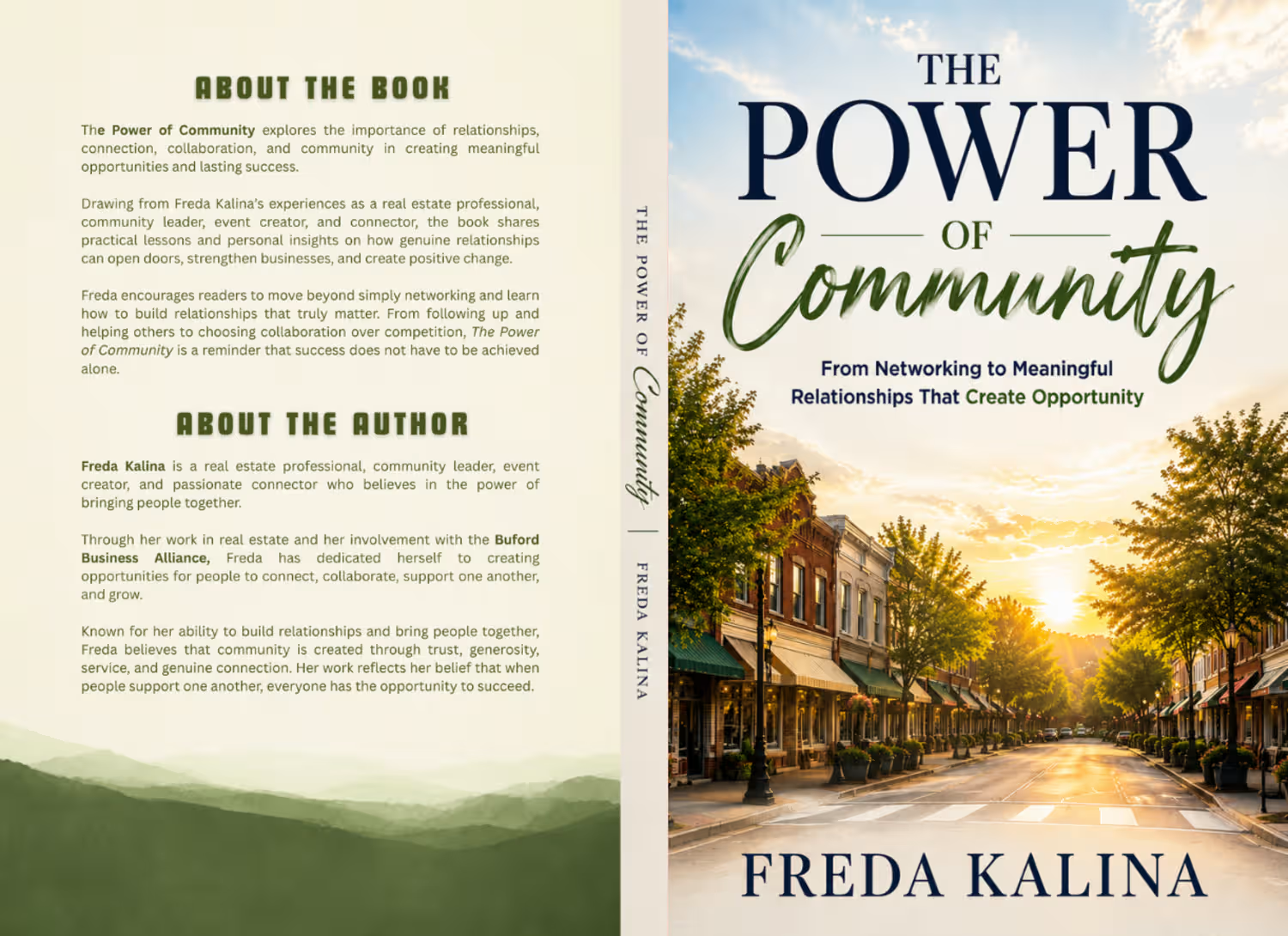
SHORT PROMOTIONAL VIDEO
Turn your manuscript into a visual experience that captures readers' attention and boosts book sales. I specialize in crafting professional, cinematic promotional videos and book trailers tailored specifically for eBooks and audiobooks across platforms like Amazon Kindle, Apple Books, and social media. From engaging 3D book mockups and high-quality motion graphics to custom typography, licensed background music, and voiceover integration, every video is custom-built to match your book's genre and target audience. Whether you need a short, punchy 15-second video ad for TikTok and Instagram Reels or a full-length cinematic trailer for your launch campaign, I ensure your video meets all platform specs and stands out in a crowded market.
0
27
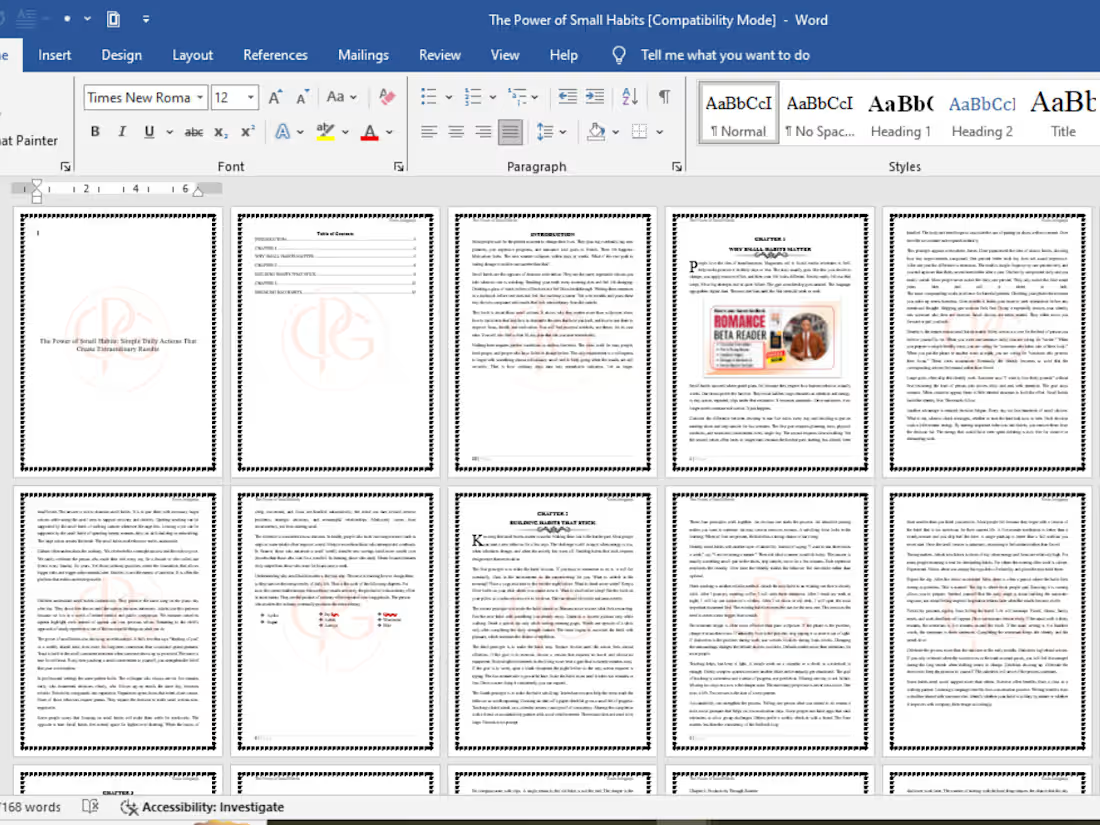
BOOK FORMATTING
Transform your raw manuscript into a beautifully formatted, publication-ready book tailored for both digital devices and physical print across platforms like Amazon KDP, IngramSpark, and Barnes & Noble. My professional book formatting service covers everything from Kindle/ePub creation, complete with clickable tables of contents, active hyperlinks, and responsive typography to print paperback layouts featuring custom headers, footers, precise gutter margins, drop caps, and decorative scene breaks. Every project includes full quality assurance to guarantee clean, error-free files that pass all digital validation and print-on-demand inspections effortlessly. If you need professional formatting for your manuscript or have specific requirements in mind such as custom fonts, non-standard trim sizes, complex tables, illustrations, or unique layout styles. Send me a message today so we can discuss your project and bring your publishing vision to life!
0
31
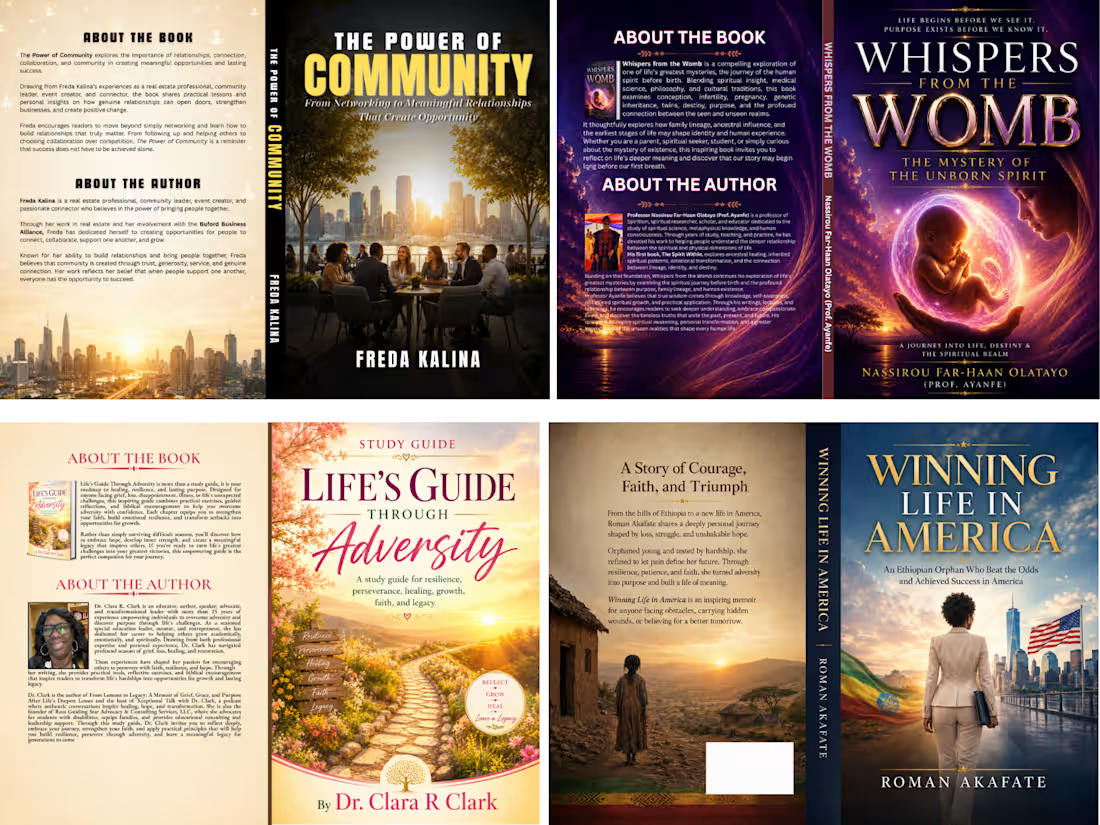
Paperback Book Cover Design
Overview
This project involved designing complete paperback book covers that bring each author’s story, message, and target audience together in one professional visual package. The work covered the front cover, spine, and back cover, with attention to typography, imagery, color balance, layout, and readability. Each book had a different subject and mood, so the goal was to create a cover that felt unique to the story rather than using the same design approach for every book.
The Aim of Writing This Book
Every book has a message that needs to be communicated before a reader even opens the first page. The aim was to make each cover visually represent the heart of the book and create enough curiosity for the reader to want to learn more.
For example, books focused on community, personal growth, adversity, spirituality, and life journeys required different visual directions. The cover needed to immediately communicate the appropriate feeling while keeping the title and author name clear and memorable.
The Challenges I Faced
One of the main challenges was balancing strong visuals with readable text. A paperback cover can easily become overcrowded when the title, subtitle, author name, imagery, and back-cover information all need space.
Another challenge was maintaining a professional appearance across the entire paperback wrap. The front, spine, and back had to feel like one complete design while still giving each section enough breathing room. I also had to work with different themes and genres, meaning the typography, imagery, and color choices had to change according to the individual book.
How I Offered the Solution & Outcome
I approached each cover by first considering the book's message, audience, genre, and emotional direction. I then selected imagery that supported the story, created a clear hierarchy between the title and supporting text, and carefully arranged the spine and back cover to complement the front.
The final outcome was a collection of complete, professional-looking paperback covers designed to give each book its own identity. The covers are structured for both visual appeal and practical use, helping the books look polished and market-ready while making it easier for potential readers to understand what each book represents at first glance.
1
96
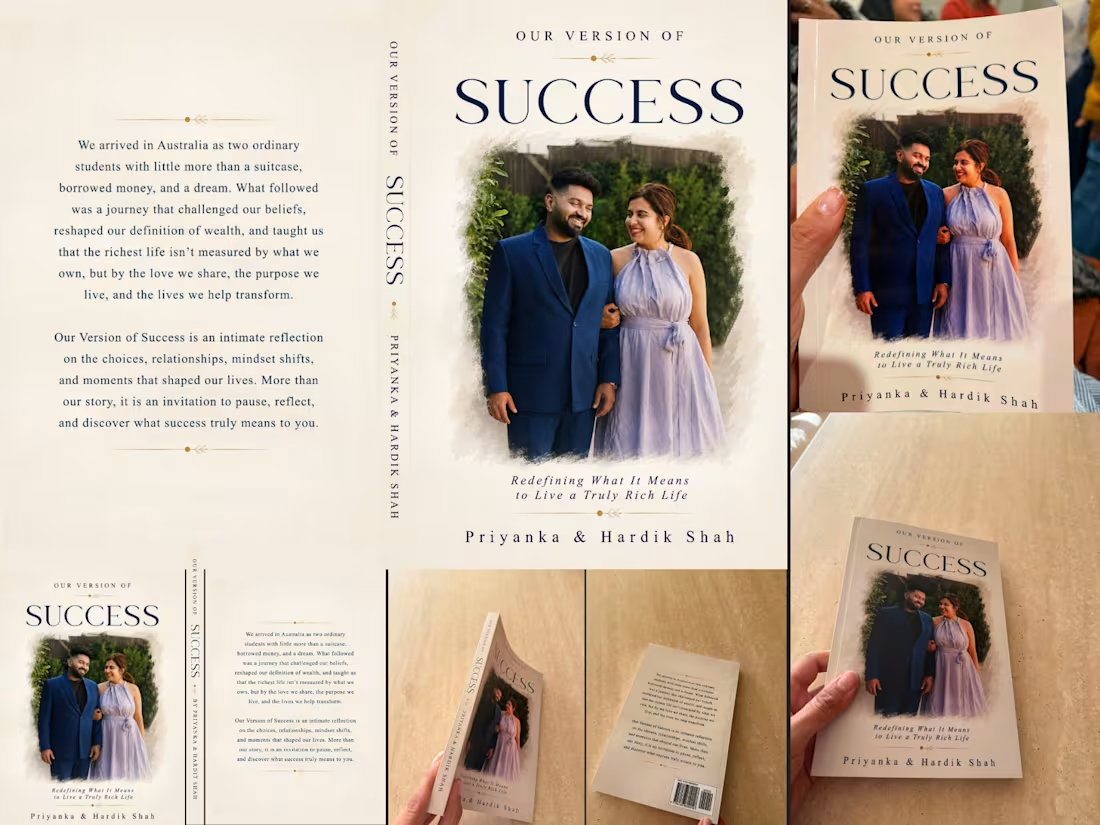
FROM ROUGH DRAFT TO A STANDARD PUBLISHED BOOK
OVERVIEW
This project began with an author who had a meaningful personal story to tell. The book follows the journey of moving from India to Australia, starting over in a new country, supporting family, building a future, and gradually developing a different understanding of what success really means. The story was not written simply to talk about financial achievement. It was also intended to show the realities behind building a new life, the sacrifices involved, the uncertainty, the lessons learned, and the importance of purpose, relationships, freedom, and personal fulfilment.
The project started from the author's ideas, experiences, memories, and conversations. I conducted interviews with the author, listened carefully to the experiences behind the story, asked questions where more clarity was needed, and began turning those conversations into a structured manuscript through ghostwriting.
The initial goal was to transform the author's spoken experiences and ideas into a complete book of approximately 25,000 to 30,000 words and more than 200 pages. This required much more than simply putting words on paper. I had to understand the author's voice, the meaning behind each experience, the lessons they wanted readers to take away, and how individual experiences could be connected into one compelling story.
The manuscript eventually developed into a structured book covering the authors' journey as students in Australia, their early struggles, financial decisions, property journey, transition into self-employment, family life, community, health, wealth, purpose, and their evolving definition of success. The book itself makes the point that success is not one fixed destination but something that can evolve as a person's life and values change.
However, getting from the first draft to the final book was a long process. The project went through several rounds of writing, editing, beta reading, proofreading, formatting, cover design, and publishing before the final version was ready.
THE AIM OF WRITING THIS BOOK
The main aim of the book was to preserve and communicate the author's real-life journey in a way that other people could understand, relate to, and learn from.
The author wanted the story to encourage immigrants and anyone starting again in a new country. Moving to another country can look exciting from the outside, but the reality can involve financial pressure, loneliness, uncertainty, long working hours, adapting to a new environment, and making difficult decisions without the support system that existed back home.
The book therefore needed to show both sides of the journey. It needed to show where the authors eventually reached, but also the difficult stages that came before that point.
For example, the manuscript describes arriving in Australia with limited resources, living in a small apartment shared by five adults, managing study and work, travelling for hours using public transportation, and learning how to make every dollar count. These experiences eventually became part of the foundation for the lessons presented throughout the book.
Another important aim was to show that success is not necessarily about becoming rich. The authors wanted readers to question their own definition of success and consider things such as family, freedom, health, relationships, purpose, contribution, and meaningful living alongside financial security.
This is reflected in the author's note, which explains that the book is not intended to be a formula for becoming wealthy, but an invitation for readers to ask themselves, "What is my version of success?"
My responsibility as the ghostwriter was therefore not simply to make the manuscript longer. It was to help turn the author's experiences into a readable, organised, emotional, and meaningful story while preserving the message behind the experiences.
THE CHALLENGES I FACED
One of the biggest challenges was making sure the manuscript truly represented the author's story.
During the initial ghostwriting process, I had to take the information provided through interviews and conversations and turn it into a coherent narrative. As the manuscript developed, the author remembered additional experiences, details, ideas, and moments that had not appeared in the earlier drafts.
This meant the work did not follow a simple "write once and finish" process.
The ghostwriting stage itself took more than six months because the story continued to develop as we worked on it. After the initial manuscript was produced, the editing process continued for more than three months as we reviewed sections, added missing information, improved the storytelling, and made sure the author's intended message was properly represented.
Another major challenge came during the beta-reading stage.
At the point when a writer has spent months working on a manuscript, it can feel as though the book is already complete. However, professional beta readers can see things that the writer and editor may become too familiar with to notice.
I worked with members of my team who have experience in beta reading and proofreading. They reviewed the manuscript and provided feedback from a reader's perspective. Their reports highlighted areas that could be improved, clarified, strengthened, or developed further.
This created another cycle of work.
The manuscript went back into editing based on the beta-reader feedback. The reports were also shared with the author so they could review the observations and participate in the decision-making process.
One of the difficult parts of the project was accepting that even a manuscript that feels finished may still need more work. Instead of treating criticism as a problem, I treated every piece of feedback as another opportunity to improve the book.
After making the recommended changes, the manuscript went through another round of beta reading. Further feedback was received, more adjustments were made, and the manuscript was reviewed again.
To increase confidence in the final manuscript, another professional beta reader was brought in to provide an independent perspective. Her feedback confirmed that the story was strong and that the manuscript had reached a much better stage.
Proofreading followed the editing and beta-reading stages. This was also not treated as a single quick check. The manuscript was reviewed repeatedly until the final corrections were addressed.
The entire process took more than a year because of the number of revisions, the time required for beta readers and proofreading, and the availability of the author to review updates before we could move to the next stage.
This project taught me an important lesson: finishing a book is not always about writing the last sentence. Sometimes the real work begins after the first complete manuscript has been written.
HOW I OFFERED THE SOLUTION AND THE OUTCOME OF THE PROJECT
The solution was to approach the project as a complete book-development process rather than treating ghostwriting as the only service required.
I started by interviewing the author and gathering the experiences, ideas, memories, and lessons that formed the foundation of the story. From there, I developed the manuscript through ghostwriting and organised the material into a structured book.
Once the first major manuscript was completed, I moved into the editing stage. This involved reviewing the writing, improving the flow, developing areas that needed more detail, removing weaknesses, and making sure the story remained connected from beginning to end.
After editing, I brought in beta readers to provide an independent reader's perspective. Their feedback helped identify areas that I could no longer easily see because I had become deeply familiar with the manuscript.
I then worked through the beta-reader reports and returned to the manuscript for another round of editing. The author was also involved in reviewing the feedback so that the changes remained consistent with their original story and intention.
After further beta reading and revisions, the manuscript was reviewed again by another professional beta reader for an additional independent perspective. Once the content had been strengthened, the manuscript moved into proofreading.
Only after the writing, editing, beta reading, and proofreading stages were sufficiently completed did I move to the production stage.
The manuscript was then formatted for both Kindle and paperback, with attention to the layout and requirements needed for Amazon KDP. Because I have experience formatting books for authors, including more than 50 books, this stage was handled efficiently compared with the earlier writing and editing stages.
The book cover was then designed for both Kindle and paperback editions. The cover design was created to match the book's theme and provide the finished project with a professional presentation.
The final stage was publishing. The necessary book information was entered, the files were prepared and submitted through Amazon KDP, and the book went through the publishing process. After the required processing period, the book became available for readers.
An author copy was also requested and delivered to the author's doorstep. This provided a physical copy of the finished book and served as tangible evidence of the journey from the original idea to a completed published product.
The final outcome was therefore more than a manuscript.
It was a complete book that moved through the full process of development: interview → ghostwriting → editing → beta reading → revisions → additional beta reading → proofreading → Kindle formatting → paperback formatting → cover design → Amazon KDP publishing → author copy.
The finished manuscript became a structured story about the authors' journey from arriving in Australia with uncertainty to building a life around family, work, wealth, purpose, community, health, and freedom. The central message remained that success does not have one universal definition and that every person has the opportunity to discover their own version of it.
This project took patience because the goal was never simply to finish quickly. The goal was to take a rough collection of experiences and ideas and patiently develop them into a book that the author could be proud to put their name on.
That is what made this project special to me. I was not only writing a book. I was helping transform someone's lived experiences into a finished story that could be shared with family, immigrants, entrepreneurs, and readers who are also trying to understand what success means in their own lives.
1
107