Anyone else revisiting old side-projects over the holidays?
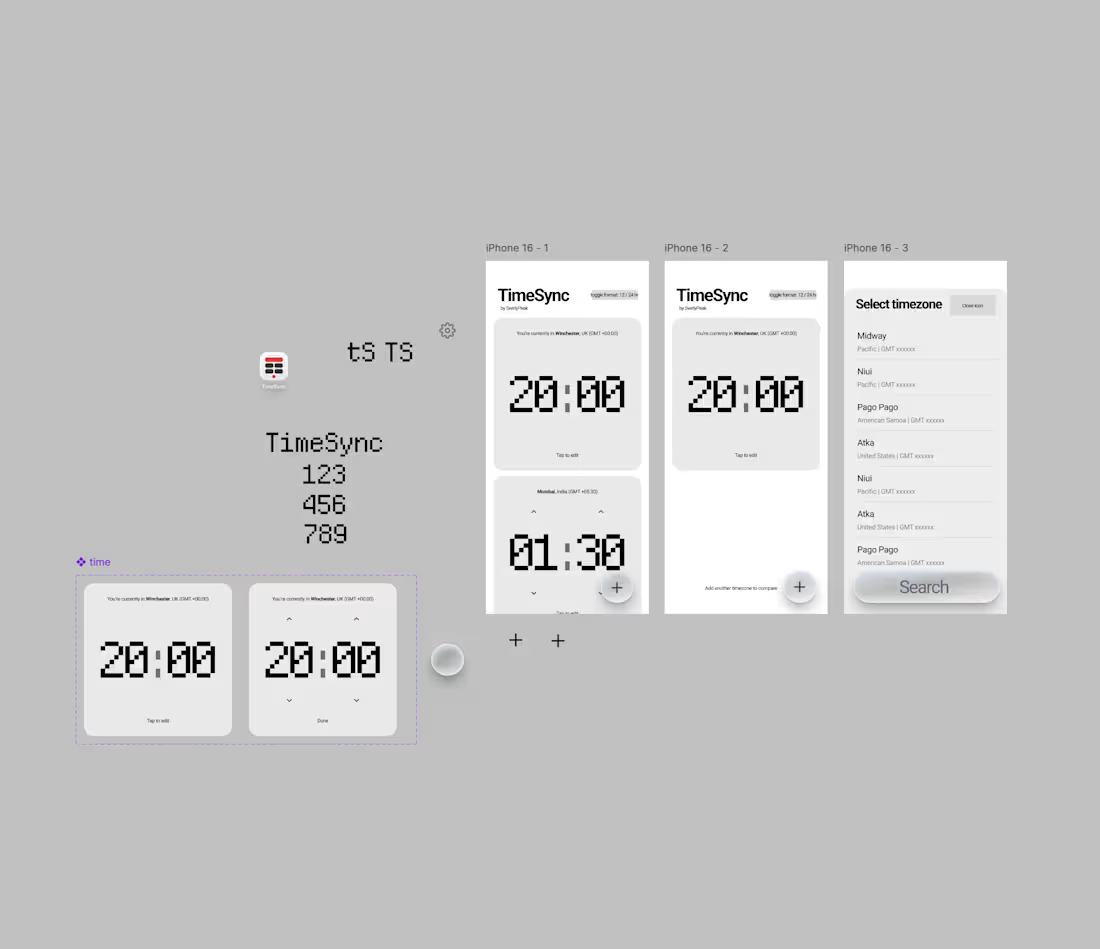
I just opened up my TimeSync app on Claude Code for some maintenance and couldn't resist adding and improving some things in there
Try it out > time-sync-five.vercel.app (http://time-sync-five.vercel.app)
0
10
Just wrapped a website for a multi-disciplinary design studio based in Bangalore
After months of async workshops, rethinking the why and goals for the redesign as well as 1000s of conversations about fonts and colours, we’ve finally launched.
Their WhatsApp message made my day.
“Hi Nim!
Good news first! We had an architects recruitment portal post a vacancy at TOO yesterday… And, thanks to our website, we have a flood of applications. Almost 40 over 2 days… thanks a tonne, we have never received so many applications. The job was well done, and the purpose was served.
So thanks a lot for that.”
Their primary goal was to attract talent for the work they have lined up in 2026. And seems like they’re on the right track.
theopenoffice.in
(http://theopenoffice.in)Built with Framer (https://www.linkedin.com/company/framer/)
11
106
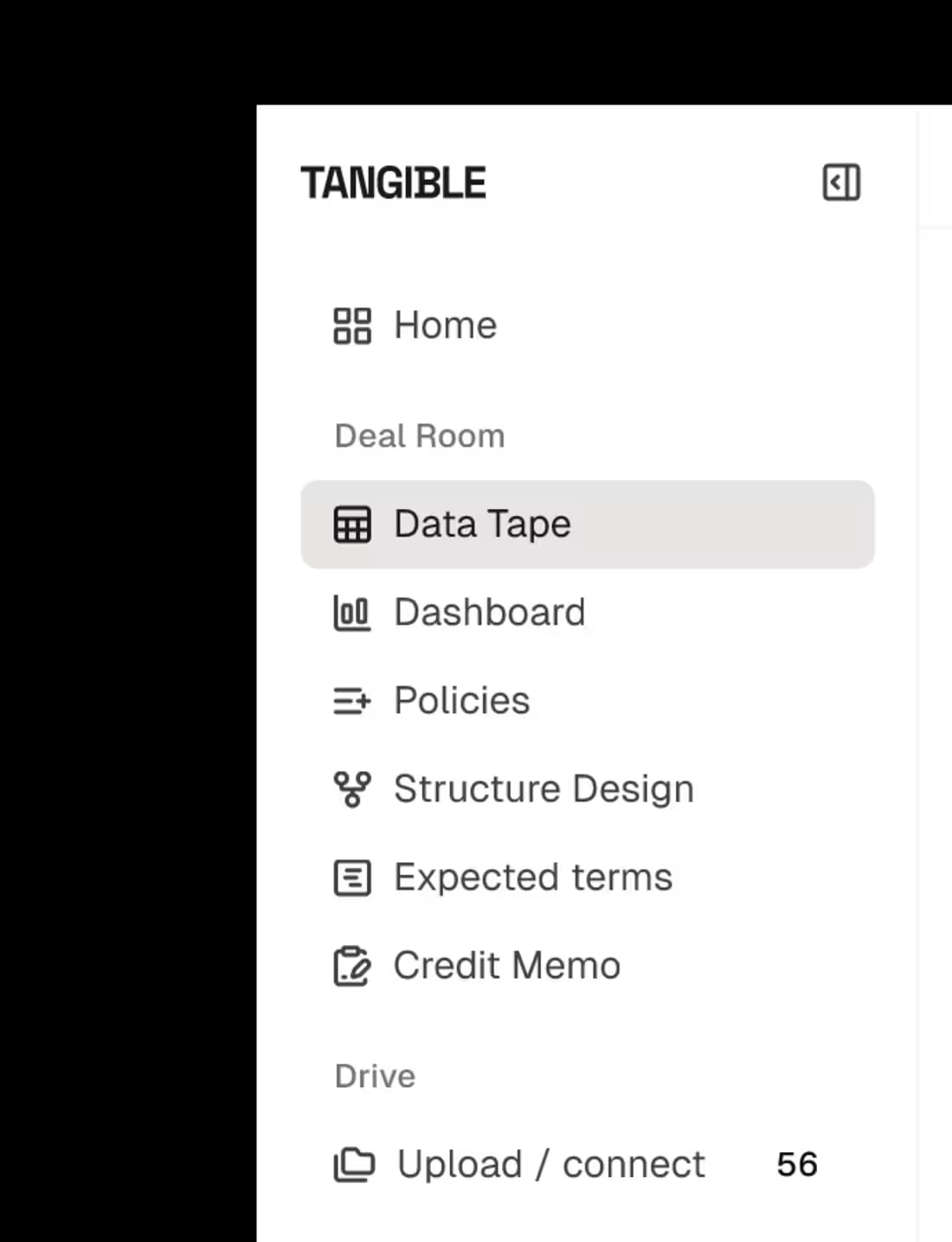
Navigation is finally done. After 5 iterations of figuring out what the right hierarchy should be.
1
89
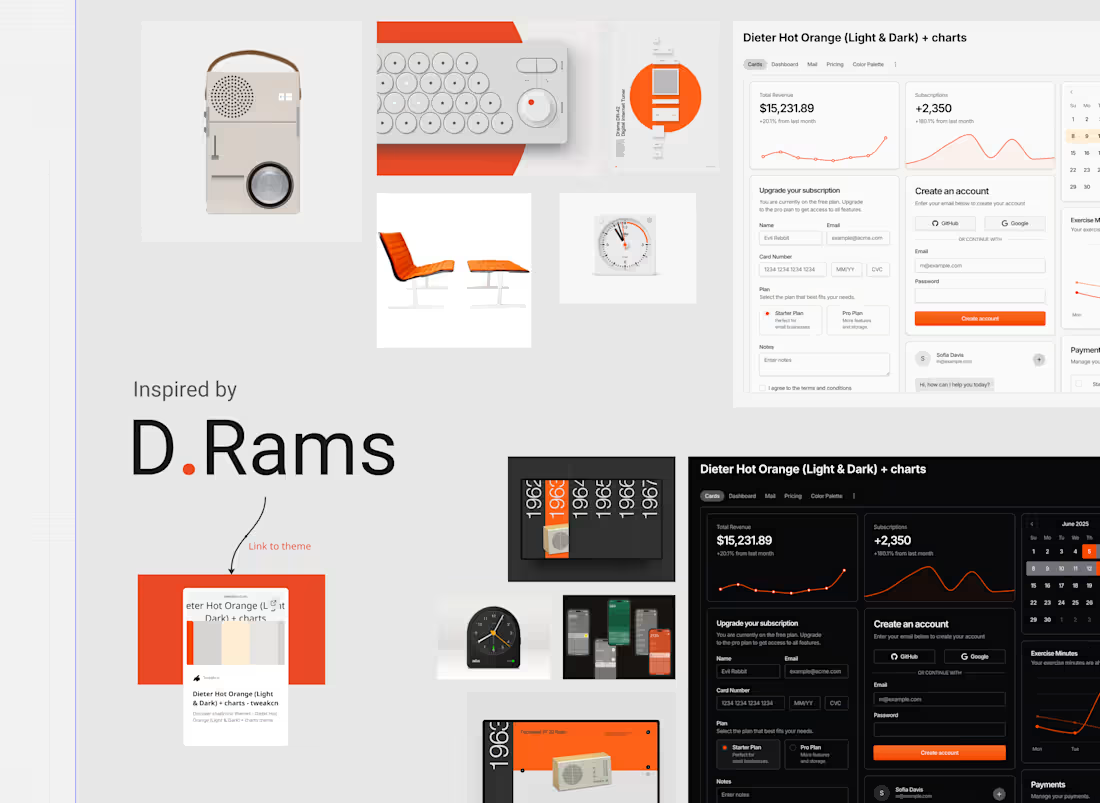
Building a UI visual direction for a client. First steps... wdyt?
18
207
UX of Extracting accurate data from Tables
Led the user experience for a new table extraction workflow, introducing:
- Multiple extraction modes–
- - Table classification
- - Mixed classification
- - Table point extraction
- - Mixed point extraction
- Support for full-table and cell-specific extraction
- Confidence scoring to indicate extraction reliability
Designed interfaces to:
- Configure extraction type
- Preview confidence levels
- Evaluate outputs with precision/recall metrics
Users reported that the new workflow felt:
- “Clearer and more trustworthy”
- “Much easier to decide whether to accept or edit extractions”
Feedback highlighted how confidence scoring helped reduce anxiety around ML reliability.
19
266
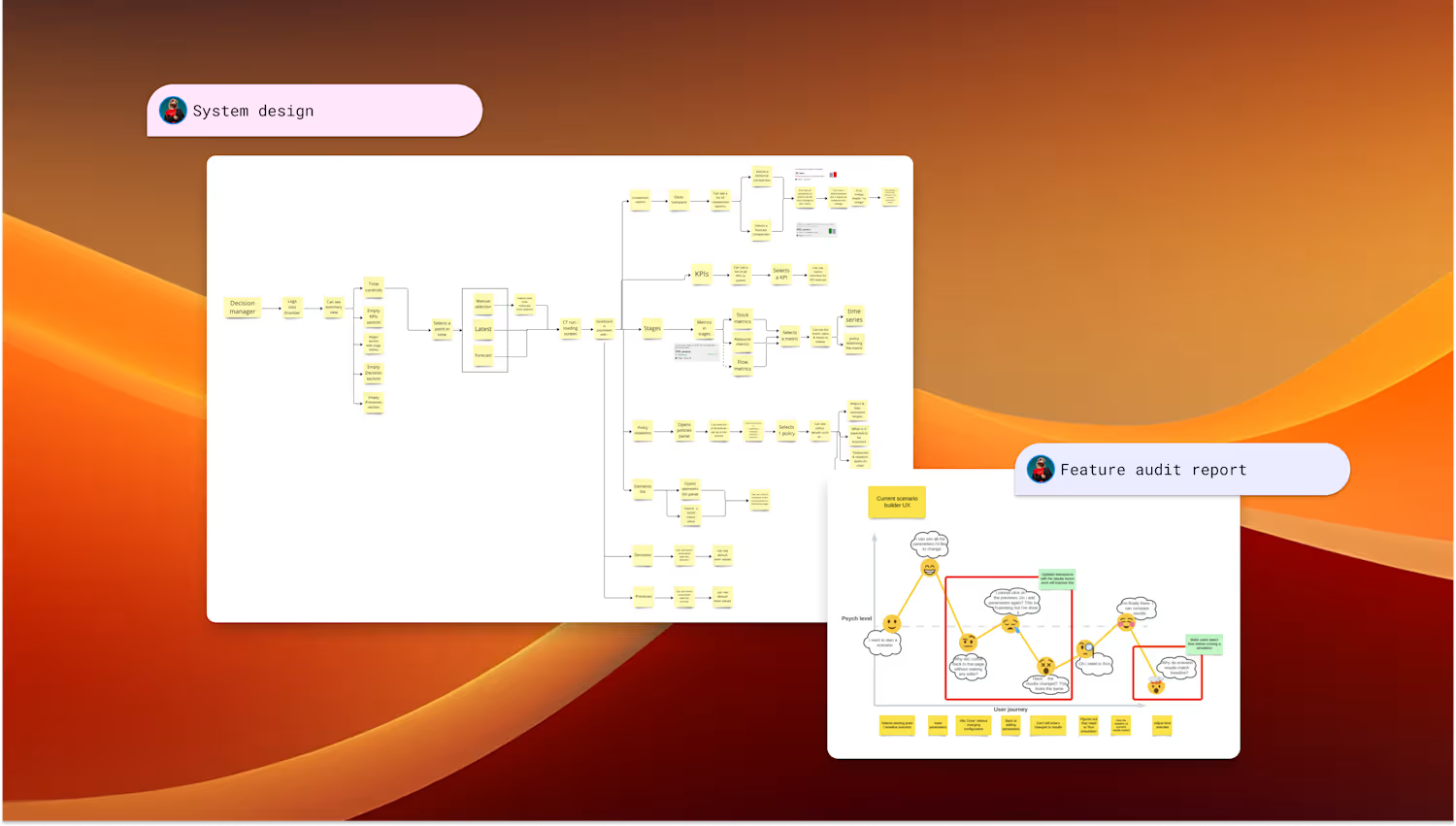
Scenario planning to reduce NHS wait times
The NHS faced severe inefficiencies in emergency departments due to:
- Poor visibility into bed availability
- Ineffective discharge processes
- Reliance on manual systems (whiteboards, spreadsheets updated every 6–8 hours)
Led the end-to-end design of the Decision Navigator, focusing on:
- Synthesizing discovery research and stakeholder needs
- Creating journey maps to visualise pain points in patient flow
- Designing an intuitive information architecture for real-time decision-making
- Running interviews and prototype testing with NHS stakeholders (GMs, clinicians)
Built for clarity, speed and alignment with existing staff workflows.
24
279
Search for Big Data using LLMs
Improved user efficiency and retention, especially for enterprise users managing large-scale portfolios. Supported product stickiness by reducing friction in daily workflows
How?
Led the design of a global search experience that allowed users to:
- Search extracted answers across all projects
- Filter results by:
- - Document metadata (e.g. customer name, document type)
- - Confidence scores
- - Project
- View answers in context, linking directly to the source document
Collaborated with engineering and product teams to align on scope and MVP priorities.
12
185
Organisations often faced inefficient resource planning.
I led the design of a decision manager interface to:
- Enable scenario planning for project pipelines
- Allow users to simulate changes and see real-time impact on organisational KPIs
- Leverage the digital twin framework to mirror real-world project dynamics
- Design with scalability in mind, ensuring modular UI components