
NFC to 3D: How simple hardware integrations scale into complex spatial systems. 💡
What started as NFC-triggered 3D renders evolved into a full WebAR ecosystem for real estate. Here is the technical breakdown:
Spatial Anchoring: Implemented marker-based tracking to anchor high-poly architectural models directly to physical cards.
Volumetric Exploration: Bridged the gap between flat interfaces and spatial computing, allowing users to "walk through" buildings projected onto a tabletop.
Frictionless Bridge: By leveraging WebAR and NFC, we bypassed app downloads entirely—executing the physical-to-digital transition with a single tap.
Solving these early rendering and hardware constraints paved the way for my current focus: integrating AI architectures into immersive environments.
You can read more about this in my Linkedin!
0
14
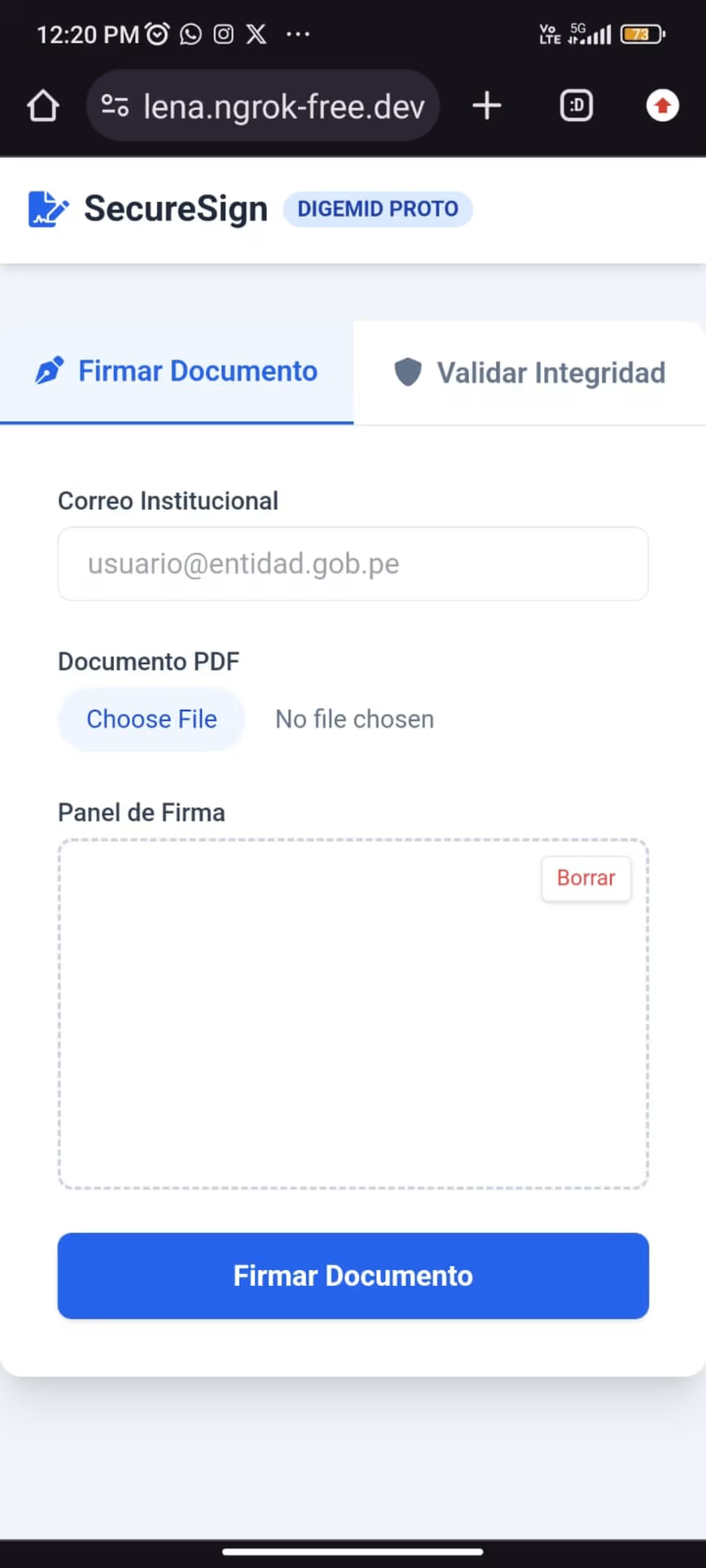
Most digital signature platforms rely on centralized databases. SecureSign embeds decentralized, immutable traceability directly into the PDF.
Steganographic Vault: A hidden JSON is injected into the document’s structure, remaining transparent to the user.
Sequential Hashing: Each signature is cryptographically chained, creating a tamper-proof, immutable timeline.
Data Sovereignty: 100% portable. The audit history belongs to the file, not a third-party platform.
Read more on LinkedIn: https://www.linkedin.com/posts/n%C3%A9stor-allende-heredia-ai_softwarearchitecture-python-steganography-activity-7437184265890729984-7VbR?utm_source=share&utm_medium=member_desktop&rcm=ACoAAC0dhwsBNOycJdI_-j67pYH7aHgRNeml-Co
0
17
Following my last update on MIMI, I’ve been collaborating with coffee shop owners on Personalized Customer Recognition. The goal: recognize returning customers to automate loyalty and recommendations. In the video, you can see the Real-time Face Detection layer.
The Engineering Challenge: To move from detection to identification with low latency, I am developing a proprietary hashing method for face embeddings. By shifting from heavy DL inference toward an efficient hashing architecture, I aim to:
Decrease computational overhead.
Improve search scalability for databases.
Optimize edge performance.
I’m refining the logic to balance collision resistance with speed. If you have experience with LSH or vector indexing.
You can read more in mi Linkedin: https://www.linkedin.com/feed/update/urn:li:activity:7432843587752554496/
0
23
VR Medical Assistant: $0 Budget to MVP in 8 Weeks 🚀
How do you integrate complex medical data into VR for free? Technical breakdown:
Low-Latency Voice: Gemini 1.5 Flash + Google STT/TTS. Python multithreading cut response latency by 60% via async processing.
3D Interaction: A Python-C# WebSocket bridge allows real-time VR object manipulation using dynamic command lists.
Precision RAG: Using ChromaDB & Hugging Face, I bypassed basic embeddings for metadata-rich blocks, ensuring accuracy and image retrieval.
Result: A functional 3D pilot built in just 2 months!
Read more on LinkedIn: https://www.linkedin.com/feed/update/urn:li:activity:7437907765915873280/
0
26