
Namra Parejiya
AI Automation and Agent expert, automating the repetitive
New to Contra
Namra is building their profile!
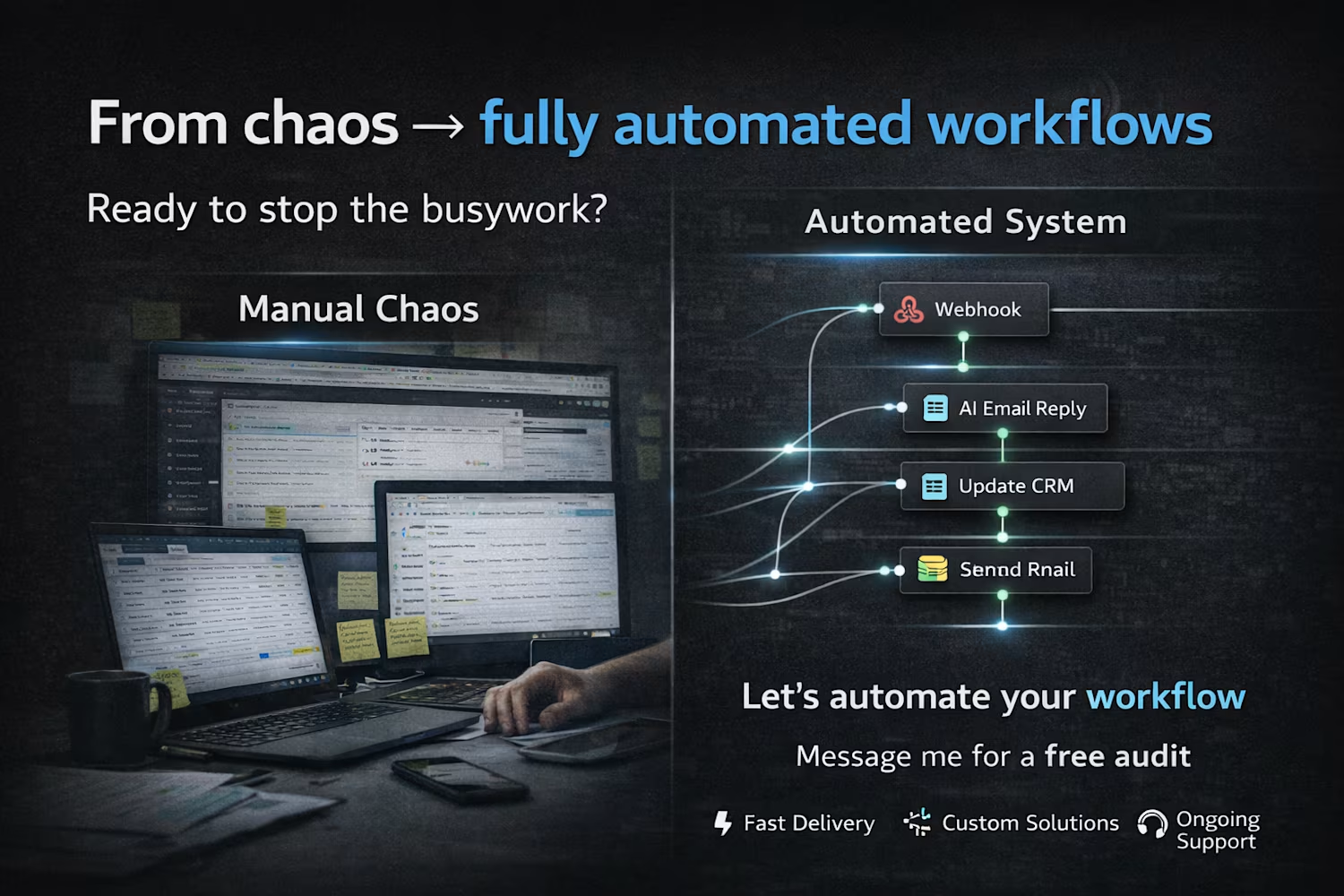
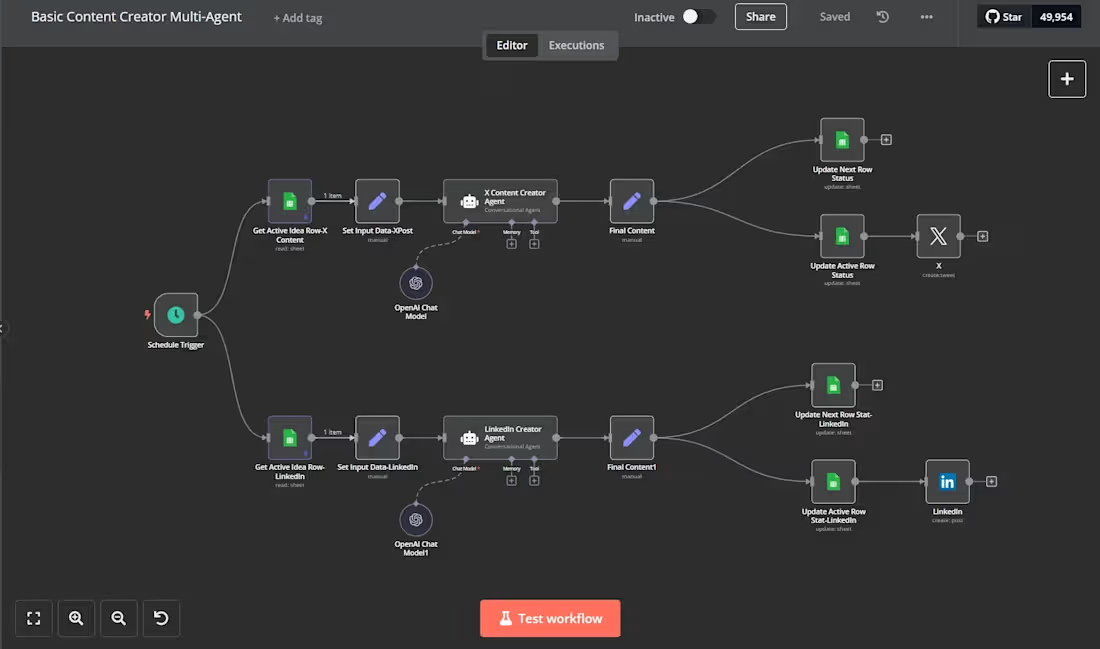
AI Multi-Agent Content Creation & Publishing System (n8n + OpenAI)
I built a fully automated multi-agent content engine that generates, manages, and publishes content across platforms like X (Twitter) and LinkedIn — without manual intervention.
This system is designed for creators, agencies, and businesses that want to scale content production while maintaining consistency and quality.
⚙️ How the System Works
Scheduled Automation Trigger:
The workflow runs automatically at defined intervals, ensuring consistent content output without relying on manual effort.
Content Source (Google Sheets Integration):
The system pulls structured content ideas directly from a sheet, allowing easy planning, tracking, and scalability.
Platform-Specific AI Agents:
Two dedicated AI agents handle content generation:
X (Twitter) Content Agent → Creates short, engaging, high-conversion posts
LinkedIn Content Agent → Generates professional, value-driven posts tailored for business audiences
Each agent is powered by OpenAI and optimized with platform-specific prompting.
Content Processing Layer:
Input data is refined and structured before generation, ensuring the AI produces relevant and high-quality output.
Automated Publishing:
Once content is generated:
Posts are automatically published to X and LinkedIn
No manual copy-pasting or scheduling required
Real-Time Status Tracking:
The system updates the Google Sheet:
Marks completed posts
Tracks active and next content
Maintains a clean workflow pipeline
💡 Why This System Stands Out
True Multi-Agent Architecture:
Each platform has its own specialized AI agent, resulting in better content quality compared to generic AI outputs.
End-to-End Automation:
From idea → generation → publishing → tracking — everything is handled automatically.
Consistency at Scale:
Enables daily content production without burnout or inconsistency.
Customizable & Scalable:
Easily extendable to other platforms (Instagram, blogs, newsletters, etc.)
🚀 Use Cases
Personal brand growth on X & LinkedIn
Content marketing for startups & agencies
Automated social media management
Lead generation through consistent posting
AI-powered content operations systems
2
55
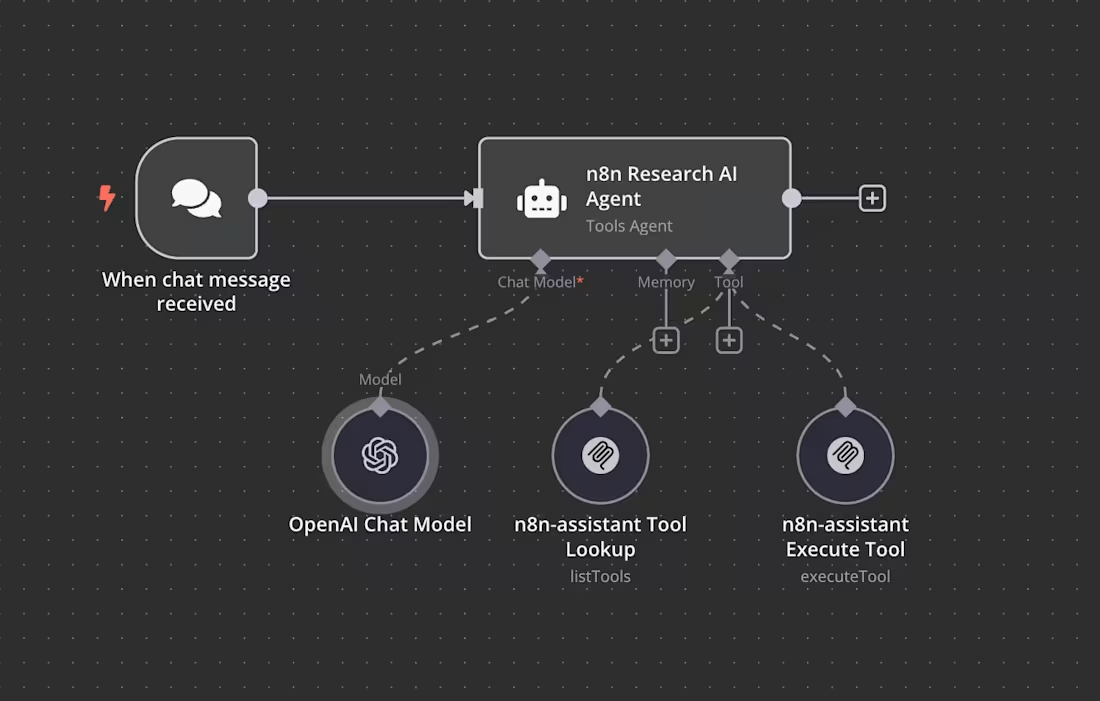
AI Research Automation Agent (n8n + OpenAI)
I designed and implemented a fully automated AI-powered research assistant using n8n, capable of intelligently understanding user queries, selecting the right tools, and executing tasks in real time.
This workflow is built to simulate how a human researcher thinks — but with the speed and scalability of AI.
🔧 How the Workflow Works
Trigger (Chat Input):
The system activates whenever a user sends a message. This acts as the starting point for all interactions.
AI Decision Layer (OpenAI Chat Model):
The core intelligence of the workflow. It interprets the user’s request, understands intent, and decides the next steps dynamically.
Tool Discovery (n8n Tool Lookup):
Instead of hardcoding actions, the agent checks available tools in real-time and determines which one is best suited for the task.
Execution Engine (n8n Execute Tool):
Once the right tool is identified, the agent executes it automatically — whether it’s fetching data, running workflows, or triggering external processes.
Memory Integration (Optional Expansion):
The structure supports memory, enabling future improvements like context retention and personalized responses.
💡 What Makes This Valuable
Dynamic Decision-Making:
This isn’t a static automation. The AI actively decides what to do, not just how to do it.
Scalable System Design:
New tools can be added anytime without redesigning the workflow — making it future-proof and highly extensible.
Time Efficiency:
Automates multi-step research and execution processes that would normally require manual effort.
Human-Like Reasoning:
The agent mimics how a human would approach a task: understand → analyze → choose → execute.
🚀 Use Cases
Automated research assistants
AI-powered customer support systems
Internal business automation tools
Data retrieval & workflow orchestration
Smart agents for SaaS products
1
55
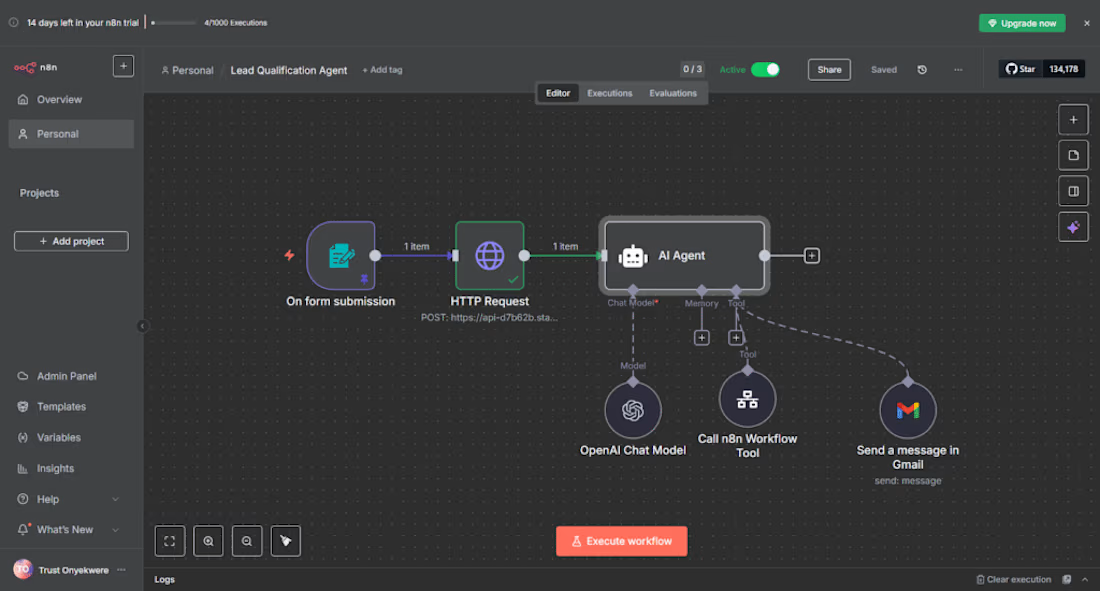
AI Lead Qualification & Auto-Response Agent
I built an AI-powered workflow that automatically captures, analyzes, and responds to incoming leads in real time—removing the need for manual follow-ups and saving hours of repetitive work.
How it works (Simple Explanation)
When a potential client submits a form, the system instantly triggers. The lead data is processed and passed to an AI agent that understands the message, evaluates the quality of the lead, and decides what action to take.
Based on this analysis, the AI can:
Send a personalized response via email
Trigger additional workflows for follow-ups or internal handling
Route high-quality leads for immediate attention
All of this happens automatically, within seconds.
What Value This Provides
Instant response time → No lost leads due to slow replies
Better lead quality filtering → Focus only on serious prospects
Time saved → Eliminates manual screening and replying
Scalability → Handle unlimited leads without increasing workload
Consistency → Every lead gets a structured, professional response
This turns a basic form into a smart sales assistant that works 24/7.
Outcome
This system replaces manual lead handling with an intelligent, automated pipeline that improves response speed, increases conversion potential, and reduces operational effort.
0
32
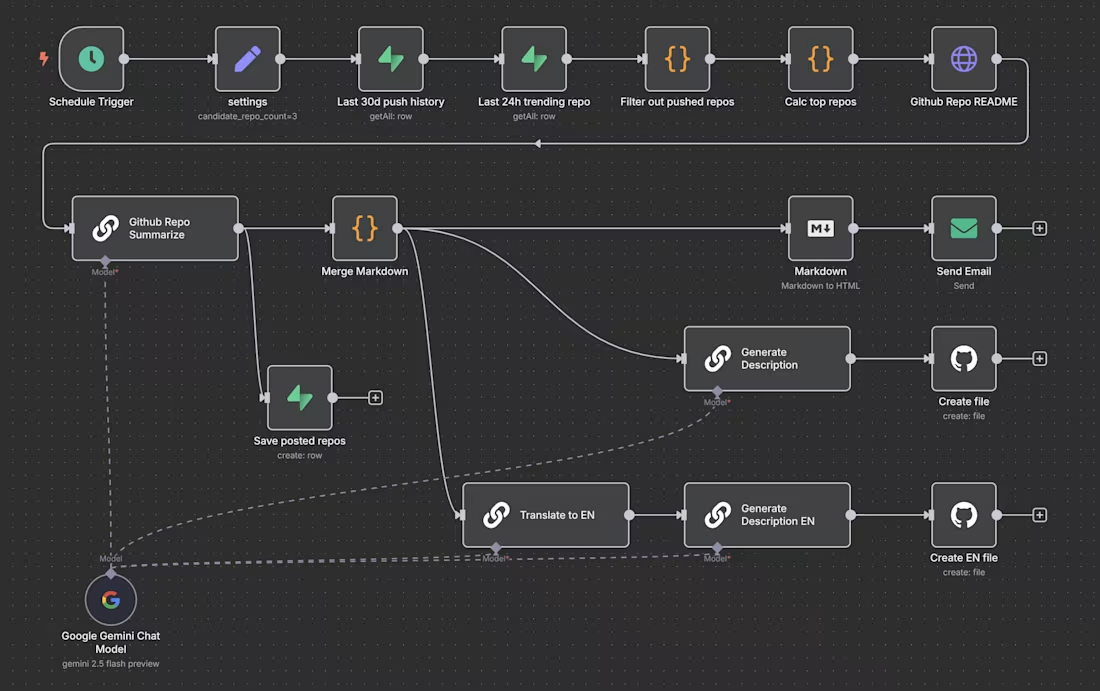
Automated GitHub Trending Intelligence & Content Workflow
This workflow is designed to automatically discover, analyze, and distribute high-quality GitHub repositories with minimal manual effort. It combines data filtering, AI summarization, and multi-format content generation into a seamless daily pipeline.
1. Automated Discovery & Filtering
The process begins with a scheduled trigger that runs at predefined intervals. It pulls:
Repository activity from the last 30 days
Trending repositories from the last 24 hours
These datasets are then filtered to remove duplicates and already-processed repositories, ensuring only fresh and relevant projects are considered.
2. Intelligent Ranking & Data Enrichment
The workflow evaluates and ranks repositories based on performance metrics (such as activity and popularity). It then fetches additional context, including README content, to gain a deeper understanding of each project.
3. AI-Powered Summarization
Using an AI model, each repository is summarized into clear, structured insights. This transforms complex technical content into concise, human-readable information suitable for broader audiences.
4. Content Structuring & Distribution
The summarized content is:
Merged into a clean markdown format
Converted into HTML for email delivery
Automatically sent to recipients as a curated digest
This creates a ready-to-consume newsletter-style output without manual formatting.
5. Multi-Language Content Generation
To expand reach, the workflow translates the content into English and generates an additional refined version. This ensures accessibility for a global audience while maintaining clarity and quality.
6. Automated Publishing
Finally, the system:
Generates descriptive content for each repository
Creates files (such as documentation or posts)
Stores processed repositories to prevent duplication in future runs
Outcome
This workflow transforms raw GitHub data into valuable, curated insights—automatically. It eliminates manual research, reduces content creation time, and enables consistent delivery of high-quality technical updates.
1
56