
Muhammad Unain
Full-Stack Next.js Developer | SaaS & AI Products
Ready for work
Muhammad is ready for their next project!


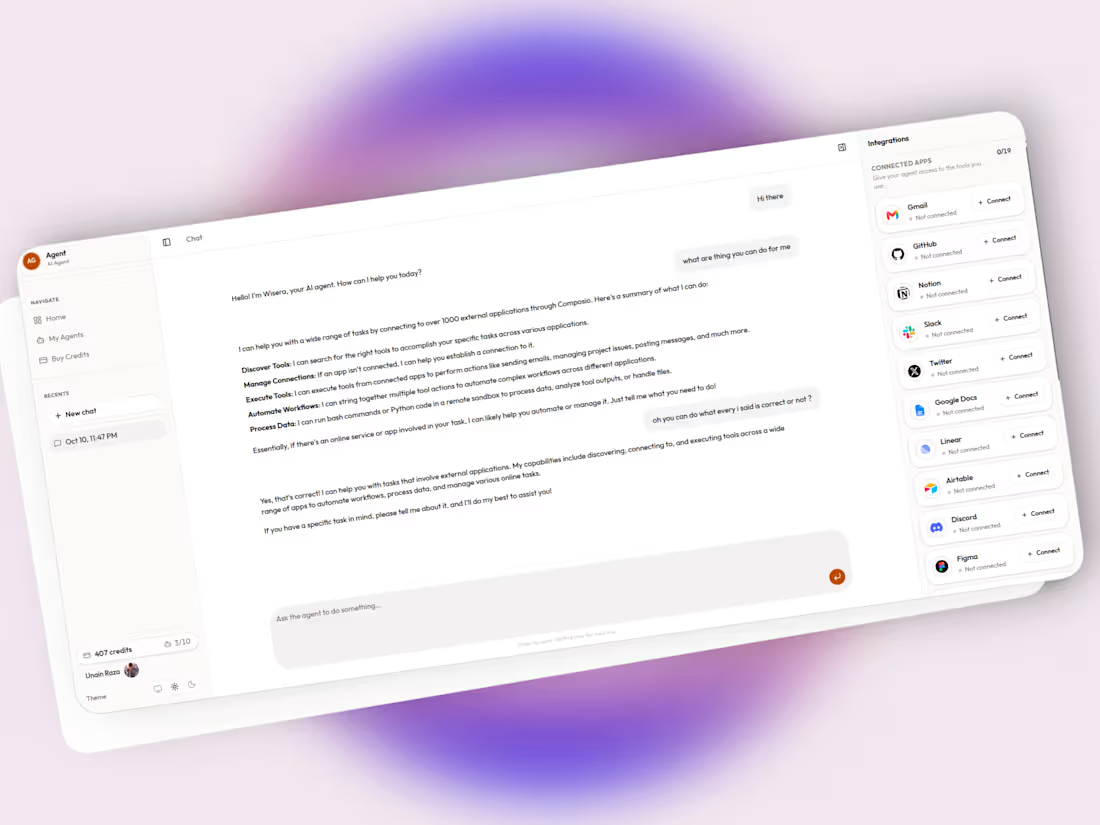
I was trying to improve latency in Amanises.
The database wasn't actually the only problem.
Amanises is built with Next.js, Hono, Cloudflare Workers, and AI, so a single user action can end up going through quite a few things:
→ API request
→ Database
→ AI processing
→ Response
→ Back to the client
I started tracing the request flow instead of looking at each part separately.
And I found something pretty simple: some requests were doing work they didn't actually need to do.
Some database calls could be avoided.
Some data could be reused instead of fetched again.
And some AI flows could be handled more efficiently instead of triggering another request every time.
So I started moving the logic around and reducing unnecessary calls.
The result: fewer database calls per request, less repeated fetching, and fewer extra AI requests. The app feels noticeably snappier.
The interesting part was that I didn't need some huge optimization. I just needed to stop doing unnecessary work.
That's probably my biggest takeaway from this:
Performance isn't always about making things faster.
Sometimes it's about asking: "Do I need to do this at all?"
Still building Amanises, but these changes made the request flow a lot cleaner and gave me a much better understanding of how the app behaves once Next.js, Hono, Workers, databases, and AI all start talking to each other.
If your app feels slow and you can't figure out why, DM me, happy to take a look.
What's the most unnecessary work you've found hiding in your own app?
More of my work: unainr.vercel.app (http://unainr.vercel.app)
2
19
Aureum
Most luxury brand sites look the same: a big hero, a few stock photos, done. Aureum is my take on a landing page that feels like stepping into a space instead of reading a page.
It’s a scroll-driven, cinematic experience built around light, texture, and restraint. A golden ring animates as you scroll, the copy is sparse and deliberate, and every section is paced so nothing feels rushed. The goal was a premium, quiet-luxury feel that holds attention without shouting.
I handled the concept, design direction, copy, and front-end build, from the story structure to the motion and performance. It’s a concept project, but the approach works for high-end brands, studios, and product launches that need to feel premium from the first second.
If you want a site that makes people stop scrolling and actually feel your brand, let’s talk.
3
52
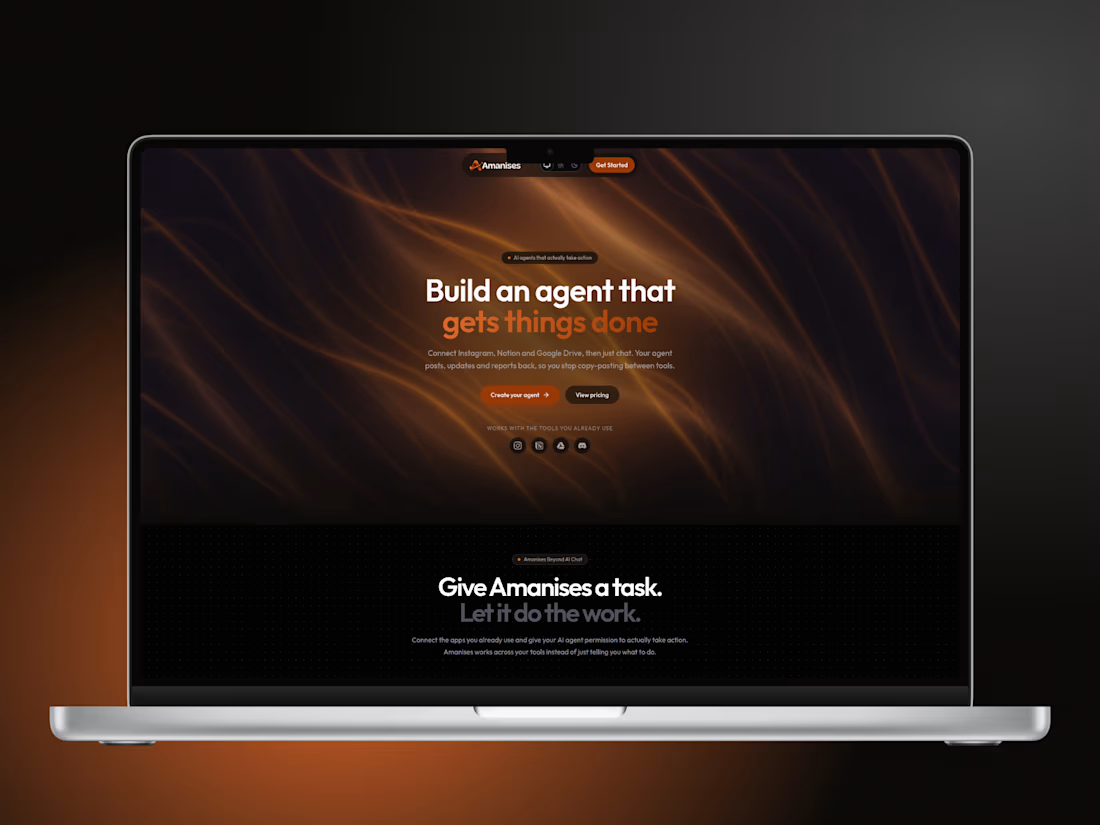
Development of Amanises AI Agent Platform
1
6
Oblivion A cinematic scroll experience where every pixel you scroll advances a single frame no autoplay, no timeline, just motion bound to your gesture.
Oblivion is a frontend motion study built to push what a scroll interaction can feel like. Instead of a traditional video or animation, the entire sequence is frame-locked to scroll position one frame per pixel, fully reversible, with 12ms scrub latency and 1:1 frame accuracy.
The project explores a neon-chrome cyberpunk aesthetic: a synthetic android rotates through light and shadow as the user scrolls, with detail passes on chrome plating, glowing conduits, and visor optics rendered for close-up clarity, not just thumbnail appeal.
What I built:
Frame-by-frame scroll-scrubbing engine synced to scroll position
Custom cinematic UI/UX with a magenta/violet color grade, dual-graded for neon and dark backgrounds
Horizontal scroll material studies section for detail shots
Fully responsive, performance-optimized frame sequencing no jank, no autoplay
Live: bolivion.munain605.workers.dev (http://bolivion.munain605.workers.dev)
2
2
263