
Muhammad Tayyab Attari
AI developer shipping multi-agent apps & ecommerce websites
- 2
- Followers


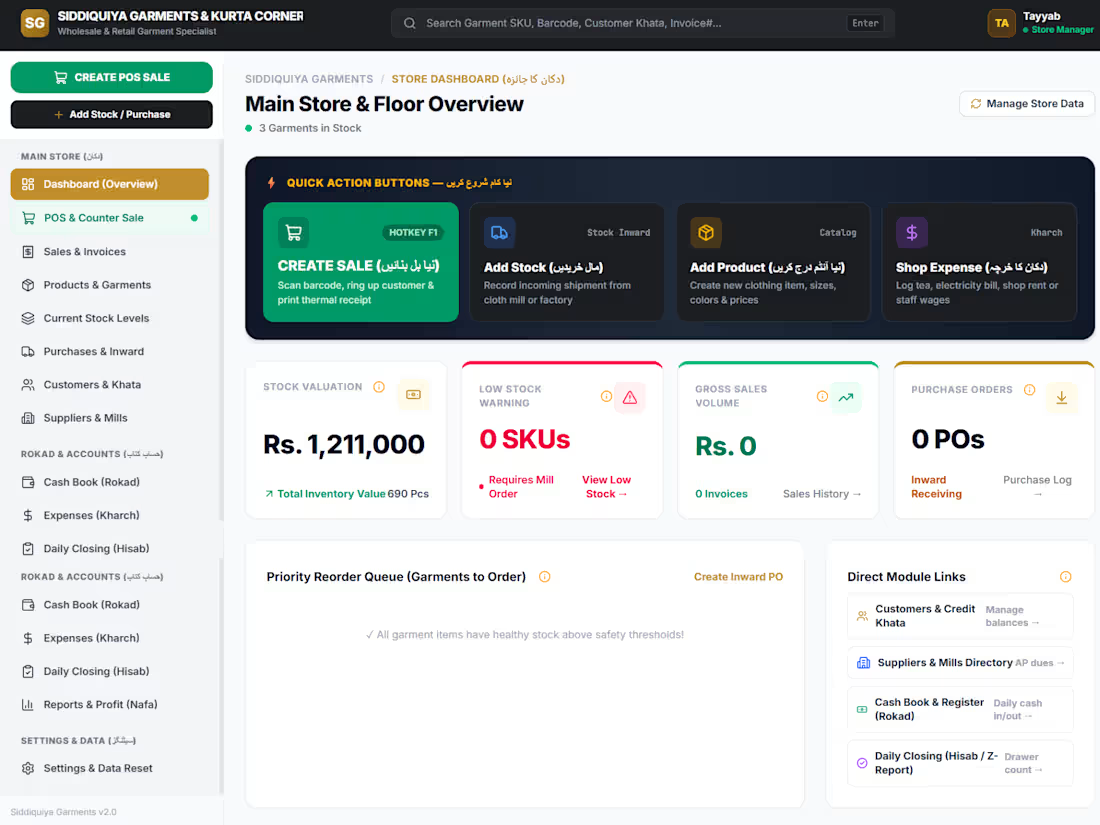
Small garment shops in Pakistan usually run on paper registers and memory. I built a complete inventory and point-of-sale system for a wholesale and retail garment shop that replaces that with one dashboard, in English and Urdu.
Sales: a POS screen where staff scan a barcode, sell to a customer and print a thermal receipt. F1 opens a new sale.
Stock in and out: incoming shipments from mills and factories update stock automatically, and each sale reduces it. Every item has a minimum level. When stock falls below it, the item shows up in a reorder queue, so the owner knows what to order before it runs out.
Products: each item has a barcode, supplier, category, fabric notes, image, cost price and retail price. The system calculates gross margin as you enter prices. Products can be bulk-imported or exported from a spreadsheet template.
The shop’s accounts: customer credit ledgers (khata), supplier dues, a daily cash book (rokad), shop expenses (kharch such as rent, wages and electricity), a daily closing report (hisab), and profit reports (nafa). Labels are in both Urdu and English, so staff use it in the language they already work in.
A bilingual (Urdu/English) inventory and POS system for a garment shop, with barcode sales, stock tracking, low-stock alerts, customer credit ledgers and daily accounts.
0
17
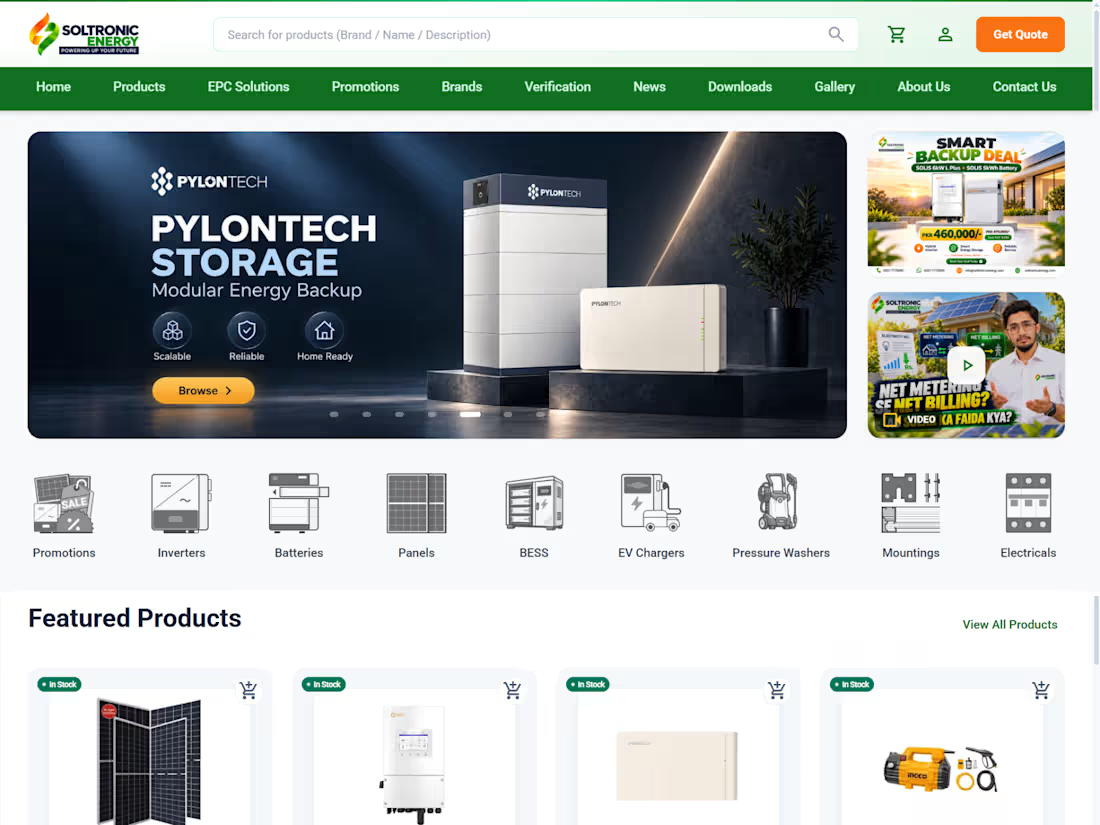
I designed and built the full website for Soltronic Energy Distribution, a solar company in Lahore. It’s an ecommerce store and a content management system in one, and the team runs it themselves without a developer.
For customers: a product catalog for solar panels, inverters, batteries, BESS, EV chargers and mounting hardware, with search, categories, cart, and quote requests. There are also pages for EPC services, promotions, brands, news, downloads and a project gallery. A verification page links each brand’s official serial-number and warranty portal, so buyers can check that their equipment is genuine.
Solar sizing estimator: visitors enter their monthly units or electricity bill and choose hybrid or on-grid. The tool recommends system size, panel count, battery storage and estimated yearly savings under Pakistan’s net billing rules. It then opens a WhatsApp message to the sales team with all the numbers filled in, so every lead arrives with context.
For the team: a full admin panel to add, edit and delete products, upload media, and manage homepage banners, promotions and ads, blog posts, news, events and site settings. Marketing changes go live without touching code.
Stack: Next.js, TypeScript, Tailwind CSS, Supabase (database and media storage).
0
40
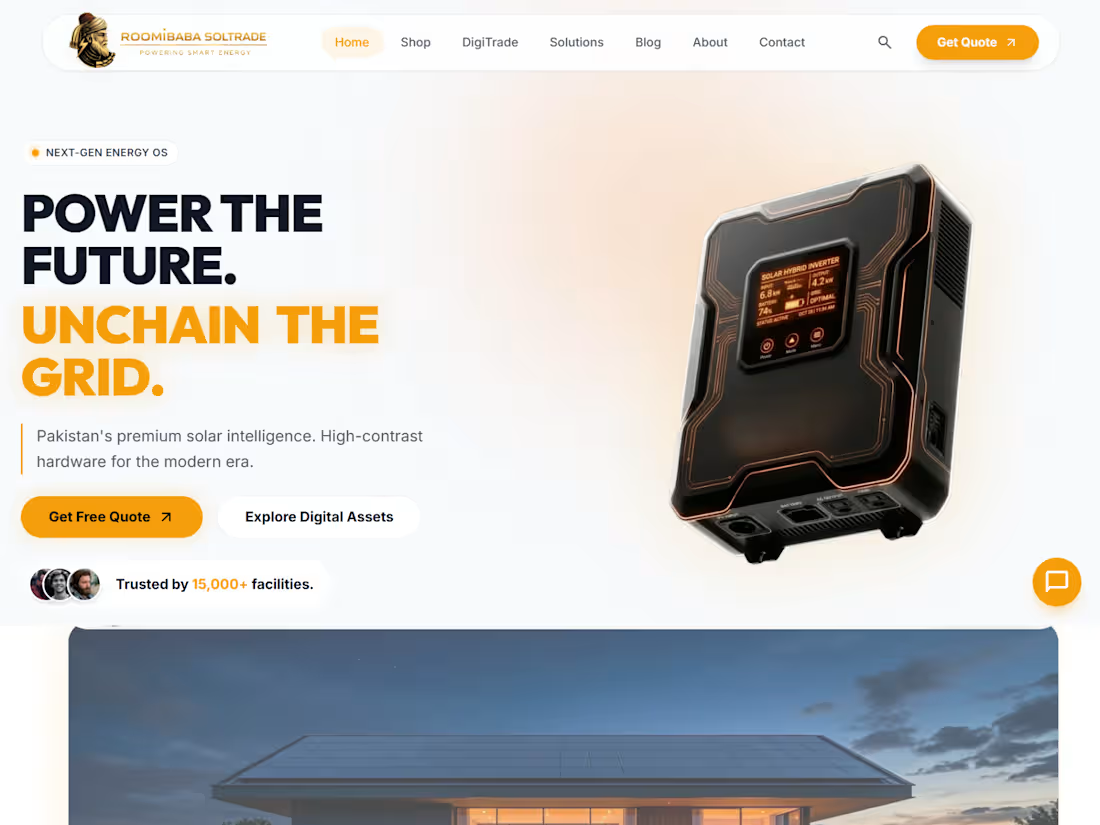
I built this ecommerce website for my family’s solar energy business in Pakistan. It started as a catalog for solar hardware like inverters and panels. I then added a second line of digital products (DigiTrade), so the store now sells both physical and digital items.
Customers can browse the shop, search products, read blog articles, and request a free quote for solar systems. The quote button appears on every page because most solar buyers want a price before they order.
Behind the storefront is a full admin panel. The business owner can add and edit products, manage categories, and [update orders / handle quote requests, confirm which], without needing a developer.
I handled everything myself: design, frontend, backend, admin panel and deployment.
Stack: Node.js, React & Supabase
0
32
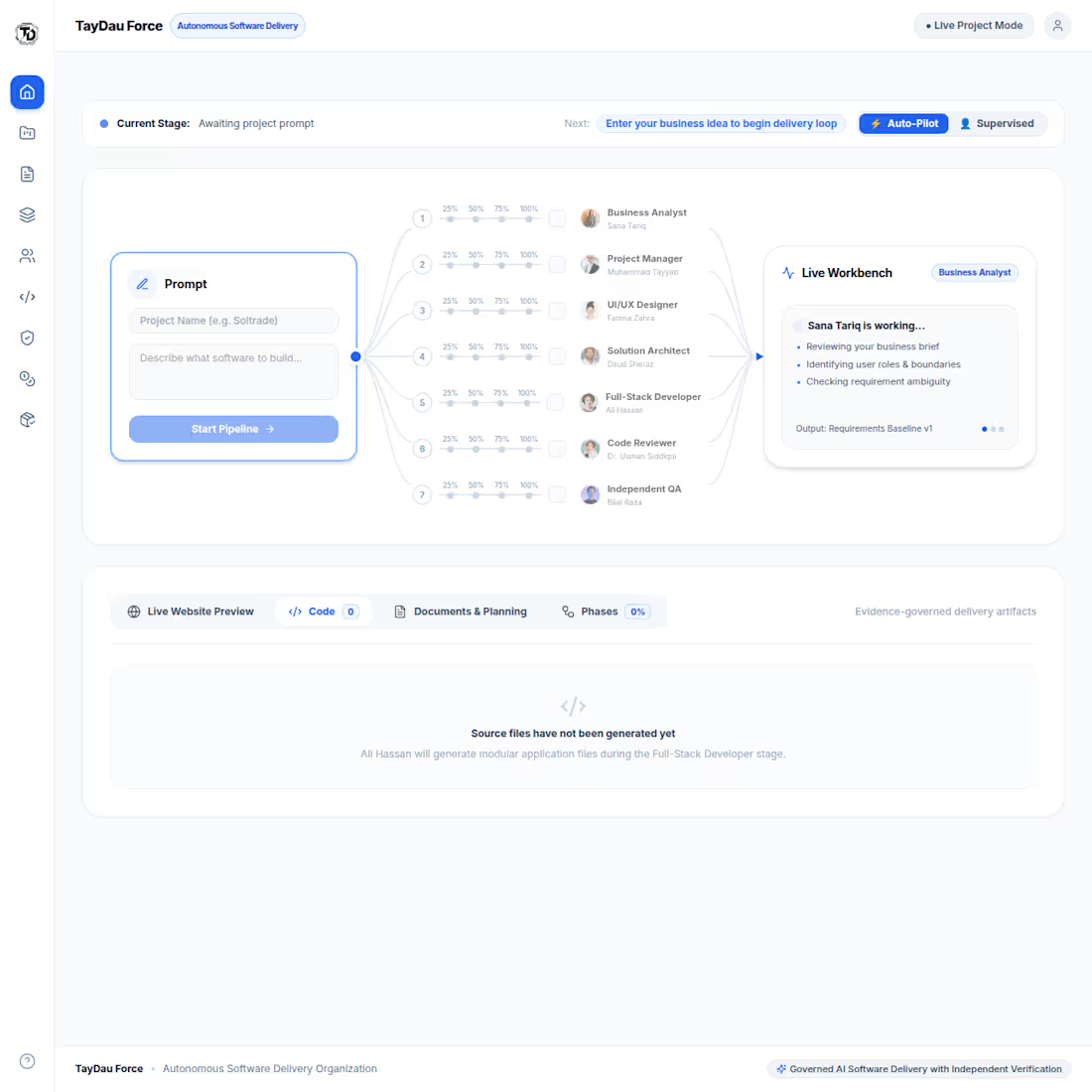
AI tools can write code fast, but nobody checks it. The same agent builds, tests and approves its own work, and when information is missing it guesses.
TayDau Force is a prototype built for the Alibaba/Qoder hackathon with Daud Sheraz (https://www.linkedin.com/in/daud-sheraz-4a36972b7/). You describe a product in plain language, and a team of seven specialist AI agents takes it from idea to working software: requirements, planning, design, architecture, code, review and QA.
Each agent has one job. The agent that writes the code never approves it. A separate reviewer checks it, and a separate QA agent derives tests from the requirements. If a business detail is missing, the system asks the client instead of assuming it. Every requirement is marked as confirmed, proposed or assumed, so it’s clear what is fact and what is a guess.
The hardest problem was reliability. Free AI APIs hit rate limits and timeouts, which broke full runs halfway. I built a router that checks each model’s health and quota before sending a request, with a local fallback model if the cloud providers fail. Another bug showed a cleaning-services project rendered with an old portfolio design. I fixed that by isolating each project’s context and validating every design before use.
Stack: React, TypeScript, Vite, Tailwind, Node.js, Express, PostgreSQL, multi-provider AI gateway, Docker.
Live demo: https://taydau-force.vercel.app/
0
43