
Mohib Ali Khan
Build Scalable Web Apps That Turn Data Into Decisions
New to Contra
Mohib Ali is building their profile!



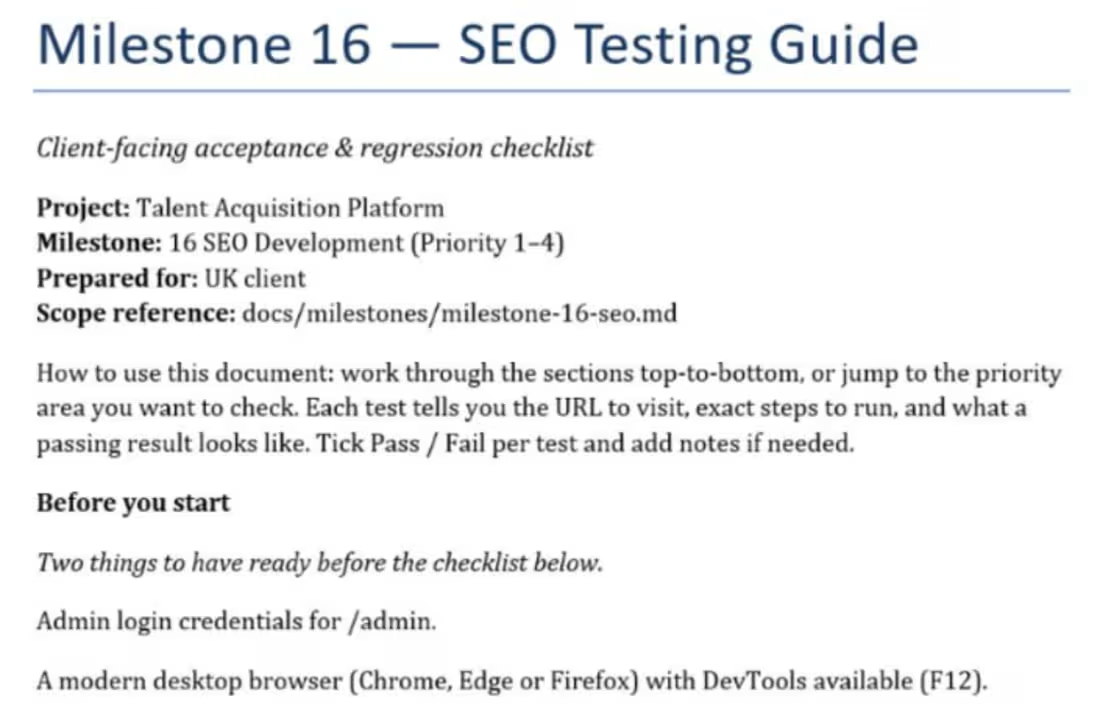
𝗗𝗲𝗹𝗶𝘃𝗲𝗿𝗲𝗱 𝗘𝗻𝗱-𝘁𝗼-𝗘𝗻𝗱 𝗤𝗔 𝗳𝗼𝗿 𝗦𝗘𝗢 & 𝗖𝗠𝗦 𝗠𝗶𝗹𝗲𝘀𝘁𝗼𝗻𝗲 (𝗨𝗞-𝗕𝗮𝘀𝗲𝗱 𝗣𝗹𝗮𝘁𝗳𝗼𝗿𝗺)
Executed structured testing for a live talent acquisition platform, ensuring smooth rollout of SEO enhancements without impacting existing user flows.
What was covered:
SEO landing pages logic & visibility controls
CMS-driven dynamic content (hero sections, highlights, banners)
Admin vs frontend data consistency
UI rendering validation across key pages
Regression assurance across:
Authentication system (Login / Register)
Real-time messaging
Job creation & management
Talent discovery (search & filters)
Execution approach:
Tested 40+ scenarios across multiple modules.
Followed structured acceptance + regression checklist
Focused on real user journeys, not just isolated test cases
Key learning:
Effective testing isn’t just about finding bugs
it’s about ensuring new changes don’t break existing user flows.
Outcome: Smooth deployment, stable system, zero critical breakage.
2
2
252
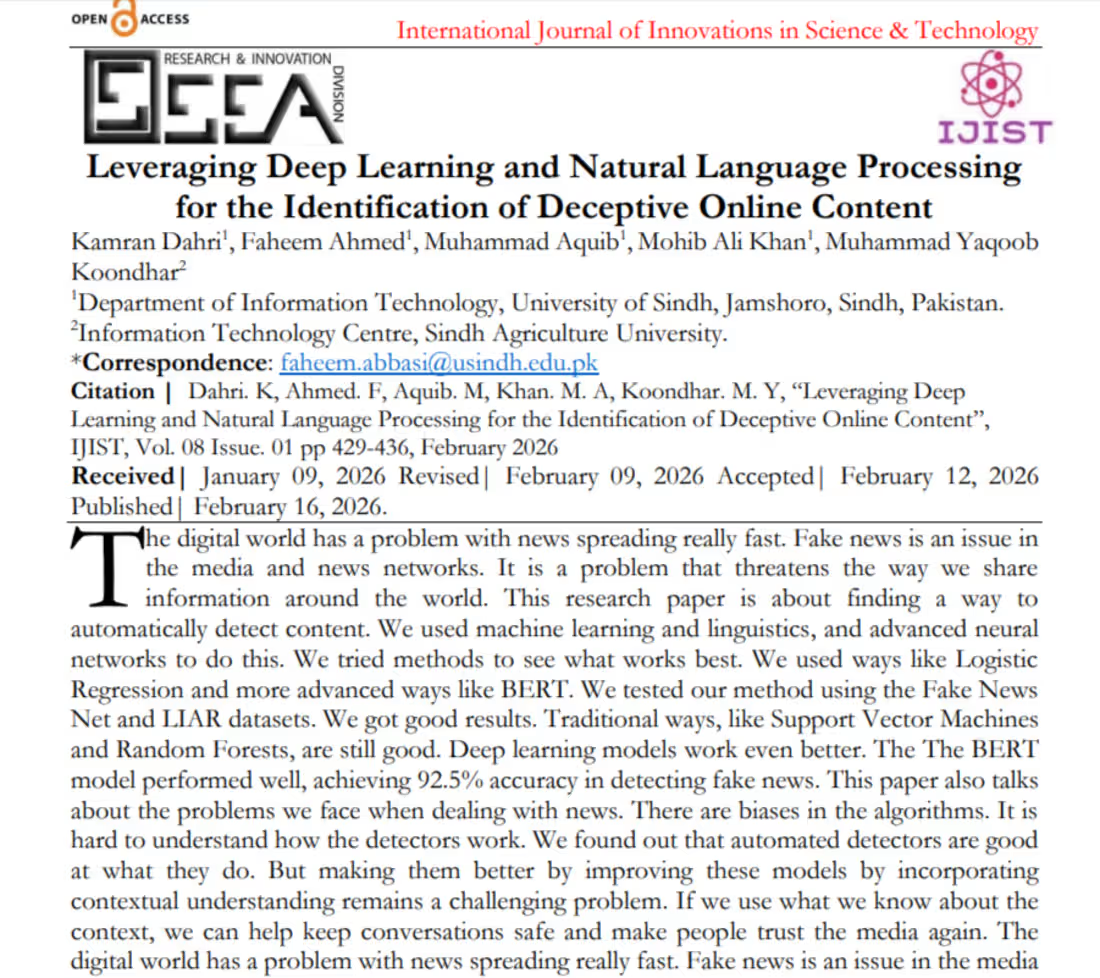
🚨 92% accuracy sounds impressive until you see what it misses.
Excited to share that our research paper has been published in the International Journal of Innovations in Science and Technology
𝗟𝗲𝘃𝗲𝗿𝗮𝗴𝗶𝗻𝗴 𝗗𝗲𝗲𝗽 𝗟𝗲𝗮𝗿𝗻𝗶𝗻𝗴 𝗮𝗻𝗱 𝗡𝗟𝗣 𝗳𝗼𝗿 𝘁𝗵𝗲 𝗜𝗱𝗲𝗻𝘁𝗶𝗳𝗶𝗰𝗮𝘁𝗶𝗼𝗻 𝗼𝗳 𝗗𝗲𝗰𝗲𝗽𝘁𝗶𝘃𝗲 𝗢𝗻𝗹𝗶𝗻𝗲 𝗖𝗼𝗻𝘁𝗲𝗻𝘁
We developed and compared multiple ML and NLP models including Logistic Regression, SVM, Bi-LSTM, and BERT for detecting deceptive online content.
Key result:
BERT significantly outperformed traditional models, achieving 92.5% accuracy by better capturing contextual meaning in text.
💡 But what we learned goes beyond numbers:
→ High accuracy does not always mean real-world reliability.
→ Explainability is still a major gap in NLP systems.
→ Fake news detection is an evolving and continuous problem.
This work made one thing clear building a model is easy, but building a reliable system for real-world misinformation is much harder.
Special thanks to my mentors Faheem Ahmed, Ph.D (https://www.linkedin.com/in/faheem-ahmed-ph-d-4a057723/) | Kamran Dahri (https://www.linkedin.com/in/kamran-dahri-70a06925a/) | Muhammad Aquib (https://www.linkedin.com/in/muhammad-aquib-a31a49192/) | Dr Muhammad Yaqoob Koondhar (https://www.linkedin.com/in/dr-muhammad-yaqoob-koondhar/) for their guidance and continuous feedback throughout this journey.
🔗 full paper: https://journal.50sea.com/index.php/IJIST/article/view/1834
Our next goal is to publish in higher-tier, indexed journals and contribute to research that genuinely impacts how we fight misinformation online.
Do you think AI alone can solve misinformation, or will humans always be part of the solution?
#DataScience (https://www.linkedin.com/search/results/all/?keywords=%23datascience&origin=HASH_TAG_FROM_FEED) #MachineLearning (https://www.linkedin.com/search/results/all/?keywords=%23machinelearning&origin=HASH_TAG_FROM_FEED) #NLP (https://www.linkedin.com/search/results/all/?keywords=%23nlp&origin=HASH_TAG_FROM_FEED) #DeepLearning (https://www.linkedin.com/search/results/all/?keywords=%23deeplearning&origin=HASH_TAG_FROM_FEED) #BERT (https://www.linkedin.com/search/results/all/?keywords=%23bert&origin=HASH_TAG_FROM_FEED) #Research (https://www.linkedin.com/search/results/all/?keywords=%23research&origin=HASH_TAG_FROM_FEED) #SiliconValley (https://www.linkedin.com/search/results/all/?keywords=%23siliconvalley&origin=HASH_TAG_FROM_FEED) #TechCommunity (https://www.linkedin.com/search/results/all/?keywords=%23techcommunity&origin=HASH_TAG_FROM_FEED)
0
46
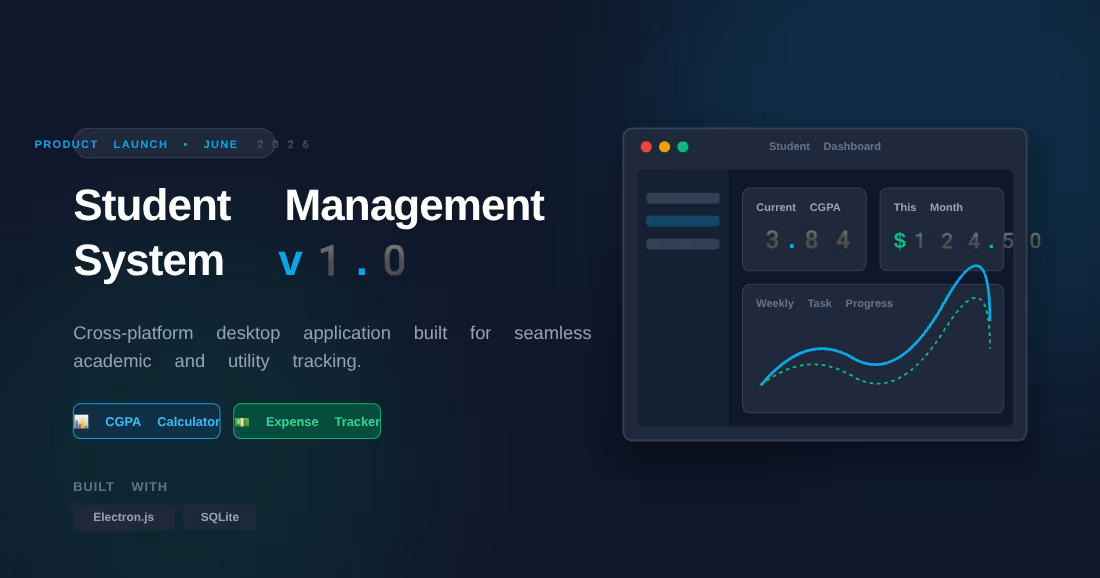
Cross-Platform Student Management System v1.0
0
4