
Marike Reimer
Agile Lead & Scrum Master | 15+ yrs | CSM, CSPO | Remote
New to Contra
Marike is ready for their next project!

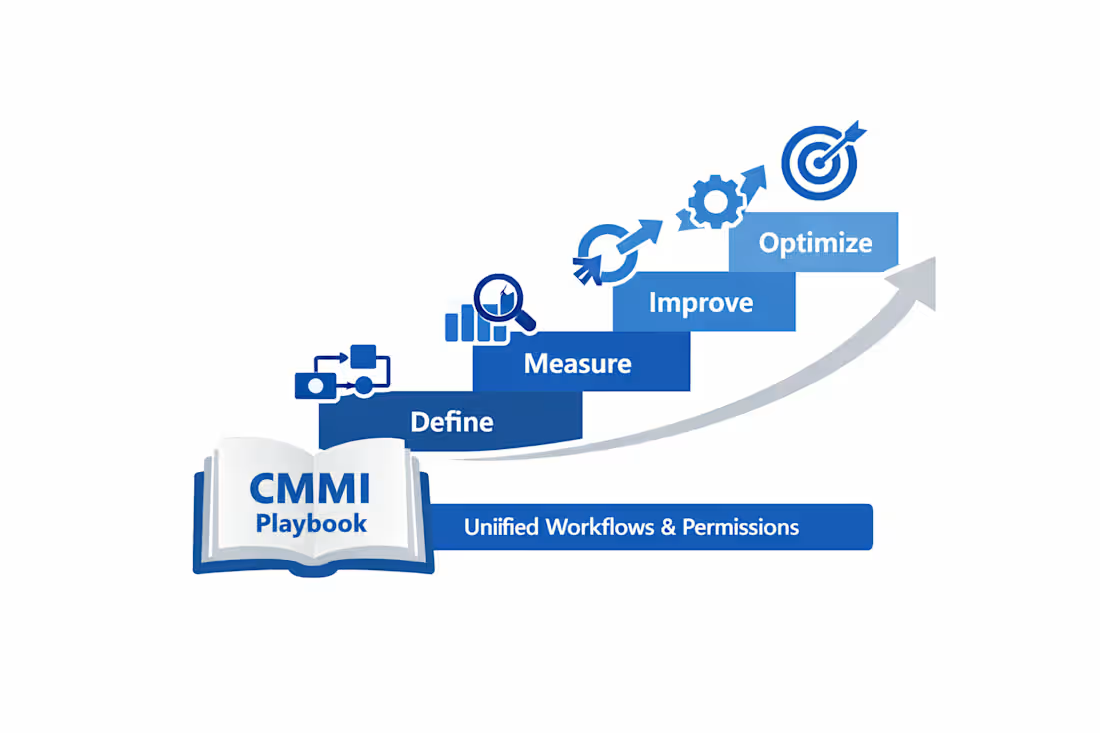
Problem: With no existing delivery standards, the team risked rework, ambiguity, and early CMMI gaps. Creating an Agile/CMMI framework established a repeatable model that prevented downstream pain and set the foundation for all future projects. The resulting best‑practice template strengthened the consultancy’s competitiveness and expanded its market reach.
Action: I reviewed Agile and CMMI best‑practice literature and mapped those practices onto the team’s existing Agile structure. I identified gaps that could create future delivery or audit pain and designed lightweight, low‑overhead solutions to satisfy CMMI requirements without slowing the team down. I then consolidated these into a clear, reusable project template that standardized execution and became the foundation for all future internal projects.
Result: The result was a repeatable delivery process that consistently produced on‑time, on‑scope work, with documentation fully audit‑ready. The framework became the firm’s internal standard, strengthening competitiveness and supporting future client engagements.
0
2

Problem: A 500+‑user Jira instance had grown organically, leaving teams reliant on free‑form labels to track work. Reporting was inconsistent, Dev and DevOps sprints lacked upstream alignment, and QA had no visibility at all. The result was fragmented workflows, unreliable dashboards, and no trustworthy cross‑team view of delivery.
Action: I untangled a sprawling, organically grown Jira ecosystem, streamlining chaotic labels into a coherent structure. I removed unused categories, consolidated redundancies, and built a consistent foundation for dashboards. I integrated developer and DevOps boards while preserving team views, ensuring smooth deployments across the redesigned workflow.
Result: The new Jira architecture provided the company with a clear, scalable blueprint for how to unify a 500+‑user ecosystem, eliminate reporting chaos, and restore cross‑team visibility. Leadership recognized it as the optimal long‑term solution, and it became the reference model for future planning.
0
7
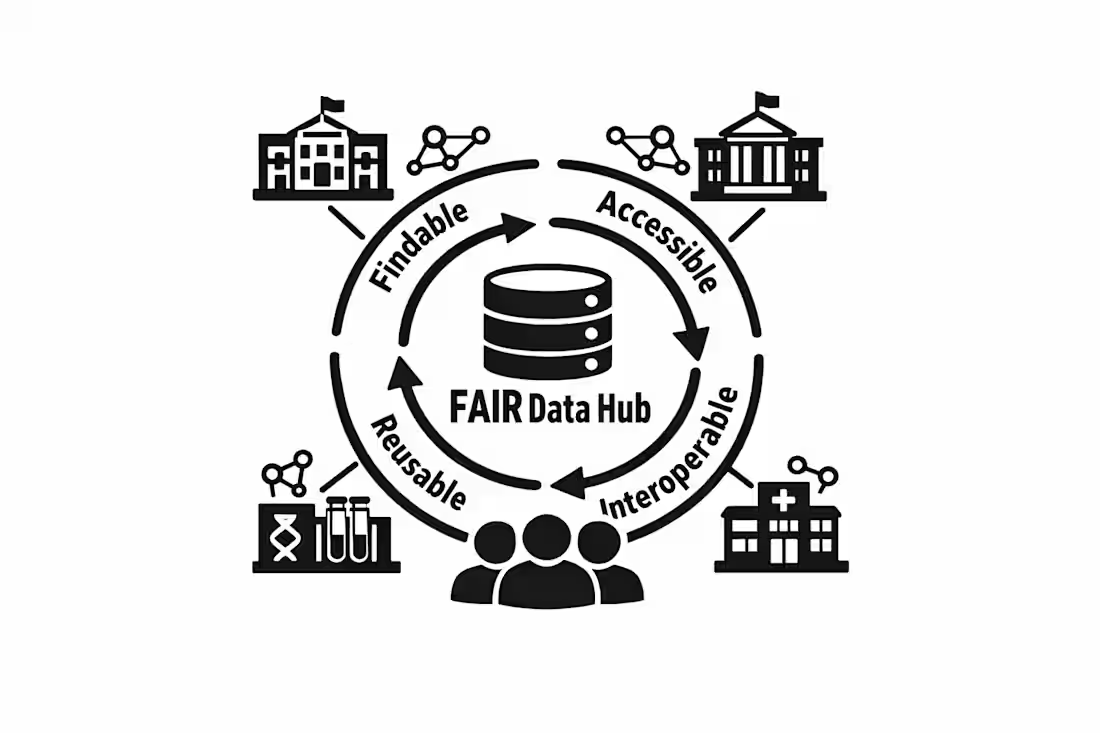
Problem: A consortium of researchers won a NIH HEAL award to develop novel approaches to treating pain — but had no data management plan. The NIH Data Sharing Mandate required all research outputs to be FAIR: Findable, Accessible, Interoperable, and Reusable. Without a structured approach, data produced across multiple institutions risked being siloed, irreproducible, and non-compliant.
Action: I audited data modalities across all consortium institutions and evaluated FAIR-compliant repositories to match each data type to the right archive. Working directly with NIH data stewards, I established metadata standards for the HEAL Initiative platform. I beta-tested and evaluated tools to capture relationships between data and conclusions. I then worked with scientists across the consortium to document and deposit their data.
Result: Research data across the consortium became searchable and integrated with the NIH HEAL platform. I built a Confluence hub to support internal collaboration and coordinate data staging across institutions — giving teams a shared workspace to align before deposit. Data was deposited in FAIR-compliant repositories, satisfying NIH sharing requirements and ensuring outputs remained findable, accessible, and reusable beyond the life of the grant.
0
10
Problem:
A newly formed web development team had Agile familiarity but lacked the working relationships, practices, and tooling to deliver effectively. The backlog was not being groomed, estimation was driven solely by developers without QA input, and Jira had not been customized to support their workflow. Sprint predictability was low and the team needed to build the discipline and cohesion to perform at pace.
Action:I coached the team from formation through full Agile maturity, introducing sprint planning, stand-ups, mid-sprint reviews, retrospectives, and backlog grooming. I worked closely with the Product Owner to customize Jira workflows for thorough backlog vetting and to remove friction from Dev/QA test cycles and handoffs. I brought QA into story point estimation alongside developers, improving accuracy. I trained a junior project manager to sustain the practice after my departure.
Result:Within three months the team was pulling work into sprints — a marker of mature estimation and sprint discipline. Their delivery performance markedly outpaced peer teams. Jira workflows were customised for Dev/QA test cycles, reducing handoff friction. A trained junior SM ensured Agile practice continued after my departure, making the improvement self-sustaining rather than consultant-dependent.
1
15