
Lotte Frieda
Personal Executive Creative Administrative Gohighlevel VA
New to Contra
Lotte is building their profile!

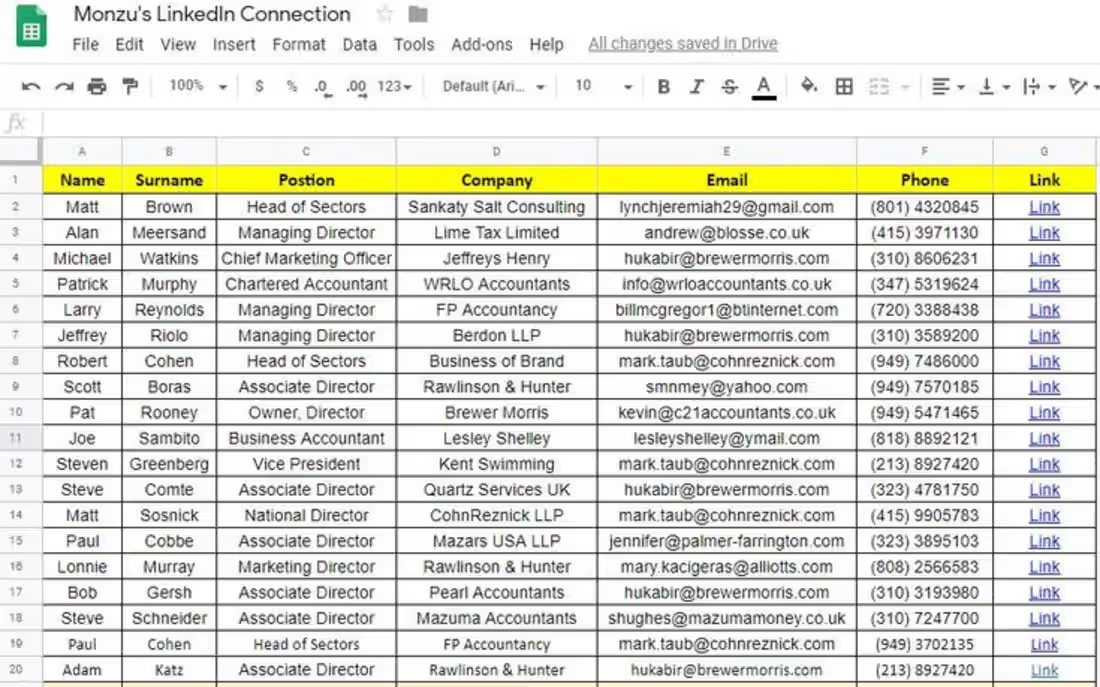
The client was an outreach-driven professional , either in sales, recruitment, or B2B consulting ... who had built up a substantial LinkedIn network over time but had no organized way to leverage it. Their connections existed only inside LinkedIn's ecosystem, making it impossible to run targeted email campaigns, segment contacts by industry or seniority, or feed prospects into a CRM or outreach tool. Every time they needed to reach out to a specific type of contact ... say, Managing Directors at accounting firms ... they had to manually scroll through their connections one by one. There was no master list, no exportable data, and no way to filter by job title, company, or sector. They were sitting on a goldmine of warm contacts with no infrastructure to mine it.
I extracted, cleaned, and organized the client's full LinkedIn connections data into a structured Google Sheets database with seven clearly labeled columns ... First Name, Surname, Job Title, Company, Email, Phone Number, and a direct LinkedIn Profile Link. Every row was verified and formatted consistently so the data was immediately usable for outreach, CRM import, or campaign segmentation. The spreadsheet covered a diverse range of decision-makers including Managing Directors, Chief Marketing Officers, Head of Sectors, Vice Presidents, Associate Directors, and Business Accountants ... spanning industries from accountancy and consulting to brand management and financial services. Each contact's LinkedIn profile link was embedded directly in the sheet for one-click access, making it easy to personalize outreach before sending. The final deliverable was a clean, filterable, ready-to-use lead database the client could plug straight into any email tool, CRM, or outreach sequence.
The delivered spreadsheet gave the client instant access to a fully organized, actionable contact database that had previously been locked inside LinkedIn's interface. What once required hours of manual searching and copy-pasting was now a single, filterable file the client could sort by job title, company, or industry in seconds. The structured format meant the data could be imported directly into tools like GoHighLevel, HubSpot, Apollo, or Instantly without any reformatting. The client was able to immediately launch targeted email and LinkedIn outreach campaigns to specific segments ... for example, filtering only Managing Directors in the accounting sector for a specific service pitch. By turning a passive network into an active, organized lead database, the client gained a concrete outreach asset that could generate pipeline on demand ... making every future campaign faster, more targeted, and significantly more effective.
3
5
292
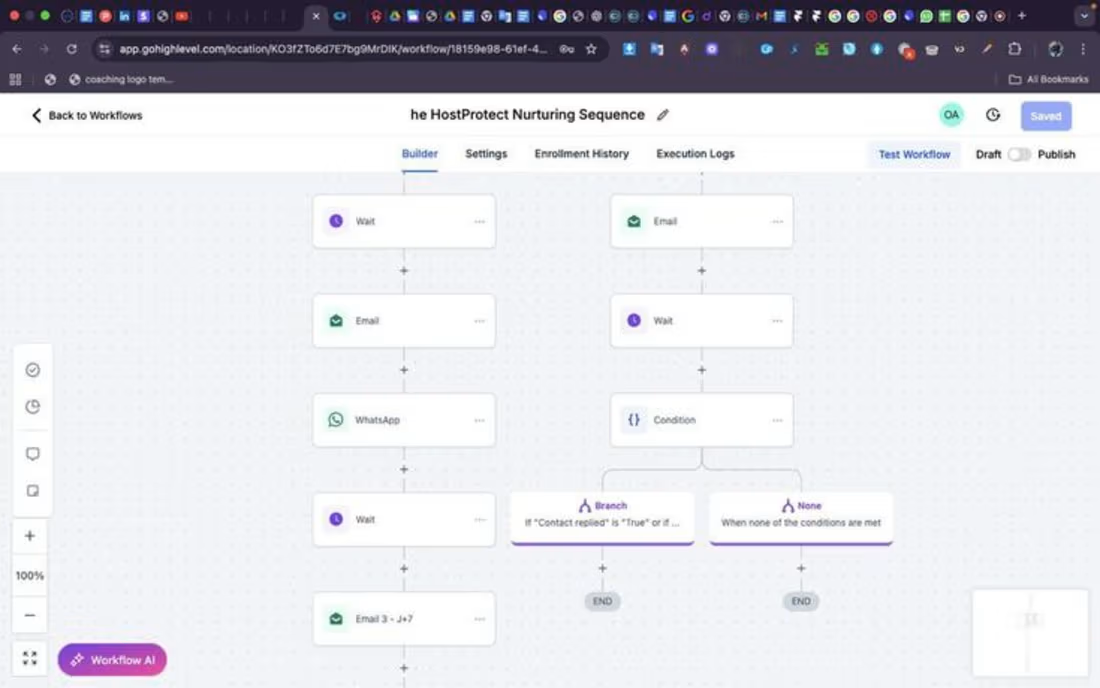
The client was a coaching business running paid ads and generating inbound leads through their funnel ... but the follow-up process was entirely manual. Their team was copy-pasting emails, forgetting to send WhatsApp messages, and had no consistent system for nurturing prospects who didn't buy immediately. Leads were going cold within 24–48 hours because there was no structured sequence to keep them warm. There was also no intelligent branching ... every lead was treated the same regardless of whether they had replied or engaged. The result was a leaking pipeline: they were spending money to attract leads and then losing them through sheer inaction. They needed a fully automated nurture system that could follow up, adapt to lead behavior, and close the gap between interest and conversion ... without requiring manual effort from the team.
I built a fully automated nurturing sequence inside GoHighLevel (HostProtect) that combined email, WhatsApp, timed wait steps, and conditional branching into one intelligent workflow. The sequence was designed to engage leads across multiple touchpoints ... starting with an initial email and wait step, followed by a second email, then a WhatsApp message for higher-intent outreach, and a further email series timed to maximize open rates. The critical feature was a conditional logic node that evaluated whether the contact had replied at any point. If they had, the workflow routed them into a live branch for personalized follow-up. If none of the conditions were met, the sequence gracefully exited rather than over-messaging unresponsive leads. This protected sender reputation and kept the pipeline clean. Every step was mapped, tested, and labeled clearly so the client's team could manage and update the workflow independently going forward.
The completed workflow transformed the client's follow-up process from a manual, inconsistent effort into a reliable, always-on nurture machine. Leads entering the funnel were now automatically walked through a structured multi-channel sequence ... receiving the right message at the right time without any manual intervention. The conditional branching meant that engaged leads were identified and fast-tracked for personal outreach, while unresponsive contacts were exited cleanly without damaging deliverability. The client's team went from spending hours chasing leads to simply monitoring the pipeline as the system did the work. Response rates improved because touchpoints were timely and varied across email and WhatsApp rather than relying on a single channel. The business now had a scalable, repeatable follow-up process that worked around the clock ... turning cold leads into warm conversations and warm conversations into closed clients.
2
64
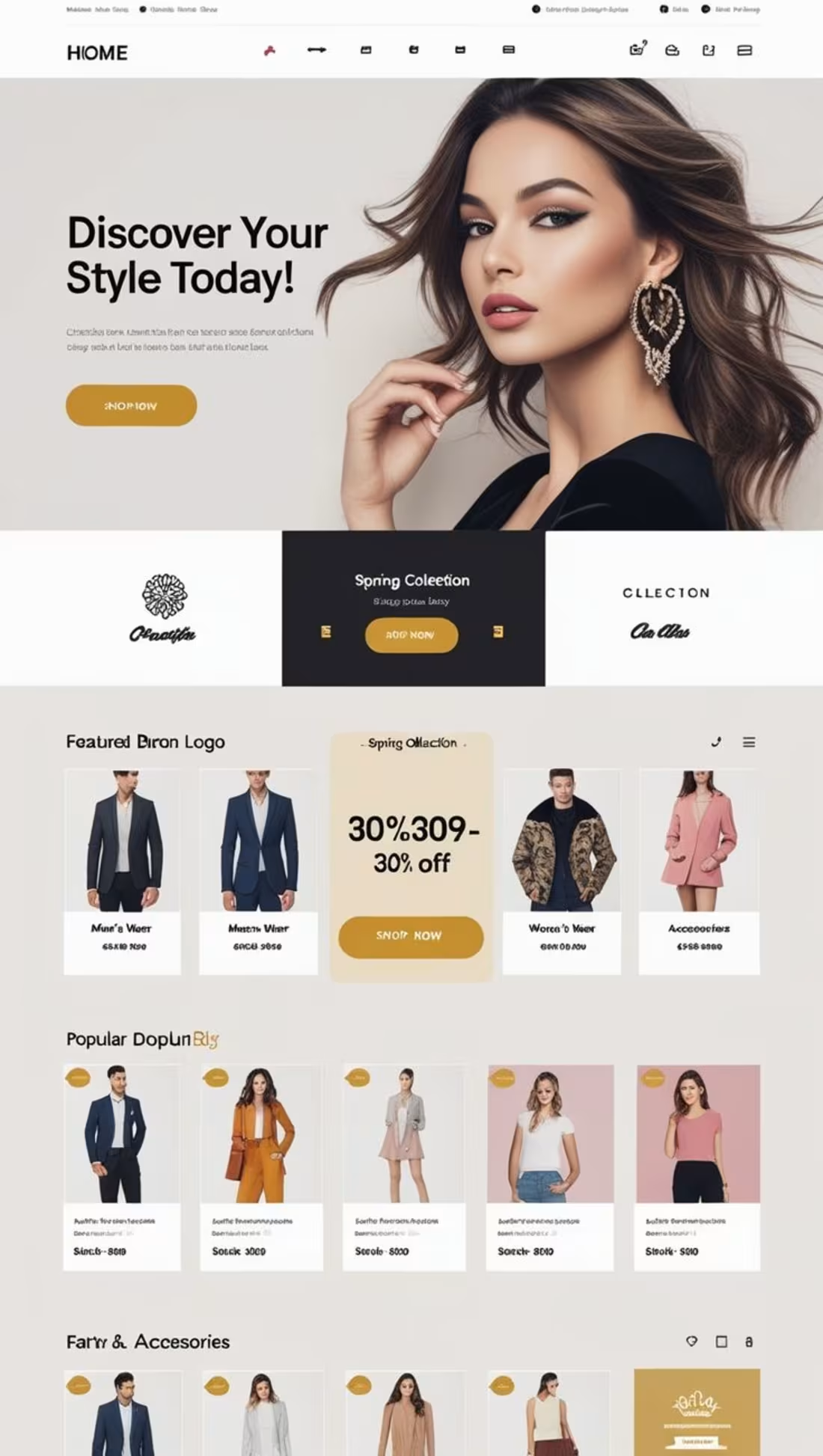
The client was a growing streetwear and fashion label with a strong aesthetic vision but a website that failed to communicate it. Their existing online storefront felt generic ... a basic template with no personality, poor visual hierarchy, and no clear path to purchase. Visitors were landing on the page and leaving immediately because the design didn't reflect the premium, editorial quality of the clothing. The brand was losing potential customers at the very first touchpoint, and the lack of a seasonal campaign section meant new collection drops went unnoticed. They needed a website that didn't just list products... it needed to sell a lifestyle.
I designed and built a full fashion e-commerce landing page in Framer that merged editorial storytelling with e-commerce functionality. The page opens with a bold, full-bleed hero section featuring a high-impact model photograph, a commanding headline, and a prominent shop CTA — immediately establishing the brand's tone. Below the fold, I created a spring collection spotlight with a dark contrast panel and promo CTA to drive urgency, followed by a featured brands section with a discount callout card to increase average order value. A product grid with clean cards, pricing, and sale badges was designed to guide shoppers toward purchase, while a fashion accessories section extended the browsing experience. The warm beige and gold palette, oversized typography, and generous whitespace gave the brand the premium boutique feel it deserved — without losing approachability.
The redesigned landing page gave the brand a cohesive, high-converting digital storefront that finally matched the quality of their clothing. The editorial hero section significantly reduced bounce rates by immediately capturing attention and communicating brand identity. The structured product grid and seasonal campaign section made it easy for returning customers to discover new drops and take action, while the strategic placement of discount callouts and sale badges created natural purchase urgency. The client reported stronger engagement from their social media traffic, with visitors spending more time on the page and the shop-now conversion path feeling intuitive across both mobile and desktop. The site now works as a full-time salesperson — visually compelling, easy to navigate, and built to grow with the brand.
2
64
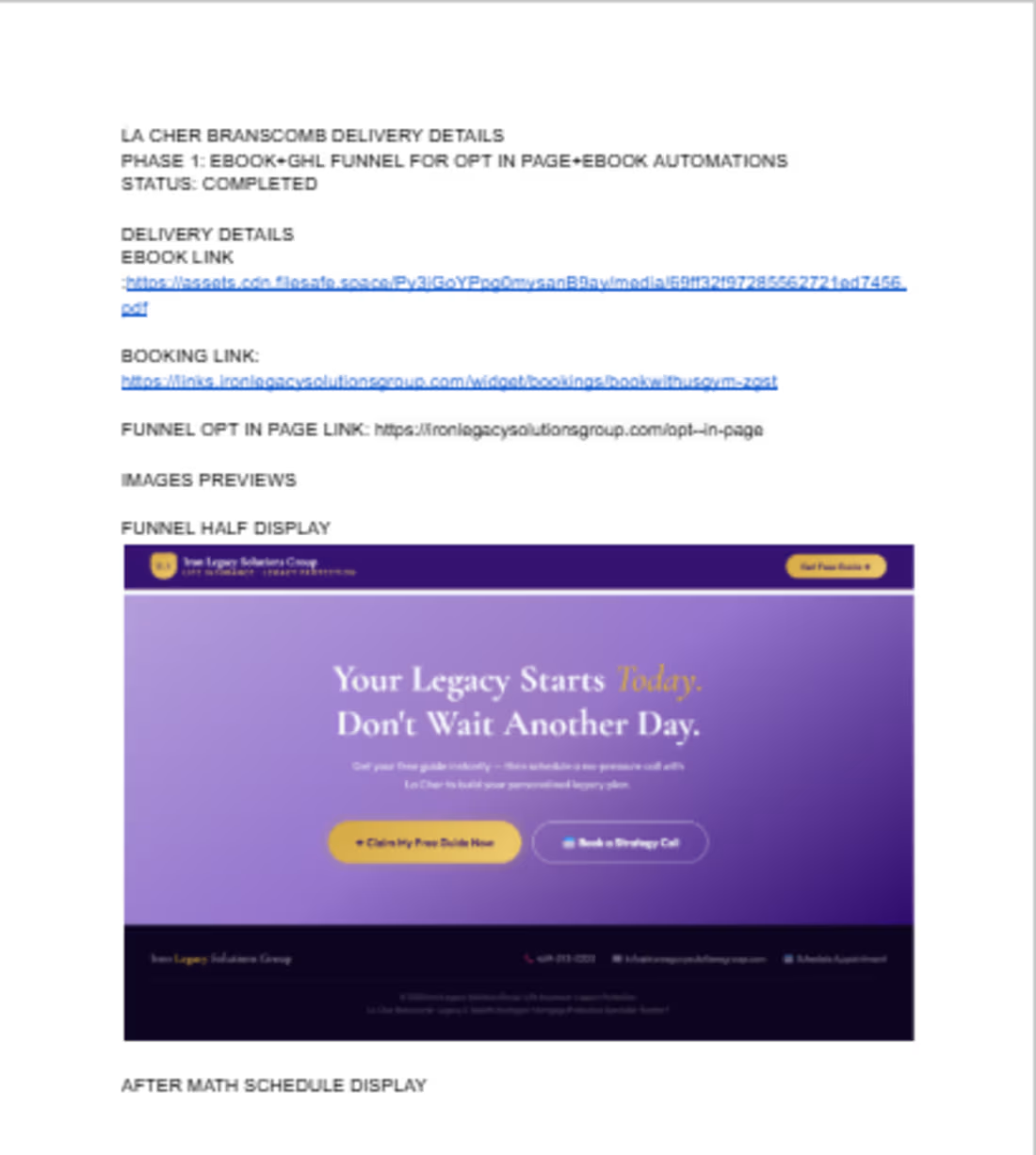
I worked on a GoHighLevel (GHL) automation and CRM setup project for Lacher Branscomb, focusing on building a streamlined and efficient client management system. I created and organized the CRM structure, including pipelines, custom fields, and contact segmentation to improve lead tracking and follow-ups.
I also set up automated workflows to handle lead capture, email/SMS notifications, and appointment scheduling, ensuring smooth communication and reduced manual workload. In addition, I configured landing pages and forms to support lead generation and integrated them into the CRM for real-time data collection.
To improve productivity, I implemented automation sequences for nurturing leads and follow-ups, helping to increase engagement and conversion potential. I ensured the entire system was user-friendly, scalable, and aligned with the client’s business operations.
The final setup provided Lacher Branscomb with a fully functional GoHighLevel system that improves organization, saves time, and supports consistent client communication and business growth.
2
123