
khubaib Naveed
I BUILD THE SYSTEMS BEHIND YOUR BUSINESS/ Automation · AI
- 4
- Followers


Automated Review Requests for Local Service Businesses
The Problem
Google reviews help local businesses get found, and every HVAC company, salon, cleaner and contractor knows it. Most of them ask for reviews inconsistently. The reason isn’t that they don’t care. Asking every customer, right after every job, depends on someone remembering at the exact moment the business is busiest. Happy customers never get asked, and the review count grows slower than it should.
The Solution
I built an n8n system that sends the review request automatically, once, at the right time, and tracks what happens next. Nobody gets asked twice and nobody gets forgotten.
How the System Works
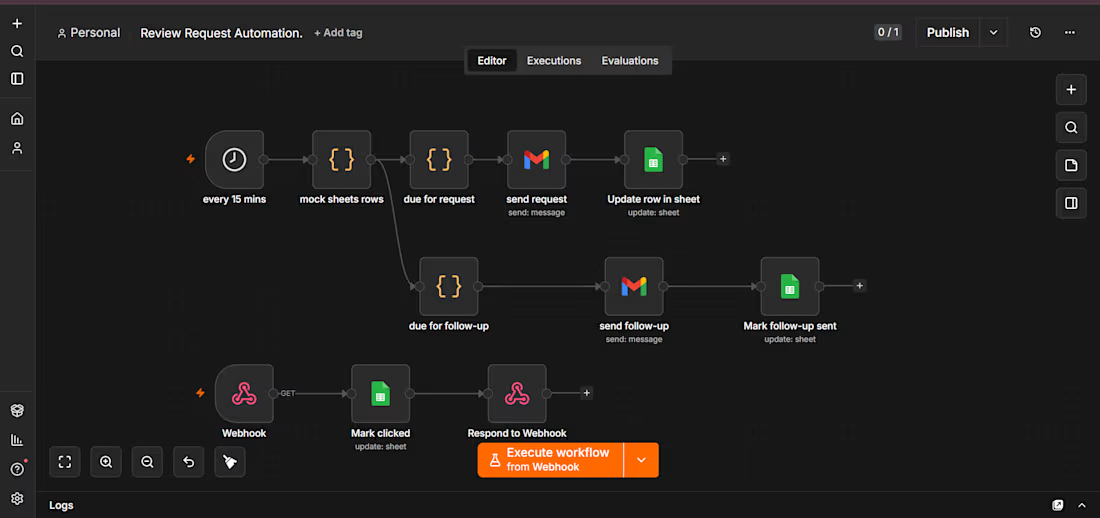
1. Checks every 15 minutes. The workflow reads a Google Sheet that lists each job and what has already been sent. The sheet is the system’s memory, so nothing depends on timers that can fire twice.
2. Sends the request. Two hours after a job is marked complete, the customer gets an email with a review link.
3. Tracks the click. The link goes through a tracking step that records “clicked” in the sheet, then sends the customer to Google.
4. Sends one follow-up. If there’s no click after three days, one reminder goes out. Customers who clicked or opted out are skipped.
5. Alerts me on errors. A separate error workflow emails me if any step fails.
Why this design: every step re-checks the sheet before sending, so the system can’t double-send and a customer who already responded is never contacted again.
Tools: n8n, Gmail, Google Sheets
2
3
474
A system I designed for local service businesses that consistently lose out on Google reviews. Full build in progress
Automated Review Requests for Local Service Businesses
The Problem:
Google reviews are one of the strongest signals for local search ranking, this is well established across HVAC companies, cleaning services, salons, contractors, and landscaping businesses. Every owner in this space knows reviews matter. Very few of them ask for one consistently.
The reason isn't a lack of care, it's a lack of a system. Asking every customer, right after every job, every single time, is a small task with no natural trigger behind it. It depends entirely on someone remembering in the moment, usually right when the business is busiest and least likely to remember. The result is a steady stream of satisfied customers who were never actually asked, and a review count that grows far slower than it should.
The Solution👍
I designed a system that removes the dependency on memory entirely, so a review request goes out every time, without anyone having to think about it.
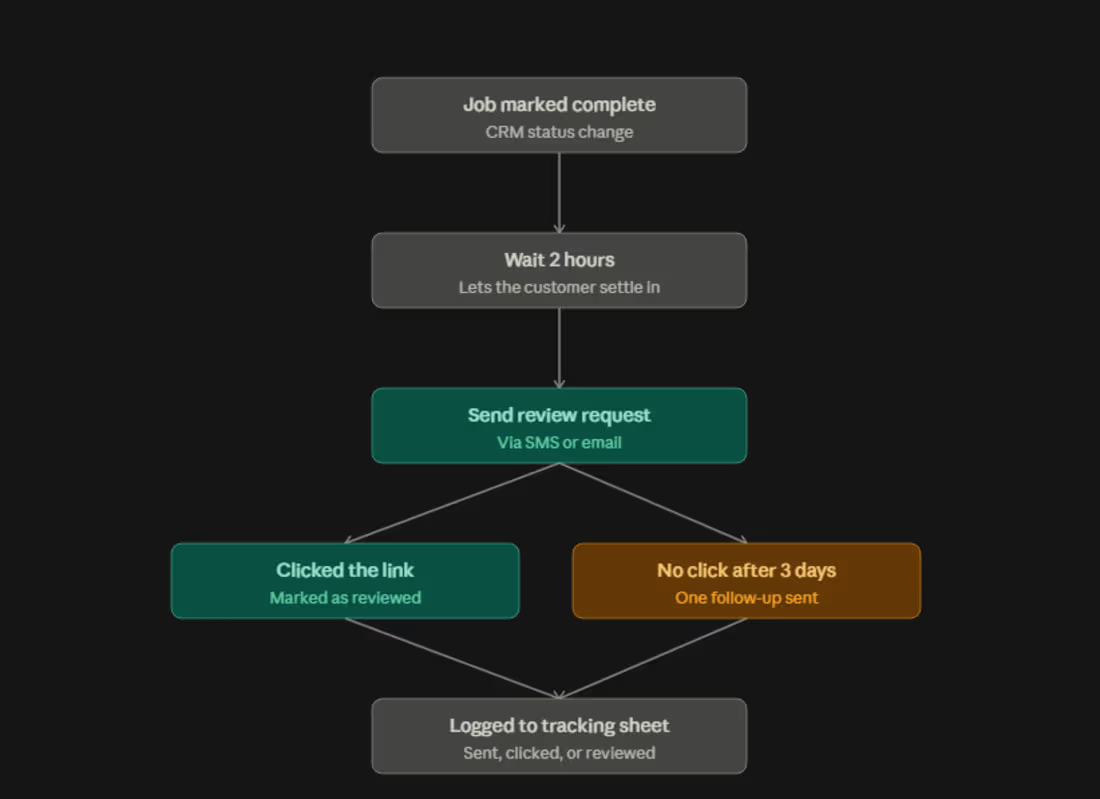
The moment a job is marked complete in the CRM, the system picks it up automatically. It waits a short period first, so the request doesn't feel rushed or robotic, the customer gets a little time to settle in before being asked. Then it sends a review request by SMS or email.
From there, the system tracks what happens next. If the customer clicks through and leaves a review, that's logged as a win and the process ends there, no further messages, no risk of annoying someone who already did what was asked. If there's no response after a few days, the system sends exactly one follow-up, never more than that, since a second or third nudge tends to do more harm than good. Whatever the outcome, sent, clicked, or reviewed, it's recorded in a tracking sheet, so the business owner always has a clear, accurate picture of where every customer stands.
The result is simple: every completed job gets a consistent, well-timed ask, with no manual list to maintain and no customer slipping through the cracks.
What's Next
The full workflow build, including the architecture and the tools behind it, is going up in the next few days.
2
3
467
Multi-Channel Inventory Sync for Ecommerce (Shopify, Amazon, eBay)
Designed and built a system for stores selling across multiple channels to stop losing time and money to manual listing updates and stock mismatches.
The problem: every store selling on more than one platform hits the same wall. A new product means retyping the title, description, and pricing into Shopify, then again into Amazon, then again into eBay, three separate chances to make a mistake, and three places that can quietly go out of sync.
What it does:
Catches new products the moment they go live on Shopify
Rewrites listing copy to fit how Amazon and eBay actually rank and display listings, not just copy-pasted
Routes every draft through a Slack approval step before anything publishes
Keeps stock counts synced across all channels on a schedule
Runs a daily reconciliation pass that independently checks for drift and alerts if something's off
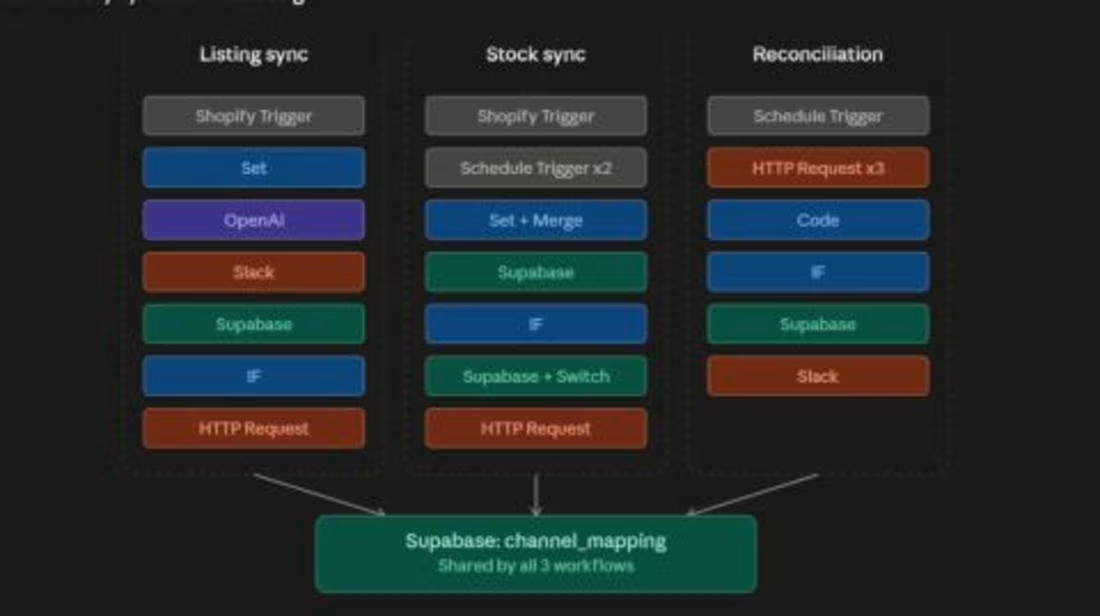
Three separate, focused pipelines (listing sync, stock sync, reconciliation), all reading from and writing to one shared data table, so nothing gets duplicated or contradicted between them.
Built with: n8n, Supabase, AI for listing rewrites, Slack for approvals
Available for: ecommerce stores or agencies managing multi-channel listings who want this templated to their own stack
1
2
283
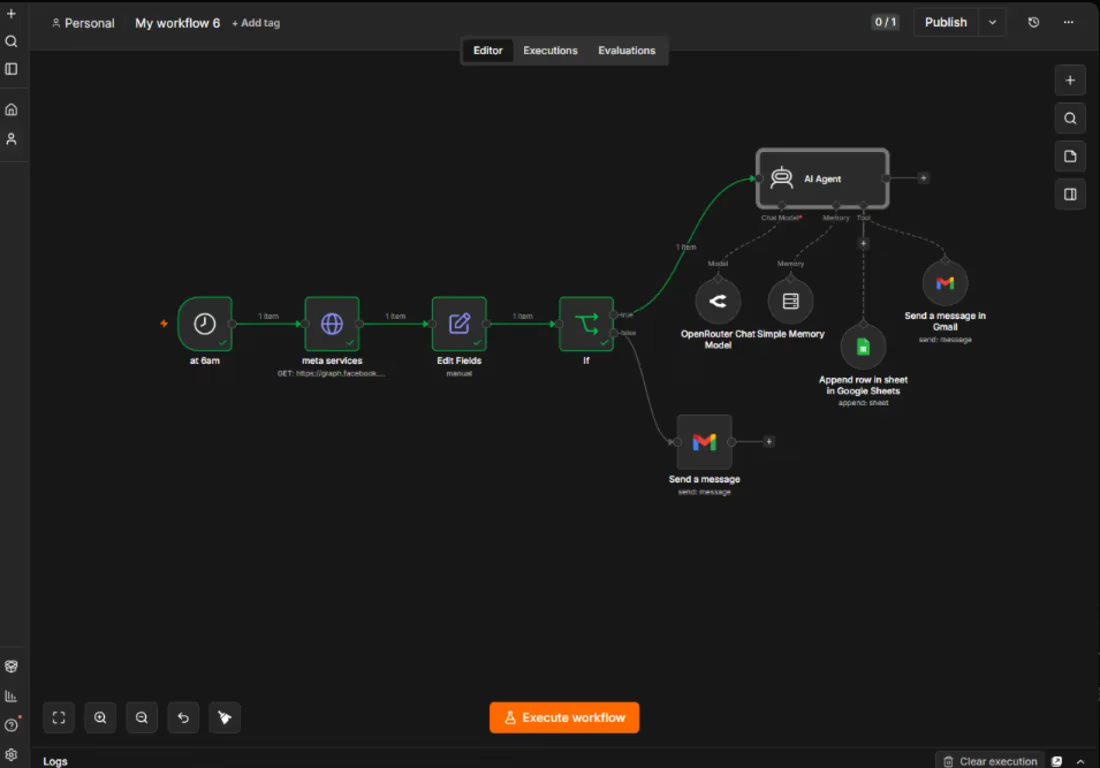
Automated Meta Ads Reporting via n8n & AI
1
5