An AI close-up can look great on its own and still feel like the wrong take. Before cutting from a wide shot to a close-up, I like to compare the two side by side: does the face still read as the same character, and does the action pick up where the wide shot left off?
One thing I’m learning in AI video: the camera movement and the character’s movement need separate directions. “The camera moves closer” and “the character steps forward” may look similar on paper, but they tell very different stories on screen.
The first AI output is where my review starts, not where the work ends. I compare it with the scene I had in mind, mark the details that feel off, and revise them one by one.
Making the idea specific enough to guide those decisions is a creative skill in itself.
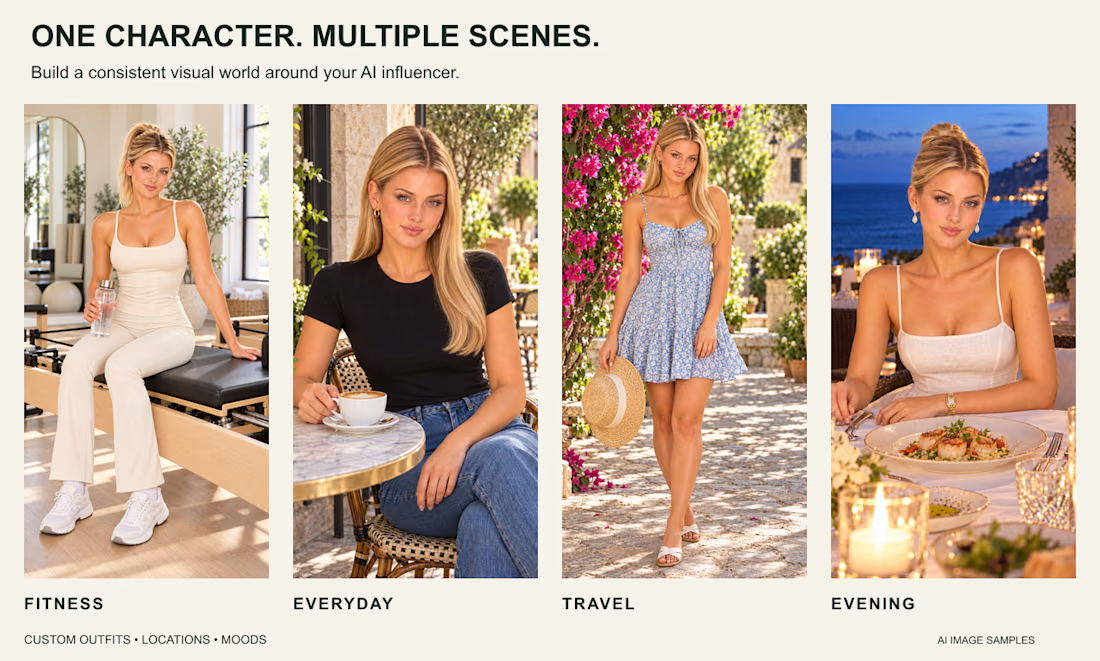
For a cohesive AI character image set, I start by agreeing on the character look, settings and visual direction. The aim is a coordinated series, not a promise of pixel-identical faces.
My image service includes a self-initiated AI-generated lifestyle study featuring a fictional...

In my lifestyle character study, the outfits and locations change across fitness, café, travel and evening scenes. Facial continuity, natural-looking proportions and a coherent mood were the focus of the visual review.
Four selected images from a self-initiated AI-generated...